Pioneering Technologies Set to Transform Global Industries
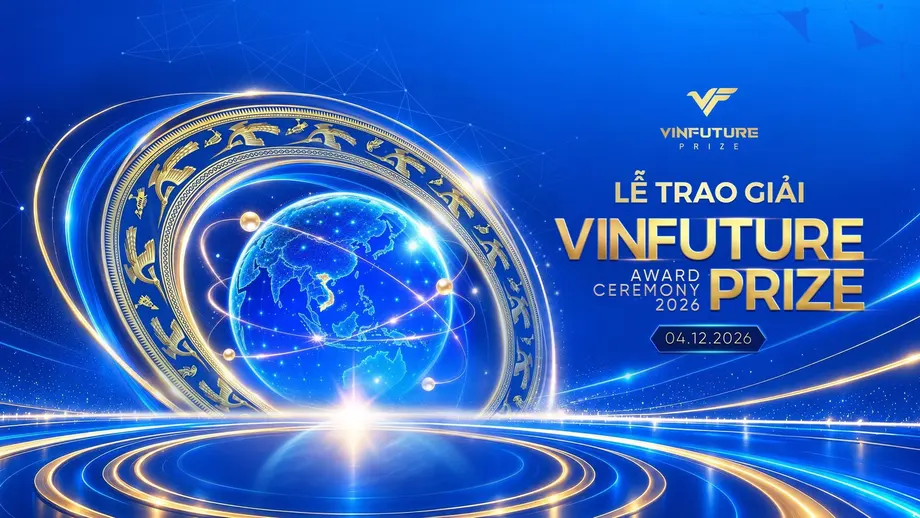
Pioneering innovations with the potential to reshape modern society are taking center stage at the upcoming VinFuture 2026 Science and Technology Week. Scheduled to take place in Hanoi from December 2 to December 8, 2026, the annual event brings together leading researchers, academic figures, and technology executives from around the world. The central theme for this year is Open Science and Creating Prosperity, reflecting a concerted push to translate laboratory breakthroughs into practical solutions that address pressing global challenges. Organizers announced that the 2026 season received 1,819 nominations from 79 countries and territories, building on a cumulative total of 7,951 nominations from nearly 120 countries across its six editions. This growing international participation underscores the expanding reach of the global science community and highlights the role of cross-border academic cooperation in solving complex issues.
Contents
The week features eight primary activities, including the third annual International Conference on Open Innovation, the main award ceremony, interactive sessions with award winners, specialized seminars, dialogue series at twelve research institutions nationwide, an art exhibition, and a higher education innovation forum. The flagship VinFuture Award Ceremony is scheduled for the evening of December 4, 2026, at the Ho Guom Theater in Hanoi, where groundbreaking scientific achievements capable of benefiting millions of lives will be formally recognized. Past editions have honored 48 scientists with 20 distinct works, establishing the prize as a major fixture in the international research landscape. Alongside the main events, the Vincom Center for Contemporary Art hosts an art exhibition titled Shining VI from Experimentation to Reality, exploring the conceptual bridge between theoretical science and practical application through works by nine Vietnamese artists.
Artificial Intelligence and Digital Transformation in Healthcare
Modern healthcare systems face mounting pressures, and researchers are turning to artificial intelligence and digital transformation to expand access and improve patient outcomes. During a dedicated seminar titled Artificial Intelligence and Digital Transformation in Healthcare, scheduled for December 8, 2026, at the Almaz International Convention Center, international specialists examine how machine learning models can assist medical professionals. Professor Hong Yan from the City University of Hong Kong notes that computational tools enable remote healthcare delivery by allowing individuals to monitor basic physiological indicators using local devices before transmitting preliminary analytics to physicians. In pediatric oncology, where treatments must carefully balance therapeutic efficacy against long-term toxicities, artificial intelligence offers promising avenues for personalized care. Professor Michelle Hermiston, director of the Institute of Health Sciences at VinUni University, emphasizes that digital health initiatives provide an opportunity for developing nations to advance rapidly in clinical standards, though she also highlights the need for broader local datasets given that Vietnamese participants currently account for less than two percent of international clinical trial cohorts. Chaired by Professor Do Ngoc Minh, the panel also features prominent contributors such as Professor Ana Belén Elgoyhen, Professor Jeffrey I. Gordon, and business leader Nguyen Hien, who discuss practical integrations within hospital management and specialized medical diagnostics.
Artificial Leaves and Sustainable Energy Solutions
Addressing the interconnected challenges of energy, water, and food supply requires innovative multidisciplinary approaches that mimic natural systems. Assistant Professor Virgil Andrei from Nanyang Technological University introduces artificial leaf technology designed to float on water surfaces and utilize solar energy to produce valuable chemicals and fuels. Inspired by natural plant photosynthesis, these thin, lightweight modular reaction units measure nearly one square meter and convert water, carbon dioxide, and organic waste into usable chemical products. The experimental results point toward the future establishment of floating solar fuel farms capable of supplying isolated islands, remote coastal regions, and offshore refueling stations. Meanwhile, Professor Evelyn Wang, vice president for energy and climate at the Massachusetts Institute of Technology, focuses on systems integration by utilizing waste streams from one industrial process as resources for another. Her previous work includes developing atmospheric water harvesting devices capable of operating in arid environments, earning recognition from international scientific forums for tackling resource scarcity.
Smart Wearables and Advanced Diagnostics
Biomedical engineering is also transforming personal health monitoring through flexible electronics and smart diagnostic platforms. Associate Professor Truong Vi Khanh from Flinders University investigates the biomedical applications of liquid metals, focusing particularly on gallium due to its electrical conductivity and mechanical adaptability. When integrated into fabrics, liquid metal elements create intelligent garments capable of continuously tracking heart rate, muscular activity, temperature, and pressure while simultaneously inhibiting bacterial growth to aid infection control. Similarly, Associate Professor Hoang Phuong Phan from the University of New South Wales leads the Intelligent Microsystems Laboratory in developing ultra-small, flexible, and wireless sensor patches that continuously record cardiovascular and pulmonary signals outside traditional clinical environments. In diagnostic technology, Professor Jens Ducrie from Dublin City University applies artificial intelligence-driven digital twins to simulate and optimize lab-on-a-disc platforms. These compact rotating plastic cartridges manipulate biological samples and reagents through microscopic channels, and digital simulations allow engineers to preemptively correct manufacturing tolerances to ensure reliable, high-throughput automated testing at a reduced cost.
Ocean Biodiversity and Smart Maritime Futures
Sustainable resource management extends to aquatic ecosystems, where modern data analytics and economic frameworks are reshaping marine conservation strategies. During the Sustainable Oceans and the Future of Smart Maritime seminar on December 8, 2026, international experts address the technological and statistical gaps affecting global fisheries. Dr. Eric Karsenti, leader of the Tara Oceans international research program, highlights how automated gene sequencing and bioinformatics enable scientists to catalog complex marine microorganisms that drive global biogeochemical cycles. Concurrently, Professor Daniel Pauly from the University of British Columbia points out that industrial fishing statistics often overlook small-scale catch and discarded marine life, leading to underestimations of true resource extraction. Fisheries economist Ussif Rashid Sumaila argues that maintaining healthy ocean ecosystems must be viewed as essential economic infrastructure rather than merely an environmental concern, forming the foundation for long-term climate stability and generational prosperity. Digital transformation in shipping, presented by industry leaders such as Dr. Dmitry Ponkratov from Siemens Digital Industries Software, further supports operational efficiency and reduced environmental footprints across global maritime networks.
The broader national context for these scientific advancements is underpinned by robust policy frameworks and substantial financial investments. As detailed in the ministry's report submitted ahead of legislative sessions, public funding for science, technology, and national digital transformation expanded from approximately VND12 trillion annually prior to Politburo Resolution No. 57-NQ/TW to VND95 trillion in 2026, with projections reaching VND120 trillion by 2027. These funding increases have accelerated telecommunications infrastructure improvements, evidenced by the deployment of over 60,000 fifth generation base stations covering more than ninety percent of the population and supporting rising mobile internet speeds. International benchmarking reflects these structural changes, with the country ranking 43rd out of 139 economies in the Global Innovation Index published by the World Intellectual Property Organization, while digital economic output contributes an increasing share to the national gross domestic product. Through international symposia, prestigious award ceremonies, and institutional collaborations, the VinFuture initiative continues to position Hanoi as a central meeting point for global intellectual exchange.
Key Points
- VinFuture Science and Technology Week 2026 takes place in Hanoi from December 2 to December 8, 2026, under the theme Open Science and Creating Prosperity.
- The 2026 awards cycle received 1,819 nominations from 79 countries and territories, expanding an international network of over 17,000 nominating partners.
- The flagship VinFuture Award Ceremony is scheduled for the evening of December 4, 2026, at the Ho Guom Theater.
- Specialized seminars cover artificial intelligence applications in healthcare, sustainable ocean management, artificial photosynthesis, and flexible biomedical sensors.
- Public investment in science and technology reached VND95 trillion in 2026, supported by strategic legislative measures and national digital infrastructure modernization.