Vietnam puts national encryption into a 300 million transistor chip
Vietnam's Government Cipher Committee and military telecommunications group Viettel unveiled the VGC v1.0 security chip in Hanoi on November 3, 2026, after its first batch passed technical testing in the first quarter of the year. The chip is entering secure USB storage devices, with a national digital signature authentication system serving more than two million certificates identified as its next planned application.
Contents
- Vietnam puts national encryption into a 300 million transistor chip
- What the chip does and how it was built
- Where the speed gain matters
- Secure USB storage comes first
- Digital signatures offer a larger deployment
- A reusable platform behind the first product
- Why the engineers chose RISC-V
- Testing must follow the chip into each product
- Production, people and the wider semiconductor effort
- Key Points
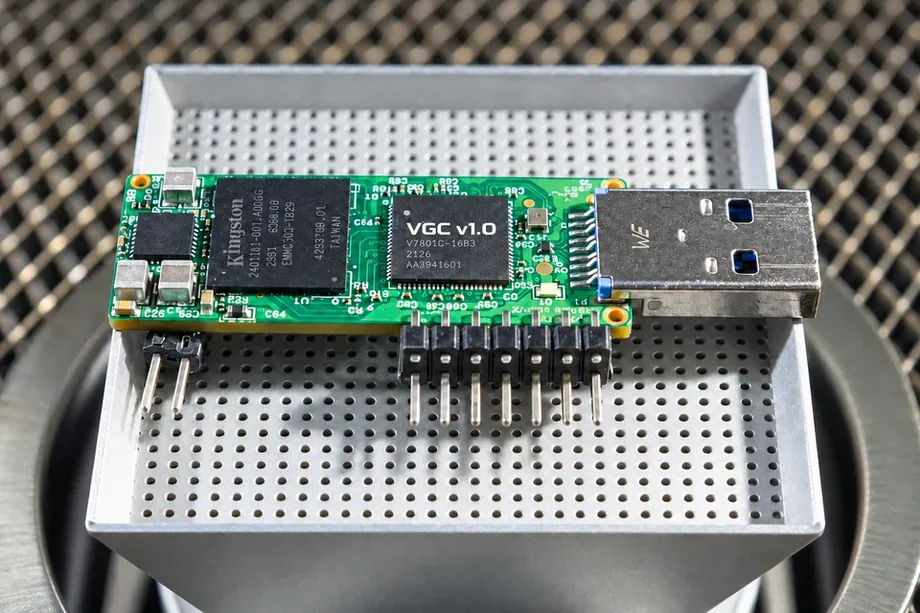
The chip contains 300 million transistors inside a package measuring 10 by 10 millimetres. According to the Government News portal's official launch announcement, technical tests found that it encrypted and decrypted data approximately 15 times faster than software performing equivalent tasks.
VGC v1.0 also introduces a reusable secure semiconductor platform. Viettel and the committee intend to use that foundation to develop later chips without rebuilding every processor component, security function and testing procedure from the beginning.
The project connects three goals: giving Vietnamese engineers greater control over technologies that protect sensitive information, moving working chips into practical products, and developing the industrial capacity to supply them at scale.
The immediate use is secure storage for Party, government and defence agencies. Digital signature devices, financial systems, connected cameras and infrastructure networks are among the next intended destinations, each requiring development and checks suited to its operating environment.
For people using those systems, the practical issue is straightforward: protecting files, transactions and digital identities depends on both the software they interact with and the electronics carrying out the security operations underneath.
What the chip does and how it was built
VGC v1.0 incorporates the Government Cipher Committee's MKV block cipher directly into hardware. A block cipher uses a secret key to turn fixed portions of readable information into encrypted data. The correct key allows that information to be recovered.
Dedicated circuitry performs this mathematical work inside the chip. Instead of asking a processor to execute the entire operation through software instructions, the design gives cryptographic processing its own hardware resources.
The Government Cipher Committee's M2 unit established the security requirements, developed the cryptographic algorithm and defined the evaluation criteria. Viettel's Semiconductor Center designed and developed the chip. The division brings the organisation responsible for national cryptography together with engineers responsible for translating requirements into working electronic circuits.
The chip uses a 28 nanometre CMOS manufacturing process. CMOS is a widely used technology for building integrated circuits. The 28 nanometre designation describes the manufacturing process, while the 10 by 10 millimetre measurement describes the finished package containing the chip.
Its 300 million transistors are tiny electronic switches that allow circuits to process information. Viettel says the selected manufacturing process meets the product's security requirements and could support production at its planned semiconductor factory once that facility is complete.
Where the speed gain matters
The development team's tests put encryption and decryption performance at approximately 15 times the speed of software performing the same tasks. That comparison concerns the cryptographic operations handled by the chip; a complete USB device or authentication service also spends time moving data and carrying out other work.
For secure storage, faster cryptographic processing can help devices protect information while reading or writing files. In authentication systems, dedicated hardware can carry out the security operations used when a person signs a document or verifies an identity.
Engineers also introduced safeguards to protect design information before sending it to manufacturing facilities. The aim is to reduce the risk of confidential circuit details leaking or being reconstructed through reverse engineering, the process of studying a product to work out how it was made.
Design protection is part of the wider security workflow. The partnership covers requirements, algorithms, circuit design and evaluation, followed by checks on the devices that will eventually contain the chip.
Secure USB storage comes first
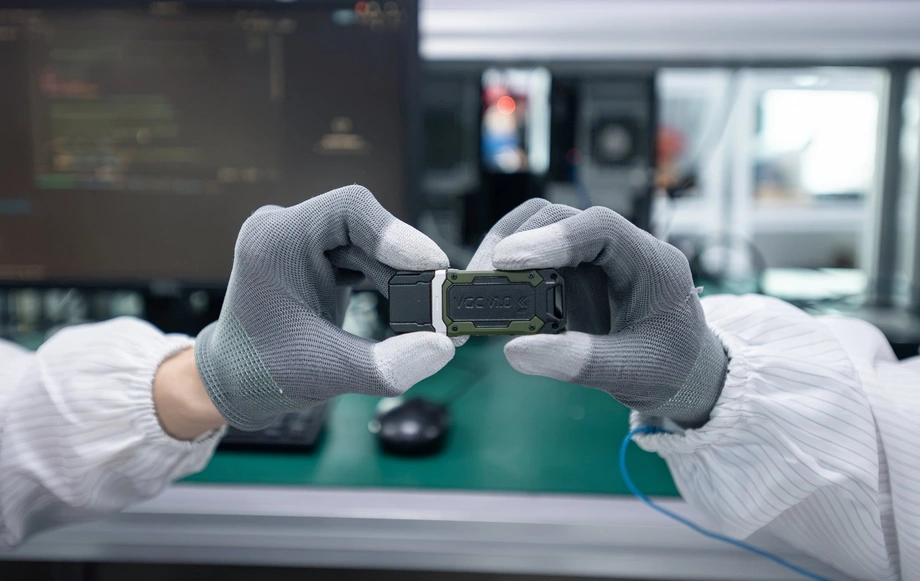
VGC v1.0 is initially being incorporated into secure USB storage devices for Party, government and defence agencies. This gives the project a defined first use: protecting information held on portable storage.
The development involved more than 40 engineers and specialists over 24 months. A prototype secure USB device incorporating the chip was completed in April, following technical checks on the first chip batch.
After the November 3 chip launch, the practical focus is turning that design and prototype work into products that can be evaluated, supplied and maintained for their intended users.
The main milestones and planned steps are:
- First quarter of 2026: the first VGC v1.0 batch passed technical testing and received certification for economic and social applications.
- April 2026: engineers completed a prototype secure USB device incorporating the chip.
- November 3, 2026: the Government Cipher Committee and Viettel unveiled the chip and its reusable platform and signed a cooperation agreement.
- Next planned stages: expand production, develop further secure chips and pursue integration into digital signature authentication.
Digital signatures offer a larger deployment
Vietnam's national digital signature authentication system has more than two million digital certificates in circulation. The partners identify it as the next planned application after secure USB storage.
A digital signature uses cryptography to help establish who signed an electronic document and whether its contents have changed. A digital certificate connects an identity to the cryptographic credentials used in that process.
Integrating VGC v1.0 into signature tokens or related identification devices would extend its role from storing protected files to supporting electronic transactions. The system's certificate count gives a sense of the potential reach, although deployment will depend on the products developed and adopted.
Banking and finance are other proposed markets. The partners identify financial records, contracts and customer information as data that future products could protect. Connected cameras, environmental sensors and monitoring stations are also possible applications.
Electricity, water, oil and gas, and telecommunications systems form another intended area. Each has different equipment and operating demands, so the platform is intended to support tailored chips and products rather than one identical device for every setting.
A reusable platform behind the first product
Viettel and the Government Cipher Committee developed a common design foundation alongside VGC v1.0. It includes reusable security functions, a standardised verification process and procedures for protecting chip designs.
Security chips often need similar building blocks: processors, encryption modules, units that generate cryptographic keys and mechanisms for secure startup. Secure startup checks that a device begins operating with authorised software.
Reusing those blocks lets engineers concentrate on the requirements that change between products. A storage device and a sensor may need different capabilities, while sharing parts of the same tested security foundation.
Professor Don Bouldin of the University of Tennessee has estimated that preparing a component for reuse requires about 50% more initial effort but can reduce the design effort for later applications by around 70%. That industry estimate illustrates the trade involved: more work at the beginning in exchange for less repeated work later.
Viettel Chairman and CEO Lieutenant General Tao Duc Thang described semiconductor development as requiring sustained investment in technology, knowledge and skilled people. He said:
Being a latecomer does not mean accepting dependence. With the right strategy, focused resources and persistent efforts, we can gradually narrow the gap and move towards mastering the country's strategic technologies.
Why the engineers chose RISC-V
The platform uses RISC-V, an open processor instruction set architecture developed at the University of California, Berkeley, in 2010. An instruction set is the basic collection of commands a processor understands.
An open specification gives engineers a shared starting point for building their own processor implementations. Viettel designed a processor around that framework and integrated the Government Cipher Committee's cryptographic functions, allowing the team to modify and verify its implementation.
European projects provide a useful comparison. ETH Zurich and the University of Bologna have developed the PULP platform since 2013, completing more than 70 chip fabrication runs using processes ranging from 65 to 7 nanometres and reusable design blocks.
The European DARE project, coordinated by the Barcelona Supercomputing Center, also uses RISC-V in an effort to reduce dependence on foreign processor technologies. Its stated scale is 240 million euros, with 38 partners from 13 countries.
Vietnam's project follows the same broad principle of retaining more control over processor design. For VGC v1.0, that principle is tied to a specific national requirement: integrating Vietnamese cryptography into hardware that domestic teams can develop and evaluate.
Testing must follow the chip into each product
The first batch received certification for economic and social applications after passing technical testing in the first quarter of 2026. Lieutenant General Vu Ngoc Thiem, head of the Government Cipher Committee, said further development, evaluation and certification are required for different operating environments, especially products intended to protect state secrets.
Thiem explained the standard by which the project should be judged:
Technological capabilities only have real value when demonstrated through safety, reliability and effectiveness in practical applications.
Identity protection is one setting where those practical demands are growing. During a National Assembly discussion on November 4 about the draft Law on Data Security and electronic authentication rules, representative Pham Trong Nhan of Ho Chi Minh City raised concerns about criminals using fake images and videos to bypass biometric checks at banks.
Nhan argued that biometrics must be combined with other protection because a compromised face or voice is much harder to replace than a password or payment card. He identified domestic cryptographic hardware as a direction worth pursuing to strengthen authentication.
The partners have not announced a timetable or supply volume for wider digital signature deployment or mass production. Those decisions will determine how quickly the project moves beyond its initial secure storage applications.
Production, people and the wider semiconductor effort
The cooperation agreement signed at the launch covers four areas: moving VGC v1.0 towards mass production, developing a platform with multiple processor cores, training specialists, and testing and evaluating products before deployment.
A processor core is a unit that executes instructions. Putting several cores on one chip, alongside dedicated cryptographic components, could support applications with greater processing demands.
Viettel is building a semiconductor fabrication plant in Hoa Lac. That factory is part of a wider effort to develop domestic capabilities across design, manufacturing and packaging. Packaging gives a chip its protective enclosure and connections to other electronics.
Testing capacity is expanding elsewhere in Vietnam. On November 3, FPT began trial operations at its chip testing and packaging plant in Yen Phong II-C Industrial Park in Bac Ninh. The facility has six production lines and a maximum designed capacity of 300 million chips a year. Its initial focus is functional, quality and reliability testing, with a first testing order planned for a Korean partner.
The policy framework includes Politburo Resolution No. 57-NQ/TW on science, technology, innovation and digital transformation. Prime Ministerial Decision No. 21/2026/QD-TTg identifies semiconductor technology as a strategic field, while Vietnam's semiconductor strategy sets development goals through 2030 with a vision to 2050.
General Phan Van Giang, deputy prime minister and minister of national defence, linked chip development directly to control over national cryptography at the launch:
Without mastering chips, it is difficult to fully master cryptography. And without mastering cryptography, it is difficult to firmly safeguard digital sovereignty and protect the Fatherland.
VGC v1.0 gives that policy a working product and a foundation for later designs. Its next practical tests are supplying reliable devices, completing the required approvals and expanding production to match actual demand.
Key Points
- Vietnam unveiled VGC v1.0 and its domestically designed secure semiconductor platform on November 3, 2026.
- The chip contains 300 million transistors, uses a 28 nanometre CMOS process and incorporates the national MKV cipher.
- Developer testing found encryption and decryption approximately 15 times faster than equivalent software tasks.
- Initial use is in secure USB storage. Digital signature authentication is a planned next application.
- The reusable RISC-V platform is intended to support later generations of security chips.
- Further product testing, certification and production expansion are central to wider deployment.