Technology sales surpass the whole of 2025
Vietnam's digital technology industry generated an estimated $254.6 billion in the first 10 months of 2026, up 53% from a year earlier, while exports reached $212 billion, according to the Ministry of Science and Technology. Both figures already exceed the totals recorded for the whole of 2025, when revenue reached $215 billion and exports stood at $172 billion.
Contents
- Technology sales surpass the whole of 2025
- How October changes the growth picture
- Public funding rises alongside new rules
- Faster networks reach more communities
- More public services move online
- Vietnamese language AI enters government offices
- Research moves toward products and exports
- Twenty national challenges guide the next phase
- Dates behind the latest assessment
- Key Points
The ministry's figures put revenue through October $39.6 billion above the previous full year, a difference of about 18.4%. Exports were $40 billion higher, or about 23.3%. Compared with the same 10 months of 2025, exports increased 46.2%.
Hardware and electronics exports alone reached an estimated $30.681 billion in October, up 108% from the same month a year earlier. Businesses in the sector contributed an estimated VND12.45 trillion in taxes, an increase of 102%, according to the ministry.
The figures come from a wider assessment of science, technology and national digital transformation submitted by Minister of Science and Technology Vu Hai Quan to National Assembly deputies ahead of a questioning session scheduled for November 12. The assessment connects the industry's expansion with larger public budgets, new regulations, wider internet coverage and efforts to turn research into products.
For businesses, the immediate story is a sharp increase in sales and exports. For residents, the same programme is changing access to mobile networks, administrative services and digital signatures. For lawmakers, the next task is examining how effectively the government is using the money and technology behind that expansion.
How October changes the growth picture
The ministry's earlier September industry update estimated revenue for that month at VND770.766 trillion, up 36% from September 2025. Revenue for the first nine months exceeded VND5.38 quadrillion, an increase of about 32.1%.
Its October 8 assessment also said revenue, exports, profit and contributions to the state budget had each increased by more than 30% during the first nine months.
The later estimate of 53% revenue growth through October therefore represents a marked acceleration from the 32.1% reported through September. The ministry has not explained how much of that change came from October trading and how much, if any, came from revisions to earlier estimates.
Exports are central to the industry's scale. The $212 billion export figure is equivalent to about 83.3% of the $254.6 billion revenue figure. In 2025, exports of $172 billion were equivalent to 80% of revenue of $215 billion. These figures describe an industry with a large international customer base, making foreign demand an important part of its performance.
Public funding rises alongside new rules
Politburo Resolution No. 57-NQ/TW, which sets priorities for science, technology, innovation and national digital transformation, provides the policy framework for the changes. After nearly two years of implementation, the ministry says Vietnam has strengthened its legal framework, increased investment resources and expanded digital infrastructure.
Public funding for these fields rose from about VND12 trillion a year before the resolution to VND75 trillion in 2025 and VND95 trillion in 2026. The planned allocation for 2027 is VND120 trillion. The 2026 amount is about 26.7% above 2025, while the proposed 2027 allocation would be another 26.3% higher.
The ministry has led the drafting, submission or issuance of 195 legal documents. It also advised on and organised a campaign lasting 100 days to address obstacles holding back digital transformation. Together, those measures are intended to make it easier to carry out research, introduce technology and bring products to market.
September measures included Decision 3795/QD-BKHCN, establishing indicators to measure development of the semiconductor industry, and Decision 3805/QD-BKHCN, setting out implementation arrangements for national laboratories, research centres and testing facilities focused on strategic technologies. Semiconductors are the chips that help electronic devices process, store and transmit information.
Three circulars addressed imports of used machinery and production equipment, public utility telecommunications services through 2030, and provisions under the Law on Emulation and Commendation. The legislative programme also included planned amendments to laws on metrology, postal services, intellectual property, and science, technology and innovation.
Faster networks reach more communities
Vietnam had 60,034 5G stations by the end of the third quarter of 2026, with coverage reaching 93.4% of the population. The number of 5G subscriptions stood at 27.2 million in August, nearly twice the level recorded in September 2025.
Mobile internet speed increased from 50.9 megabits per second in April 2024 to about 230 megabits per second in September 2026, according to the ministry's assessment. That is roughly 4.5 times the earlier speed. Vietnam's global position on that measure rose from 58th to eighth.
Faster connections can make a practical difference when people upload documents, join video appointments or use services that rely on large amounts of data. Coverage figures measure how many people live within reach of a network; subscriptions show how many connections have been taken up.
Telecommunications companies brought mobile coverage to 3,513 villages and hamlets with signal gaps between 2021 and the end of the third quarter of 2026. Satellite internet had also been activated at 196 locations with connectivity gaps by November 1, adding another way to connect places where terrain makes cables or ground stations difficult to install.
The ministry's September programme identified further signal gaps across 273 remote villages and 209 public agency sites for attention. Vietnam also had 703,236 active national .vn domain names on September 15, up 5.7% from a year earlier. Adoption of IPv6, an internet addressing standard that supports more connected devices, stood at 67%, ranking second in Southeast Asia and seventh globally.
More public services move online
The National Public Service Portal offered 3,745 online administrative procedures, including 2,361 that could be completed fully online. That puts the fully online share at about 63%, leaving 1,384 procedures with some stages outside a complete online process.
For a resident or business, the practical difference is whether an application can be finished remotely or still requires an additional step elsewhere. The government's national digital master architecture framework is intended to help ministries, agencies and local authorities build systems that connect with one another and reuse data.
By September 30, 37 of the country's 79 national shared digital platforms were operating, while another 12 were undergoing testing. About 46.8% were therefore operational, and roughly 62% were either operating or being tested. Shared platforms give agencies common systems rather than requiring each organisation to build every service separately.
The National Data Exchange Platform had handled 4.86 billion transactions from its launch through mid September. Such exchanges allow information to move between government systems, supporting the effort to reduce repeated requests for the same details.
Vietnam had issued approximately 36.16 million digital signature certificates by October, up 36.71% from the end of 2025. The September total had been about 34.6 million. A digital signature helps verify who signed an electronic document and whether the document changed afterward, supporting transactions without a handwritten signature on paper.
Vietnamese language AI enters government offices
Two artificial intelligence platforms developed by Vietnamese companies are being piloted free of charge across 24 ministries and central agencies and 34 localities. The companies control the Vietnamese language large language models behind the services.
A large language model is software trained to recognise patterns in language and generate responses. In this pilot, the platforms help officials search legal documents with references, prepare drafts, summarise material, compare regulations and review documents.
About 761,000 accounts had been created by November 2. The government is using the pilot to introduce AI into routine administrative work, including tasks that require reading and comparing lengthy legal texts.
AI governance is also one of the three main areas identified for parliamentary questioning. The ministry's agenda includes standards, safety and skills, alongside the management and application of the technology. Its stated priorities include stronger risk controls as AI use expands.
Research moves toward products and exports
Vietnam recorded 26,107 scientific publications indexed in Scopus during the first 10 months of 2026, exceeding its total for the whole of 2025. Scopus is a database used to track academic literature. Universities accounted for nine of the 10 Vietnamese organisations producing the most international publications.
Vietnam ranked 42nd globally for publication volume in 2025, up three places from 2024. The ministry also approved programmes supporting outstanding doctoral researchers for 2026 to 2030 and outstanding basic research in natural sciences for 2026 to 2035.
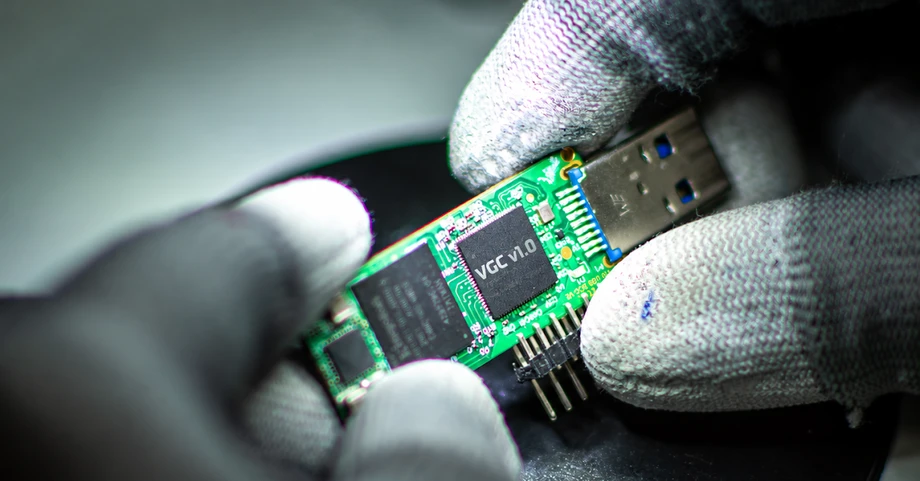
Commercial results include completion in October of an order for 300,000 doses of a Vietnamese developed African swine fever vaccine for the Philippines. The disease affects pigs, making the vaccine relevant to animal health and livestock production. In another field, the Government Cipher Committee worked with domestic businesses to manufacture a specialised security chip.
The Hanoi Irradiation Centre received certification on May 6 from the United States Department of Agriculture's Animal and Plant Health Inspection Service to treat fresh fruit for export. It became Vietnam's third certified facility, allowing quarantine treatment of lychees bound for the United States to take place in northern Vietnam. Irradiation uses controlled radiation to treat produce against pests.
WIPO's 2026 Global Innovation Index placed Vietnam 43rd among 139 economies, one position higher than in 2025. It ranked third in ASEAN, behind Singapore and Malaysia, and second among economies in the lower middle income group. Vietnam's innovation output ranking rose two places to 35th, while its startup ecosystem ranked 50th globally, up five places.
Intellectual property offices processed 182,415 applications and granted 76,804 industrial property protection certificates in the first 10 months of 2026. September alone accounted for 17,525 processed dossiers and 8,096 certificates. The activity reflects another part of the research and business pipeline: securing legal protection for inventions, designs and brands.
Twenty national challenges guide the next phase
The prime minister has identified 20 major challenges and assigned 10 ministries, sectors and agencies to lead work on them. A restructuring plan for national science, technology and innovation programmes covers 2026 to 2035. By November 3, authorities had approved 18 strategic technology tasks.
The policy direction is to organise research around practical needs and identifiable products. Vaccine exports, security chips and fruit treatment facilities illustrate different routes from technical work to a service or product that businesses can use.
The November 12 parliamentary questioning session is expected to examine three groups of issues: implementation of Resolution 57 and the use of resources; digital transformation and data sharing; and AI management, safety and skills. Budget allocation, disbursement, private investment, research facilities and scientific staffing all fall within the first group.
The ministry says its next priorities include completing legal measures, accelerating disbursement, resolving difficulties in scientific projects, connecting data systems and improving online public services. Those commitments bring the focus back to delivery: functioning platforms, usable services and research results that reach production.
Dates behind the latest assessment
The latest figures cover different reporting periods, from September infrastructure measures to approvals made in early November. Keeping those dates together helps explain how the government's assessment developed.
- September 15, 2026: Vietnam had 703,236 active .vn domain names, while cumulative transactions on the National Data Exchange Platform had reached 4.86 billion by mid September.
- September 30, 2026: Of 79 national shared digital platforms, 37 were operating and 12 were being tested. By the end of the third quarter, Vietnam had 60,034 5G stations.
- October 2026: Estimated digital technology revenue for January through October reached $254.6 billion. An order for 300,000 vaccine doses for the Philippines was completed during the month.
- November 1 to 3, 2026: Satellite internet activations reached 196 locations on November 1; AI pilot accounts reached about 761,000 by November 2; and 18 strategic technology tasks had been approved by November 3.
- November 12, 2026: Parliamentary questioning on science, technology, innovation and digital transformation was scheduled to take place.
- 2027: Funding for science, technology, innovation and digital transformation is projected at VND120 trillion.
The assessment combines rapid industry growth with a continuing government implementation programme. Revenue and exports have already passed the previous full year, while shared platforms, network extensions and strategic research tasks remain at different stages of delivery.
Key Points
- Digital technology revenue reached an estimated $254.6 billion in the first 10 months of 2026, up 53% from a year earlier.
- Exports reached $212 billion, up 46.2%, while October hardware and electronics exports rose 108%.
- Public funding for science, technology, innovation and digital transformation reached VND95 trillion in 2026.
- Vietnam had 60,034 5G stations covering 93.4% of the population by the end of the third quarter.
- The public service portal offered 2,361 procedures that could be completed fully online, out of 3,745 online procedures.
- Two Vietnamese language AI platforms attracted about 761,000 registered accounts during government pilots.
- Parliamentary questioning scheduled for November 12 was set to examine spending, digital services, data sharing and AI governance.