A simple pouch gives maternity teams an earlier warning
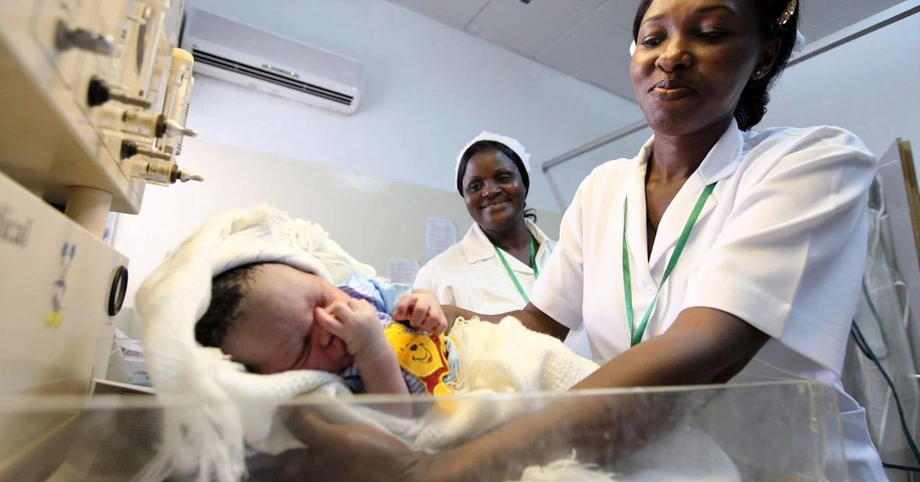
In a Nigerian maternity room, blood flows down a transparent plastic sheet into a pouch marked with measurements. At 300 millilitres, the amount becomes a warning for staff to act. Taiwan's machinery manufacturer 鏈嶔 is contributing to this effort through blood collection drapes costing a little over NT$20 each, a modest product addressing one of childbirth's deadliest emergencies.
Contents
- A simple pouch gives maternity teams an earlier warning
- Why 300 millilitres can prompt action
- A common emergency with a heavy toll
- What the African trial changed
- Why treatment speed matters as much as measurement
- Nigerian hospital experience helped build support
- How Nigeria's policy response developed
- Midwives gain authority, but training takes time
- Keeping drapes available is the next practical test
- Key Points
The device makes blood loss visible as a number rather than something a midwife must estimate by looking at soaked cloths or bedding. In Kano, northern Nigeria, maternity teams use that information to begin a coordinated response involving massage, medicines and intravenous fluids.
The strongest evidence comes from a much larger effort combining measurement with rapid treatment. On 9 May 2023, the World Health Organization and the University of Birmingham announced results from E-MOTIVE, a trial in 80 hospitals in Kenya, Nigeria, South Africa and Tanzania. Severe bleeding after childbirth fell by 60% when staff used a collection drape alongside a bundle of treatments.
WHO's trial announcement described a package that changed both how quickly bleeding was recognised and how treatment was delivered. The practical advance was simple: measure blood accurately, prepare the necessary supplies and give the indicated treatments together.
For a woman losing blood after delivery, those changes can shorten the wait between the start of an emergency and the care needed to stop it. For a maternity ward, they turn a dangerous situation into a sequence of actions that staff can prepare for before the next birth.
Why 300 millilitres can prompt action
The drape sits beneath the woman and channels blood into a calibrated pouch, meaning a pouch with markings showing the volume collected. Staff can watch the amount rise instead of relying on a visual guess.
In the Kano practice described, blood loss passing 300 millilitres prompts midwives to respond with uterine massage, oxytocin, tranexamic acid and intravenous fluids. The 300 millilitre mark serves as an early warning within that approach.
WHO's May 2023 announcement defines postpartum haemorrhage, or PPH, as the loss of more than 500 millilitres of blood within 24 hours after birth. Severe bleeding in the trial meant losing more than one litre. The lower warning point used in Kano allows staff to respond before blood loss reaches those larger amounts.
The medicines have different jobs. Oxytocin helps the uterus contract, squeezing blood vessels where the placenta was attached. Tranexamic acid helps blood clots remain intact. Intravenous fluids support circulation while the team works to control the bleeding.
A common emergency with a heavy toll
WHO estimated in 2023 that postpartum haemorrhage affects about 14 million women each year and causes around 70,000 deaths, mostly in countries with low or middle incomes. Its Bulletin account put annual births worldwide at 134 million, meaning roughly one birth in 10 was affected.
Nigeria accounted for an estimated 20,000 of those deaths, according to figures cited by WHO medical officer Dr Ioannis Gallos. Against the global estimate of 70,000, that is about 29%, illustrating the scale of the country's burden.
Dr Pascale Allotey, WHO's director of Sexual and Reproductive Health and Research at the time of the trial announcement, described both the danger and the opportunity to treat it:
Postpartum haemorrhage is scary, not always predictable, but absolutely treatable. Nonetheless, its impacts around the world are tragic,
Bleeding can begin when the uterus fails to contract properly after delivery. Other causes include retained placenta, tears in the birth canal, or a ruptured or inverted uterus. Staff therefore need to examine the woman as well as give medicines, because different causes may require different treatment.
What the African trial changed
The E-MOTIVE trial covered more than 210,000 births during 2021 and 2022, according to the WHO Bulletin's implementation account. Researchers assigned hospitals to compare the new approach with usual care, allowing them to test changes across entire maternity teams.
Professor Arri Coomarasamy, who led the research at the University of Birmingham, said the team had expected a 25% reduction in severe postpartum haemorrhage. The observed reduction was 60%, and some participating hospitals subsequently achieved reductions of 80%.
A 60% reduction means severe bleeding was substantially less common relative to the comparison group. Expressed simply, for every 10 severe bleeding cases expected under comparable usual care, a reduction of that size corresponds to about four with the new approach.
Women also needed fewer blood transfusions for bleeding. That matters in hospitals where donated blood is scarce or expensive, because preventing major blood loss reduces pressure on a resource that may be urgently needed by several patients at once.
The package included more than equipment. Training, prepared treatment trolleys or carry cases, staff members who supported adoption, and reviews of performance helped teams put the approach into daily practice. The Bill & Melinda Gates Foundation funded the research.
Why treatment speed matters as much as measurement
Dr Hadiza Shehu Galadanci, a professor of obstetrics and gynaecology at Aminu Kano Teaching Hospital, identified three recurring causes of delay: staff underestimate bleeding, necessary medicines are not ready, and treatments are given one after another with waiting time between them.
Some families have been asked to find medicines at an outside pharmacy when supplies were unavailable at the hospital. In other cases, prescriptions or paperwork needed a doctor's signature before treatment could proceed. Each extra step consumed time while a woman continued losing blood.
E-MOTIVE addresses these problems with an organised response. A prepared cart or case keeps supplies together. The drape provides a measured warning. Staff then begin the indicated treatments together, examine the woman and arrange more advanced care when necessary.
WHO says midwives can perform all components of the E-MOTIVE intervention. More advanced care may still be necessary, including procedures to control bleeding or surgery. A uterine balloon, for example, can be inflated inside the uterus to press against bleeding vessels. In the most serious cases, removing the uterus may be necessary to save the woman's life.
Nigerian hospital experience helped build support
Galadanci described a striking change at one of the 19 Nigerian intervention hospitals. Between January and June 2022, before implementation, 25 women died from postpartum haemorrhage. In the following six months, after implementation, the hospital recorded none.
The hospital experience gave staff a concrete reason to support wider adoption. Galadanci, also identified as a professor at Bayero University, went on to persuade Nigeria's health minister to introduce the drape as a national standard of care.
Kano suppliers now produce drapes for Nigeria and neighbouring countries. A unit price of about US$0.80 has been reported for the device there. Alongside the Taiwanese product costing a little over NT$20, the figures show why a simple plastic item has attracted attention in efforts to make maternity care more affordable.
The drape's purchase price covers only one part of care. Hospitals also need medicines, fluids, trained staff, dependable supplies and access to emergency procedures. The E-MOTIVE approach joins those pieces into a response that begins as soon as a problem is recognised.
How Nigeria's policy response developed
Nigeria's federal government announced support for local production of calibrated drapes at a press conference in Abuja marking National Safe Motherhood Day in 2024. Coordinating Minister of Health and Social Welfare Ali Pate said the devices would help staff monitor and control postpartum haemorrhage.
Pate also announced support for local production of magnesium sulphate, a medicine used in managing dangerous complications associated with preeclampsia and eclampsia. Those conditions concern high blood pressure during pregnancy and, in eclampsia, seizures, requiring a different response from treatment for bleeding.
The main stages of the wider effort include:
- 2021–2022: The E-MOTIVE trial covered more than 210,000 births across 80 hospitals in four African countries.
- January–June 2022: One Nigerian intervention hospital recorded 25 deaths from postpartum haemorrhage before implementation, followed by zero in the next six months.
- 9 May 2023: WHO and the University of Birmingham announced the trial's 60% reduction in severe bleeding.
- 2024: Pate announced federal support for local production of calibrated drapes during National Safe Motherhood Day activities.
Pate said maternal care guidance would be used alongside the Partograph, a chart for monitoring a woman and her baby during active labour, as services expanded across Nigeria's 36 states and the Federal Capital Territory. He also described a decentralised facility financing package targeting about seven million pregnancies and more than six million births annually. No completion date for nationwide access to drapes was given.
Midwives gain authority, but training takes time
South African maternity teams described benefits beyond the main trial figures. Professor Sue Fawcus of the University of Cape Town, who oversaw work in 14 hospitals across three provinces, observed fewer transfusions and an apparent reduction in haemorrhage reaching postnatal wards, where there were fewer staff and more patients.
Earlier recognition in the labour ward meant teams could begin treatment before women moved to a less closely staffed area. That changed where emergencies were managed, as well as when they were detected.
Sister Thea Williams, operational manager of the maternity ward at Vredenburg Provincial Hospital in the Western Cape, explained how the protocol changed midwives' ability to act:
As midwives, we can immediately implement the bundle and don't have to wait for a doctor to decide what to do,
Williams also described the difficulty of finding training time. Doctors and nurses were so busy during shifts that some had to come in on their days off. Fawcus pointed to staff turnover, agency workers and new students as reasons training had to continue rather than end after an initial introduction.
Keeping drapes available is the next practical test
South Africa's experience exposed a supply problem. The drapes described in the WHO Bulletin were imported, designed for a single use and not biodegradable. Hospitals needed a dependable supply, while every birth using a drape added plastic waste requiring disposal.
The Gates Foundation agreed to provide drapes while a sustainable supply solution was sought. Nigerian production offers another route to availability, and Taiwan's machinery sector adds a manufacturing contribution to the wider effort.
A hospital needs replacement drapes as reliably as it needs medicines and staff. Local production can put supply closer to maternity wards, while training and prepared treatment kits help ensure the device leads quickly to action. The research points to that combined approach as the source of the improvement.
Key Points
- Taiwanese machinery maker 鏈嶔 is contributing blood collection drapes costing a little over NT$20 each to efforts addressing bleeding after childbirth in Africa.
- In Kano, Nigeria, a 300 millilitre warning point helps maternity teams begin a rapid treatment response.
- The E-MOTIVE trial covered more than 210,000 births in 80 hospitals across four African countries.
- Measured blood loss combined with bundled treatment reduced severe bleeding by 60% and reduced the need for transfusions.
- Nigeria announced support for local drape production in 2024, while suppliers in Kano produce devices for domestic and neighbouring markets.
- Reliable supplies, continued training, ready medicines and access to emergency care remain essential parts of the approach.