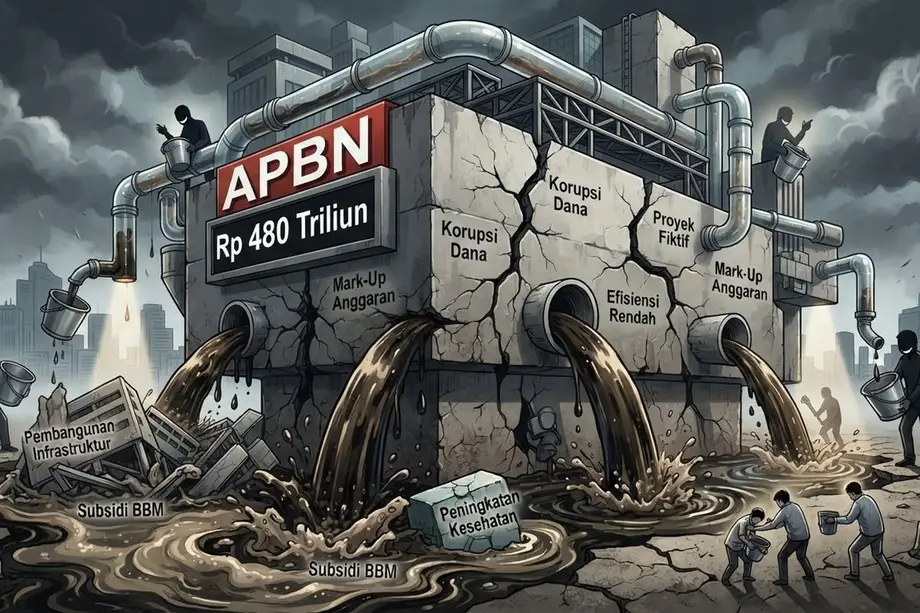
A Rp480 Trillion Savings Claim Puts State Purchasing in Focus
President Prabowo Subianto says Indonesia could save about Rp480 trillion a year, nearly US$30 billion by his estimate, by changing how government agencies buy goods and services. Speaking at NasDem Tower in Jakarta on November 11, 2026, he attributed the figure to a report from Sarah Sadiqa, head of the National Public Procurement Agency, known as LKPP.
Contents
- A Rp480 Trillion Savings Claim Puts State Purchasing in Focus
- How the President Reached Rp480 Trillion
- Why the Same Goods Can Have Different Prices
- What LKPP Says It Has Already Saved
- Regional Savings Figures Need Their Dates and Scope
- From Purchasing Reform to a New Agency
- The New Body Still Has Budget Decisions Ahead
- What Better Purchasing Could Mean for Public Services
- Key Points
His calculation starts with approximately Rp1,200 trillion in annual government purchases, which he described as about one third of the state budget, or APBN. According to Prabowo, the LKPP assessment put waste within that spending at 40 percent. He argued that bringing purchases together through a central body could recover much of that money.
The president pointed to a concrete problem: government offices buying similar goods separately, sometimes at as many as 15 different prices. Buses, fire engines, computers and hospital medicines were among his examples. Across 38 provinces and around 500 local administrations, he said, fragmented purchasing weakens the government's ability to obtain better prices.
Prabowo presented the potential savings as a management opportunity. Indonesia, he argued, could make more money available for public needs by improving how it spends existing funds.
The proposal also builds on work already under way. LKPP has reported Rp14.10 trillion in savings from a defined group of consolidated purchases in 2025, while officials are preparing plans to turn the agency into a Government Procurement Agency with a broader purchasing role.
How the President Reached Rp480 Trillion
Prabowo's procurement estimate follows a straightforward calculation: 40 percent of Rp1,200 trillion is Rp480 trillion. Procurement means the process government bodies use to buy goods and services, from ordering medicines to selecting suppliers for equipment.
Prabowo, explaining the calculation in his anniversary speech for the NasDem Party, described the spending he believed was being wasted:
So if one third of the state budget is approximately Rp1,200 trillion, then 40 percent of Rp1,200 trillion is Rp480 trillion.
The president also made a broader claim that roughly 30 percent of Indonesia's wealth, which he then described as 30 percent of the APBN, leaks away annually. He attributed that assessment to economists without naming them in the speech.
The two percentages refer to different amounts. His specific procurement calculation applies 40 percent to roughly one third of the budget. Using those assumptions, Rp480 trillion would equal about 13.3 percent of the implied total budget of Rp3,600 trillion. His broader 30 percent claim concerns the budget as a whole.
The Rp480 trillion figure is therefore the president's estimate of annual procurement waste and potential savings. LKPP's detailed method for arriving at that national estimate, the purchases covered and a timetable for achieving the savings were not given.
Why the Same Goods Can Have Different Prices
Prabowo identified separate purchasing by ministries, regional governments and hospitals as a central source of inefficiency. Each buyer negotiates its own order, even when another government body needs a similar product.
In his examples, provinces need buses and fire engines, local administrations need computers, and hospitals need medicines. He said the same type of item could carry 15 different prices across government purchases.
Consolidation brings comparable orders together. Instead of many offices approaching suppliers separately, a coordinating body combines their requirements and negotiates for a larger quantity. Sarah said this approach can strengthen the government's bargaining position and turn the scale of public spending into greater benefits.
The proposed model would also establish common specifications centrally. Specifications describe what a buyer needs, such as a computer's capacity or a medicine's formulation. Agreeing on those requirements gives participating agencies a common basis for purchasing and comparing prices.
What LKPP Says It Has Already Saved
Sarah told a hearing with Commission XI of the House of Representatives in Jakarta that consolidated procurement across ministries and agencies achieved an efficiency rate of 54.9 percent in 2025. She compared that with 30.6 percent in 2023, an increase of 24.3 percentage points.
LKPP put the savings at Rp14.10 trillion from a procurement allocation of Rp25.69 trillion in 2025. Those figures show the scale of the purchasing programme behind the reported rate: Rp14.10 trillion is approximately 54.9 percent of Rp25.69 trillion.
The agency's figures give the consolidation proposal a measurable starting point. They describe savings within a particular set of purchases, while Prabowo's Rp480 trillion ambition involves applying procurement reform across a much larger spending base.
The difference in scale is substantial. The Rp25.69 trillion allocation cited by Sarah is about 2.1 percent of the Rp1,200 trillion procurement total used by the president. His annual savings estimate is roughly 34 times the Rp14.10 trillion LKPP reported for that programme.
Expanding consolidation would therefore mean bringing many more buyers and purchases into the system. The proposed new agency is intended to coordinate that wider effort across central and regional government.
Regional Savings Figures Need Their Dates and Scope
Sarah also described progress in regional procurement, giving an efficiency rate of 24.1 percent for 2024 and 33.1 percent for 2026. That represents an increase of nine percentage points between the two years.
Prabowo had used different regional figures in his speech accompanying the 2027 Financial Note in August 2026. He cited efficiency of 20.86 percent in 2025 and a projection of 25.43 percent for 2026. Sarah's hearing figures give a higher rate for 2026, but the scope and calculation behind the difference were not explained.
The August speech also set out a national ambition of 30 percent efficiency, equivalent to approximately Rp360 trillion a year with disciplined implementation. The November speech raised the potential to 40 percent, or Rp480 trillion, using the same approximate procurement base of Rp1,200 trillion.
That is an increase of Rp120 trillion in the savings ambition, or one third above the earlier Rp360 trillion figure. Both amounts depend on extending more efficient purchasing across government.
From Purchasing Reform to a New Agency
Prabowo's proposal goes beyond asking individual offices to negotiate harder. He wants a central body to consolidate similar purchases across ministries, agencies and regional governments. LKPP is preparing the concept for that body, called the Government Procurement Agency, or BPP.
The sequence of reported results and policy announcements shows how the proposal has developed:
- 2023: Consolidated procurement across ministries and agencies recorded an efficiency rate of 30.6 percent, according to Sarah.
- 2025: LKPP reported Rp14.10 trillion in savings from a Rp25.69 trillion procurement allocation, equivalent to 54.9 percent.
- August 2026: Prabowo's speech accompanying the 2027 Financial Note outlined plans to consolidate similar purchases and upgrade LKPP into BPP.
- November 11, 2026: Prabowo told the NasDem anniversary gathering that consolidation could potentially save 40 percent, or Rp480 trillion annually.
- 2027 budget planning: LKPP's proposed budget excludes the requirements of the planned new agency.
Sarah said LKPP was studying institutions in Indonesia and abroad while developing an appropriate structure. The intended responsibilities include gathering purchasing requirements from government bodies and setting common specifications.
The central task would be coordinating demand across institutions that currently place their own orders. For the goods Prabowo named, that would mean bringing together needs for items such as hospital medicines, computers and vehicles before purchasing decisions are made.
The New Body Still Has Budget Decisions Ahead
LKPP's requested funding for 2027 does not include the cost of establishing BPP. Sarah said the institutional concept was still being developed and that further budget requirements would be calculated as preparations and implementation progressed.
Sarah, explaining how LKPP expected to handle the initial work, told lawmakers:
The budget we requested for 2027 does not yet include BPP.
She said the agency would first use existing staff and funds. A launch date, final operating structure and full funding requirement have yet to be announced.
For ministries and regional administrations, the intended change is a shift from arranging comparable purchases separately toward submitting requirements through a coordinated process. How that division of responsibilities will work is part of the institutional planning still under way.
What Better Purchasing Could Mean for Public Services
Prabowo linked procurement savings to Indonesia's development priorities, including reducing poverty and ending hunger. These are also objectives within the United Nations Sustainable Development Goals. During the speech, he acknowledged former president Susilo Bambang Yudhoyono's role in the UN process that helped shape the development agenda.
The practical connection is the amount government pays for what it needs. If public institutions can obtain the required medicines, computers or vehicles for less, more of their budgets can be available for other needs. The president did not specify allocations for any savings from the proposed reform.
Prabowo also called on political parties to support more efficient spending. His appeal framed procurement reform as a shared responsibility across government rather than a task for the purchasing agency alone.
The president acknowledged that achieving savings on the scale he described would take time. LKPP's reported results provide an existing base for the proposal, while the larger ambition depends on expanding coordinated purchasing and completing decisions about the new agency's authority, staff and funding.
Key Points
- Prabowo estimated potential annual procurement savings of Rp480 trillion in a speech on November 11, 2026.
- His calculation applies a 40 percent savings rate to approximately Rp1,200 trillion in purchases of goods and services.
- He proposed consolidated purchasing to address separate orders and differing prices across government institutions.
- LKPP reported Rp14.10 trillion in savings from a Rp25.69 trillion procurement allocation in 2025.
- The proposed Government Procurement Agency remains in preparation, and its costs are excluded from LKPP's requested 2027 budget.
- A final launch date and a timetable for achieving the national savings ambition have not been announced.