A national honour, an unpaid debt of justice
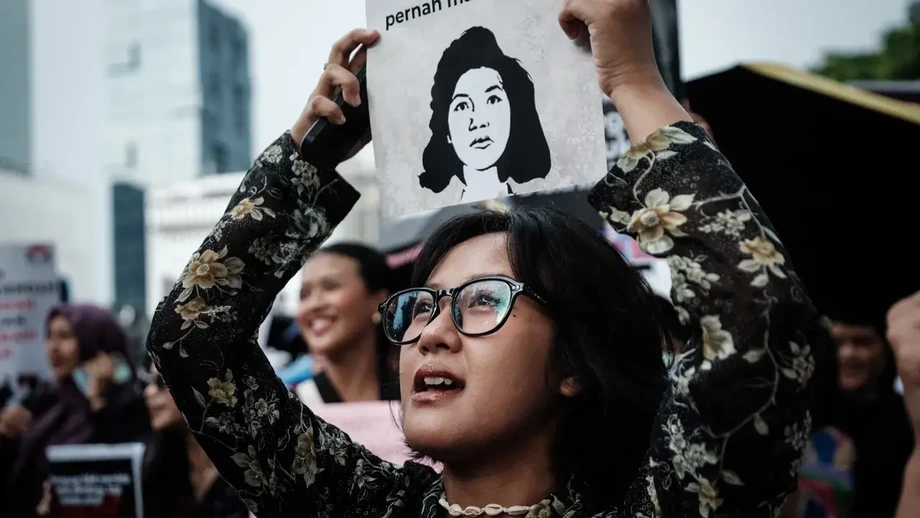
Presidential Decree No. 116/TK/2025 placed labour activist Marsinah and former president Suharto on the same list of Indonesian National Heroes. One was a factory worker murdered after a strike in 1993. The other led the government under which she died. President Prabowo Subianto awarded both the honour on 10 November 2025, alongside eight other figures.
Contents
- A national honour, an unpaid debt of justice
- The wage dispute that preceded Marsinah's death
- Convictions collapsed, and the years passed
- How Marsinah became a National Hero
- Why the legal classification matters
- Udin's reporting, killing and failed prosecution
- The route from a local campaign to the president
- What recognition changes for families
- The dates behind the unfinished cases
- Key Points
A year later, a campaign to recognise murdered journalist Fuad Muhammad Syafruddin, known as Udin, is bringing the same unresolved problem back into view. Indonesia can celebrate people who challenged abuses during Suharto's New Order, which lasted from 1966 to 1998, while their killers remain beyond the reach of ordinary criminal proceedings.
The National Hero title, awarded after death since 1959, recognises service to the country. A criminal case has a different purpose: identifying responsibility and bringing an accused person before a court. For Marsinah and Udin, the campaigns for recognition have advanced after police or human rights officials treated the time allowed for ordinary prosecution as expired.
Komnas HAM chair Anis Hidayah described the tension in Jakarta on 12 November 2025. Speaking as head of Indonesia's National Commission on Human Rights, she welcomed recognition of Marsinah's struggle while saying the state still owed her justice.
The person is given a title, yet the case itself remains unresolved.
With National Heroes Day approaching on 10 November 2026, a deputy minister says the decree for the next group of honourees is already with Prabowo. Udin's supporters are still pursuing the nomination process, while Marsinah's supporters are seeking a legal route back into her murder case.
The wage dispute that preceded Marsinah's death
Marsinah was born on 10 April 1969 in Nglundo, East Java. Unable to afford university, she eventually found work at the PT Catur Putra Surya watch factory in Porong. At 24, she became involved in a dispute over whether workers would receive a wage increase ordered by the provincial government.
East Java's governor raised the minimum wage by 20% in April 1993. The factory refused to implement the increase. Marsinah and about 500 colleagues went on strike on 3 May, seeking the pay rise. Negotiations the following day, with Marsinah acting as a workers' spokesperson, brought an agreement to meet their demands.
The dispute continued outside the factory. On 5 May, 13 workers were summoned to the District Military Command and forced to sign resignation letters. Marsinah went to the military office to find out what had happened to her colleagues, then disappeared.
Her body was found on 8 May in a hut in Jagong village, Nganjuk. An autopsy at Nganjuk regional public hospital, supervised by Dr Jekti Wibowo, documented serious injuries. Medical findings indicated that she had been tortured before her death.
The Indonesian Legal Aid Foundation concluded that the army was most likely responsible. That assessment became part of the longstanding demand for accountability. Under the New Order, military personnel intervened in labour disputes, giving a disagreement about wages consequences far beyond the workplace.
Convictions collapsed, and the years passed
Nine factory management personnel and security guards were convicted in 1994. The defendants said their confessions had been obtained through torture. The Supreme Court acquitted them in 1995, and all nine were released on 5 May that year. No one has been charged since.
Marsinah's case then passed through successive presidencies without a successful prosecution. On 8 May 2019, Lokataru Foundation human rights and law director Haris Azhar said he saw no political will in the administration of President Joko Widodo and Vice President Jusuf Kalla to resolve it.
Azhar also called for truth and justice over the Trisakti and Semanggi student shootings and abuses in Aceh and West Papua. He described accountability as a way to establish standards for how the state should act.
The aim is not revenge, but to set a standard for the future, about what law enforcement should be like.
By then, the ordinary prosecution deadline cited in Marsinah's case had already passed. Under the old Criminal Code, which remained in force until January 2026, prosecution for murder was subject to an 18 year limit. Applied to her death in 1993, that period ended in 2011.
How Marsinah became a National Hero
Nganjuk district began pursuing Marsinah's nomination in 2022. On May Day in 2025, Prabowo pledged his support, provided union leaders agreed. The campaign brought a worker remembered for challenging military involvement in a factory dispute into the republic's highest system of public recognition.
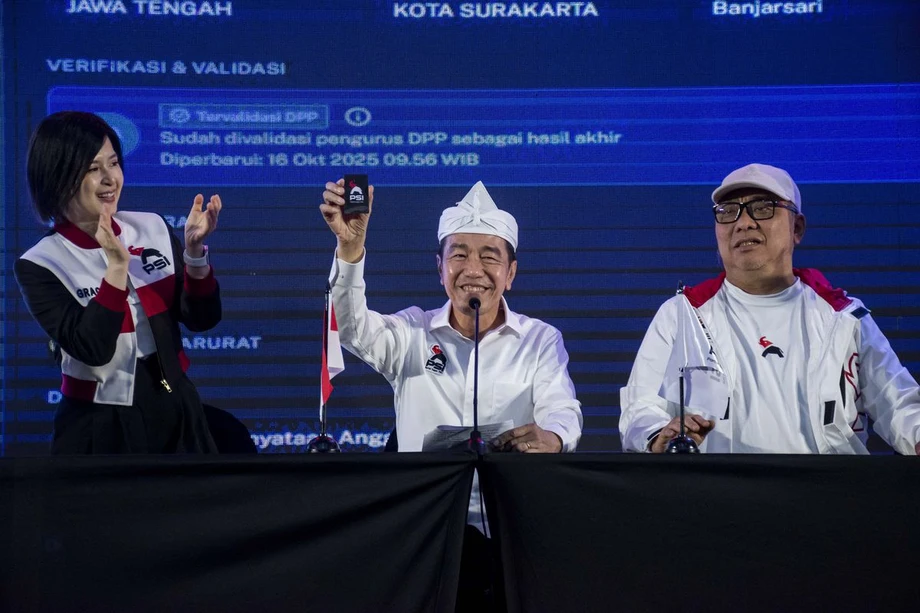
Prabowo, a retired general and former son-in-law of Suharto, conferred the title on Marsinah on 10 November 2025. The other recipients included former president Abdurrahman Wahid, former special forces commander Sarwo Edhie Wibowo, former foreign minister Mochtar Kusumaatmadja and Suharto himself.
State Secretary Prasetyo Hadi said Marsinah's award recognised her service and was unrelated to reopening the investigation. Asked about the murder case, he urged a forward focus.
Let us look forward together. Every generation has its time, every era has its people, its achievements, its strengths, its shortcomings.
Indonesia has previously honoured someone killed by its own forces. In 1963, President Sukarno awarded the title to revolutionary Tan Malaka, who had been executed by Republican troops in 1949. Marsinah's recognition continued that difficult relationship between national remembrance and violence committed within the state.
Why the legal classification matters
Marsinah's supporters are seeking recognition of her killing as a gross human rights violation. Under Indonesia's special human rights framework, cases in that category have no prosecution deadline. Moving into that framework would require a formal assessment of the killing and its surrounding circumstances.
Komnas HAM has a central role in that assessment. On 5 May 2026, a committee marking 33 years since Marsinah's death went to the commission to demand the change. The commission declined and continued to treat the killing as an ordinary crime. It also said its investigation file from 2013 had been lost.
The missing file adds a practical problem to the legal dispute. Investigators revisiting events from decades ago need records of testimony, findings and previous investigative work. Reconstructing those records takes time when witnesses have already waited more than three decades.
Prabowo addressed security involvement when opening a Marsinah museum on 16 May 2026. The president said he had come to understand how security personnel had worked with business interests.
I have only just realised and understood that collusion by security personnel was used by certain capitalists, and this is a culture we must not continue.
The president's statement acknowledged the relationship between coercion and commercial power behind the case. The decision needed to move Marsinah's killing into the special human rights process still rests with the institutions responsible for investigating and pursuing such cases.
Udin's reporting, killing and failed prosecution
Udin worked for the daily Bernas, covering Bantul district near Yogyakarta. His reporting examined local government and alleged misconduct surrounding the selection of the regent for the 1996 to 2001 term. His death became a lasting case for journalists seeking protection from violence and accountability for attacks on the press.
Two unidentified people arrived at his Bantul home on the night of 13 August 1996. Udin was beaten and died that month. Police pursued a local driver whose confession had been obtained with alcohol and money. A court acquitted him in 1997.
A senior Supreme Court justice argued in 2013 that the case could not expire because the real killers had never been tried. Police nevertheless treated the prosecution deadline as having passed in August 2014. The disagreement left a legal argument for continued action alongside a police position that ordinary prosecution was closed.
Journalists' associations in Yogyakarta are now nominating Udin for National Hero status. Like the labour groups supporting Marsinah, they are using a public recognition process after years without a successful criminal case.
The route from a local campaign to the president
Deputy Social Affairs Minister Agus Jabo Priyono backed Udin's candidacy on 29 October 2026. Discussing it again on 3 November, he said the proposal was progressing through regional and central stages. A discussion had taken place in Yogyakarta on 24 October, followed by a seminar at Bantul Regency Hall on 29 October.
Law No. 20 of 2009 governs the honours process. A proposal moves through district or city review, then provincial review, using regional research and assessment teams known as TP2GD. The Ministry of Social Affairs then convenes a central team, TP2GP, to study and verify the nomination.
The central team's findings go to the social affairs minister, then to the Council on Titles, which presents its recommendation to the president. Community support begins the process, but several layers of government assessment stand between nomination and an award.
The current honours list was described as closed when Agus supported Udin in October. On 3 November, however, he left open whether the nomination would be considered that year or the next, saying the required procedure still had to be followed. No confirmed award cycle has been announced for Udin.
The law assesses a candidate's service and example. Resolution of a murder case is handled through a different set of institutions and legal rules, allowing a nomination to proceed while the demand for criminal accountability remains unanswered.
What recognition changes for families
A National Hero title brings public standing and can also bring financial support to eligible relatives. Under a 2018 presidential regulation, spouses and children qualify for an annual family allowance of 50 million rupiah, about US$2,800.
Udin's widow would qualify if he received the title. Marsinah's surviving sisters appear to fall outside the regulation because it names spouses and children. The rules therefore produce different practical outcomes for the families of two people whose supporters are pursuing similar forms of recognition.
Marsinah's museum gives her life and struggle a permanent place in public remembrance. Udin's nomination could similarly give national recognition to the work for which journalists remember him. For both families, the unresolved criminal cases remain a separate, continuing demand.
The dates behind the unfinished cases
Marsinah's and Udin's cases span three decades of criminal proceedings, public campaigns and official recognition. The sequence shows how long the honours process has followed the original violence.
- 3 to 8 May 1993: Marsinah joins a factory strike, disappears after seeking information about colleagues at a military office, and is found dead.
- 1994 to 1995: Nine defendants are convicted in her case, then acquitted by the Supreme Court.
- August 1996: Udin is attacked at his Bantul home and dies.
- 1997: A court acquits the driver accused in Udin's killing.
- 2011 and August 2014: The ordinary prosecution deadlines are treated as having expired for Marsinah and Udin respectively.
- 10 November 2025: Prabowo awards Marsinah the National Hero title.
- 5 May 2026: Marsinah's supporters ask Komnas HAM to classify her killing as a gross human rights violation.
- October and November 2026: Udin's nomination advances through public discussions and government consideration.
Indonesia's chairmanship of the United Nations Human Rights Council in 2026 gives these unresolved cases an international setting. At home, the government is drafting a revision of the 1999 Human Rights Law that could give Komnas HAM investigative powers over the gravest cases.
The final powers in that revision have not been settled. For families seeking court proceedings, the concrete issues are whether the commission gains stronger authority, whether investigators can recover and preserve evidence, and whether cases qualify for the legal framework without prosecution deadlines.
Key Points
- Marsinah received National Hero status on 10 November 2025, in the same decree as Suharto.
- Her murder remains unresolved after the Supreme Court acquitted nine defendants in 1995.
- Komnas HAM continues to classify her killing as an ordinary crime subject to a prosecution deadline.
- Journalists are seeking National Hero status for Udin, whose killing police treated as beyond the prosecution deadline in 2014.
- Udin's award cycle is unconfirmed, while proposed changes to human rights law could affect the handling of the gravest cases.