A new bank without an ATM card
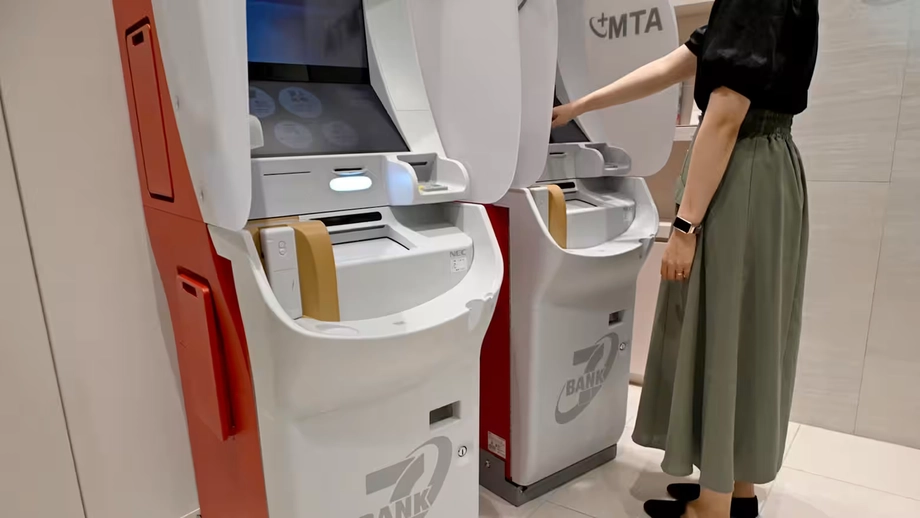
Mitsubishi UFJ Financial Group plans to launch its new digital bank in 2027 without issuing cash cards. Customers of Mitsubishi UFJ Emutto Bank would instead use a smartphone app to deposit and withdraw cash, initially through roughly 28,000 Seven Bank ATMs across Japan.
Contents
The planned service would make the new lender the first bank affiliated with one of Japan's major banking groups to operate without issuing cash cards. Its launch would bring an approach already used by some online banks and regional lenders into a major banking group's new retail business.
Customers would enter the amount they want to withdraw in the app and scan a QR code displayed on a compatible ATM. A QR code is a square pattern that a phone camera can read, allowing the app and the ATM to exchange information needed for the transaction.
MUFG's stated aims are to reduce card issuance costs and strengthen security through several authentication checks. The group also plans to direct savings toward customer services, including deposit interest, with interest payments expected to become available every day.
The change concerns the new bank, which is planned as a separate unit. Existing Mitsubishi UFJ Bank customers will still be able to use their cash cards. For customers choosing between the two banks, the practical difference is straightforward: the new service would make a smartphone essential for the planned method of accessing cash at an ATM.
How cash withdrawals would work
Emutto Bank's withdrawal process would begin on the customer's phone. The customer would open the bank's app, enter an amount and use the app to scan the QR code on the ATM screen. Authentication would take place through the smartphone service before the machine dispenses the money.
Deposits would also use the smartphone app and a QR code process. Cash would still move through a physical ATM, even though the customer would no longer insert a bank card to identify the account.
For users, this changes which item they need to bring. A cash card could stay out of the wallet because none would be issued; access would instead depend on having a phone capable of running and using the bank's app. The ATM remains the place where digital account balances meet physical banknotes.
MUFG is presenting the app as the standard route for these transactions, rather than an extra option alongside a newly issued card. That makes the design of account access and authentication central to the new bank's everyday service.
Seven Bank ATMs would provide the starting network
Seven Bank is the planned ATM partner at launch. Its machines are found at 7-Eleven stores and other locations across Japan, giving the new bank a route to cash services without building its own nationwide network of machines.
The initial network is described as roughly 28,000 ATMs. Customers would therefore use participating convenience store machines for deposits and withdrawals, rather than rely on a dedicated branch network for those transactions.
The service would also be available at roughly 16,000 ATMs being installed in stages to replace machines at FamilyMart stores. Support for Mitsubishi UFJ Bank's existing ATMs is under consideration.
The arrangement separates two jobs that customers often associate with a single bank: Emutto Bank would hold the account and provide the app, while Seven Bank's machines would handle the physical cash. For a customer, the useful combination is an accessible machine and an app that can authorise the transaction.
Security would move from the card to the app
MUFG considers authentication through the app more secure than the familiar combination of a cash card and a personal identification number, or PIN. Its plan is to use multiple authentication checks to help prevent unauthorised transactions.
Authentication is the process a bank uses to check that the person requesting access is entitled to use an account. In the traditional ATM process, the customer presents a card and enters a secret number. Under the new plan, the smartphone service would take over the task of checking access through several steps, including the phone's passcode and logging into the app.
The security goal is to reduce fraudulent use while removing the physical card from the transaction. Customers would interact with the ATM through the app, with the QR code connecting the transaction shown on the machine to the process on their phone.
MUFG has not yet detailed arrangements for a lost or unusable phone, transaction fees, deposit rates or an exact opening date. Those details will matter to customers deciding whether the service fits their daily needs, especially when their phone is unavailable.
Lower card costs could support deposit services
MUFG plans to reduce the expense of issuing cards and put those savings toward better services, including deposit interest. The proposal connects an operational change inside the bank with a benefit customers could see in their accounts.
A physical card has to be produced and issued. A bank that does not issue one avoids that category of spending. MUFG's plan is to use the resulting savings to support the new bank's customer proposition, rather than make card removal simply a change in how an ATM works.
Interest is expected to be paid daily. Interest is the money a bank pays a customer for keeping deposits with it, while the payment schedule determines when that money reaches the account.
A daily schedule would make interest arrive more frequently. The amount customers earn would still depend on the applicable rate, their balance and the account's conditions. Those are separate parts of the product that customers will need to consider alongside the convenience of using the app.
From the first cash dispensers to a phone
Japan's cash card system dates back more than half a century. In 1969, Omron and Sumitomo Bank introduced Japan's first cash dispenser, allowing customers to withdraw money without joining a queue at a bank counter.
Before that change, customers commonly used a passbook and a personal seal at the counter as part of the process of identifying themselves and withdrawing money. The dispenser introduced a cash card and PIN method that remains familiar today.
- 1969: Omron and Sumitomo Bank introduced Japan's first cash dispenser, using a cash card and PIN for withdrawals.
- Recent years: Some online banks and regional lenders began offering ATM transactions through smartphone apps.
- 2027: MUFG expects to open its new digital bank without issuing cash cards, starting with access through Seven Bank ATMs.
The historical change is about how customers gain access to their accounts. The first dispensers moved withdrawals away from the bank counter. Smartphone transactions now allow the identifying tool to move from a separate plastic card to an app on a device customers already carry.
What changes for existing customers?
Mitsubishi UFJ Bank will continue to support its cash cards. The new bank's approach therefore gives MUFG two different service models: the existing bank with continued card access, and a separate digital bank designed around a smartphone app.
Customers who regularly use their phones for banking may find the new process familiar, especially if they already use similar services elsewhere. People who prefer a physical card will still have that option at the existing Mitsubishi UFJ Bank.
Other major banking groups will be able to observe how customers respond to a bank that starts without cards. The immediate change, however, is limited to MUFG's planned new institution. Its launch would extend an established smartphone ATM method into a new part of Japan's major banking sector while keeping cash deposits and withdrawals available.
Key Points
- MUFG plans to open Mitsubishi UFJ Emutto Bank in 2027 without issuing cash cards.
- Customers would deposit and withdraw cash using a smartphone app and QR codes at ATMs.
- Roughly 28,000 Seven Bank ATMs are planned as the initial network, with access also available at roughly 16,000 replacement ATMs being installed in stages at FamilyMart stores.
- Support for Mitsubishi UFJ Bank's existing ATMs is under consideration.
- MUFG aims to strengthen authentication through steps including the phone's passcode and app login, and use card issuance savings to support customer services.
- Daily interest payments are expected, with product terms still to be detailed.
- Cash cards at the existing Mitsubishi UFJ Bank will remain available.