Ten kilograms a month amid pressure on household budgets
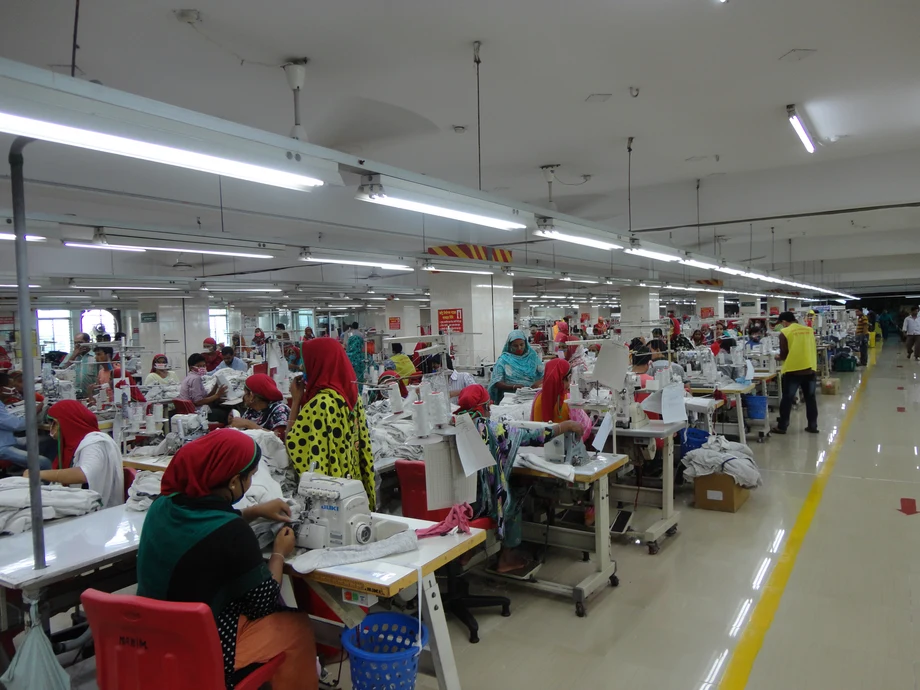
Bangladesh's Food Ministry has proposed selling rice to garment workers at Tk30 a kilogram through 75 trucks every Friday, giving each eligible worker access to up to 10 kilograms a month for an initial three months. The plan calls for 4,500 tonnes of rice from government stocks, alongside additional public funding for distribution.
Contents
- Ten kilograms a month amid pressure on household budgets
- How the Friday sales would work
- What the subsidy would cost
- How far the allocation could reach
- Workers want wages that cover more than rice
- Families are already cutting meals and medical care
- Why the delivery method matters
- Manufacturers support relief while resisting steep wage rises
- Key Points
The ministry wrote to the Finance Division on 11 November seeking the rice allocation and operating funds under the fiscal 2026-27 budget. Sales are planned for Dhaka city and other parts of Dhaka district, Gazipur, Narayanganj, and Chattogram city and district, areas that contain major concentrations of garment factories.
A worker buying the full monthly allowance would pay Tk300. Based on the market prices cited in estimates for the programme, that purchase could save a household Tk200 to Tk350 a month. The assistance comes as workers press for higher wages and describe cutting food, medical treatment and other essentials to make their earnings last.
The government has decided to introduce the special Open Market Sale programme, known as OMS, but an official launch date and final funding approval have not been announced. The proposed rice sales and the separate wage negotiations address different parts of the same household budget: one reduces a particular food bill, while the other determines workers' regular income.
How the Friday sales would work
The Food Ministry plans to send out 75 open trucks on Fridays, the weekly holiday for the garment workers covered by the proposal. Each truck would carry five tonnes, making 375 tonnes available on each sales day. Factory owners would help monitor purchases so that each worker buys rice only once a month.
At the maximum allowance of 10 kilograms per worker, one Friday's supply could cover 37,500 workers. The full allocation of 4,500 tonnes equals 450,000 purchases of that size. Spread evenly over three months, it would provide the maximum allowance to 150,000 workers each month.
The quantities also amount to 12 sales days at 375 tonnes each. The final distribution calendar will therefore matter, along with the placement of trucks across the industrial areas. Workers' ability to collect rice will depend on how many people each location serves and whether supplies last through the queue.
Government officials say existing public stocks contain enough rice for the proposed allocation. The funding request includes truck operations, transport and other expenses needed to move that rice from government storage to workers.
What the subsidy would cost
The government would finance the programme entirely with public money. Garment factory owners would assist with purchase monitoring, while taxpayers would cover the rice subsidy and distribution costs.
Regular OMS operations carry a direct subsidy of about Tk18 to Tk19 per kilogram, based on the difference between the government's purchase price and its selling price. For the Aman procurement season in fiscal 2026-27, the stated purchase prices are Tk49 per kilogram for parboiled rice and Tk48 for rice that is not parboiled. Procurement means the government buys rice to replenish its stocks.
Using the Tk49 price, selling rice at Tk30 leaves a gap of Tk19 per kilogram. Across 4.5 million kilograms, or 4,500 tonnes, that comes to Tk85.5 million, equivalent to Tk8.55 crore. Transport, storage, losses and dealer commissions would add to the expense.
The public subsidy and the worker's saving are calculated differently. The subsidy compares the government's purchase and selling prices. The household saving compares the Tk30 OMS price with the price a worker would otherwise pay in a shop. A market price of Tk50 to Tk65 per kilogram produces the estimated monthly saving of Tk200 to Tk350 on 10 kilograms.
How far the allocation could reach
Mapped in Bangladesh lists 3,320 garment factories employing 2.987 million workers, 57 percent of them women. A broader estimate puts employment in the garment industry at more than four million. The figures use different counts of the industry, and a common coverage definition has not been provided.
Against the mapped workforce of 2.987 million, the proposed supply could give roughly 5 percent of workers the full 10 kilograms each month, assuming the same 150,000 people receive it throughout the three months. The programme is initially aimed at selected industrial areas, so this national comparison illustrates the size of the allocation rather than the share eligible in each location.
The ministry's proposal sits alongside existing government food assistance. Bangladesh stores rice and wheat both for subsidised sales and for relief. Its Food Friendly Programme distributes rice against beneficiary cards, while people without those cards often rely on OMS shops or trucks.
The special garment programme would create a targeted route into subsidised rice purchases. Its monthly limit makes purchase monitoring central to distribution: repeat buying by some workers would leave less of the fixed allocation for others.
Workers want wages that cover more than rice
Garment workers have been demanding a minimum monthly wage of Tk30,000, up from Tk12,500. At a wage board meeting, worker representative Babul Akhter proposed Tk32,000. The Tk30,000 protest demand is 2.4 times the current minimum, while the board proposal is slightly higher.
The wage board has held two meetings. On 4 November, it agreed that a revised wage structure should take effect in December, with the first wages under that structure paid in January. The amount of the increase has not yet been set.
Recent protests have included road blockades and clashes in industrial areas, forcing hundreds of factories to close. Police used tear gas and sound grenades to disperse demonstrators. Workers say food, rent, transport and healthcare costs have pushed their earnings beyond breaking point.
The announced steps form a short timeline:
- 4 November: The wage board agreed on December implementation of a revised wage structure.
- 11 November: The Food Ministry requested rice and operating funds from the Finance Division.
- December: The revised wage structure is scheduled to take effect.
- January: Workers are scheduled to receive their first pay under the new scale.
A Tk200 to Tk350 monthly rice saving would equal about 1.6 to 2.8 percent of the current Tk12,500 minimum wage. For a household counting every taka, that can free money for another purchase, while leaving most expenses dependent on wages.
Families are already cutting meals and medical care
Shilpi Khatun, a 27-year-old garment worker in Gazipur, earns Tk13,500 a month, rising to about Tk16,000 with overtime. Her husband is unemployed, and her parents and parents-in-law also depend on her earnings. Before work, she cooks on a stove burning wood because the family cannot afford gas.
Khatun described how rising costs consume her pay:
Everything costs more now. Rent has doubled, food is more expensive and whatever I earn disappears before the month is over,
Her monthly salary has risen from Tk9,000 over five years, but she says the money still rarely lasts until payday. On the hardest days, her family eats puffed rice. She also said she had gone three years without seeing a doctor despite worsening health problems.
Roksana Parveen, a 29-year-old sewing operator in Ashulia, described similar choices for herself and her two daughters. Their meals often consist mainly of rice and vegetables, with meat and fish beyond reach. One daughter left school to reduce household costs.
Parveen explained how even food purchases require hesitation:
I think twice before buying anything, even food,
Bangladesh Bureau of Statistics figures put October inflation at 8.27 percent, with food inflation at 6.40 percent. Inflation has averaged around 9 percent since 2022. A lower inflation rate means prices are rising more slowly; families can still face much higher bills than they paid several years earlier.
Why the delivery method matters
Babul Akhter, the worker representative on the wage board, criticised the prospect of employees spending their weekly holiday queuing for rice after six days of work. He argued that saving about Tk300 would offer limited relief if workers had to wait for hours, and called for subsidised goods to be distributed at factory gates.
Akhter also urged the government to include lentils, cooking oil, salt and sugar alongside rice. His proposal addresses expenses that remain after a family has bought its staple grain.
Fahmida Khatun, distinguished fellow at the Centre for Policy Dialogue, welcomed the intervention while calling for dependable distribution. She said workers should be able to collect the food they have waited to buy:
Workers must not be forced to return empty-handed after standing in long queues,
Fahmida also called for the basket to include edible oil, lentils and eggs. She linked immediate food assistance to the wage negotiations:
While this offers temporary relief and signals government concern, temporary food assistance must be accompanied by a long-term resolution to secure a fair wage structure.
Friday sales would avoid requiring workers to leave their jobs to make a purchase. Factory gate distribution, as proposed by Akhter, would bring collection closer to the workplace. Both the queue length and the distance to a truck would affect how much time workers spend obtaining the monthly saving.
Manufacturers support relief while resisting steep wage rises
Mahmud Hasan Khan, president of the Bangladesh Garment Manufacturers and Exporters Association, supported the rice initiative and called for its extension to workers on low incomes in other sectors.
Manufacturers have taken a more cautious position on large wage increases. They say higher energy costs are already squeezing margins and argue that a steep rise in pay would weaken Bangladesh's cost advantage against competitors such as India and Vietnam. Manufacturers also point to a 9 percent annual increment and two festival bonuses as parts of workers' compensation.
Bangladesh is the world's second largest apparel exporter after China. Garments generate more than 80 percent of its export earnings, and factories supply brands including H&M, Zara, Gap, Primark and Walmart. Wage decisions therefore affect both household spending in factory communities and production costs across a major export industry.
The rice proposal offers a limited, measurable form of relief: up to 10 kilograms per worker each month for three months. Its practical value will depend on reliable access, while the wage board's decision will determine how much regular income workers have for food, housing, healthcare and schooling.
Key Points
- The proposed programme would sell garment workers up to 10 kilograms of rice a month at Tk30 per kilogram for three months.
- Seventy-five trucks would distribute rice on Fridays in Dhaka, Gazipur, Narayanganj and Chattogram.
- The requested 4,500 tonnes could support 150,000 workers receiving the full allowance each month for three months.
- The estimated rice purchase and sale price gap is Tk8.55 crore, before distribution and other costs.
- Workers could save Tk200 to Tk350 a month, depending on market prices.
- The wage board plans a revised structure from December, with first payment in January; the increase is still undecided.
- Worker representatives and a named economist have called for easier collection and a wider basket of essential foods.