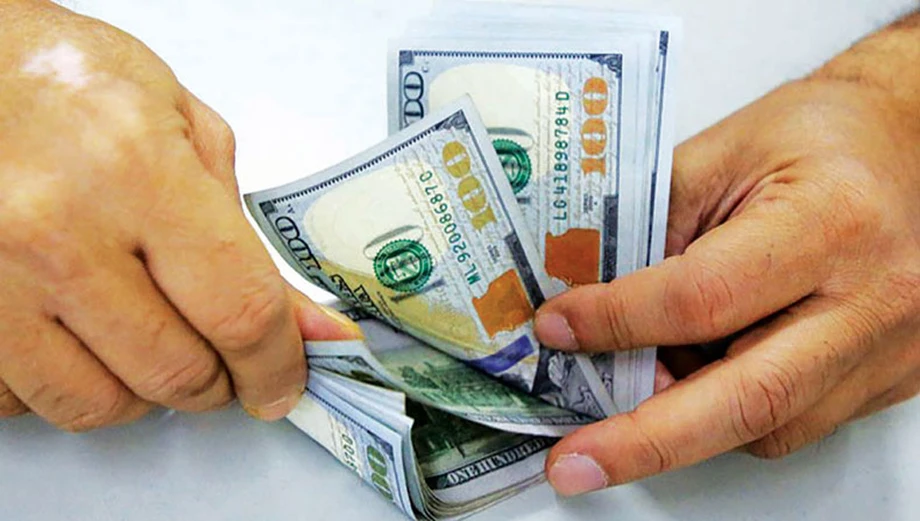
Growing transfers face a rising import bill
Bangladesh received $2.87 billion from workers abroad in October 2026, up 12.1 percent from a year earlier, yet its dependence on Gulf earnings and imported energy has left the economy exposed to a prolonged Middle East conflict. Fitch Ratings warned in an assessment dated October 29 that returning migrant workers could reduce remittances just as higher oil and gas prices increase the country's need for foreign currency.
Contents
- Growing transfers face a rising import bill
- What Fitch's warning means
- Remittances have stayed strong through the conflict
- Workers in Saudi Arabia face direct disruption
- A small group of countries supplies most transfers
- Oil and gas create a second exposure
- Stronger reserves still face pressure from the taka
- Households face higher prices and uncertain incomes
- Reforms and payment discipline become more urgent
- Key Points
Remittances accounted for 36 percent of Bangladesh's current external receipts in fiscal 2024-25, according to Fitch. Those receipts are money earned from abroad through activities such as exports, services and transfers. Gulf countries supplied nearly 46 percent of remittances in 2025, making the region central to both household incomes and the country's ability to pay overseas bills.
The pressure is already visible in imports. Bangladesh Bank figures show that import payments rose 12 percent to $12.20 billion in July and August, while payments for petroleum products doubled to $2.49 billion. Petroleum therefore accounted for about one dollar in every five spent on imports during those two months.
October's remittance growth gives Bangladesh a financial cushion. The central economic problem is that dollars coming in must keep pace with dollars going out. Families can receive more money from relatives abroad while the country still faces pressure if fuel purchases and debt payments rise faster.
What Fitch's warning means
Fitch revised the outlook on Bangladesh's long term foreign currency issuer default rating from stable to negative in May 2026, citing vulnerabilities linked to the conflict and limited progress on key reforms. An outlook describes the likely direction of a rating. A negative outlook signals a greater risk of a downgrade.
Fitch's October assessment identified two connected threats: workers leaving the Middle East could send less money home, while an extended energy shock could raise the import bill. External liquidity means the foreign currency a country can access to meet payments as they fall due.
Bangladesh would face a tighter squeeze if both threats developed together. A returning worker might lose a regular overseas salary, reducing support for relatives at home. At the national level, fewer incoming dollars would leave banks with less foreign currency to supply businesses buying fuel, equipment and other imports.
Fitch said continued support from bilateral partners and multilateral institutions could ease liquidity pressure. It gave no estimate of how many workers might return or how far remittances might fall during a prolonged conflict.
Remittances have stayed strong through the conflict
Bangladesh Bank's figures show substantial inflows during the year, including a surge before Eid-ul-Fitr. Workers sent $2.20 billion between March 1 and March 14, compared with $1.62 billion during the same period in 2025, an increase of 36 percent. February receipts were $3.02 billion.
Transfers between July and March 14 reached $24.65 billion, up 22.6 percent from a year earlier. By the end of fiscal 2025-26, annual remittances had reached a record of about $35.6 billion.
The main developments unfolded as follows:
- March 1-14, 2026: Remittances reached $2.20 billion as families prepared for Eid.
- May 2026: Fitch changed Bangladesh's rating outlook to negative.
- July-October 2026: Remittances totalled $11.47 billion, up 13 percent from $10.15 billion a year earlier.
- October 29, 2026: Fitch issued its revised assessment, and Bangladesh Bank recorded reserves of $31.46 billion under the BPM6 measure.
- October 2026: Monthly remittances reached $2.87 billion, compared with $2.77 billion in September and $2.56 billion a year earlier.
October was nevertheless the fifth consecutive month with receipts below $3 billion. Ashikur Rahman, principal economist at the Policy Research Institute, pointed to the annual increase when assessing that figure. The practical measure of resilience is whether foreign currency earnings can meet the country's growing payment needs.
Workers in Saudi Arabia face direct disruption
Saudi Arabia is home to more than 3.5 million Bangladeshis and is the country's largest source of remittances. Attacks on Riyadh by Yemen's Houthi rebels during the conflict killed two Bangladeshis and injured several others. Security concerns and suspended flights have disrupted workers' lives.
Bangladesh Bank spokesperson and Executive Director Arief Hossain Khan described the concern surrounding October transfers, while confirming that receipts had continued to grow.
Several attacks took place in Saudi Arabia in October. Everyone was frightened, and there were fears that remittances would fall. But inflows still posted strong growth,
Fitch's concern extends beyond the money sent during any single month. A prolonged conflict could interrupt recruitment, prevent workers from travelling to jobs or prompt those already abroad to return. Each would affect the stream of wages available to send home.
Saudi Arabia's role in recruitment was already large several years earlier. Bangladesh Bank's quarterly remittance report recorded 292,935 workers leaving Bangladesh for overseas employment in April-June 2022. Of those, 179,538, or 61.29 percent, went to Saudi Arabia. Oman received 14.39 percent and the United Arab Emirates 8.71 percent.
A small group of countries supplies most transfers
Bangladesh Bank's country breakdown for fiscal 2025-26 shows how concentrated the earnings are. Saudi Arabia supplied $5.8488 billion, followed by the United Kingdom with $5.07 billion, the United Arab Emirates with $4.58 billion, Malaysia with $3.40 billion and the United States with $3.01 billion.
Those five countries supplied 61.61 percent of total remittances. Italy, Kuwait, Oman, Qatar and Singapore contributed a further $8.9142 billion, or about 25 percent. Together, the top 10 sources accounted for roughly 87 percent.
Mustafa K. Mujeri, executive director of the Institute for Inclusive Finance and Development and a former chief economist at Bangladesh Bank, identified this concentration as a risk to economic security. Changes in employment rules or labour demand in a few countries can reach households across Bangladesh through lower transfers.
Mujeri said remittances from the Middle East are less stable because many Bangladeshi workers there have limited formal skills. He described earnings from the United Kingdom and United States as comparatively stable because migrants there generally have stronger social and economic positions.
The central bank's 2022 report provides a historical measure of that skills gap: 73.57 percent of workers going abroad in 2021 were classified as unskilled, compared with 20.66 percent classified as skilled. Mujeri called for preparing more skilled workers and finding new employment markets.
Oil and gas create a second exposure
Fitch estimates that every $10 increase in the price of a barrel of oil could add $1.2 billion to Bangladesh's annual oil related import bill, equivalent to 0.2 percent of gross domestic product. Crude oil accounts for nearly 15 percent of total imports, according to its assessment.
Electricity supplies are also exposed. Nearly 40 percent of Bangladesh's electricity is generated using liquefied natural gas, or LNG, and Qatar supplies nearly 70 percent of its LNG imports. LNG is natural gas cooled into liquid form so ships can transport it.
Higher prices can therefore affect the economy through several routes at once. Importers need more dollars to buy fuel. Electricity generation becomes more expensive. Factories and other businesses face higher costs or energy shortages, which can reduce production and push up prices.
Gulf tensions have also increased the prices of fertiliser and sulphur. The Strait of Hormuz is a key route for about one fifth of global oil exports and nearly one third of fertiliser shipments. Disruption along that route can reach Bangladesh through farming costs as well as fuel purchases.
Bangladesh's recent payment figures show the scale of demand for foreign currency. Banks opened letters of credit worth $8.10 billion in September and settled $6.38 billion. A letter of credit is a bank's promise to pay an overseas seller once agreed conditions are met. Central bank officials expected settlements to exceed $7 billion in October.
Stronger reserves still face pressure from the taka
Bangladesh's foreign exchange reserves increased during 2026. In March, reserves measured using the International Monetary Fund's method stood at $29.64 billion, compared with $19.74 billion a year earlier. On October 29, Bangladesh Bank recorded $31.46 billion under the BPM6 measure and $36.33 billion in gross reserves.
BPM6 is an international statistical standard used to calculate external accounts. The two reserve measures cover different amounts, so the smaller BPM6 figure provides the basis for the central bank's stated import coverage. At August's import bill of $5.76 billion, it represented roughly five and a half months of imports.
The taka nevertheless weakened against the dollar from early March as uncertainty increased. By early November, Bangladesh Bank figures put the weighted average interbank exchange rate at Tk 124.30 per dollar, compared with Tk 123.99 previously. A higher taka price for a dollar makes foreign purchases more expensive in local currency.
Md Deen Islam, an economics professor at the University of Dhaka and research director at Research and Policy Integration for Development, warned that slower remittance growth, rising import payments and external debt obligations could increase pressure on the currency. He also warned that repeated central bank intervention to support the exchange rate could deplete reserves.
Zahid Hussain, former lead economist at the World Bank's Dhaka office, described remittances as the economy's strongest indicator. A setback in that income stream, he said, could put reserves under pressure and deepen the economic crisis.
Households face higher prices and uncertain incomes
Inflation averaged 8.8 percent during the first nine months of 2026, according to Fitch. Prices in the category covering housing, water, electricity, gas and other fuels rose 9.1 percent. That category represents about 15 percent of the consumer price index, the basket used to track household prices.
Families supported by migrants face a particularly difficult combination if overseas earnings fall while domestic prices rise. Less money arriving from abroad would have to cover more expensive food, housing, transport and energy. A weaker taka can add to that pressure by increasing the local cost of imports.
Economic growth slowed to 2.2 percent compared with a year earlier in the first quarter of 2026, partly because of the conflict, before recovering to 4.6 percent in the second quarter, Fitch said. Sustained energy shortages and import costs could weigh on that recovery.
Government spending on LNG and electricity subsidies increased between July and September 2026. Subsidies can limit the immediate price rise paid by consumers, but they shift part of the expense onto the public budget. Continued high energy costs would leave the government facing larger bills alongside other spending needs.
Reforms and payment discipline become more urgent
Fitch identified unfinished reforms alongside the external pressures. An initiative to separate the National Board of Revenue's policy responsibilities from its tax collection functions had stalled, while comprehensive bank asset quality reviews remained incomplete. Such reviews examine whether loans and other assets are worth what banks record in their accounts.
The newly elected administration adopted a strategic framework covering July 2026 to June 2031 to pursue broad reforms. Fitch cautioned that implementation could be difficult. Stronger banks, tax administration and energy management would help Bangladesh handle pressure without relying so heavily on remittances and reserves.
Rahman urged exchange rate flexibility, careful reserve use and restraint over monetary easing. He also set out actions for the government and banks.
The government should exercise fiscal discipline, better coordinate major foreign currency payments, and make formal remittance channels cheaper and more competitive,
Bangladesh has used incentives to encourage transfers through banks before. The central bank's 2022 report records an increase in the government cash incentive from 2 percent to 2.5 percent from January 1 that year. It also records $5.733 billion in remittances during April-June 2022, with Gulf countries supplying 52.47 percent.
That older record shows the longstanding importance of Gulf earnings and affordable banking channels. Bangladesh's immediate task is to preserve those transfers while managing rising import payments. Its longer reform programme must address the employment, banking and energy weaknesses that make a regional conflict costly for households far from the fighting.
Key Points
- October 2026 remittances rose 12.1 percent to $2.87 billion, while July-October receipts reached $11.47 billion.
- Fitch warned that returning migrant workers and higher energy costs could squeeze Bangladesh's foreign currency resources.
- Gulf countries supplied nearly 46 percent of remittances in 2025, according to Fitch.
- Petroleum import payments doubled to $2.49 billion in July-August as total import payments rose 12 percent.
- Reserves stood at $31.46 billion under BPM6 on October 29, covering roughly five and a half months of imports at August's payment level.
- Inflation, rising subsidies and unfinished banking and tax reforms add to the pressure on families and public finances.