A name confirmed as the succession assessment hardens
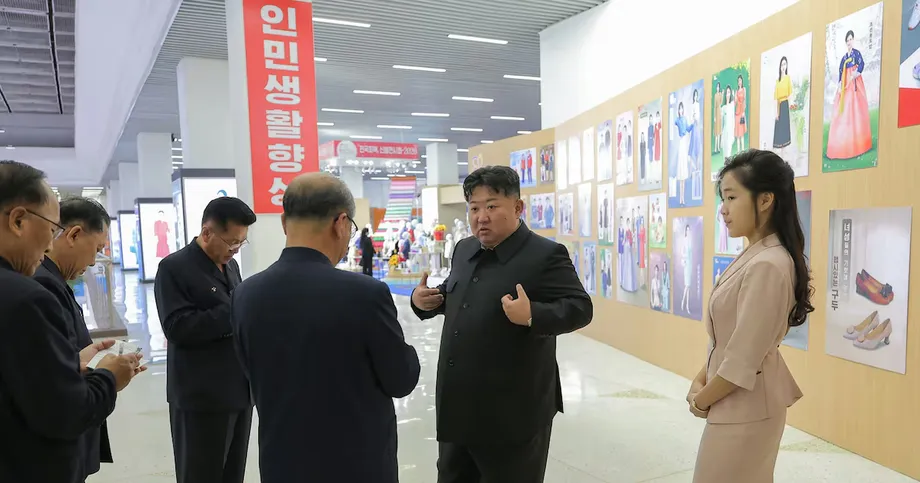
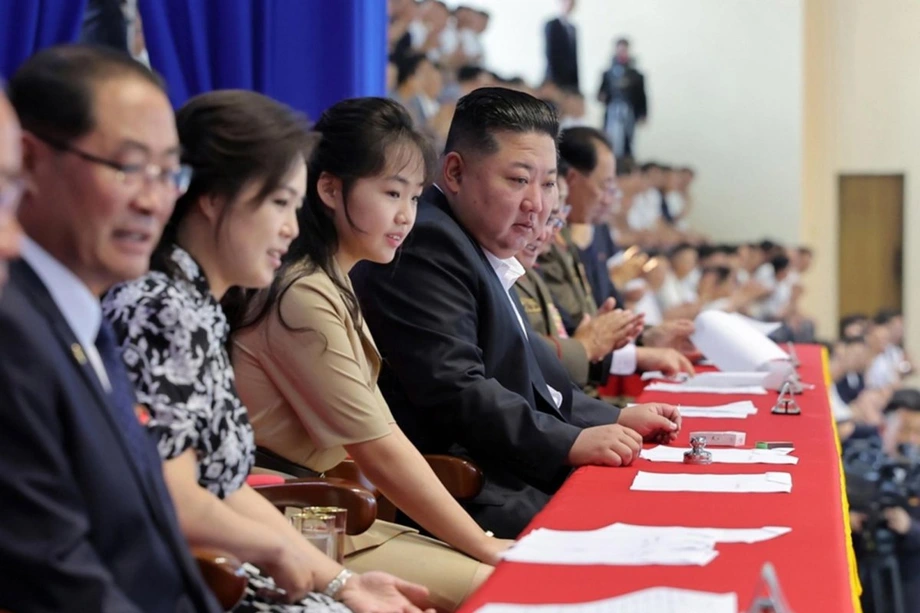
South Korea's National Intelligence Service has confirmed that North Korean leader Kim Jong Un's daughter is named Kim Ju Ae, while assessing that Pyongyang is steadily strengthening her position as a potential successor. The agency said roughly 60% of her public activities involved the military, including appearances designed to associate her with nuclear weapons, missiles and command authority.
Contents
- A name confirmed as the succession assessment hardens
- Why military appearances carry so much weight
- From a missile launch to a tank driver's seat
- How Seoul's assessment changed
- Public visibility comes before formal office
- What is known about the family
- A China visit with a diplomatic purpose
- Talks remain possible as weapons development continues
- Intelligence restrictions and visa delays addressed separately
- Key Points
NIS Director Lee Jong-seok confirmed her name during a closed parliamentary audit on October 29, 2026. Lawmakers Yoon Geon-young of the Democratic Party and Yoo Young-ha of the People Power Party described the briefing afterward. The confirmation addressed speculation over whether her name might instead be Kim Ju Hae.
North Korean state media have still not publicly named her. They have presented her through her relationship to Kim, using descriptions such as his respected or most beloved daughter. Seoul's confirmation therefore supplies a firmer public identification while Pyongyang continues to build her prominence through photographs, appearances and ceremonial treatment.
The NIS assessment goes beyond identifying a child who accompanies her father. After reviewing her activities since her first public appearance in November 2022, the agency concluded that North Korea was gradually fixing her image as a future leader in the minds of its people.
Kim Ju Ae has no publicly identified party, state or military office, and North Korea has announced no timetable for a transfer of power. The October briefing instead described a process of preparation: increasing her visibility, associating her with the armed forces and making the possibility of her leadership more familiar to officials and citizens.
That process is unfolding while the NIS judges Kim Jong Un's health indicators to be good and his political system to be managed stably around his inner circle.
Why military appearances carry so much weight
The NIS put military events at about 60% of Kim Ju Ae's public activities and said commemorative photographs involving her were taken only at military events. Its interpretation was that North Korea was constructing an image of her as a military leader.
Nuclear and missile appearances are especially central to that effort. The agency described scenes presenting her as though she were involved in practical work in those fields. Its assessment focused on how those public scenes were arranged and the role they assigned to her.
Cheong Seong-Chang, deputy head of South Korea's Sejong Institute, supplied a more detailed count in a study of her activities from November 18, 2022, through August 31, 2026. He recorded 72 appearances: 40 involving the military, 16 involving the economy and livelihoods, 12 involving politics or social and cultural events, and four involving diplomacy.
Military appearances accounted for 55.6% in Cheong's study, broadly matching the concentration described by the NIS. The study also showed that her public schedule had expanded: 23 appearances in the first eight months of 2026, compared with 17 throughout 2025. That is six more appearances, or about 35% more, before the year had ended.
The changing content of those appearances matters as much as their frequency. Kim Ju Ae began as a child watching a missile test beside her father. By 2026, North Korean media were showing her handling weapons and driving a tank, giving her a more active place in the state's military imagery.
From a missile launch to a tank driver's seat
Kim Ju Ae's public development has followed a series of identifiable steps, moving from family appearances to military demonstrations and foreign travel.
- 2013: Former NBA player Dennis Rodman publicly described holding a baby named Ju Ae during a visit to North Korea.
- November 18, 2022: She made her first known public appearance at a Hwasong-17 intercontinental ballistic missile test.
- 2023: She appeared on commemorative stamps and attended prominent military events.
- September 2025: She accompanied her father to Beijing, her first known appearance outside North Korea.
- January 1, 2026: She joined her parents at the Kumsusan Palace of the Sun, where the bodies of Kim Il Sung and Kim Jong Il are displayed.
- February 28 and March 20, 2026: Images showed her firing a sniper rifle and driving a new main battle tank.
- June 4, 2026: She accompanied Kim Jong Un at sailing trials for the destroyer Kang Kon.
- October 29, 2026: The NIS confirmed her name and said her position in the succession process was becoming more firmly established.
The Beijing appearance in 2025 widened her public role beyond domestic ceremonies. She stepped into an international setting alongside her father, although North Korean coverage continued to leave her unnamed.
How Seoul's assessment changed
South Korean intelligence officials initially questioned whether a daughter could become the next leader in a country whose ruling institutions have long been dominated by men. Her increasingly prominent treatment prompted a reassessment.
By January 2024, the NIS regarded her as the most likely successor, while acknowledging that many variables remained. In a February briefing before the 2026 Workers' Party congress, the agency used stronger language about her place in the process.
Lee Seong Kweun, a South Korean lawmaker who attended that briefing, described the agency's change in terminology:
In the past, (NIS) described Kim Ju Ae as being in the midst of 'successor training.' What was notable today is that they used the term 'successor-designate stage,' a shift that's quite significant,
Lee said the agency cited her presence at major military events, the family visit to Kumsusan and signs that Kim Jong Un was beginning to seek her views on certain policy matters. Kumsusan has special political meaning because it connects the current leader with the two earlier generations of family rule.
In April, Director Lee Jong-seok told lawmakers that the judgment rested on credible intelligence. On September 1, the NIS again assessed that Kim Ju Ae was effectively at the stage of being designated successor. The October audit described her position within that stage as becoming stronger.
Public visibility comes before formal office
Cheong's study identifies a difference between Kim Ju Ae's preparation and the paths followed by her father and grandfather: her public image is developing before she receives a formal institutional role.
Kim Jong Il built a career in party organisation and propaganda before establishing his position internally in 1974 and being publicly presented as successor at the 1980 party congress. Kim Jong Un's preparation was much faster. He received senior military and party positions in 2010 and took power after his father's death in December 2011.
Kim Ju Ae's progression has so far centred on familiarity and symbolic authority. Cheong argues that repeated exposure allows her to build recognition among citizens and relationships with senior officials while formal appointments come later.
The February 2026 Workers' Party congress illustrated that uneven progression. Before the gathering, analysts considered whether it might provide a stage for an appointment. She received no formal party position and did not appear at the congress proceedings, according to Cheong's study, but appeared in a central position at the military parade marking its conclusion.
Party membership rules also affect the timing of any appointment. Before the congress, the minimum membership age was described as 18; Cheong's later study said revised rules disclosed in September raised it to 20. The NIS believes Kim Ju Ae was born around 2013, placing her well below either threshold.
What is known about the family
Kim Ju Ae's name first became known internationally through Rodman's description of his 2013 visit. South Korean intelligence places her birth around that year, but her exact birth date remains private.
Earlier NIS assessments suggested that Kim Jong Un and his wife, Ri Sol Ju, probably had three children, with Ju Ae between an older son and a younger child. A September 2026 briefing gave a more cautious account: the agency was still checking whether she had an older brother and believed she had a younger sibling whose sex was unknown.
Her aunt, Kim Yo Jong, already holds an established position as director of the Workers' Party's General Affairs Department. She has also issued statements on relations with South Korea and the United States. Her present authority comes from her office and political activities, while Ju Ae's emerging position concerns a future succession.
Cheong has suggested that, if Kim Jong Un suddenly became unable to govern while his daughter was still a minor, Kim Yo Jong or senior party and military officials might manage power while protecting her position. That is an analyst's proposed scenario. The NIS's current assessment describes a stable leadership under Kim Jong Un.
The agency also told lawmakers on October 23 that online claims of Kim's death were false. His subsequent conference with company commanders on October 22 and 23 placed him publicly at the centre of military planning and demands for loyalty.
A China visit with a diplomatic purpose
The October audit also examined Kim Jong Un's recent visit to Dandong, China. The NIS judged that its purposes may have extended beyond commemorating China's entry into the Korean War and discussing economic cooperation.
The delegation's composition was one clue. Senior military figures were absent, economic officials formed a small group, and diplomatic figures were prominent. They included Foreign Minister Choe Son Hui and Kim Song Nam, a senior party official responsible for international affairs.
China's reception also drew attention. The NIS cited a change in the senior welcoming official from Premier Li Qiang to Wang Huning, chairman of the Chinese People's Political Consultative Conference. Chinese Foreign Minister Wang Yi and other diplomatic officials participated.
Yoo Young-ha said Choe was seen talking closely with Wang Yi apart from the leading group. He also described senior North Korean official Jo Yong Won giving Choe a place beside Kim Jong Un. The agency interpreted the attention given to the foreign minister as a sign that discussions with Washington were on Kim's mind.
The NIS assessed that Kim may have used the trip to convey North Korea's position on possible talks with the United States to Chinese leaders. It expected China might pass that position to Washington, while judging active Chinese mediation less likely.
Talks remain possible as weapons development continues
North Korea and the United States had not narrowed their differences over the conditions for restarting talks, according to the NIS. The agency was nevertheless watching for a possible diplomatic shift around the Asia-Pacific Economic Cooperation summit on November 18.
No meeting between Kim Jong Un and the American president was announced in the audit briefing. The agency described North Korea as keeping open the possibility of dialogue around the summit period.
The same briefing addressed military developments with immediate importance for South Korea. The NIS was monitoring possible deployment of 600 mm multiple rocket launchers near the front, along with construction of naval bases and expansion of North Korea's fleet.
Those assessments sit alongside Kim's October weapons exhibition, where demonstrations combined drones, missiles and a battalion of 600 mm launchers. His instructions there called for faster development of drones and artificial intelligence for military use.
Kim Ju Ae's appearances connect her emerging political identity to that military programme. Her father is pursuing weapons development and possible diplomacy at the same time, while public images place her beside systems central to North Korea's future military power.
Intelligence restrictions and visa delays addressed separately
The NIS acknowledged that Washington continued to restrict a small portion of intelligence shared with Seoul concerning North Korean uranium enrichment facilities. Uranium enrichment can produce material used in nuclear fuel and, at sufficiently high levels, nuclear weapons.
The restrictions followed Unification Minister Chung Dong-young's remarks about a nuclear facility in Kusong. Director Lee said the NIS had not supplied the information behind those remarks.
The agency described the affected intelligence as a very small part of the exchange and said South Korean reconnaissance assets could fill the gaps. It said cooperation continued smoothly in other areas.
Lawmakers also asked about delays in American visas for South Korean officials, including intelligence personnel assigned to the embassy in Washington and National Assembly defence committee chairman Jin Sung-joon. The NIS attributed the delays to tighter American entry screening rather than measures directed specifically at South Korea.
The agency said individual visa decisions were outside its jurisdiction and that it lacked sufficient grounds to connect the delays with intelligence restrictions. It also rejected claims that Washington had cancelled a planned visit by Director Lee.
Lee had received an invitation but decided not to attend, the agency said, after telling organisers that circumstances surrounding the outbreak of war in Iran made the journey difficult. The briefing treated the intelligence restrictions, visa screening and his travel decision as separate matters.
Key Points
- NIS Director Lee Jong-seok confirmed Kim Jong Un's daughter's name as Kim Ju Ae during the October 29 parliamentary audit.
- The agency assessed that her position as a potential successor was becoming more firmly established.
- About 60% of her public activities involved the military, according to the NIS.
- A detailed study counted 72 appearances through August 2026, including 40 military activities.
- North Korea has not publicly named her, announced her as successor or given her a publicly identified formal office.
- The NIS judged Kim Jong Un's health indicators to be good and his leadership stable.
- The agency was watching for possible diplomatic movement around the November 18 APEC summit, while differences over talks remained.
- Seoul acknowledged limited American intelligence restrictions and attributed visa delays to tighter entry screening.