Pyongyang puts company commanders at the center of military plans
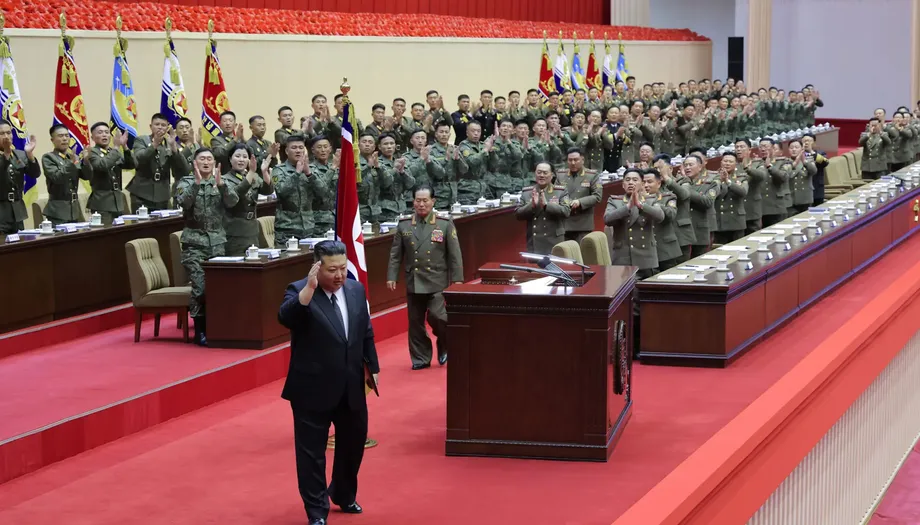
North Korean leader Kim Jong Un ordered frontline commanders to strengthen combat readiness, political loyalty and military discipline at a conference in Pyongyang on October 22 and 23, 2026. The gathering reviewed seven years of work to strengthen army companies and ended with awards for 247 commanders.
Contents
- Pyongyang puts company commanders at the center of military plans
- Why Kim is focusing on companies
- What independent combat missions would require
- Strict discipline alongside better treatment of soldiers
- Seven years of work reviewed, 247 commanders honored
- Senior leaders connect party policy to frontline units
- Public appearances follow false death rumors
- The dates behind the conference and public appearances
- Border tensions and the cost of combat form the backdrop
- Key Points
The Third Conference of Company Commanders of the Korean People's Army was the first gathering under that name since February 1999, a gap of about 27 years and eight months. North Korean authorities described it as the first gathering across the military since the ruling Workers' Party held its ninth congress from February 19 to 25.
Kim presented the development of the world's strongest armed forces as a priority for the new planning period. His immediate focus was the company, a basic combat unit usually containing around 100 soldiers, whose commander directly oversees training, readiness and daily life.
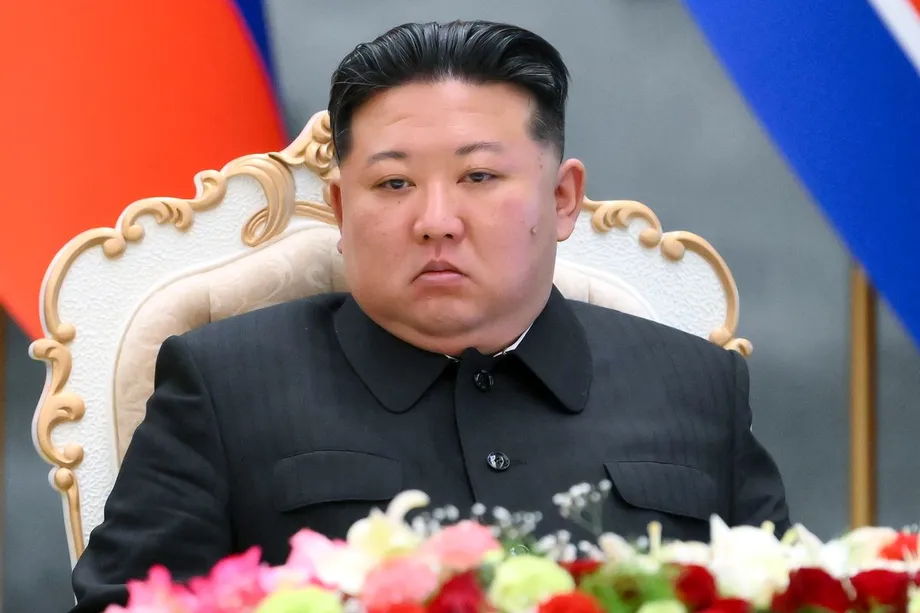
The conference also brought another public appearance after false claims about Kim's death spread online. South Korea's National Intelligence Service told lawmakers on October 23 that the death rumors were false. North Korea released images of Kim overseeing the military gathering the following day.
Why Kim is focusing on companies
Kim's speech, titled Building a Strong Army in the New Era and the Duties of Company Commanders, placed responsibility for military improvement on officers who work closest to ordinary soldiers. He argued that strengthening companies was the quickest and most effective way to improve the entire armed forces.
A company is both a fighting organization and a place where soldiers spend their daily lives. Its commander's decisions affect whether troops train properly, maintain discipline, understand orders and receive adequate care. Kim's instructions therefore reached beyond battlefield tactics into the management of barracks and personnel.
Kim, North Korea's leader, described the conference's central objective in his speech:
building the strongest military by fostering the strongest companies and accelerating a military revolution of our own style.
His message linked three demands: political loyalty, military and technical skill, and consistent readiness for combat. Commanders were expected to develop all three together, rather than concentrate on training while leaving discipline or unit management to others.
What independent combat missions would require
North Korean authorities said the conference discussed turning companies into versatile units capable of carrying out combat missions independently. In plain terms, the ambition is for a small unit to handle a wider range of battlefield tasks through its own capabilities.
Such an approach puts more responsibility on company commanders. Officers must understand their mission, coordinate the soldiers and equipment assigned to them, and respond when conditions change. The conference connected that responsibility with more demanding practical training and stronger command skills.
Participants watched videos presenting commanders' field and combat experiences, including examples of carrying out the leadership's training policy. Discussions addressed preparing units to complete missions under severe combat conditions.
The public announcement left the practical design open: no detailed unit structure, equipment allocation, schedule for reorganization or milestones for the new planning period were disclosed. The immediate instructions concerned readiness, training and leadership.
Strict discipline alongside better treatment of soldiers
Kim told commanders to tighten ideological discipline and maintain strict military rules while continuously improving company management and soldiers' living conditions. He also urged officers to act as soldiers' elder brothers and genuine comrades, making their companies feel like home.
Those instructions combine authority with personal responsibility. The same officer expected to enforce orders is also expected to understand the people carrying them out and take responsibility for their daily welfare.
Kim said commanders needed to be prepared politically, morally and professionally. The demand extended from loyalty to the ruling party to the practical ability to organize a unit and lead it in combat.
For soldiers, the concrete promises concern daily treatment and barracks life. For commanders, the orders mean that managing personnel and maintaining cohesion are part of combat preparation, alongside drills and technical instruction.
Seven years of work reviewed, 247 commanders honored
Defense Minister Kim Song Gi delivered a report reviewing seven years of efforts to strengthen companies' political and military capabilities. The conference also examined problems in company management and combat preparation, while presenting selected commanders' experiences as examples for others.
The review period reaches back to 2019, when North Korea held a related conference for company commanders and political instructors. Political instructors are officers responsible for political education and loyalty within military units. That joint event has a different conference series from the gathering held in October.
The awards ceremony showed how the leadership used recognition to promote its preferred standards. Three commanders, Choe Gon, Yun Myong Nam and An Ok Gyong, received commendations from the Workers' Party's top leader.
Another 72 received the Order of the National Flag: five received the first class, 17 the second class and 50 the third class. Military merit medals went to 172 commanders. Together with the three party commendations, the awards totaled 247 recipients. The military merit medals accounted for about 70 percent of that total.
The combination of reports, training videos and awards gave the gathering a practical teaching function as well as a political one. Selected officers were presented as models whose methods other commanders were expected to adopt.
Senior leaders connect party policy to frontline units
The attendees included Pak Jong Chon, vice chairman of the Workers' Party Central Military Commission; Defense Minister Kim Song Gi; Yu Kwang U, first deputy director of the military's General Political Bureau; and Ri Yong Gil, chief of the Korean People's Army General Staff.
Commanders from military institutions, different services and major formations attended alongside company commanders. Their presence connected the officers responsible for daily unit operations with the leadership responsible for military policy, planning and political supervision.
The conference followed the ninth party congress, which set the broader political framework for the new planning period. Kim used the meeting to carry those ambitions down to the level where soldiers train, live and prepare to fight.
The long interval since the previous company commanders' conference requires some context. Meetings under that exact title took place in November 1991 and February 1999, but related gatherings continued. The fifth conference bringing company commanders and company political instructors together was held in March 2019.
Public appearances follow false death rumors
South Korea's National Intelligence Service privately briefed governing and opposition lawmakers on the National Assembly Intelligence Committee on October 23. It rejected claims that Kim had died, as well as claims that a body double was appearing in his place.
The rumors had spread after posts by Xie Wanjun, a Chinese dissident living in the United States, claimed Kim had suffered a brain hemorrhage and died after receiving treatment in China. Subsequent online speculation also targeted photographs of his public appearances.
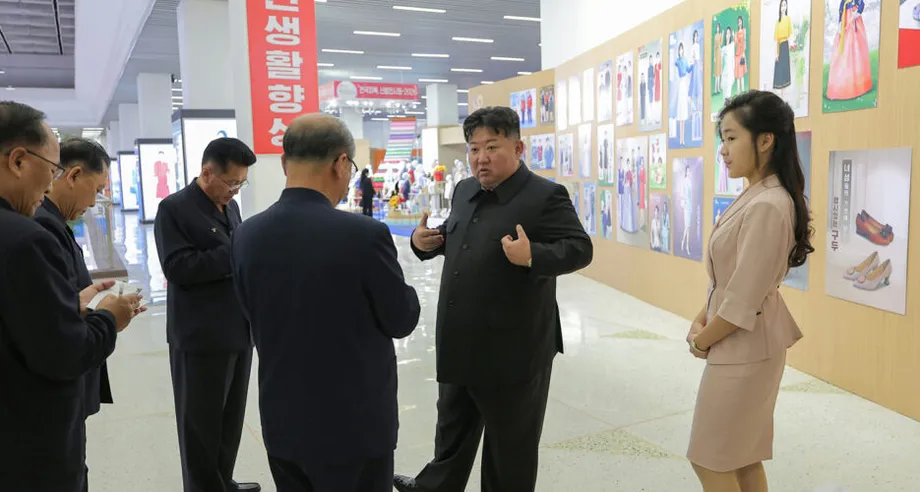
North Korea had already released images on October 20 showing Kim at a clothing and footwear exhibition with his wife, Ri Sol Ju, and daughter, Kim Ju Ae. Detailed accounts place the visit on October 19 and its publication on October 20; other accounts describe October 20 as the visit date.
The October 24 release added photographs from the more recent military gathering. North Korean authorities published 28 conference images, including views of Kim speaking and close photographs of his face.
South Korean intelligence had also assessed Kim's health in a September 30 briefing. It placed his weight in the 140 kilogram range and considered him at high risk of cardiovascular disease, while saying it had observed no particular signs of a current health problem.
The dates behind the conference and public appearances
The chronology brings together a rare military meeting, a recent party congress and several closely spaced public releases about Kim. It also separates the dates of events from the dates on which images or assessments became public.
- November 1991: North Korea held its first reported company commanders' conference.
- February 1999: The second conference took place.
- March 2019: A separate conference brought company commanders and political instructors together.
- February 19 to 25, 2026: The Workers' Party held its ninth congress.
- October 20: North Korea published images of Kim at a clothing and footwear exhibition, with detailed accounts dating the visit to the previous day.
- October 22 and 23: Kim presided over the Third Conference of Company Commanders in Pyongyang.
- October 23: South Korean intelligence rejected the death rumors in a parliamentary briefing.
- October 24: North Korea announced the conference and released photographs.
The military meeting took place after the exhibition appearance and continued through the day of the South Korean intelligence briefing. Its publication supplied a newer account of Kim's activities as attention remained focused on his whereabouts.
Border tensions and the cost of combat form the backdrop
The conference took place while North Korea continued fortification work near the Military Demarcation Line, the boundary separating the two sides inside the Demilitarized Zone. Kim's sister, Kim Yo Jong, identified as head of the Workers' Party General Affairs Department, visited the southern border construction area with Pak Jong Chon on October 20.
A mine explosion on September 21 had injured three South Korean military officers in the western part of the Demilitarized Zone near Paju. The blast occurred about 10 meters south of the demarcation line, and military authorities found at least four more mines nearby. The mine was suspected to have been laid by North Korea.
Despite that tension, the public account of Kim's conference speech concentrated on internal military tasks. It contained no direct discussion of the recent deterioration in relations with South Korea, the policy describing the two Koreas as hostile states, or the United States.
North Korea's combat experience abroad also gives weight to the focus on unit leadership and soldiers' welfare. Earlier this year, the Pyongyang military memorial displayed what appeared to be approximately 2,304 names of soldiers killed during operations supporting Russia. That figure came from an estimate based on the arrangement of names on two walls; neither government had published an official death toll.
The conference placed commanders' field experiences before an audience drawn from across the military. Its central demand was concrete: officers closest to soldiers must improve how their units train, operate and live. The awards, political instructions and emphasis on independent missions all reinforced that responsibility.
Key Points
- Kim Jong Un led the Third Conference of Company Commanders in Pyongyang on October 22 and 23, 2026.
- He ordered stronger combat readiness, political discipline, command skills and care for soldiers.
- The conference discussed preparing companies to carry out a wider range of combat missions independently.
- Defense Minister Kim Song Gi reviewed seven years of work, and 247 commanders received awards.
- The previous conference under the same name took place in February 1999; related gatherings were held more recently.
- South Korean intelligence rejected rumors of Kim's death on October 23, before North Korea released conference photographs on October 24.