Intelligence agency tells lawmakers the rumors are false
South Korea's National Intelligence Service told lawmakers on October 23 that social media claims that North Korean leader Kim Jong Un had died were false, according to people briefed at a closed meeting of the National Assembly Intelligence Committee. The assessment followed several days of speculation about a brain hemorrhage, treatment in China and an alleged transfer of power to his sister, Kim Yo Jong.
Contents
- Intelligence agency tells lawmakers the rumors are false
- How the death claim spread
- What the NIS said about Kim's health
- Pyongyang published images of a family outing
- Kim Yo Jong's border appearance drew attention
- Border construction brought threats over loudspeakers
- A disruption affected 42 North Korean websites
- Diplomatic uncertainty surrounded the same week
- The dates leading to the next parliamentary review
- Key Points
The agency had already assessed on September 30 that Kim showed no unusual signs of ill health, despite weighing in the 140 kilogram range and facing a high risk of cardiovascular disease. It cited his ability to run up stairs during an inspection of a destroyer, a type of warship, and close supervision by dedicated medical staff.
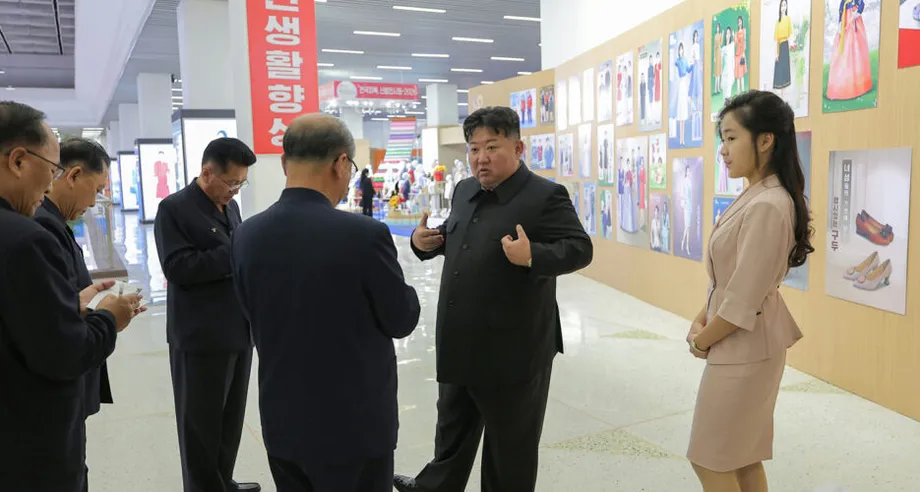
North Korean state media released photographs on October 20 showing Kim visiting a clothing and footwear exhibition in Pyongyang the previous day with his wife, Ri Sol Ju, and daughter, Kim Ju Ae. The publication came after the death claim began spreading online on October 18.
The October 23 briefing also covered Kim Yo Jong's appearance at fortification works along the border with South Korea. The NIS assessed that her inspection with senior military figures was insufficient to conclude that her political standing had changed.
Lawmakers are scheduled to question the intelligence service again during a parliamentary audit on October 29. Kim's health and developments inside North Korea are expected to be among the subjects examined.
How the death claim spread
The rumor was traced to an October 18 post on X by Xie Wanjun, a Chinese dissident living in the United States. He claimed that Kim had suffered a brain hemorrhage, died in a Beijing hospital and been secretly returned to North Korea. The allegations circulated without supporting evidence.
Xie also shared a video presented as a North Korean announcement of Kim's death. The footage came from the announcement of the death of Kim's father, Kim Jong Il, in 2011. Xie had previously circulated unverified claims about Chinese President Xi Jinping, including allegations about his death and the use of a double.
By October 22, messages circulating through private messaging services had expanded the story to include supposed succession arrangements involving Kim Han Sol and claims about American military involvement. Other posts alleged that Kim Yo Jong had already taken power.
The changing allegations helped the rumor survive new developments. After North Korea published photographs of Kim, speculation shifted to claims that the images were staged or showed a double. A claim that artificial intelligence had identified a substitute circulated without details of the tools, comparison images or results used.
What the NIS said about Kim's health
The September 30 assessment gave lawmakers a more specific picture than the later online speculation. The NIS placed Kim's weight in the 140 kilogram range and described him as severely obese, with a high risk of cardiovascular disease.
Cardiovascular disease affects the heart and blood vessels. Severe obesity can increase the likelihood of such illness over time. The agency's description combined that medical risk with observations of Kim's recent movements and the care he receives.
During a destroyer inspection, Kim was observed performing physical movements without apparent difficulty, including running up stairs. The intelligence service also cited the presence of medical staff who closely monitor him.
The October 23 briefing repeated the agency's rejection of the health rumors. The information reached the public through people familiar with the closed parliamentary meeting; no detailed public medical assessment accompanied it. South Korea's Unification Ministry also said it had detected no unusual internal signs in North Korea.
Pyongyang published images of a family outing
North Korean state media said Kim attended a clothing and footwear exhibition in Pyongyang on October 19. The photographs published on October 20 showed him touring the displays with Ri Sol Ju and Kim Ju Ae.
The exhibition was identified as the National Clothing and Footwear Exhibition 2026. It was the first report of a public appearance by Kim since coverage of his attendance at the opening of the National Defence Revolution Museum on October 11, a gap of nine days between the reports.
North Korea's state media did not directly address the death rumor when publishing the exhibition visit. The purpose of the release and the circumstances in which the photographs were taken were not independently established.
The timing differed from earlier periods of speculation in 2014 and 2020, when photographs of Kim were withheld for dozens of days. This time, images appeared two days after the initial social media claim, and the stated date of the exhibition visit was one day after it.
Kim Yo Jong's border appearance drew attention
Kim Yo Jong, the leader's sister and a senior Workers' Party official, inspected construction intended to strengthen North Korea's southern border. She appeared with senior commanders, including Pak Jong Chon, an adviser to the Ministry of National Defence.
Descriptions of the inspection placed it on October 20 or October 21. The NIS addressed the appearance at its October 23 briefing and assessed that it was insufficient to conclude that her political status had changed.
Her public activity came during a series of statements about tension near the Military Demarcation Line, the military boundary separating North and South Korea. North Korea has increased border fortification work since April 2024, following Kim Jong Un's description of relations with the South as relations between two hostile states.
Kim Yo Jong repeatedly said the military measures followed the leadership and instructions of Kim Jong Un. South Korea's Unification Ministry interpreted those references as an effort to tighten discipline and strengthen loyalty within the North Korean military.
Border construction brought threats over loudspeakers
Kim Yo Jong's statements on October 19, 21 and 22 concerned North Korean construction near the border and South Korean military responses, including warning broadcasts and warning shots connected with crossings of the Military Demarcation Line.
On October 19, she raised the possibility of restarting propaganda loudspeakers aimed at South Korea. On October 21, she indicated that broadcasts would operate along the border during October. On October 22, she warned that another means of responding would enter a state of readiness.
Kim Yo Jong, speaking as a senior Workers' Party official about the border dispute, threatened South Korea with what she called a:
horrible and distressing situation.
Loudspeaker broadcasts send political messages across the border. In this case, her warnings were tied to an active dispute over fortification work and South Korean warnings to North Korean personnel near or across the military boundary. The concrete developments were construction, military responses and threats to resume broadcasts.
A disruption affected 42 North Korean websites
Access problems at 42 major North Korean state and government websites added another event to the same crowded week. The affected services included the Korean Central News Agency, the Workers' Party newspaper, the Foreign Ministry and Air Koryo. Email servers were also affected.
The disruption began at about 11 a.m. on October 20 and eased around 7 p.m. on October 21, roughly 32 hours later. A security company suggested either an attack targeting connections through China or a failure in the connections themselves.
A distributed denial of service attack, often called a DDoS attack, overwhelms an online service with traffic until ordinary users struggle to reach it. A connection failure can produce similar access problems for multiple services that share network infrastructure.
A South Korean government official said no specific signs of hacking had been detected. A Unification Ministry official said interruptions lasting about two days had happened before. The cause of this disruption remained unconfirmed.
Diplomatic uncertainty surrounded the same week
Diplomatic exchanges also became caught up in the speculation. On October 22, North Korean state media reported that Xi Jinping had sent Kim a reply on October 20 to congratulations marking China's October 1 national day.
Discussion of a possible meeting between Kim and US President Donald Trump was taking place at the same time. The NIS had estimated on September 30 that the chance of talks around the Asia Pacific Economic Cooperation summit was about 50 percent.
By October 19, Trump was expressing uncertainty about a meeting and about who might be requesting one. The October 23 parliamentary briefing included no separate presentation on prospects for talks between North Korea and the United States or preparations for a visit by Kim to China.
Former Unification Education Institute head Ko Young Hwan also said he had heard intelligence that North Korean officials in China had been told to remain at their assigned locations on emergency standby. Ko said he did not believe the death rumor.
The dates leading to the next parliamentary review
The public sequence stretches from the NIS health assessment in late September to the audit scheduled for October 29. The principal dates are:
- September 30: The NIS tells lawmakers that Kim faces substantial cardiovascular risk but shows no unusual signs of ill health.
- October 18: Xie Wanjun posts the death allegation on X.
- October 19: Kim visits a Pyongyang clothing and footwear exhibition, according to North Korean state media.
- October 20: State media publish photographs of the visit; widespread website access problems begin.
- October 21: Website access stabilizes after about 32 hours.
- October 23: The NIS tells lawmakers that the death rumors are false.
- October 29: The National Assembly Intelligence Committee is scheduled to audit the NIS.
The audit will give lawmakers another opportunity to examine the agency's assessment of Kim's health, the military activity along the border and other security developments. For people living near the border, the immediate developments concern fortification work, military warnings and the threatened return of propaganda broadcasts.
Key Points
- South Korea's NIS rejected rumors of Kim Jong Un's death during a closed parliamentary briefing on October 23.
- The agency had previously cited normal physical activity and close medical monitoring while identifying substantial cardiovascular risk.
- North Korean state media published photographs on October 20 of Kim visiting a Pyongyang exhibition with his wife and daughter.
- The NIS assessed that Kim Yo Jong's border inspection was insufficient to conclude that her political standing had changed.
- A disruption affected 42 North Korean websites for about 32 hours; its cause remained unconfirmed.
- The next scheduled parliamentary audit of the intelligence service is October 29.