National interests first, with the US alliance still central
South Korean President Lee Jae Myung called for diplomacy that protects national interests without taking a submissive stance toward other countries, as restrictions on US intelligence sharing exposed disagreements within his government over the state of relations with Washington.
Contents
- National interests first, with the US alliance still central
- What is restricted, and why Kusong matters
- Two officials give different assessments
- The sequence behind the current dispute
- White House access and opposition scrutiny
- Disagreement also reaches the landmine incident
- Lee points to investment negotiations as his model
- Arctic ambitions put Russia in the same calculation
- Key Points
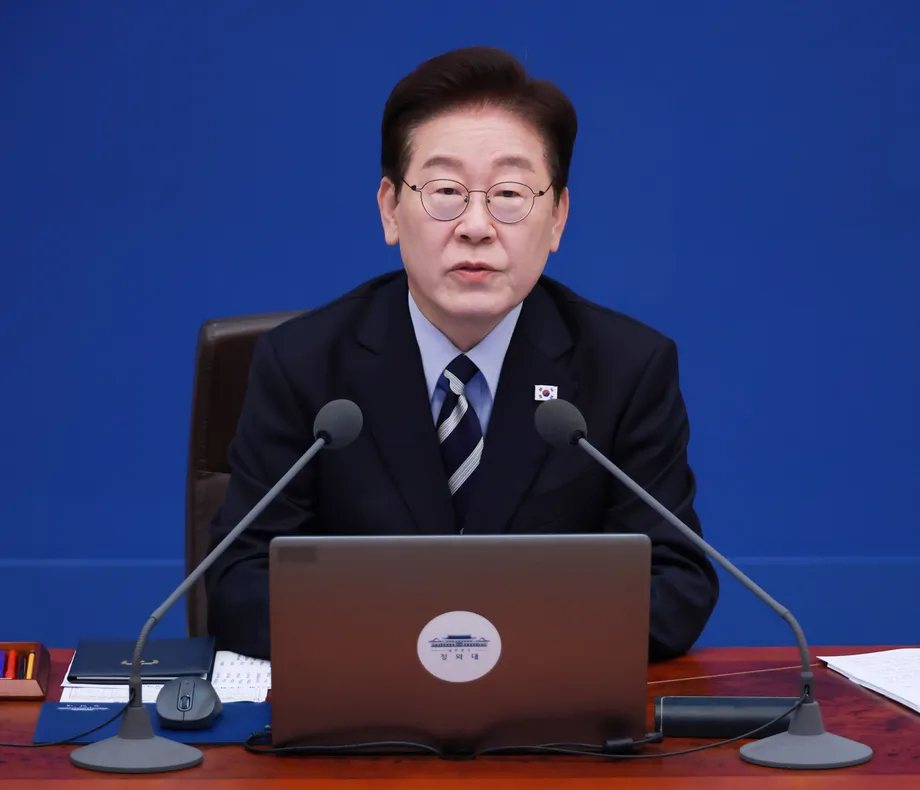
Speaking at a Cabinet meeting at the Blue House on October 13, 2026, Lee described the US alliance as a central pillar of South Korean foreign policy that should continue to grow stronger. His remarks came a day after Ambassador to the United States Kang Kyung-wha acknowledged unresolved American concerns about intelligence cooperation and limits on communication with the White House.
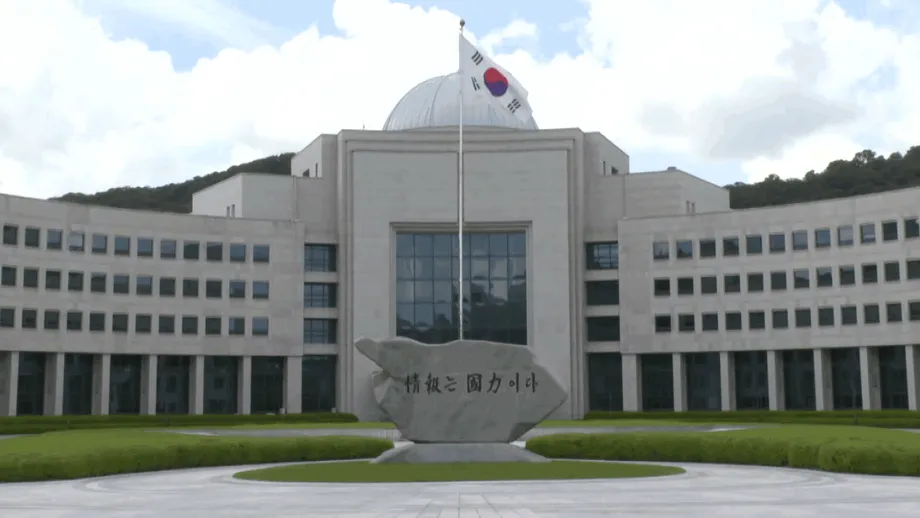
The immediate dispute concerns information about North Korea's nuclear activities. Washington reportedly restricted intelligence sharing after Unification Minister Chung Dong-young publicly identified Kusong as a uranium enrichment site. South Korea's National Intelligence Service (NIS) has acknowledged disruption in that area, while maintaining that cooperation on other subjects remains unaffected.
Lee did not directly address the intelligence dispute during his opening remarks. Instead, he set out the principles he said should guide the government's response to differences with Washington and other powers.
"The guiding principle of South Korea's diplomacy is pragmatism. The most important thing for South Korea is its national interests," Lee stressed.
That position combines two commitments: strengthening the US alliance and preserving Seoul's freedom to defend its own interests. The practical test is whether officials can resolve the intelligence restrictions while maintaining those commitments. Lee also argued that good relations with surrounding powers remain necessary, a point he later illustrated through South Korea's ambitions for Arctic shipping and its dealings with Russia.
What is restricted, and why Kusong matters
The intelligence controversy turns on both the content of Chung's remarks and the authority to disclose it. Washington reportedly regarded his identification of Kusong as a unilateral disclosure of sensitive intelligence that the United States had shared with South Korea. Seoul has maintained that the information was already publicly available.
Uranium enrichment increases the concentration of a particular form of uranium. Depending on the degree of enrichment, the material can be used for nuclear fuel or nuclear weapons. Information about suspected enrichment facilities therefore matters to assessments of North Korea's nuclear capabilities.
Reports place a key disclosure on March 6, when Chung identified Kusong alongside Yongbyon and Kangson as uranium enrichment sites. In defending himself, Chung also said he had discussed the facilities publicly at his confirmation hearing in July of the previous year. Those accounts identify different occasions on which the information was discussed; they do not establish precisely which words Washington considered a breach.
Descriptions of the facility also differ in certainty. Some accounts call Kusong an enrichment site, while another describes it as a suspected site. That distinction should not disappear in the political argument over disclosure.
The NIS has drawn a narrower boundary around the restrictions than claims suggesting a general breakdown in intelligence cooperation. It says the disruption concerns North Korea's nuclear activities and that other cooperation is unaffected. The exact information withheld, the duration of the restrictions and the conditions for restoring access have not been publicly detailed in the accounts of the dispute.
Two officials give different assessments
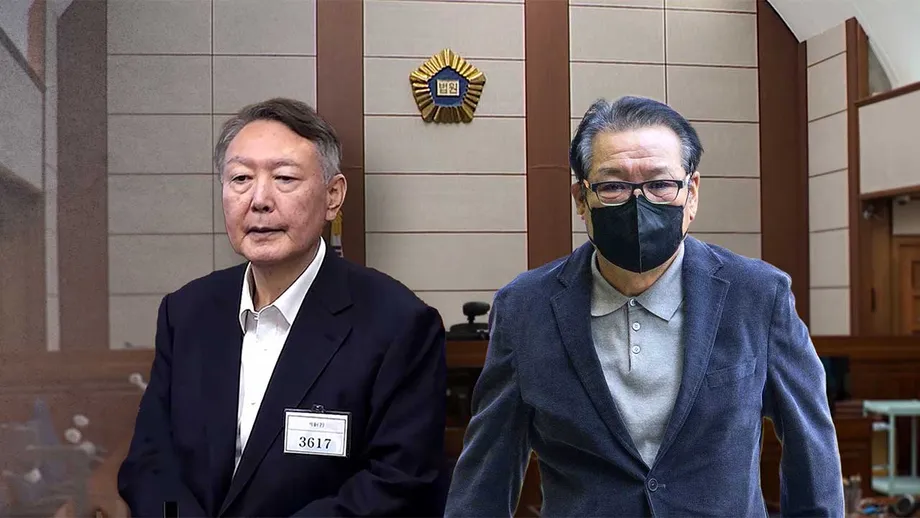
Chung and Kang offered contrasting descriptions of relations with Washington on October 12. At a briefing in Seoul, Chung rejected claims that the alliance was in trouble and argued that the intelligence restrictions resulted from an American misunderstanding.
Chung, the minister responsible for relations with North Korea, described the alliance in unequivocal terms.
"The South Korea-U.S. alliance has no issues," he said.
He also disputed the claim that he had leaked classified information, saying, "The U.S. is wrong." His argument was that allies can share values while disagreeing over interests, including security and trade.
Kang's assessment at a parliamentary audit of the South Korean Embassy in Washington was more cautious. She identified intelligence cooperation as the most pressing bilateral challenge, replacing strategic investment negotiations as the most difficult issue facing the two countries.
Kang, South Korea's ambassador to the United States, said American concerns had not been settled.
The U.S. does not yet believe the issues have been sufficiently resolved to meet their expectations.
The two accounts are not identical measures of the same thing. Chung defended the strength of the alliance as a whole, while Kang described an unresolved operational dispute. Still, his categorical reassurance contrasts with her account of continuing American dissatisfaction.
Kang confirmed that Chung had called her to explain his remarks and that she passed his explanation through official channels. She did not say Washington had accepted it. She also reported communication and progress between the intelligence agencies, indicating that efforts to repair cooperation were continuing rather than complete.
The sequence behind the current dispute
The controversy has moved through public disclosures, ministerial talks and parliamentary scrutiny. The dates reported show that the concerns had reached senior diplomatic channels before Lee's latest Cabinet remarks.
- July of the previous year: Chung says he publicly discussed North Korean nuclear facilities during his confirmation hearing.
- March 6: Chung reportedly identified Kusong as a uranium enrichment site alongside Yongbyon and Kangson.
- September 18: US Secretary of State Marco Rubio raised intelligence cooperation concerns in a meeting with South Korean Foreign Minister Cho Hyun, according to Kang.
- September 22: A summit between South Korea and the United States took place. Chung later cited it as evidence of progress for South Korean interests and autonomy.
- October 12: Chung defended the alliance in Seoul, while Kang described unresolved intelligence concerns during the embassy's parliamentary audit in Washington.
- October 13: Lee called for pragmatic diplomacy and continued strengthening of the US alliance at the Cabinet meeting.
The sequence separates political reassurance from a confirmed resolution. Chung's positive description of the summit does not establish that Washington subsequently lifted the intelligence restrictions. Kang's later testimony indicates that American concerns were still unresolved.
No date has been announced in these accounts for restoring unrestricted sharing or completing talks on the dispute.
White House access and opposition scrutiny
Kang also acknowledged difficulties in securing the level of White House contact she wanted. She said she frequently met National Security Council personnel and other key officials, but that senior consultations were not taking place as often as she considered necessary.
During the parliamentary audit, the ambassador directly acknowledged the limits on those exchanges.
"I acknowledge that there are limitations in our communication with the White House," Kang said.
Her testimony distinguished access to officials from access to the highest levels of decision making. It did not describe a complete absence of contact. Kang also said bipartisan American support for the alliance and bilateral relationship remained strong.
At home, the main opposition People Power Party has questioned whether NIS Director Lee Jong-seok's perceived leanings toward China and North Korea have affected Washington's trust in Seoul's intelligence establishment. Questions have also been raised about a visit to Russia earlier in the year by the head of the Institute for National Security Strategy, a think tank affiliated with the NIS.
These are political criticisms, not established explanations for the restrictions. The reported trigger remains Chung's public remarks about Kusong. There is no demonstrated connection in the accounts between the Russia trip and Washington's decision to limit sharing.
Disagreement also reaches the landmine incident
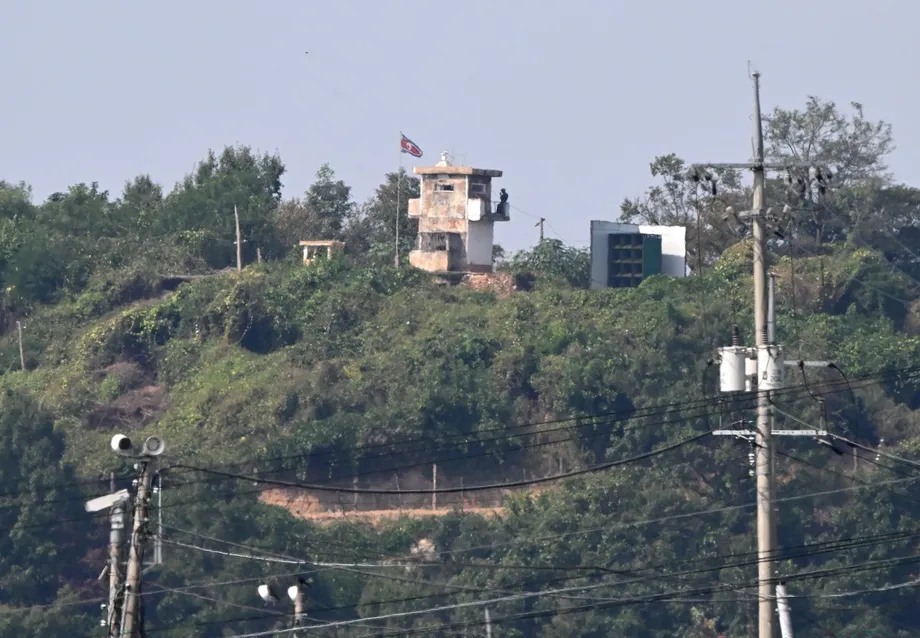
The parliamentary audit exposed another difference within the South Korean government: how to describe a landmine explosion that injured South Korean soldiers. Kang cited findings by the Joint Chiefs of Staff that North Korea had intentionally planted the mines, rather than the mines having been lost or displaced.
That assessment differed from Lee's description of the incident as an "accidental accident" during his Armed Forces Day speech on October 1. Chung had taken a cautious position, saying it was unclear whether the explosion constituted a deliberate North Korean attack.
Explaining her position, Kang pointed to the military investigation and distinguished intentional installation from an accidental event.
Based on the JCS investigation, these were mines installed by North Korea," she explained. "Such installations are intentional, and in that sense, it was not an accidental accident.
Chung's comments focused on establishing North Korean intent, differences in perceptions of the Military Demarcation Line among the two Koreas and the UN Command, and preventing another incident. Intentionally planting a mine and intending a particular explosion to injure particular soldiers are related but distinct questions.
The landmine disagreement is separate from the reported cause of the US intelligence restrictions. Its relevance is the contrast in how senior officials describe sensitive security events, not evidence that it caused Washington's response.
Lee points to investment negotiations as his model
Lee used a recent agreement with Washington on US investment projects to illustrate what he meant by pragmatic diplomacy. He praised officials for lengthy negotiations that, in his view, secured results serving South Korea's interests better than those achieved by other countries.
That comparison was the president's assessment. The accounts give no investment totals, country comparisons or detailed terms that would allow readers to independently measure the outcome. His example nevertheless explains the approach he was advocating: sustained bargaining rather than automatic acceptance of another country's position.
Lee said differences between nations should be minimized and kept within manageable bounds. Their existence alone, he argued, should not be treated as proof that a relationship is failing. Countries pursuing separate interests cannot be expected to agree on every issue.
The president also made clear that recognizing differences was not a reason to leave them unresolved.
"We must constantly discuss, put forward our positions and make adjustments in pursuit of agreement," Lee said.
Applied to intelligence cooperation, that approach requires more than a general declaration that the alliance is healthy. Kang's testimony identifies a specific unfinished task: addressing concerns that Washington does not yet consider sufficiently resolved. Lee's remarks supplied a negotiating principle, but no new settlement or timetable.
Arctic ambitions put Russia in the same calculation
Later in the Cabinet meeting, Lee connected his diplomatic approach to a commercial objective: developing an Arctic shipping route to Europe and turning Busan into a global maritime hub. South Korea had completed its first commercial round trip to Europe through the Arctic on the preceding Sunday.
Lee said the route could reduce the distance to Europe to two thirds of the current route. That would mean roughly one third less distance. It does not establish an equivalent reduction in shipping costs, since costs also depend on operating conditions, transit arrangements and other expenses.
The president pointed to disruptions affecting passage through the Suez Canal, which have forced many ships heading to Europe to avoid the Red Sea and sail around South Africa's Cape of Good Hope. He also said the period during which ships can navigate the Arctic route was expanding.
Russia is central to the plan because much of the route passes through its Exclusive Economic Zone. An EEZ gives a coastal state certain rights over maritime resources, though it is not identical to territorial waters. The proposed Arctic journey depends in practice on Russian approval and cooperation, making relations with Moscow a practical concern for Seoul.
Lee explicitly called for managing those relations. His comments did not announce a new agreement with Russia or settle the conditions for future voyages. They showed why his appeal to maintain ties with surrounding powers went beyond the immediate dispute with Washington.
Taken together, the intelligence issue, investment agreement and Arctic route illustrate the choices Lee was addressing: protecting access to security information, negotiating economic terms with an ally and maintaining contact with another power for a shipping project. The alliance remains central in his stated policy, while the intelligence dispute remains unresolved.
Key Points
- Lee called for diplomacy centered on South Korean national interests at the October 13 Cabinet meeting.
- He rejected a submissive posture while describing the US alliance as a central pillar that should grow stronger.
- The NIS acknowledged disruption in intelligence sharing about North Korea's nuclear activities, but said other cooperation was unaffected.
- Washington reportedly objected to Chung's disclosure about Kusong; Seoul maintains the information was public.
- Chung denied alliance problems, while Kang reported unresolved US concerns and limits on senior White House communication.
- No timetable for fully restoring intelligence sharing was announced.
- Lee also called for managing relations with Russia to support South Korea's Arctic shipping ambitions.