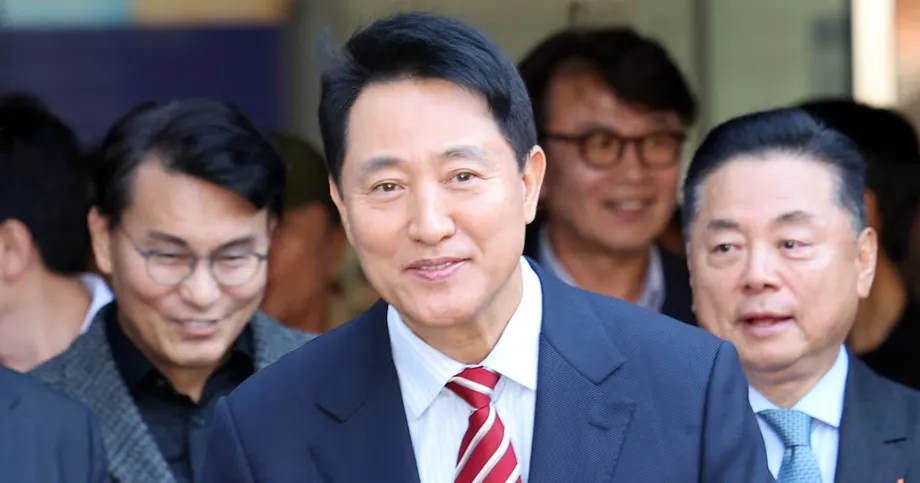
Seoul mayor wins appeal in case threatening his political future
The Seoul High Court acquitted Mayor Oh Se-hoon on October 23, 2026, overturning a conviction involving 33 million won in alleged opinion poll payments and easing a legal threat to his prospects for South Korea's 2030 presidential election. The special counsel team immediately announced plans to appeal.
Contents
- Seoul mayor wins appeal in case threatening his political future
- What the polling payments involved
- Why the court questioned Myung's testimony
- A recording and messages changed the assessment
- Prosecutors say other evidence was overlooked
- How the case reached this point
- Why the verdict matters for the PPP
- Democrats demand an appeal and judicial reform
- The same panel heard Yoon's polling appeal
- Key Points
The court's Criminal Division 7, led by Judge Koo Hoe-geun, rejected the earlier finding that Oh had illegally received political funding before the April 7, 2021, Seoul mayoral election. Former Seoul deputy mayor Kang Cheol-won and Oh's supporter Kim Han-jung, who were tried alongside him, were also acquitted.
Oh had faced a 10 million won fine and an order to forfeit another 21 million won. Under the Political Funds Act, a final fine of at least 1 million won for improperly receiving political funds would remove him from office and bar him from public office for five years. That would put the next presidential election beyond his reach.
The ruling therefore carries consequences well beyond the disputed polling bill. Oh narrowly secured his fifth term as Seoul mayor in June and is considered a potential presidential contender within the conservative People Power Party (PPP), the main opposition to President Lee Jae Myung's Democratic Party (DP).
The appeals court found that prosecutors had failed to establish beyond reasonable doubt that Oh specifically commissioned the surveys and agreed to pay for them. Its reasoning centered on the reliability of political broker Myung Tae-kyun, whose testimony supplied the direct link between Oh and the alleged arrangement.
What the polling payments involved
Prosecutors accused Oh of receiving polling results from Myung on 10 occasions before the 2021 election and arranging for Kim to cover 33 million won in costs through Kang. Three surveys were published, while seven were unpublished.
Opinion polls measure public preferences by questioning a sample of people. For a campaign, the results can help identify rivals, assess support and decide where to focus resources. The legal dispute concerned whether Oh requested those services and arranged for a supporter to pay for them as political funding.
The lower court, ruling in July, accepted the allegations concerning five of the 10 polls, with costs totaling 21 million won. It imposed the 10 million won fine and the additional forfeiture order. The 33 million won prosecution allegation and the 21 million won trial finding therefore cover different portions of the same case.
The appellate panel accepted that some polling results reached Oh's campaign and that Kim made several payments to Myung's side. It nevertheless found the evidence insufficient to establish the alleged commissioning and payment agreement involving Oh. Criminal convictions require prosecutors to prove the essential elements of a charge beyond reasonable doubt, meaning serious uncertainty about those elements must be resolved in the defendant's favor.
Why the court questioned Myung's testimony
Myung claimed that Oh called him four times on January 22, 2021, seeking a survey showing him ahead of rival Na Kyung-won. The appellate court found his account inconsistent and at odds with several surrounding circumstances.
Oh's support among the general public was stronger than his support among party members during the 2021 contest. The panel accepted his argument that his electoral position gave him no reason to seek the kind of favorable survey Myung described.
Kang Hye-kyung, who worked at the polling company operated by Myung, also testified that a survey placing Oh first had been changed to put Na ahead, allegedly on Myung's instructions. Her account described manipulation against Oh rather than an effort to produce results favorable to him.
The judges considered Myung's own statement that the first survey was conducted for Kim Jong-in, then the PPP's interim leader, rather than commissioned by Oh. They also examined evidence of deteriorating relations between Myung and Oh's side from February 2021 and Myung's disappointment about receiving insufficient recognition after the election.
The panel said Myung began making detailed allegations about Oh's political funding in December 2024, when Oh announced plans to sue him. It found that his account became more specific as investigators presented evidence, adding to its concerns about his reliability.
A recording and messages changed the assessment
A telephone recording dated March 6, 2021, became another important part of the appeal. The conversation between Myung and Kim indicated that Kang, rather than Oh personally, had introduced them.
The panel used that recording when assessing Myung's claim that Oh had directly approached Kim to seek payment for polling. Kim said in the conversation that he had met Myung after hearing from Kang and had received no direct explanation from the mayor.
The judges also examined the relationship between Oh and Kim. Although Kim had supported Oh since voluntarily displaying banners during Seoul's 2011 referendum on free school meals, he held no explicit role or position in the 2021 campaign.
Communication records showed five text messages exchanged between Oh and Kim from January 1 to April 15, 2021. After Kim joined Telegram in February, 16 of their 18 messages on that service were sent by Kim. The panel found their relationship insufficiently close to support the prosecution's account of a direct request for illegal political funding.
Those details helped explain why the appeal produced a different outcome from the first trial. The judges assessed the disputed testimony against recorded conversations, campaign roles and patterns of contact, rather than accepting the length of Kim's support as a measure of his closeness to Oh.
Prosecutors say other evidence was overlooked
The special counsel team led by Min Joong-ki challenged the court's treatment of the evidence. Assistant special counsel Park No-soo said the prosecution had relied on more than Myung's testimony and argued that the panel had concentrated too heavily on his credibility.
Park cited a conversation in which a campaign team leader described the disputed polling as commissioned by the campaign and said unfavorable results had caused an uproar. He also pointed to conversations about how Kim first met Myung and interview notes prepared by a lawyer sent by Oh.
The disagreement concerns both the reliability of Myung's account and the weight of the surrounding evidence. The court described his testimony as the sole direct evidence on the central disputed issues; prosecutors said messages, conversations and interview notes supported the charges and deserved a fuller response.
The team intends to take the case to the Supreme Court. Expedited trial provisions under the Kim Keon-hee Special Prosecution Act could allow a final ruling as early as January 2027, although no Supreme Court decision date has been fixed.
How the case reached this point
The dispute stretches from the preparations for Seoul's 2021 election to an appeal heard after Oh won another mayoral term. Several dates explain how the legal and electoral calendars became intertwined.
- January 22, 2021: Myung alleged that Oh called four times seeking a favorable poll, an account the appellate court rejected as unreliable.
- March 6, 2021: Myung and Kim held the recorded conversation about how they had met.
- April 7, 2021: Seoul held the mayoral election ahead of which the disputed polling was provided.
- December 2024: According to the appellate court, Myung began making detailed allegations about Oh after the mayor announced plans to sue him.
- June 2026: Oh narrowly won his fifth term as mayor while the case was continuing.
- July 2026: The lower court imposed a 10 million won fine and ordered forfeiture of 21 million won.
- October 23, 2026: The Seoul High Court overturned the conviction and acquitted Oh and his two co-defendants.
- January 2027: A Supreme Court ruling could come as early as this month under the expedited schedule.
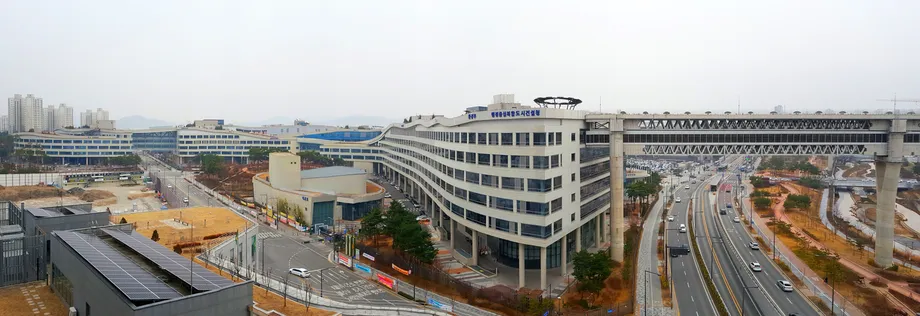
Oh arrived at the Seoul High Court in Seoul's Seocho district at about 1:30 p.m., before the verdict hearing scheduled for 2 p.m. He said favorable, decisive evidence absent from the first trial had been submitted during the appeal.
Seoul Mayor Oh Se-hoon offered a brief response when asked about the approaching decision:
Let's wait and see the trial result.
After the acquittal, Oh apologized for appearing before prosecutors and the courts, promised to conduct public service more carefully, and thanked Seoul residents who had trusted him and voted to return him to office during the proceedings.
Why the verdict matters for the PPP
Oh's acquittal gives the PPP a stronger basis for treating him as a potential presidential candidate rather than a mayor whose eligibility could soon end. His narrow June victory had already given conservatives a prominent success during an election in which the party suffered broader losses.
Oh has been a vocal critic of the Lee administration's housing policies, a politically sensitive subject linked to the president's declining approval ratings in recent months. Keeping his mayoral position allows him to continue challenging the government from an elected executive office.
The verdict may also strengthen his position within a party where his influence has been relatively limited. PPP leader Jang Dong-hyeok faces an internal dispute over his refusal to break with former President Yoon Suk Yeol and over responsibility for the June election defeat.
Some lawmakers and political commentators expect Oh's stronger position to assist efforts to replace Jang. Independent lawmaker Han Dong-hoon, a former PPP leader and another possible conservative presidential contender, could benefit from cooperation with Oh over party leadership. Such cooperation remains a political possibility, rather than an announced agreement.
The party's immediate response focused on Seoul's administration. PPP chief spokesperson Park Choong-kwon welcomed the decision in a commentary:
It is a great relief and at the same time only the right thing that the city administration, entrusted to Mayor Oh Se-hoon by ten million residents of Seoul, can continue without disruption.
For residents, the immediate consequence is continuity in the mayor's office while the legal process moves toward a final decision. For the PPP, the longer contest is over who will lead the party and eventually challenge the governing DP.
Democrats demand an appeal and judicial reform
The DP responded sharply. Senior spokesperson Park Sung-joon argued that the appeals court had dismissed allegations involving payments the lower court had accepted as illegal political funding.
Park Sung-joon, speaking for the governing party, linked the decision to its judicial reform agenda:
This ruling defied common sense.
It will serve as a catalyst for judicial reform.
DP floor leader Han Byung-do also expressed regret and urged the special counsel team to appeal immediately. Park compared the panel to a "vending machine" for acquittals, pointing to its decision earlier in October to acquit Yoon in another polling case.
The political stakes had been visible before Oh's appeal. In September, DP leader Kim Min-seok was photographed looking at a notepad listing five possible candidates, including himself, for an election to replace Oh. Friday's acquittal shifted attention away from that possibility and back toward Oh's own future.
The same panel heard Yoon's polling appeal
Judge Koo's panel had overturned another prominent conviction on October 7, acquitting Yoon in a separate Political Funds Act case involving Myung. That prosecution concerned 58 surveys valued at 274.4 million won before the 2022 presidential election.
Yoon's lower court sentence had been two years in prison. On appeal, the panel found insufficient evidence of an agreement between Myung and Yoon or his wife to commission or receive the surveys without payment. Its reasoning also addressed whether the polling constituted a financial benefit.
The two cases brought the same broker's polling activities before the same appellate panel within 16 days. Oh's case concerned an alleged arrangement for a supporter to pay, while Yoon's concerned surveys allegedly provided free of charge.
Koo, 58, became a judge in 1996 and joined the Seoul High Court in 2019. His earlier decisions include a 2010 election law fine of 500,000 won against Lee, then a Seongnam mayoral candidate, and a 2023 ruling ordering Japan to pay 200 million won per claimant in a case brought by 16 survivors of wartime sexual slavery and relatives.
For Oh, the immediate gain is the removal of the lower court conviction that threatened his office and electoral eligibility. His next legal milestone is the planned Supreme Court appeal; his political opportunity is to turn renewed eligibility into greater influence within the conservative camp.
Key Points
- The Seoul High Court acquitted Oh Se-hoon on October 23, 2026, overturning his Political Funds Act conviction.
- The allegations involved 10 polls and 33 million won in payments; the lower court had accepted charges concerning five polls worth 21 million won.
- The appellate panel found Myung Tae-kyun's central testimony unreliable and the alleged agreement insufficiently proven.
- The special counsel team plans to appeal, arguing that other evidence supported the prosecution.
- A final ruling could come as early as January 2027 under expedited trial provisions.
- The acquittal strengthens Oh's position as a possible PPP contender for the 2030 presidential election.