Two Walls, Thousands of Names
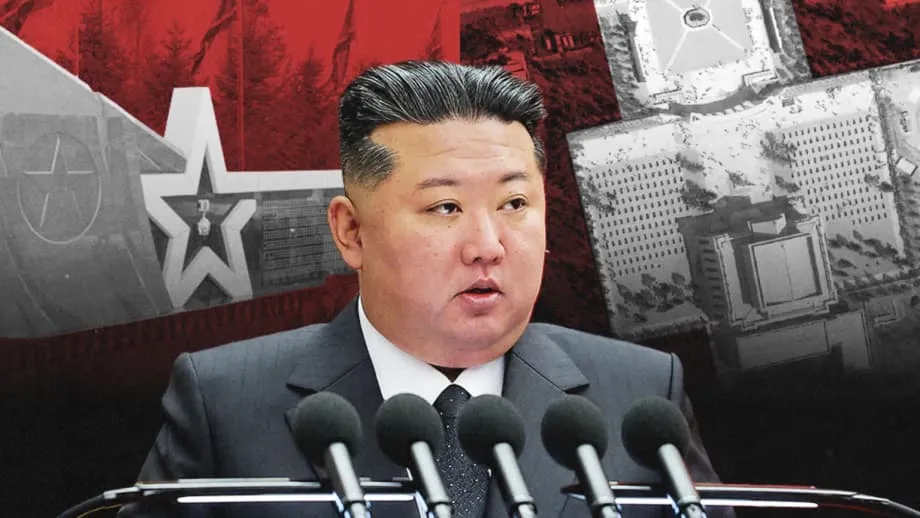
Approximately 2,304 names appear to be engraved on two granite walls at a new military memorial in Pyongyang, offering a rare, visible measure of North Korean deaths in Russia's war against Ukraine. Neither North Korea nor Russia has published an official death toll for the deployment.
Contents
- Two Walls, Thousands of Names
- How the Estimate of 2,304 Was Calculated
- Graves, Ashes and Different Forms of Recognition
- Moscow Gives Thanks and Plans Through 2031
- Kim Praises Death Rather Than Capture
- How the Kursk Deployment Developed
- Engineers and Workers Also Sent to Kursk
- What North Korea Receives From the Partnership
- Youth Loyalty Becomes Part of the Message
- What to Know
North Korean leader Kim Jong Un attended the unveiling of the Memorial Museum of Combat Feats at Overseas Military Operations alongside Russian Defense Minister Andrey Belousov. Military jets flew overhead and white balloons rose above the complex, turning a deployment once kept secret into a public ceremony of national sacrifice.
The names honor soldiers who died during operations to recapture Russia's Kursk region, where Ukrainian forces launched a surprise incursion in August 2024. South Korean intelligence estimates that at least 11,000 North Korean troops were dispatched to support Russia in the campaign.
Russian officials described the ceremony as marking the first anniversary of Moscow's reclamation of Kursk. The campaign chronology also places Russia's declaration of full control in August 2025, with fighting continuing in border areas. Both dates feature in the account of the operation and its commemoration.
North Korean state media presented the dead as patriots who defended sovereignty against Western aggression. Bereaved families have begun moving into a new housing complex in the same district, bringing the consequences of the overseas deployment into the daily life of the capital.
The memorial connects three developments: a substantial battlefield toll, closer military ties with Moscow, and a domestic campaign to make those losses symbols of loyalty. Its walls provide something official statements have withheld: a number that outsiders can attempt to count.
How the Estimate of 2,304 Was Calculated
Commercial satellite images show construction beginning in October 2025 on a complex covering 52,000 square meters in Pyongyang's Hwasong district. A basic structural shell was visible by December. Exterior work appeared largely complete by March 2026, and landscaping was finished in April. The pace suggests the project received urgent attention.
Each memorial wall stretches roughly 30 meters and appears in official photographs to contain about 14 sections. Nine sections on each wall carry names, arranged in approximately 16 columns per section. Detailed photographs of the eastern wall show eight names in a single column.
The calculation is straightforward: 16 columns multiplied by nine sections and eight names produces 1,152 names per wall. Doubling that for the two walls gives approximately 2,304. The estimate depends on the photographed arrangement being consistent across both structures.
Songhak Chung, a senior researcher at the Korea Institute for Security Strategy, supports an assessment running into several thousand names. He points to the large surface area and the density of the very small engraved characters. Higher resolution images would be needed to establish an exact count.
South Korea's National Intelligence Service estimated in September 2025 that about 2,000 North Korean soldiers had been killed and another 2,700 wounded. In February 2026, it put the combined number killed or wounded at about 6,000 out of an estimated deployment of 11,000.
Those February figures amount to roughly 55 percent of the estimated deployment. The September figures total 4,700 casualties, compared with approximately 6,000 in February. In military reporting, casualties include both deaths and injuries, so the February total includes soldiers who survived.
Other Western and Ukrainian intelligence estimates put deployments at between 14,000 and 20,000, with some estimates suggesting roughly 6,000 deaths. Different counting periods, the inclusion of support personnel, and access to battlefield information may help explain the gaps between those assessments.
Graves, Ashes and Different Forms of Recognition
South Korean research company SI Analytics identified a tiered arrangement of remembrance within the complex. Soldiers credited with extraordinary valor receive outdoor graves with individual tombstones, while others are commemorated through urns stored inside a central building.
Satellite imagery from early April shows approximately 140 graves on the western side of the cemetery and 138 on the eastern side, a total of about 278 marked burial plots. That is roughly 12 percent of the estimated 2,304 names on the walls, although the cemetery and wall counts describe different parts of the memorial.
Kim Jin-mu, formerly a researcher at the Korea Institute for Defense Analyses, suggested that the outdoor graves may hold recovered bodies, senior officers, or soldiers singled out for their acts of sacrifice. His explanation reflects an assessment of the layout, rather than a published list of those buried there.
The grey building at the center appears to be a columbarium with three stories. A columbarium is a building containing compartments for urns of cremated remains. Songhak Chung said its walls appear filled with compartments arranged in a grid.
Chung estimated that, even after excluding offices and exhibition space, the indoor repository could accommodate at least 1,000 sets of remains. The combination of relatively few outdoor graves and extensive urn storage suggests that most of those honored are represented by ashes rather than full burials.
South Korea's Ministry of Unification said it was difficult to confirm whether every soldier killed had been memorialized on the walls. Kim Jin-mu considers it highly likely that all North Korean troops who died in Kursk are named. He argues that rewarding sacrifice and maintaining public support are central purposes of the project, and that omissions could cause discontent among bereaved families.
Moscow Gives Thanks and Plans Through 2031
Vyacheslav Volodin, speaker of Russia's State Duma, traveled to Pyongyang for the unveiling alongside Belousov. Their attendance gave the ceremony a role beyond domestic remembrance: Russia's senior representatives publicly recognized North Korean participation in the Kursk operation.
North Korean state media described the event as honoring a sacred war for territorial integrity against a Western hegemonic plot. This language presented the fighting as resistance to Western domination and tied the soldiers' deaths to the government's account of the alliance.
Volodin thanked Kim and the North Korean people, praising their forces for fighting shoulder to shoulder with Russian soldiers. Addressing the North Korean leader directly, the Russian parliamentary speaker said:
Let me express these words of gratitude to you, Comrade Kim Jong Un, and to the Korean people for their fraternal support in the liberation of Kursk.
Belousov announced that Moscow and Pyongyang had agreed to put military cooperation on a stable footing for the long term. A bilateral plan covering 2027 through 2031 is expected to be signed during 2026. He also presented Russian military awards to North Korean servicemen who participated in the Kursk operation.
Kim assured the Russian delegation in separate meetings that North Korea would continue fully supporting Russia's policy of defending its national sovereignty, territorial integrity and security interests. State media also reported his assertion that Russia would win a victory in what he called a just sacred war.
The awards, senior visitors and proposed cooperation plan place the memorial within a continuing military relationship. Moscow is thanking Pyongyang for past assistance while both governments prepare arrangements extending several years beyond the campaign being commemorated.
Kim Praises Death Rather Than Capture
Kim publicly praised soldiers who detonated their own grenades to avoid capture by Ukrainian forces. State media described these actions as suicide attacks, giving public recognition to conduct associated with orders to die rather than surrender.
North Korean military conditioning treats capture as treason and surrender as an unforgivable betrayal of the state and ruling party. That pressure helps explain why some soldiers chose death even when survival through capture might have been possible.
Kim Jong Un, speaking during the memorial events, described the soldiers' willingness to die without compensation as the highest expression of military loyalty:
Their self-sacrifice expecting no compensation, and the devotion expecting no reward. This is the definition of the height of loyalty of our army.
South Korea's National Intelligence Service found memos on deceased North Korean soldiers pointing to such extreme orders. Earlier in 2026, footage emerged of one of only two known North Korean prisoners of war held by Ukraine. The soldier expressed regret on camera, saying that everyone else had blown themselves up but he had failed.
Both prisoners have reportedly expressed a desire to resettle in South Korea. Their survival and stated wishes sit alongside the memorial's celebration of soldiers who chose death over capture.
Kim also praised troops who died during frontal charges or from shrapnel wounds, describing them as faithful warriors of the party and patriots. Shrapnel consists of fragments thrown out by an explosion. His speech brought different forms of battlefield death into the same political message: sacrifice was presented as proof of loyalty.
The government's portrayal turns heavy losses into a source of national honor and domestic authority. Housing for bereaved families gives that message a practical form, while the memorial makes it permanent in stone.
How the Kursk Deployment Developed
Ukrainian forces crossed into Russia's Kursk region in August 2024 in a surprise offensive. The operation threatened logistical hubs and caused embarrassment for the Kremlin. It was described as the first occupation of sovereign Russian territory by foreign troops since World War II.
Moscow strengthened its response with North Korean troops. The first reports of transfers emerged in October 2024, when South Korean intelligence recorded initial movements of approximately 1,500 soldiers. Estimates of the eventual deployment ranged from 11,000 to 20,000.
The main dates show how the fighting, alliance and memorial developed:
- June 2024: Vladimir Putin and Kim Jong Un signed a treaty promising mutual military assistance if either country faced aggression.
- August 2024: Ukraine launched its surprise incursion into Kursk.
- October 2024: Reports of North Korean troop transfers emerged, with approximately 1,500 soldiers recorded initially.
- November 2024: North Korea ratified the treaty with Russia.
- August 2025: Russia declared that it had fully regained control of Kursk, although fighting persisted in border areas.
- September 2025: South Korean intelligence estimated about 2,000 North Korean deaths and 2,700 wounded.
- October 2025: Construction of the Pyongyang memorial began.
- December 2025: Kim welcomed returning engineers and acknowledged nine losses in their unit.
- February 2026: South Korean intelligence estimated about 6,000 North Korean soldiers killed or wounded.
- March and April 2026: Exterior work and landscaping at the memorial approached completion.
North Korean forces fought in Kursk Oblast, the administrative region surrounding Kursk. They also reportedly assisted with drone operations and artillery spotting in neighboring Sumy Oblast in Ukraine. Artillery spotting means identifying targets and helping direct shellfire toward them.
The units suffered heavily during Russia's counteroffensive. Limited familiarity with modern drone warfare, rigid command structures and communication barriers with Russian forces contributed to the high casualty rates. Drones can expose troops moving across open ground and allow attacks to be directed with precision, making unfamiliarity with them especially costly.
Engineers and Workers Also Sent to Kursk
Kim welcomed home the 528th Regiment of Engineers in December 2025 after its work clearing mines and supporting reconstruction in Kursk. Their deployment shows that North Korea's assistance extended beyond troops assigned to combat.
During the ceremony, Kim made a rare reference to nine heartrending losses within the engineering unit. The disclosure acknowledged deaths in a support mission that also involved dangerous work, including the removal of explosives left in the ground.
The limited acknowledgment was interpreted as a calculated disclosure, recognizing sacrifice while keeping attention away from the wider risks of deployment. It contrasts with the scale of remembrance now visible at the Pyongyang complex.
North Korea also promised to send thousands of civilian workers to help rebuild Kursk. That pledge fits a broader pattern of exporting labor alongside weapons and soldiers, often through arrangements that channel workers' wages back to the state.
Combat troops, engineers and civilian laborers therefore occupy different parts of the same relationship. Russia receives military assistance and help with reconstruction, while Pyongyang gains opportunities for income and closer ties with Moscow.
What North Korea Receives From the Partnership
Russian President Vladimir Putin and Kim signed their mutual assistance treaty in June 2024. Kim hailed it as the strongest ever, and North Korea ratified it that November. The pact commits the two countries to military assistance in the event of aggression against either.
Assessments of the exchange suggest that North Korea has received large grain shipments, hard currency, advanced satellite technology and military technical assistance. For an economy constrained by stringent international sanctions, food and money provide immediate support, while technology can serve longer military goals.
One estimate puts possible Russian payments for troop support and weaponry at as much as $14.4 billion. The weapons supplied since 2023 included artillery ammunition, rockets and missiles. That figure is an estimate of the possible value of the assistance, rather than an announced payment total.
Belousov's discussions about a military cooperation plan for 2027 through 2031 point toward an arrangement extending beyond ammunition deliveries and the Kursk deployment. Western assessments have raised concern about possible future exchanges of North Korean ballistic missile components for Russian nuclear submarine designs or other advanced technology.
Such exchanges are described as possible developments. Access to advanced military designs could affect the security balance in Northeast Asia and complicate efforts to constrain North Korea's nuclear and missile programs.
Russia is preparing a memorial of its own. Foreign Minister Sergey Lavrov promised in March 2026 to erect a monument in Kursk celebrating the combat brotherhood between the two countries. Moscow's ambassador to North Korea also attended the groundbreaking ceremony for the Pyongyang memorial.
The reciprocal monuments give the partnership a lasting public expression. Alongside the treaty and planned military program, they show both governments presenting the relationship as more durable than a temporary wartime exchange.
Youth Loyalty Becomes Part of the Message
Kim addressed citizens aged 14 to 30 as the vanguard of state goals at the Eleventh Congress of the Socialist Patriotic Youth League in Pyongyang. The ruling party explicitly connected youth loyalty with the overseas deployments, describing young soldiers as having become bombs and flames in defense of the country's honor.
The language connects the memorial's account of past sacrifice to expectations for the next generation. Internationally, it signals that North Korea can replenish its forces. Domestically, it reinforces the demand that loyalty to the state take priority over individual survival.
Kim has also intensified restrictions on foreign cultural influence. Exposure to South Korean music, films and slang is treated as a serious political offense, making control over cultural life another part of the campaign to shape young people's loyalties.
The youth messaging coincides with more frequent public appearances by Kim alongside his young daughter, believed to be named Ju Ae. Those appearances place dynastic continuity alongside the government's celebration of military sacrifice.
For bereaved families, the names, graves, urns and new housing make the costs of the Russia deployment tangible. For the leadership, the same complex offers a way to bind those losses to national honor, continued support for Moscow and defiance of Western pressure.
The memorial brings a once secret deployment into public view while leaving its full death toll uncertain. Its estimated 2,304 names are the most concrete feature of a broader effort to turn overseas military service into a lasting part of North Korea's political identity.
What to Know
- Photographs suggest approximately 2,304 names on two memorial walls in Pyongyang's Hwasong district.
- South Korean intelligence estimated about 2,000 deaths in September 2025 and about 6,000 killed or wounded by February 2026.
- Deployment estimates range from 11,000 to 20,000; some Western and Ukrainian intelligence estimates suggest roughly 6,000 deaths.
- The complex includes approximately 278 outdoor graves and a building estimated to hold at least 1,000 sets of remains.
- Kim Jong Un praised soldiers who killed themselves rather than surrender, while two known prisoners held by Ukraine reportedly want to resettle in South Korea.
- Russian Defense Minister Andrey Belousov and State Duma Speaker Vyacheslav Volodin attended the unveiling.
- A military cooperation plan covering 2027 through 2031 is expected to be signed during 2026.
- North Korean assistance includes combat troops, engineers, weapons and promised civilian workers for reconstruction.
- Russia has promised a reciprocal memorial in Kursk, while Pyongyang links overseas military sacrifice to youth loyalty.