Crash figures put electric bicycles under scrutiny
Taiwan's Ministry of Transportation and Communications is drafting penalties for businesses that sell or supply unapproved electric assisted bicycles and micro electric two-wheelers, as crashes involving electric assisted bicycles climb toward a projected 3,000 or more in 2026.
Contents
- Crash figures put electric bicycles under scrutiny
- How quickly have crashes increased?
- What makes an electric assisted bicycle legal?
- Which penalties already apply?
- Where can riders legally travel?
- Police already have access to approval records
- The proposed law would reach sellers
- Consumers want clearer rules and accident protection
- Key Points
Figures cited by Kuomintang legislator Lu Ming-che show 2,191 crashes from January through August 2026, compared with 1,059 in all of 2021. The annual total reached 2,836 in 2025. Even before the final four months of 2026, the number recorded was already more than twice the 2021 total.
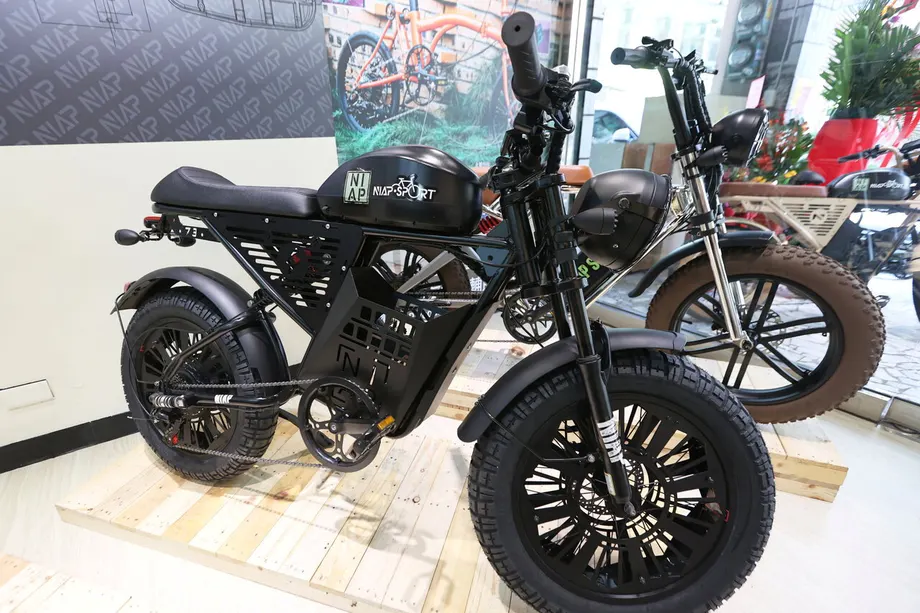
Lu says some vehicles sold as electric assisted bicycles resemble motorcycles and can travel at 40 to 50 kilometers per hour after illegal modifications. That is well above the 25 kilometers per hour limit for approved models. He has urged clearer vehicle definitions and better access to certification records for police.
The ministry's response combines existing penalties for riders with proposed controls on sellers. Unauthorized changes to electronic controls or original specifications can already bring fines of NT$3,600 to NT$7,200 when the vehicles are ridden on roads. The proposed amendments would extend responsibility to businesses supplying vehicles that have not passed approval.
For riders, the central issue is whether a vehicle meets the rules for its legal category. Pedals, a familiar bicycle shape or an online sales listing are not enough: an electric assisted bicycle must meet technical requirements, pass approval and carry a certification label before it can legally be used on public roads.
How quickly have crashes increased?
Lu cited transportation ministry figures showing an increase in every year from 2021 through 2025. The sequence helps explain why lawmakers are pressing for action:
- 2021: 1,059 crashes involving electric assisted bicycles, with 9 deaths and 932 injuries.
- 2022: 1,765 crashes, with 16 deaths and 1,565 injuries.
- 2023: 2,184 crashes, with 18 deaths and 1,952 injuries.
- 2024: 2,325 crashes, with 24 deaths and 2,080 injuries.
- 2025: 2,836 crashes, with 22 deaths and 2,542 injuries.
- January through August 2026: 2,191 crashes, with 14 deaths and 1,966 injuries, with the full year projected to exceed 3,000 crashes.
The 2025 total was 1,777 higher than in 2021, an increase of about 168 percent. A total above 3,000 in 2026 would put annual crashes at roughly three times the 2021 figure.
The January to August count averages about 274 crashes a month. Extending that pace across 12 months would produce approximately 3,287 crashes, although the final total will depend on what happens during the remaining months.
The figures count crashes involving these bicycles and include the numbers of people killed and injured. The information presented does not give vehicle-use rates, how many crashes involved illegal modifications, or how much bicycle use increased during the period. Those missing details leave policymakers with a rising crash count but an incomplete picture of the causes.
What makes an electric assisted bicycle legal?
The ministry says a compliant electric assisted bicycle must rely primarily on human effort, with a motor providing assistance. Its maximum speed is 25 kilometers per hour, and it must meet bicycle construction requirements and a weight limit of 40 kilograms.
Type approval is another requirement. This means a vehicle model is checked against the applicable technical standards before vehicles of that model can be approved for road use. An individual bicycle must also display the required certification label.
Approved models must include measures to prevent unauthorized removal of their speed limit. Changing the controls to allow higher speeds can therefore take a bicycle outside the specifications under which it was approved.
The ministry says 40 companies have secured certification for 250 models. Those include 55 models with an off-road appearance or fat tires, supplied by 13 companies. The 55 models represent 22 percent of all approved models, showing that these designs already make up a substantial part of the certified range.
Lu wants the rules to address weight, width and appearance more clearly. His concern is that vehicles with the size and performance of motorcycles can be treated as bicycles because they have pedals. Under the current rules described by the ministry, however, approval also depends on power assistance, speed, construction and certification.
Which penalties already apply?
The ministry told the Legislative Yuan that several enforcement powers are already available. The consequences depend on whether the problem is a missing label, an unapproved vehicle or an unauthorized modification.
- Riding an approved electric assisted bicycle without the required certification label can bring a fine of NT$600 to NT$1,200.
- An uncertified vehicle used on public roads may be confiscated.
- Unauthorized changes to electronic controls or original specifications on electric assisted bicycles and micro electric two-wheelers can bring fines of NT$3,600 to NT$7,200 when ridden on roads.
- Existing rules also prohibit use of vehicles with unauthorized electronic control modifications and require corrective action.
A missing label and an unapproved model are different problems. In the first case, the vehicle belongs to an approved model but lacks the required identification. In the second, the vehicle has not passed the approval process required for road use.
For a modified bicycle, paying a fine does not end the matter. The requirement to correct the vehicle means its owner must address the unauthorized change before it can return to lawful use.
Where can riders legally travel?
Electric assisted bicycles are classified as slow vehicles and generally cannot be ridden on sidewalks. A sidewalk or path designated for shared use may have different rules, so riders must follow the signs and restrictions set by the authority responsible for that road.
Access to dedicated bicycle lanes also depends on local restrictions. A route that looks suitable for a bicycle may have rules limiting which vehicles can enter. The ministry's explanation places responsibility on road authorities to define access and on riders to observe the posted conditions.
Lu has raised concerns about faster modified vehicles appearing in bicycle lanes, scenic trails and parks, where people may be walking or riding at much lower speeds. A bicycle traveling at 40 kilometers per hour is moving 60 percent faster than the legal assistance limit of 25 kilometers per hour. At 50 kilometers per hour, it is moving twice as fast.
Electric assisted bicycles currently require neither registration nor a driving license, and Lu says there is no minimum riding age. He argues that this light regulatory treatment becomes a safety concern when the vehicles have been altered to deliver motorcycle-like performance.
Police already have access to approval records
Lu has proposed connecting records held by the Vehicle Safety Certification Center more closely with police systems. He suggested using artificial intelligence and image recognition to scan certification labels or photographs for signs of an unapproved or modified vehicle.
The ministry says police already have a website containing approved model information. Officers can use the brand and model shown on a certification label to find approval documents and vehicle images, and they can ask the center to check a vehicle's certification or suspected modifications.
The proposed technology would build on that existing process. A photograph or scanned label could help an officer find the relevant record more quickly, while the approved specifications would provide the basis for checking the vehicle.
The ministry said closer integration of the data could be provided if requested. Its response leaves the immediate enforcement task with police, who are responsible for action against uncertified vehicles being used on roads.
The proposed law would reach sellers
The ministry is drafting amendments to the Road Traffic Management and Penalty Act to punish businesses that sell or provide unapproved electric assisted bicycles and micro electric two-wheelers. No proposed fine amounts or date for passage were given.
The change would put a legal consequence at the point of sale, before an unapproved vehicle reaches the road. Existing roadside penalties focus on vehicles and their use; the proposed provisions would also make suppliers answerable for selling vehicles that lack the required approval.
Online sales are already subject to a removal process. Since 2025, the ministry has tasked the Vehicle Safety Certification Center with regularly checking marketplaces for uncertified electric assisted bicycles and seeking removal of listings through the Ministry of Digital Affairs' platform for coordinating action against illegal products sold online.
Removing listings and checking vehicles on the street address different stages of the same problem. Marketplace checks can interrupt sales, while police inspections deal with vehicles already being ridden. The proposed business penalties would add another enforcement tool between those stages.
Consumers want clearer rules and accident protection
The Consumers' Foundation has also called for clearer regulation of electric bicycles and motorized scooters. Its chair, Teng Wei-chung, said riders are unsure which road rules apply and who bears responsibility when an accident occurs.
Foundation vice chair Chen Ju-yin cited a commuter on a motorized scooter who struck a senior citizen and received a NT$1,200 fine. She said the senior citizen's family questioned why shops could sell such scooters when their road use was restricted.
That complaint concerns a wider range of devices than approved electric assisted bicycles. The foundation said the Road Traffic Management and Penalty Act defines personal mobility devices and allows local governments to regulate licensing and road access, yet almost no local authorities had issued rules at the time of its appeal.
Foundation secretary-general Chen Ya-ping described weak enforcement and gaps in accident insurance. She called for scooter speed limits, standards for lights and brakes, designated legal road sections, and stronger checks on licensing and insurance for small electric two-wheelers.
Her proposals also included helmet requirements for cyclists, inspections of lights at night, clearer traffic signs to reduce conflict with motorcycles, and publication of accident statistics and liability analyses. Together, those requests focus on what happens beyond certification: whether riders understand where they may travel, whether their vehicles are visible and controllable, and how injured people obtain compensation.
Key Points
- Crashes involving electric assisted bicycles rose from 1,059 in 2021, with 9 deaths and 932 injuries, to 2,836 in 2025, with 22 deaths and 2,542 injuries; 2,191 crashes, 14 deaths and 1,966 injuries were recorded through August 2026. The figures do not include vehicle-use rates.
- Approved bicycles must rely primarily on human effort, observe a maximum speed of 25 kilometers per hour and display a certification label.
- Unauthorized modifications can already bring fines of NT$3,600 to NT$7,200, restrictions on use and required corrective action.
- The ministry is drafting penalties for businesses supplying unapproved bicycles and micro electric two-wheelers.
- Police can already consult certification records, while Lu is seeking closer data integration and technology to support checks.
- The Consumers' Foundation wants clearer road access rules, stronger enforcement and better protection after accidents.