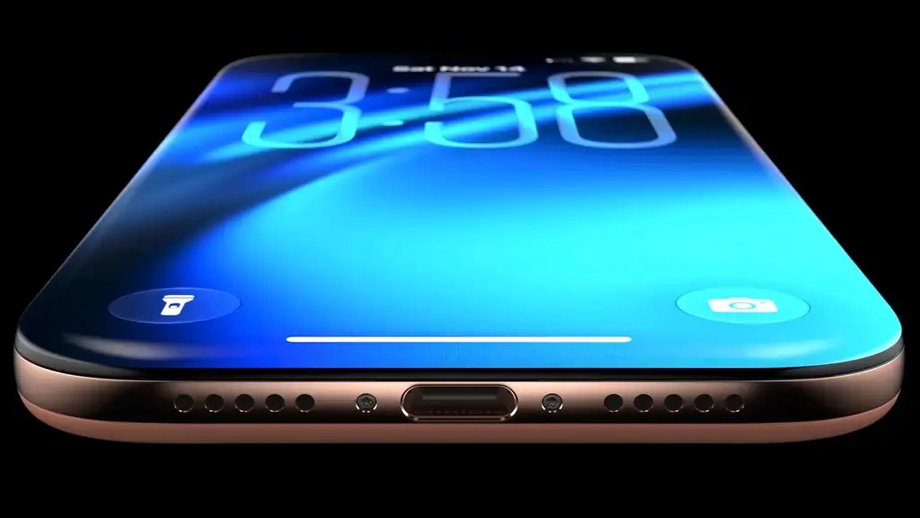
A Familiar Curve Returns to Flagship Phones
Smartphone manufacturers are preparing for a major shift in design trends, with rumors pointing toward a widespread revival of curved displays by September 2027. Samsung pioneered side-curved screens back in 2014 with the Galaxy Note Edge, introducing a styling choice that many Android brands adopted before flat screens with slim bezels became the industry standard. Industry watchers and supply chain reports now indicate that Apple is planning a significant visual overhaul for the 20th anniversary of the original iPhone, which debuted in June 2007. This upcoming flagship, widely referred to as the iPhone 20 Pro or iPhone XX, is expected to feature a display that curves gently around all four sides. Samsung, Xiaomi, and Oppo are reportedly developing competing flagships to challenge this new aesthetic, suggesting that the era of the flat screen could soon give way to a fresh wave of curved-glass devices.
Contents
Engineering the Quad-Curved Display
Apple is collaborating with Samsung to develop a custom display panel for its 20th-anniversary release. Unlike the aggressive waterfall edges seen on past Android models, which often caused visual distortion and accidental palm touches, this new approach relies on equal-depth micro-curves. According to supply chain details, the glass will feature shallow curves measuring approximately 1 millimetre wide along the top, bottom, and both sides, paired with bezel thicknesses of roughly 1 millimetre. This configuration aims to create a nearly borderless appearance while maintaining a comfortable grip and natural swipe gesture mechanics. To achieve this, Apple has reportedly tested multiple prototypes, including both flat-glass variants and quad-curved designs, during a development effort spanning three years.
The internal display technology is also set for a major transformation through the adoption of Color Filter on Encapsulation, or COE, panels. This method removes the traditional polarizer layer found on most current screens, allowing the color filter to sit directly on the encapsulation layer. By eliminating the polarizing film, the display stack becomes thinner and more light permeable, which boosts brightness and lowers power consumption. Because removing the polarizer increases screen reflections, Apple is developing an advanced anti-reflective coating alongside a crater-shaped light diffusion layer to distribute brightness evenly across the surface. While these upgrades promise a more immersive visual experience, they also introduce manufacturing hurdles such as lower production yields and higher repair costs.
Under-Display Sensors and the Dynamic Island
Achieving a truly borderless smartphone requires hiding front-facing hardware beneath the glass panel. Reports indicate that Apple has been working to integrate both Face ID and the selfie camera under the display, but the technology remains difficult to perfect. While infrared sensors may successfully move beneath the screen, the front-facing camera has proven particularly challenging to conceal without degrading image quality. Consequently, the upcoming anniversary Pro models are expected to retain a pill-shaped display cutout, with industry analysts predicting that a smaller version of the Dynamic Island will remain in place through 2027. Screen protector samples circulating among manufacturers show shallow edge curves alongside cutouts for these sensors, pointing to an intermediate step between a fully uninterrupted screen and traditional cutouts.
Upgraded Internals and Battery Innovations
Beyond the exterior redesign, the rumored 20th-anniversary lineup is expected to bring substantial performance and efficiency improvements under the hood. The devices will likely be powered by a second-generation 2nm A21 Pro chip built by TSMC, paired with vertically stacked mobile high-bandwidth memory to accelerate on-device artificial intelligence tasks. Connectivity is also expected to advance with the integration of an Apple-designed C3 modem. Power demands from larger screens will be met by new high-density silicon-anode battery cells, which replace traditional graphite anodes to deliver greater energy capacity within a slimmer physical frame. On the camera front, reports point to the testing of a custom Lateral Overflow Integration Capacitor sensor designed by Apple, which aims to provide up to 20 stops of dynamic range to preserve detail in harsh lighting conditions.
Physical interaction with the device is also set to evolve through the adoption of solid-state haptic buttons. Because the quad-curved glass design leaves a narrower structural metal band along the edges, traditional mechanical cutouts become impractical, making pressure-sensitive haptic keys a necessary alternative for power and volume controls. Display sizes are tipped to increase slightly compared to previous generations, with the smaller Pro model expanding from 6.27 inches to approximately 6.41 inches, and the Pro Max variant growing from 6.86 inches to approximately 6.96 inches. These hardware enhancements will carry a financial cost, with industry analysts estimating starting prices of $1,299 or higher for the anniversary Pro lineup when it debuts in the fall of 2027.
Android Rivals Prepare Competing Designs
Apple's anticipated design shift is already inspiring competitors in the Android ecosystem to revisit curved screen technology. Samsung is reportedly exploring an extremely bezel-less display for a future flagship, with secondary reports suggesting the Galaxy S27 Pro and S27 Ultra as potential candidates. This creates an unusual dynamic, as Samsung Display is simultaneously slated to manufacture custom panels for Apple while racing to outpace the iPhone maker in hardware design. Other manufacturers are also joining the movement. Oppo is reportedly developing the Find X11 Pro Max for a late 2027 release, featuring a flat internal panel paired with four-sided curved cover glass and visual bezels measuring just 0.3 mm thick. Xiaomi is similarly working on curved-display successors to its Xiaomi 18 series, indicating that the entire premium smartphone market is pivoting toward micro-curved aesthetics.
At a Glance
- Apple is expected to launch its 20th-anniversary iPhone models in September 2027, potentially using the iPhone 20 Pro or iPhone XX branding.
- The devices will reportedly feature a 3D quad-curved glass design with micro-curves on all four sides and approximately 1 mm borders.
- Internal display upgrades include Color Filter on Encapsulation technology to remove the polarizer, boosting brightness and efficiency.
- Performance improvements include a 2nm A21 Pro chip, mobile high-bandwidth memory, an Apple C3 modem, and silicon-anode battery cells.
- Android competitors including Samsung, Xiaomi, and Oppo are developing their own curved-display flagships to compete with Apple's new design direction.