A New Partnership for Nuclear Shipping
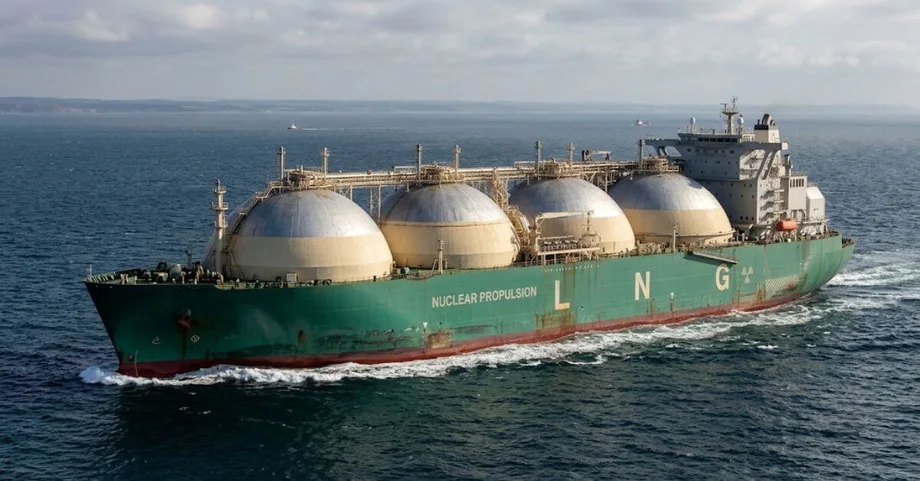
South Korea based shipbuilder Samsung Heavy Industries and United States based reactor developer Tesser Atomics signed an exclusive memorandum of understanding in Oslo, Norway, on November 19, 2026. The Memorandum of Understanding establishes a joint effort to build and demonstrate the world first nuclear powered liquefied natural gas carrier. Under the terms of the deal, Samsung Heavy Industries serves as the exclusive shipbuilder for the demonstration project, taking charge of vessel design, integration, and construction. Tesser Atomics acts as the exclusive reactor partner, providing its nuclear technology and leading regulatory licensing efforts. The demonstration vessel is planned to operate commercially on a transatlantic trade route connecting the United States and Europe in the early 2030s.
Contents
Kyunghee Kim, Executive Vice President and Head of the Future Business Division at Samsung Heavy Industries, explained the motivation behind the project in a public statement. He noted that proving nuclear propulsion on an operating merchant ship opens new horizons for the maritime sector.
Demonstrating nuclear propulsion on an LNG carrier crossing the Atlantic would open new horizons for decarbonizing the shipping industry.
Kyunghee Kim added that the initiative aims to provide shipowners with the operational evidence required to choose nuclear propulsion for their future fleets. Hyun Joe Kim, Executive Vice President of Samsung Ship and Offshore Research Institute, also attended the signing ceremony alongside Tesser Chief Executive Officer Dr Per F. Peterson.
Understanding the Triton Reactor Technology
The planned demonstration vessel relies on a compact nuclear reactor named Triton, developed by Tesser Atomics. The Triton unit falls into a category known as a fluoride salt cooled high temperature reactor, which uses molten salt instead of pressurized water to carry heat away from the nuclear core. This design operates at much lower pressures than conventional water cooled reactors, reducing mechanical stress on the vessel systems. The reactor utilizes tri-structural isotropic fuel, often called TRISO fuel, which consists of tiny uranium particles enclosed in protective ceramic layers designed to trap radioactive material even at extreme temperatures.
Dr Per F. Peterson, co founder and CEO of Tesser Atomics and a co founder of reactor developer Kairos Power, discussed the fuel selection during the partnership announcement. He emphasized that the underlying nuclear fuel technology has a long developmental background.
Our reactors use TRISO, a proven fuel the US Department of Energy spent more than two decades developing. They refuel while they run, so owners can choose when they want to buy new fuel.
The Triton reactor features an online refueling capability, meaning fresh nuclear fuel can be added while the system remains in operation. This design allows shipowners to schedule refueling stops flexibly rather than taking the vessel out of commercial service for extended maintenance periods. The entire nuclear module is built to be small enough to fit within the hull of a large cargo ship while generating enough power for propulsion.
From Research Roots to Commercial Design
The partnership between Samsung Heavy Industries and Tesser Atomics did not emerge overnight. The groundwork for the collaboration began under NuProShip, a Norwegian research program that evaluated various nuclear reactor options for merchant shipping applications. Development subsequently transitioned to SFI SAINT, a research consortium managed by the Department of Ocean Operations and Civil Engineering at the Norwegian University of Science and Technology. Tesser Atomics participates as a member of this academic consortium, which receives financial support from the Research Council of Norway.
The broader development effort also involves other maritime stakeholders in Europe. The initiative targets a wider program involving two to three demonstration vessels scheduled for the early 2030s, with participation from Norwegian shipowners such as Knutsen OAS and Island Offshore. While the current partnership focuses on the Tesser reactor design, Samsung Heavy Industries has pursued parallel nuclear engineering pathways. The South Korean shipbuilder previously collaborated with the Korea Atomic Energy Research Institute to develop a separate molten salt reactor concept for a 174,000 cubic metre LNG carrier.
Prior Milestones and Regulatory Approvals
Samsung Heavy Industries previously achieved a major conceptual milestone on September 9, 2025, at the Gastech 2025 exhibition in Milan, Italy. During the event, the shipbuilder secured an Approval in Principle from the American Bureau of Shipping and the Liberian Registry for a large LNG carrier powered by a small modular molten salt reactor. An Approval in Principle is a formal evaluation process where a classification society reviews a novel design to ensure it meets applicable safety standards and engineering rules before actual construction begins.
Dr. Jin-Young Cho, Director of the Advanced Reactor Research Institute at the Korea Atomic Energy Research Institute, commented on the significance of that earlier certification during the Milan exhibition.
We will make further efforts to ensure that the MSR we are developing contributes to achieving carbon neutrality in the maritime sector in the future.
That earlier design utilized a 100 megawatt thermal molten salt reactor intended to last for the entire lifespan of the ship without requiring a single fuel replacement. The new collaboration with Tesser Atomics utilizes a different technical configuration using solid TRISO particles rather than liquid fuel salt, representing a distinct dual track strategy by the shipbuilder to capture leadership in maritime nuclear technology.
Regulatory Pressures and Industry Demands
The push toward nuclear propulsion is largely driven by tightening environmental regulations across the global maritime sector. International shipping currently consumes approximately 350 million tonnes of fossil fuel annually and generates roughly 3 percent of worldwide carbon dioxide emissions. The International Maritime Organization adopted ambitious greenhouse gas reduction targets in July 2023, aiming to achieve net zero emissions from international shipping by or around 2050. The regulatory framework requires cuts of at least 20 percent by 2030 and at least 70 percent by 2040 compared to baseline levels from 2008.
Shipowners are actively evaluating multiple alternatives to traditional bunker fuels to meet these standards. Liquefied natural gas dual fuel engines offer incremental improvements but still emit carbon dioxide and methane. Ammonia is another candidate due to its carbon free chemical structure, but it presents severe toxicity challenges and requires entirely new port handling infrastructure. Methanol provides easier handling than ammonia, yet green supply quantities remain severely constrained. Battery electric systems work efficiently for short trips but prove too heavy for long distance ocean crossings. Nuclear propulsion offers exceptionally high energy density and long operational endurance, though it faces unique regulatory and public acceptance hurdles.
Key Developments Timeline
- July 2023: The International Maritime Organization adopts strategic targets aiming for net zero greenhouse gas emissions from shipping by or around 2050.
- September 9, 2025: Samsung Heavy Industries and the Korea Atomic Energy Research Institute secure an Approval in Principle from the American Bureau of Shipping and the Liberian Registry for a 174,000 cubic metre nuclear powered LNG carrier.
- May 2026: The International Maritime Organization approves a specialized work program to develop and revise safety regulations specifically for nuclear powered ships.
- November 19, 2026: Samsung Heavy Industries and Tesser Atomics sign an exclusive memorandum of understanding in Oslo, Norway, to build the world first nuclear powered LNG carrier using the Triton reactor.
- Early 2030s: Projected target window for the commercial deployment of the demonstration vessel on a transatlantic shipping route between the United States and Europe.
Remaining Challenges and Market Outlook
Despite the high profile partnership agreement, several practical hurdles remain before a nuclear powered merchant ship carries commercial cargo across the Atlantic Ocean. No formal shipbuilding contract, firm construction price, committed shipowner, or financing package has been announced by the collaborating companies. Industry analysts note that regulatory frameworks represent a primary gating factor for maritime nuclear power. The International Maritime Organization operates under a legacy nuclear ship safety code from 1981 that is currently undergoing a comprehensive revision process targeted for adoption around 2030.
Furthermore, flag state licensing procedures, port entry conditions, and specialized insurance packages for nuclear vessels are still largely undeveloped. A November 2026 assessment by University College London suggested that nuclear propulsion could emerge as a cost competitive option for shipping by approximately 2040 under the International Maritime Organization framework, provided that manufacturing costs for small modular reactors decline significantly from current levels. A spokesperson for Samsung Heavy Industries noted that because the initiative is currently at the memorandum of understanding stage, detailed project schedules and operational budgets will be defined during subsequent joint engineering phases.
The Bottom Line
- Samsung Heavy Industries and Tesser Atomics formed an exclusive partnership on November 19, 2026, to build a nuclear powered LNG carrier.
- The demonstration vessel will utilize Tesser Atomics' compact Triton reactor, which runs on TRISO fuel and molten salt coolant with online refueling capabilities.
- The project targets commercial operations on a transatlantic trade route between the United States and Europe by the early 2030s.
- Strict environmental rules set by the International Maritime Organization are driving shipbuilders to explore advanced nuclear propulsion as a zero emission alternative.
- Significant hurdles remain, including the absence of a finalized shipbuilding contract, unresolved port entry regulations, and the need for updated international maritime safety codes.