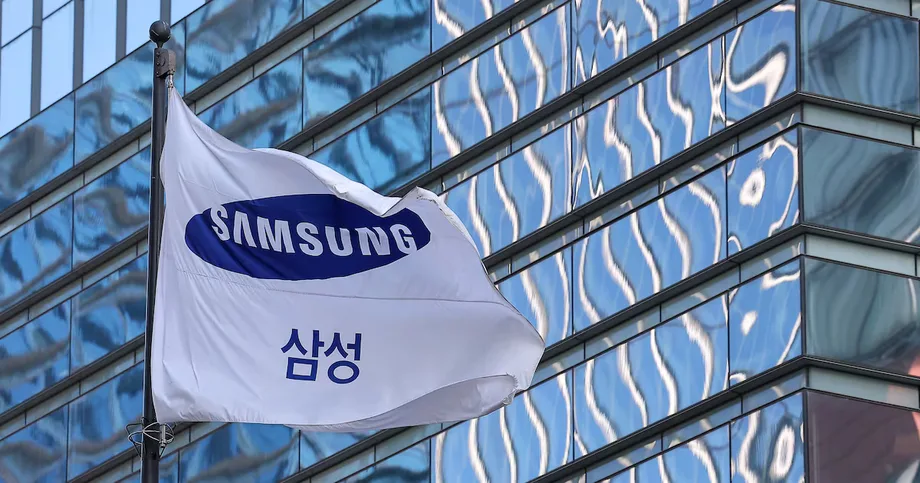
A November reset with a December start
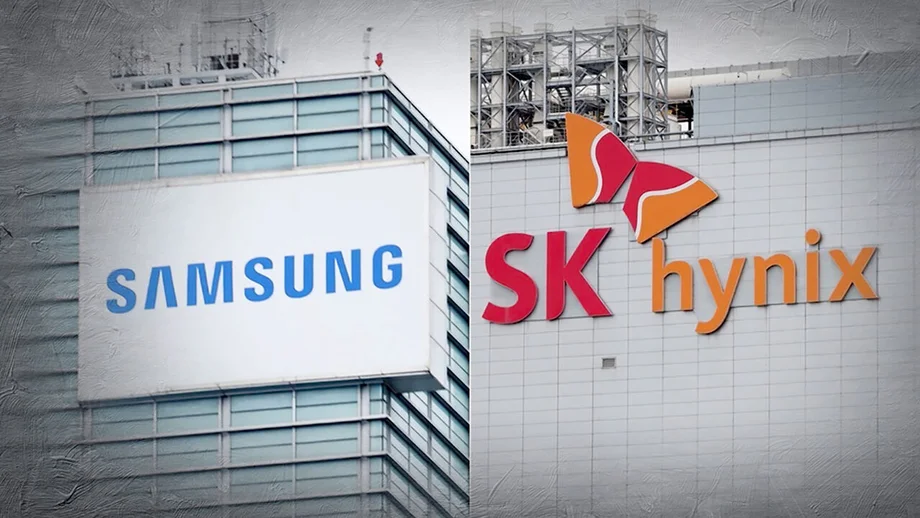
Samsung Electronics on Nov. 26, 2026 finalized a reorganization reaching from smartphone software and refrigerator factories to memory development and its US semiconductor operations. The company briefed employees after completing subsequent personnel appointments for its Device eXperience (DX) and Device Solutions (DS) divisions. The moves followed president appointments on Nov. 20 and regular executive appointments on Nov. 24.
Contents
- A November reset with a December start
- Acquisitions and bundled business sales move up the hierarchy
- Appliances split in two after a painful profit slide
- The cooling bet becomes a factory and a search for orders
- Phones become the control point for Samsung's AI home
- Televisions, services and regional sales also change hands
- Memory development loses a layer of management
- System LSI puts customer acquisition beside chip design
- Packaging and US appointments complete the chip reset
- The commercial test is margins, contracts and execution
- Key Points
The reorganized DX operations will begin work on Dec. 1. Samsung is elevating acquisitions and investment, giving heating, ventilation and air conditioning equal status with general appliances, and creating organizations for connected home artificial intelligence and premium phones. In semiconductors, it is removing a management layer above memory development, rebuilding System LSI sales and marketing, adding packaging specialists and changing leaders in the United States.
- November 2025: Samsung acquired German climate control specialist FläktGroup for about 1.5 billion euros, approximately 2.4 trillion won.
- August 2026: Samsung announced an investment of about 240 billion won in a FläktGroup production line at its Gwangju site.
- Nov. 20, 2026: Hwang Sang-jun, Cho Sang-yeon and Lee Jong-myeong were promoted to president and assigned senior semiconductor roles.
- Nov. 24: Samsung announced its regular executive appointments, including a promotion for acquisitions specialist Mathieu Apotheker.
- Nov. 26: The two divisions confirmed their organizational changes and held employee briefings.
- Dec. 1: The new DX structure is scheduled to start operating.
- Early 2028: The Gwangju line is planned to begin producing data center cooling equipment.
The plan therefore combines immediate changes in authority and sales leadership with industrial projects whose output and contract results will arrive later.
Acquisitions and bundled business sales move up the hierarchy
Within DX, Samsung raised its Corporate Development Group to team status and placed it under management support, inside a dedicated mergers and acquisitions structure. A team occupies a higher position in Samsung's internal organization than a group. Vice President Jang Se-myung was named to lead the organization responsible for M&A and strategic investment. Samsung had already created a companywide M&A team under its Business Support Office the previous year.
Mathieu Apotheker, who had led the Corporate Development Group, was promoted to executive vice president on Nov. 24. He specializes in acquisitions and financial investment involving AI and robotics, and was credited with helping diversify Samsung's business portfolio through negotiations with industry partners. The elevated DX organization is expected to pursue outside technology, companies and talent in AI, robotics and climate control. No acquisition target, spending budget or deal timetable was announced with the reorganization.
Samsung also moved the functions of its B2B Integrated Offering Center from its Korean sales operation into a center reporting directly to DX, appointing Vice President Park Chan-woo as its head. B2B means sales to companies and institutions rather than individual consumers. The center will combine smartphones, televisions, appliances and climate control into packages for homes and buildings, giving Samsung one organization to coordinate products that otherwise sit in separate business units.
Appliances split in two after a painful profit slide
The Digital Appliances Business will now operate through two pillars. The new Home Appliance Business Team brings refrigerators, washing machines and other general appliances into one organization, while the HVAC Business Team remains separate and equal in status. DA head Kim Cheol-gi will also lead the home appliance team. Vice President Lim Sung-taek, previously head of Korean operations, will lead HVAC.
The financial pressure behind that separation has been building for years. Operating margins for the business grouping including televisions and appliances fell from 6.5 percent in 2021 to 2.2 percent in both 2022 and 2023. Operating profit in the second quarter of 2024 was 490 billion won, down 34 percent from a year earlier. The grouping earned 1.7 trillion won in 2024 but recorded a 200 billion won operating loss in 2025, a swing of 1.9 trillion won. It returned to profit with 200 billion won in the first quarter of 2026, slipped back into loss in the second quarter and posted a 200 billion won loss in the third.
Executive Chairman Lee Jae-yong had already pressed management about the underlying technology during a visit to the appliance business at Suwon Digital City on Sept. 9, 2024. He reviewed Chinese competitors, product differentiation, AI connections between devices and product standardization intended to improve manufacturing competitiveness.
Is this our own technology? How far ahead are we?
Production and sales have since been altered as well. At an April 2026 management briefing, the appliance business presented plans to outsource some products with weak returns, including dishwashers and microwave ovens, and to close its Malaysian appliance factory. It said it would concentrate resources on strategic products such as refrigerators and washing machines, together with climate control. In May, Samsung decided to stop selling appliances and televisions in China. Its Suzhou appliance factory will continue operating, and service for existing Chinese customers will remain available.
Samsung said third quarter appliance sales benefited from subscriptions and B2B business, but raw material prices and logistics costs weighed on results. Combining the general appliance teams gives Kim direct responsibility for simplifying that operation, while Lim receives a separate organization for winning orders from data centers and commercial buildings.
The cooling bet becomes a factory and a search for orders
The Gwangju investment shows what the new HVAC team is intended to sell. Samsung began construction this year on a production line using FläktGroup technology, with about 240 billion won committed. That is one tenth of the roughly 2.4 trillion won acquisition value given for the German company. The line is intended to make central air conditioning products for AI data centers and advanced manufacturing facilities, including coolant distribution units, with production planned for early 2028. A coolant distribution unit controls the flow of liquid that carries heat away from computing equipment.
Electricity demand explains Samsung's interest. The International Energy Agency projects global data center electricity consumption will rise from 485 terawatt hours in 2025 to 950 terawatt hours in 2030, an increase of about 96 percent. One terawatt hour equals one billion kilowatt hours. Cooling is a major part of that demand because densely packed AI servers generate considerable heat.
Lee Byung-hoon, a professor of electrical and electronic engineering at POSTECH, explained why cooling efficiency matters to the industry's expansion.
Cooling can account for as much as 50 percent of a data center's total power consumption. Power shortages can constrain the growth of the data center market, so cooling technology that uses energy efficiently will become more important.
FläktGroup produced 2.5 megawatt liquid cooling equipment at its Arkansas factory in October 2026 after designing it jointly with a US customer. The equipment is destined for an American data center project planned to reach 200 megawatts. The customer's name, contract value and equipment volume were not disclosed, leaving the commercial size of that project unclear.
Phones become the control point for Samsung's AI home
At the Mobile eXperience Business, President Choi Won-joon will have a Home AI Team reporting directly to him. Vice President Jeong Jae-yeon will oversee its work. The team is expected to combine the Galaxy AI experience on smartphones with SmartThings, Samsung's platform for connected devices, so a phone can help control televisions, refrigerators, washing machines and other household internet devices. Its remit extends across business divisions rather than stopping at features for individual products.
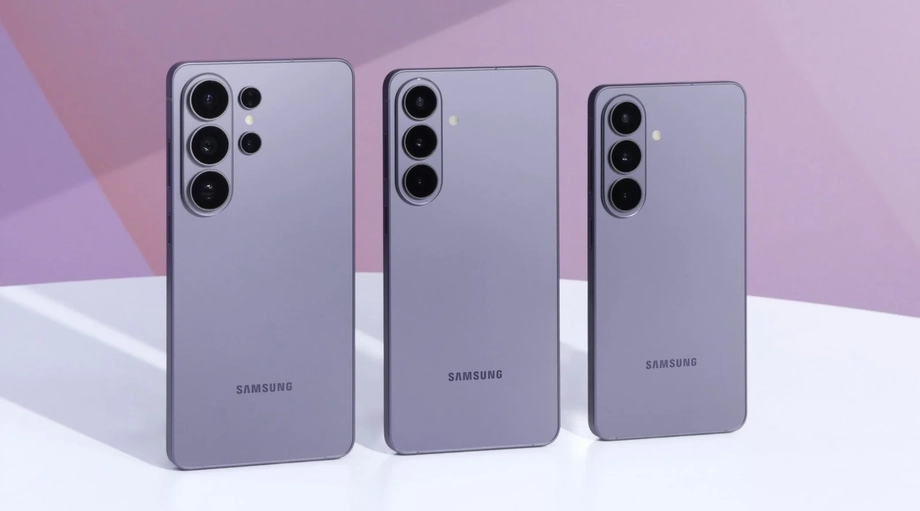
A second organization, the Flagship Innovation Group, will sit under the MX Strategic Marketing Office. It will set sales targets and strategies for Galaxy S phones and foldable models. Rising memory prices are increasing the cost of building phones, so Samsung wants to sell a larger proportion of premium devices. A richer mix of expensive models can raise the average selling price and provide more room to absorb component costs.
Televisions, services and regional sales also change hands
The Visual Display Business will gain an Integrated Operation Center reporting directly to its business head, with Vice President Choi Yong-hoon as center chief. Vice President Park Soon-cheol will oversee both the Big Data Center and the direct to consumer sales center. The latter will contain a new planning group for AI transformation. Samsung is also renaming its Medical Device Business as the HME Business, its Global CS Center as the LX Center and its Global Brand Center as the Global Marketing Center, while reducing similar or overlapping organizations.
Regional appointments include Jeong Ho-jin for Korea, Choi Soon for Africa and Lee Seung-yeop for Latin America. These changes accompany a difficult balance in televisions. Samsung estimated that its share of global TV revenue rose from 28.3 percent in 2024 to 29.1 percent in 2025 and 29.5 percent for the first three quarters of 2026. Over the same period, the average TV selling price for the first three quarters of 2026 fell about 3 percent from the 2025 annual average. In May, Samsung appointed Lee Won-jin, a content and services specialist with experience at Google, to replace Yong Seok-woo as head of Visual Display, adding advertising, content and platform revenue to the business's priorities.
Memory development loses a layer of management
The Memory Business has abolished the head of memory development position, which was created late in 2025 to concentrate technical capabilities. The DRAM Development Office, Flash Development Office and Solution Development Office will now report directly to business head Hwang Sang-jun. Hwang, who previously led memory development and DRAM development, will also continue as head of the DRAM Development Office. One reporting layer between engineers and the business chief has disappeared.
Samsung wants faster decisions on products such as high bandwidth memory, or HBM. HBM stacks memory chips so that AI processors can receive large volumes of data quickly. A new Logic Development Team under the Solution Development Office will strengthen the circuitry that controls memory operations. That capability matters as customers request HBM tailored to their own systems. The team is also intended to improve the next generation of DRAM and connect technologies across NAND flash and solution products.
The leadership structure above these teams was set on Nov. 20. Lee Jong-myeong became DS chief technology officer and head of the Semiconductor Research Institute, alongside Hwang's appointment to Memory and Cho Sang-yeon's move to System LSI. Vice Chairman and DS head Jun Young-hyun had previously said he would concentrate on future businesses, including foundry contract manufacturing, after giving up his concurrent role as memory chief.
System LSI puts customer acquisition beside chip design
System LSI, which designs chips rather than manufacturing memory, is restoring the Strategic Marketing Office that it abolished late in 2025. Sales, marketing and product planning previously divided among system on chip, sensor and LSI products will be consolidated. A system on chip combines several computing functions in one chip. The three existing product business teams will each be elevated to a development office, while Vice President Shin Seung-cheol, previously head of System LSI sales, will lead the restored marketing organization.
President Cho Sang-yeon brings experience with global customers after leading Device Solutions Americas from December 2024. His earlier assignments included the A-Project team for automotive semiconductors and software development within Memory. Samsung is pairing that experience with a larger sales organization as it tries to win more external orders and diversify beyond mobile products toward automotive and custom semiconductors. The contrast within DS is sharp: memory is benefiting from a boom and record division results, while System LSI has faced persistent losses.
Packaging and US appointments complete the chip reset
The Foundry Business will establish an Advanced Packaging Development Office reporting directly to its head, Han Jin-man. The Semiconductor Research Institute will add a Next Generation Packaging Development Team. Packaging protects chips and connects them to other components; advanced methods can bring memory and computing chips closer together, making packaging important to speed, heat control and manufacturing yields.
In the United States, Executive Vice President Yoon Ha-ryong was designated to lead Device Solutions Americas after Cho's move to System LSI. Yoon previously headed DSA's Memory Marketing Team. DSA handles sales and customer response across memory, System LSI and foundry services, placing it close to major buyers of HBM and advanced manufacturing capacity.
Executive Vice President Lee Hwa-sung was designated head of the Austin operation, known as SAS, ahead of full operation of Samsung's foundry plant in Taylor, Texas. His tasks include stabilizing local production infrastructure and expanding the North American foundry business. Vice President Park Sung-wook was named head of the Memory Manufacturing Technology Center. Samsung did not give a date for full Taylor operations or announce new customer contracts alongside these appointments.
The commercial test is margins, contracts and execution
Climate control presents a different economics problem from memory chips. Semiconductor factories can spread development costs across large production volumes, while cooling projects often require design, installation and maintenance adapted to each building. Suppliers must compete for individual projects, which can keep margins thin even when the market expands.
Park Jae-geun, a professor in Hanyang University's School of Electronic Engineering, expects limited benefit from simply transferring Samsung's semiconductor relationships because the chip and appliance businesses operate independently. A Samsung representative likewise said it was not yet possible to know whether the existing semiconductor customer network could be used for climate control.
Han Se-kyung, a professor of electrical engineering at Kyungpook National University, described why the sales model must change and warned against treating the two industries alike.
In semiconductors, customers choose products that match a supplier's technology. In HVAC, the supplier must match the customer's requirements. It is a business adapted to each site, and Samsung must not approach it in the same way as semiconductors.
Han also identified a possible advantage inside the Samsung group. Samsung C&T designs and constructs data centers, while Samsung SDS operates them, giving the group places to demonstrate cooling technology and build an operating record. He identified actual contract awards in 2027 and 2028 as the crucial test. Before then, the nearest milestones are the Dec. 1 launch of the DX structure, the integration of FläktGroup into the new HVAC team and the customer work assigned to the rebuilt semiconductor sales organizations.
Key Points
- Samsung finalized the DX and DS reorganization on Nov. 26, 2026, with the new DX structure starting Dec. 1.
- DX elevated its acquisitions organization and appointed Jang Se-myung to lead M&A and strategic investment.
- General appliances and HVAC became separate business pillars under Kim Cheol-gi and Lim Sung-taek.
- A 240 billion won Gwangju cooling line is planned to begin production in early 2028.
- MX created a Home AI Team and a Flagship Innovation Group to connect devices and increase premium phone sales.
- Memory development now reports directly to Hwang Sang-jun, who will also lead DRAM development.
- System LSI restored its Strategic Marketing Office, elevated three product teams and consolidated customer acquisition work.
- Samsung added packaging organizations and appointed new leaders for its Americas and Austin semiconductor operations.