A tax break tied to a public sale
South Korea is pursuing a capital gains tax reduction of up to 200 million won for owners who sell certain rental apartments to the Korea Land and Housing Corporation (LH) or another public buyer in 2027. The proposed relief would cover 25 percent of the tax bill. In 2028, the reduction would fall to 15 percent, with a ceiling of 100 million won.
Contents
- A tax break tied to a public sale
- Who qualifies, and how large is the saving?
- Why about 63,000 apartments entered the discussion
- A shrinking tax runway for private sales
- Why public agencies are being brought in as buyers
- What happens to the tenant after a public takeover?
- Other property tax changes discussed alongside the plan
- Which issues remain unresolved?
- At a Glance
The eligible properties are apartments in regulated areas that were bought and registered as rental homes, then automatically deregistered after their mandatory rental periods ended. Regulated areas are places where the government has identified an overheated housing market, or a risk of overheating, after examining factors such as home prices and competition for new housing subscriptions.
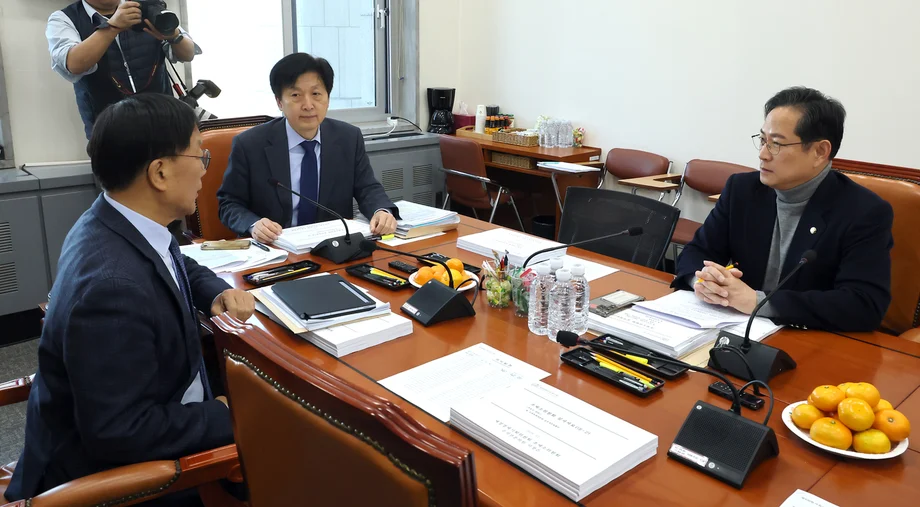
First Vice Finance Minister Kwon Dae-young expressed the government's acceptance of the proposal at a Nov. 25, 2026 meeting of the parliamentary finance committee's tax subcommittee, citing the need to support residential stability for tenants and improve selling conditions for rental business operators. The subcommittee reached a tentative agreement. The government plans to combine its proposal with a plan from Democratic Party lawmaker Oh Ki-hyoung, and the resulting amendment still needs approval from the National Assembly.
The policy addresses two connected problems. Owners facing the withdrawal of tax privileges can struggle to find buyers when tenants remain in their apartments, while a sale to an owner occupier can remove another home from the rental market. A public purchase is intended to give the owner an exit and keep the apartment available for rent.
Who qualifies, and how large is the saving?
Capital gains tax is charged on the profit from selling a property, rather than on its full sale price. The proposed public sale credit would reduce the calculated tax, subject to both a percentage and a cash ceiling.
An owner facing 400 million won in capital gains tax before relief would receive a 100 million won reduction for a qualifying sale in 2027, leaving 300 million won to pay. The same tax bill on a qualifying sale in 2028 would produce a 60 million won reduction, leaving 340 million won. The example shows how the benefit narrows even when the underlying tax bill stays unchanged.
The 200 million won ceiling applies cumulatively to each individual. It is not a new allowance attached separately to every apartment. Oh and nine other lawmakers introduced the relevant amendment to the Restriction of Special Taxation Act on Nov. 2, 2026. Their bill also calls for publicly acquired apartments to be supplied as public purchase rental housing or publicly supported private rental housing.
Eligibility is tied to the property's history. The apartment must have been purchased in a regulated area, registered as a rental home, kept through its required rental period and then automatically removed from the register. Detailed requirements for buyers are expected to be set through a presidential decree.
Why about 63,000 apartments entered the discussion
The Finance Ministry counts approximately 63,000 purchase rental apartments in regulated areas whose registrations were automatically cancelled between 2021 and 2026. That figure includes homes that have already been sold. The ministry therefore could not determine how many remain in the hands of rental business operators, or how many currently have tenants.
The origins of the measure lie in a 2020 amendment to the Special Act on Private Rental Housing. The amendment abolished the apartment categories for short term and long term purchase rentals. Previously registered homes could complete a mandatory rental period of four or eight years, after which their rental registrations were automatically cancelled.
Cancellation did not immediately remove every tax advantage. Owners who met certain conditions could continue to receive exclusion from the heavier capital gains tax rates applied to owners of multiple homes. Some could also receive a preferential special deduction for long term ownership, which reduces the portion of a property gain subject to tax.
The government's original tax plan focused on winding down those privileges. The public sale proposal adds an incentive to that process, giving qualifying owners a reason to sell to LH or another public institution instead of waiting for a conventional buyer.
A shrinking tax runway for private sales
Enforcement decrees for the Income Tax Act and Corporate Tax Act that took effect on Oct. 1, 2026 began limiting the remaining benefits. For the affected apartments in regulated areas, owners generally must sell by the end of 2027 to receive all of the existing advantages.
The treatment then becomes less generous. Sales in 2028 would face reduced transitional relief, including application of half the heavier tax rate for owners of multiple homes. For an apartment registered for eight years that meets the existing deduction requirements, the special deduction for gains arising during the rental period would fall from 50 percent to 30 percent. The transitional measures end in 2029.
- In 2020, parliament abolished the apartment purchase rental categories, while existing registrations continued for mandatory periods of four or eight years.
- On Oct. 1, 2026, revised enforcement decrees began restricting the remaining capital gains and corporate tax privileges.
- On Nov. 2, 2026, Oh Ki-hyoung and nine other lawmakers introduced the public sale tax credit bill.
- On Nov. 25, 2026, the tax subcommittee tentatively accepted combining the proposal with the government's plan.
- Sales by the end of 2027 can receive the full existing treatment if the relevant conditions are met. Public sales in that year would qualify for the proposed 25 percent credit, up to 200 million won.
- In 2028, private sales would receive narrower transitional treatment, while the proposed public sale credit would fall to 15 percent, up to 100 million won.
- In 2029, the transitional measures for ordinary sales are scheduled to end.
This calendar creates a financial reason for some owners to dispose of their apartments before the advantages disappear. It also increases the importance of finding buyers for homes that may still be occupied under existing leases.
Why public agencies are being brought in as buyers
A tenant's continued occupancy can narrow the pool of private purchasers. Someone seeking a home for immediate personal use may not want to buy an apartment with time left on its lease. A transaction that preserves the rental relationship can also be less attractive to buyers unfamiliar with taking over a landlord's obligations.
The government plans to use institutions including LH and the Korea Housing Finance Corporation to buy the apartments below market prices and supply them as rental housing for people without homes, particularly those on lower incomes. LH is a state housing developer and provider, while the housing finance corporation is a public financial institution involved in housing support.
For a landlord, the calculation would involve both the tax reduction and the purchase price. For the public sector, each acquisition could preserve an existing rental unit without waiting for a new housing development to be built.
The acquisition scale, budget and formula for setting purchase prices have not been disclosed. The division of purchases between institutions also remains undecided. Those details will determine how many apartments public buyers can actually acquire and whether owners consider the combined price and tax terms attractive.
What happens to the tenant after a public takeover?
A change in ownership does not immediately terminate an existing lease. Under the Housing Lease Protection Act, a buyer of a home occupied by a tenant whose lease has the legal right of opposability succeeds to the previous landlord's position. In plain terms, a tenant who has secured that legal protection can assert the lease against the new owner, including a public institution.
The larger uncertainty begins when the existing contract expires. The amendment does not specify the standards for renewing contracts with current tenants after conversion into a public rental program. It also leaves unanswered what income or asset qualifications those tenants would have to meet, and how their deposits and rents would be calculated.
Those issues matter because an apartment can remain rental housing even if its occupant changes. Preserving the number of rental units and enabling the current household to stay are separate outcomes. A family approaching the end of a lease would need to know whether it can renew, whether it qualifies for the new program and whether the housing payment would change.
The Finance Ministry's count of automatically deregistered apartments does not include a picture of current tenant occupancy. Until the purchase program and rental operating rules are completed, existing tenants cannot determine from the tax proposal alone what will happen after their contracts expire.
Other property tax changes discussed alongside the plan
The tax subcommittee also broadened proposed relief for households that own one home in the Seoul metropolitan area, sell it and move to another region. The government had initially proposed limiting eligibility to people aged 65 or older. The age restriction was removed during parliamentary review.
For qualifying metropolitan home sales in 2027, sellers aged 60 or older could receive up to 500 million won in capital gains tax relief, while those younger than 60 could receive up to 200 million won. The conditions differ by age. A seller younger than 60 must buy a home outside the metropolitan area and move there. Someone aged 60 or older can qualify after moving into a home under a large deposit lease or a monthly rental arrangement.
Married couples who jointly own one home would receive more automated treatment under the comprehensive real estate tax, an annual national tax on property holdings. The National Tax Service would compare separate deductions for each spouse with the special treatment available to a household owning one home. It would then issue the tax notice using the calculation that produces the smaller bill, removing the need for the taxpayers to make that comparison themselves.
Another change concerns apartments emptied for remodeling. Half of the construction period would count toward the residence period used for a capital gains tax deduction. The government's original proposal covered half the construction period for redevelopment and reconstruction projects, and the parliamentary discussions extended the treatment to remodeling.
Which issues remain unresolved?
The property measures emerged from tentative subcommittee agreement rather than final enactment. The government still intends to prepare a combined alternative to Oh's bill and its own proposal, after which the legislation must complete the remaining parliamentary process. Public purchase requirements and several operating rules would then depend on subordinate regulations.
Electric vehicles were also discussed in connection with a tax credit for domestic production. A credit of roughly 2.5 million won per vehicle has been raised, with the detailed scale of support under discussion. The issue did not reach agreement in the smaller informal consultative group involving senior lawmakers from the ruling and opposition parties and Finance Ministry officials.
That group also failed to agree on a broader revision of property taxation intended to favor people who actually live in their homes. The electric vehicle proposal therefore remains a separate, unsettled item rather than an approved companion to the public apartment sale incentive.
For owners of deregistered rental apartments, the immediate considerations are the end of 2027 deadline for full existing benefits, the more generous proposed public sale credit in 2027 and the smaller credit in 2028. For tenants and public housing administrators, the decisive information will include renewal rules, eligibility standards, rents, deposits, acquisition budgets and purchase pricing.
At a Glance
- Qualifying owners selling to LH or another public buyer in 2027 could receive 25 percent off capital gains tax, capped at 200 million won.
- The proposed reduction falls to 15 percent in 2028, with a cumulative individual ceiling of 100 million won.
- About 63,000 regulated area apartments were automatically deregistered from 2021 through 2026, but that figure includes homes already sold.
- Existing tax privileges begin narrowing after 2027, and transitional treatment for ordinary sales ends in 2029.
- Current leases survive a change in ownership when tenants have the required legal protection, but renewal and eligibility rules after public acquisition remain unspecified.
- Parliamentary discussions also covered wider relief for people leaving the Seoul metropolitan area, joint ownership tax calculations and residence periods during remodeling.
- The property tax agreement is tentative, while the proposed electric vehicle production credit of about 2.5 million won per vehicle remains without agreement.