A 925 billion won bill, and a White House charge of broken promises
Two South Korean regulators have ordered Coupang, the country's largest online retailer, to pay 925.481 billion won in penalties, about $688 million. The Personal Information Protection Commission imposed 624.68 billion won on June 30 after the personal records of roughly 37.5 million users were exposed in a data breach. The Fair Trade Commission added a tentative 300.8 billion won penalty on Nov. 9 over the way Coupang Eats required restaurants selling through its app to accept terms at least as good as those offered to rival delivery apps, a practice known as most-favored-nation treatment.
Contents
- A 925 billion won bill, and a White House charge of broken promises
- What the privacy commission found
- Why the two sides cannot agree on the size of the leak
- A laptop pulled from a river in Shanghai
- A hearing in Seoul that Washington would not ignore
- The arithmetic of the fines
- Section 301 and the next pressure point
- Lobbyists on retainer, and a message that did not land
- How the dispute unfolded
- Key Points
A White House official said the two decisions break a commitment Seoul made to President Donald Trump last year to treat American technology companies fairly, and described the Lee Jae Myung government's handling of U.S. firms as discriminatory. The official put the case in blunt terms.
The Donald Trump administration opposes the Lee Jae Myung government's discriminatory measures against U.S. companies, and the White House expects South Korea to keep its promise of fair treatment for U.S. tech companies, including Coupang.
The State Department joined in, saying that the Fair Trade Commission's continuing actions against American companies "threaten the potential development" of the alliance between the two countries, and that Washington is actively reviewing policy options to answer what it calls discriminatory treatment. Officials did not say which options are under consideration.
South Korea's Embassy in Washington rejected the charge the same week. A spokesperson said every inquiry and ruling, including the delivery app penalties, followed Korean statutes and regulations, and stressed that companies retain a full right to challenge them in court.
All investigations and decisions by the South Korean government, including the Fair Trade Commission's recent imposition of fines on food delivery service providers for anti-competitive practices, have been carried out lawfully in accordance with relevant laws and regulations.
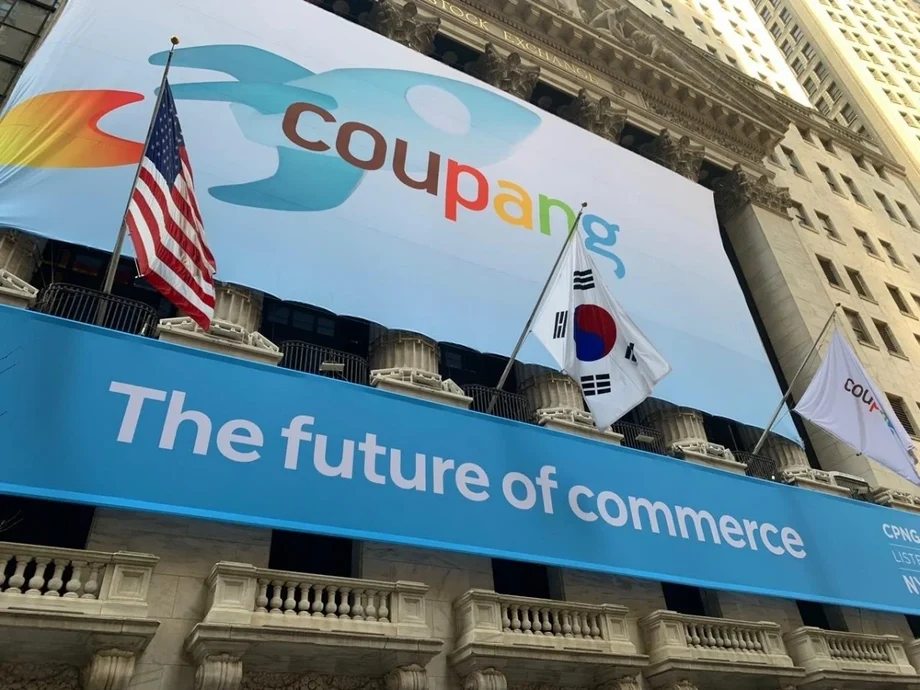
The embassy added that Seoul is honoring its agreements with the Trump administration and will work closely with U.S. policy officials to strengthen economic ties. Coupang, for its part, is American by incorporation: registered in Delaware, headquartered in Seattle, listed in New York, founded in 2010, with almost all of its business in Korea. The company says it has been the largest single source of U.S. foreign direct investment into Korea over the past decade.
What the privacy commission found
The June penalty is the largest data protection fine ever levied in South Korea. The commission said poor management of authentication signing keys and lax access controls let intruders reach the records of about 37.5 million users, and that Coupang also gathered the online activity of some 11.17 million users on third party websites and apps, storing it in a form that allowed individuals to be identified.
Commission chair Song Kyung-hee told a briefing that the retailer should have notified affected customers within 72 hours of learning of the breach. It did not, she said, and that delay had consequences.
As a result, those individuals were unaware of the breach and deprived of the opportunity to take steps to prevent secondary harm.
The 624.68 billion won figure is close to Coupang's entire operating profit of 721.1 billion won last year. It dwarfs the previous record, a 134.8 billion won fine on SK Telecom over a leak that touched 23.24 million users. Company lawyers will not argue that the old cap applies for long: an amendment to the Personal Information Protection Act takes effect in September and lifts the maximum from 3 per cent to 10 per cent of total revenue for large breaches. Coupang escaped the higher ceiling because the new rule cannot be applied to conduct that predates it.
Coupang apologized for the worry caused to customers and said it would strengthen its data protection systems. It also signalled a fight.
We regret that proactive measures taken to prevent secondary damage and explanations based on clear facts regarding last year's data breach were not sufficiently reflected" in the commission's decision. "After receiving the commission's official ruling, we expect the facts to be clearly established through legal procedures.
The company filed a suit to cancel the fine and a request to suspend it on Oct. 7. A court dismissed the suspension request this month, meaning the penalty stands while the case proceeds. Coupang's shares have fallen about 35 per cent since the start of the year.
Why the two sides cannot agree on the size of the leak
The dispute began in November 2025, when Coupang apologized publicly over the possible exposure of data belonging to 33 million customers and chief executive Park Dae-jun resigned. Investigators later concluded that the real exposure was far wider than the company's own account of what went wrong.
Coupang has told U.S. lawmakers that a former employee, a Chinese national, took information on about 3,000 customers, and that the rest of the alarm was overblown. The government called that a one sided claim issued while a joint public and private investigation was still running, and said the company had failed to hand over required material and had problems preserving its records. The commission's final count was 37.5 million users, and its fine was calculated on that basis.
A laptop pulled from a river in Shanghai
The U.S. House Judiciary Committee's interim report, published on July 1, gives the most detailed version of an episode that has become the emotional core of the case in Washington. According to the committee, the National Intelligence Service told Coupang it could not act directly under Chinese law and that the company would have to recover evidence itself. Coupang sent staff to Shanghai in December 2025 and collected a desktop computer, a hard disk, a graphics card and a written confession from the former employee.
When the service pressed for the missing laptop, the report says, Coupang hired divers to salvage a MacBook Air from the riverbed. The recovered machine, the confession and fingerprints were handed to a service officer waiting at the site, who carried them to the Korean consulate general in Shanghai. Employees were told to make sure the handover was not recorded by CCTV, according to the report, which says the committee obtained messages from a source inside the presidential office, internal service documents, more than 230 call records and testimony from people involved. The report also states that then president Lee Jae Myung was briefed on the operation.
The intelligence service has denied all of it, and has done so since late 2025.
The NIS has never given any instructions, orders, or approvals to Coupang, and does not have the authority to do so.
The service says there was information sharing and consultation between working level staff after the leak, cooperation at the level of national security, and nothing that amounted to directing an investigation or the collection of evidence.
A hearing in Seoul that Washington would not ignore
Harold Rogers, the American citizen who runs Coupang's Korean unit as interim chief executive, appeared in December 2025 before the National Assembly's science, ICT, broadcasting and communications committee. The session, and what happened in it, is treated in the House report as the moment the quarrel turned into a trade issue. Lawmakers cut off his answers, refused him time to respond and, in one case, were recorded using a slur. The report says Rogers heard language equivalent to "mother F' er" in Korean and was called a liar, and that legislators demanded laws to force Coupang into bankruptcy before any formal finding had been made.
Rogers then testified for about seven hours before the Judiciary Committee in February. That report states that on the first day of the hearing alone he faced more than 20 personal criminal threats, including perjury charges, arrest, a travel ban and deportation. Korean prosecutors are still examining whether his testimony that measures were taken on the service's instructions amounted to perjury.
Seoul's Foreign Ministry spokesperson Park Il said on July 2 that the House report "unilaterally reflects only Coupang's claims." No element of the government's account appears in the document, and the embassy in Washington has since given U.S. officials its own version of the facts.
The arithmetic of the fines
The report argues that the privacy penalty is nearly twice Coupang's net profit for last year and far heavier than anything handed to Korean competitors. It compares the roughly $410 million imposed on Coupang with the $97 million, or 149.4 billion won, paid by SK Telecom over a leak affecting about 27 million people, and the $11 million, or 16.9 billion won, paid by Kakao over about 40 million accounts. The committee says the regulatory campaign has cut Coupang's market value by more than 40 per cent and hurt investors.
Korean officials answer with ratios rather than totals. The Fair Trade Commission's own comparison shows Coupang's penalty at 2.0 per cent of relevant revenue in an algorithm manipulation case, below Kakao at 3.0 per cent and close to Naver at 1.8 per cent. Under the display advertising law, SK Telecom was fined 0.3 per cent and AliExpress 0.4 per cent, both above Tesla at 0.1 per cent. The commission has said publicly that it does not discriminate by nationality and that bans on most-favored-nation clauses are enforced by the U.S. Federal Trade Commission and other advanced regulators too.
The delivery app file cuts against the targeting claim in a different way. The commission set a tentative penalty of 3311 billion won against Woowa Brothers, the Korean operator of Baemin, which is larger than the 3008 billion won it proposed for Coupang. Nearly 100 lawmakers signed a joint letter in April warning of "undue pressure" from American politicians over the investigation. And Coupang says the method used to calculate its own penalty differs from the precedent set in earlier delivery app cases, which is the ground for its court challenge.
Section 301 and the next pressure point
Twenty two Republican lawmakers, led by House Ways and Means trade subcommittee chairman Adrian Smith, wrote to U.S. Trade Representative Jamieson Greer on Nov. 23 asking him to watch three Korean bills closely: the Online Platform Fairness Act, an amendment to the telecommunications business act that would force mobile operating system owners to open hardware and software features to rival products, and a delivery app bill capping combined commission, advertising and delivery fees at 15 per cent of an order. The lawmakers cited modelling that puts the cost to the U.S. economy at up to $525 billion over ten years without publishing how the estimate was built.
The trade representative's office is weighing a Section 301 investigation into Korean digital rules, alongside the European Union's Digital Markets Act and Australia's law requiring platforms to pay local news organisations. Section 301 of the Trade Act of 1974 lets Washington act, including with tariffs, when it finds foreign practices unreasonable or discriminatory and a burden on U.S. commerce. Korea has already been through two such inquiries under the current administration, one on forced labor import controls and one on manufacturing overcapacity. A third would open on digital policy.
Trade minister Kim Jung-kwan told reporters on Nov. 25 that no formal notice had arrived. "Nothing has arrived yet regarding the digital Section 301," he said, adding that the government is "fully prepared." On the same day, the trade representative's office published its overcapacity findings, keeping a 15 per cent tariff ceiling agreed with Seoul but warning of 25 per cent if talks disappoint, and naming an 800 trillion won semiconductor cluster planned for Gwangju and the Jeolla region, along with a record bilateral surplus above $100 billion. Written comments are open until Jan. 5, with a public hearing before the final rate is set.
Lobbyists on retainer, and a message that did not land
Seoul has spent heavily on Washington representation. The embassy retains Brownstein Hyatt Farber Schreck, Arnold & Porter and Akin Gump Strauss Hauer & Feld, paying hundreds of millions of won a year in fees. One firm working for the mission, Thomas Capitol Partners, has reported to the Justice Department that most of its activity consists of requests for in person meetings. Its representative, a Korean American identified in filings as Kim, has received more than 10 billion won since the mid-2000s, lists only the embassy and the Korea International Trade Association as clients, and has not updated its website since 2016.
Coupang has run its own campaign, donating to federal lawmakers through a political action committee and pressing its case with the administration. The result is visible in the language coming out of Congress. Representative Darrell Issa, who has argued for months that Korean rules single out American firms, said the July report was "a bombshell" and that "targeting U.S. companies and U.S. citizens is not how you treat a friend." He named Fair Trade Commission chair Joo Byung-ki as the central figure, saying Joo's anti competitive policies unfairly target U.S. industry and citizens and put the alliance at risk, and urging the Lee Jae Myung government to choose friendship over confrontation.
Adrian Smith said Washington "can no longer tolerate discriminatory actions against U.S. companies." Fred Fleitz, a former National Security Council executive secretary now at the America First Policy Institute, called the river operation "shocking." Matt Mowers, who heads the Fair Market Alliance, said Korean authorities have treated U.S. firms differently from domestic and regional competitors under an opaque system, and that non tariff barriers can hurt as much as tariffs.
How the dispute unfolded
- November 2025: Leak allegations surface. Coupang apologizes over the possible exposure of 33 million customers, and chief executive Park Dae-jun resigns.
- December 2025: Harold Rogers testifies before the National Assembly's science and ICT committee.
- February 2026: Rogers testifies for about seven hours before the U.S. House Judiciary Committee.
- June 30, 2026: The Personal Information Protection Commission fines Coupang 624.68 billion won.
- July 1, 2026: The Judiciary Committee publishes its interim report.
- July 2, 2026: The White House says Coupang is being singled out, and the Foreign Ministry calls the report one sided.
- Oct. 7, 2026: Coupang sues to cancel the privacy fine and asks for a suspension.
- Nov. 9, 2026: The Fair Trade Commission announces the tentative 300.8 billion won delivery app penalty.
- Nov. 23, 2026: Twenty two Republican lawmakers ask the trade representative to monitor Korean platform bills.
- Nov. 25, 2026: New White House criticism, a State Department review of options, and an overcapacity report that keeps a 15 per cent tariff ceiling with a 25 per cent alternative.
- Nov. 26, 2026: The embassy in Washington rejects the discrimination claim.
Key Points
- Two Korean regulators have ordered Coupang to pay 925.481 billion won, about $688 million: 624.68 billion won for a data breach and a tentative 300.8 billion won over delivery app terms.
- The White House says the penalties break Seoul's promise to treat U.S. tech companies fairly, and the State Department says it is reviewing policy options.
- Seoul's embassy in Washington says every inquiry and decision was lawful and that companies can seek remedies in Korean courts.
- A House Judiciary Committee report alleges discriminatory regulation and describes divers recovering a laptop from a Shanghai river on intelligence service instructions, a claim the service denies.
- The commission found records of about 37.5 million users exposed, while Coupang says the actual leak covered about 3,000 customers.
- The Fair Trade Commission's own data puts Coupang's penalty at 2.0 per cent of revenue, below Kakao at 3.0 per cent, and it proposed a larger 3311 billion won fine for Baemin's operator.
- Washington is weighing a Section 301 investigation into Korean digital rules, which would be the country's third such inquiry.
- Coupang's suit against the privacy fine is pending after a court refused to suspend the penalty.