A Committee, a Theme and a Set of Numbers
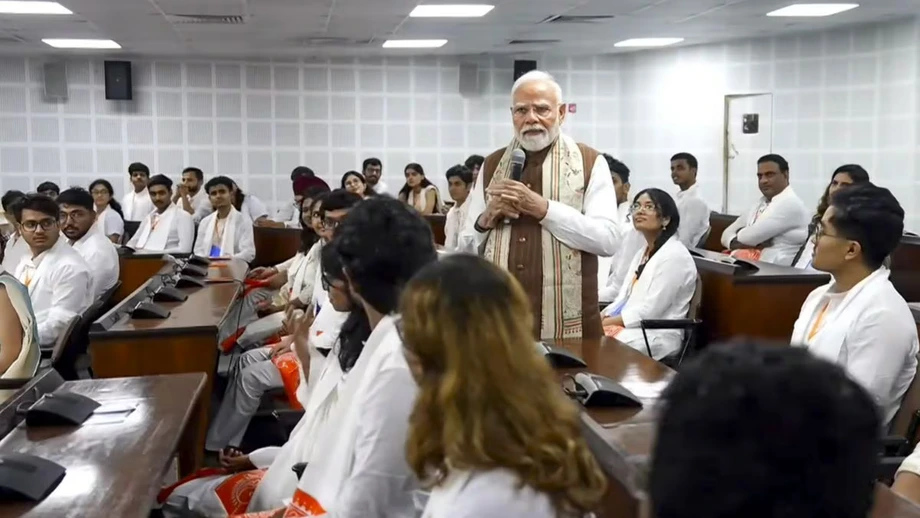
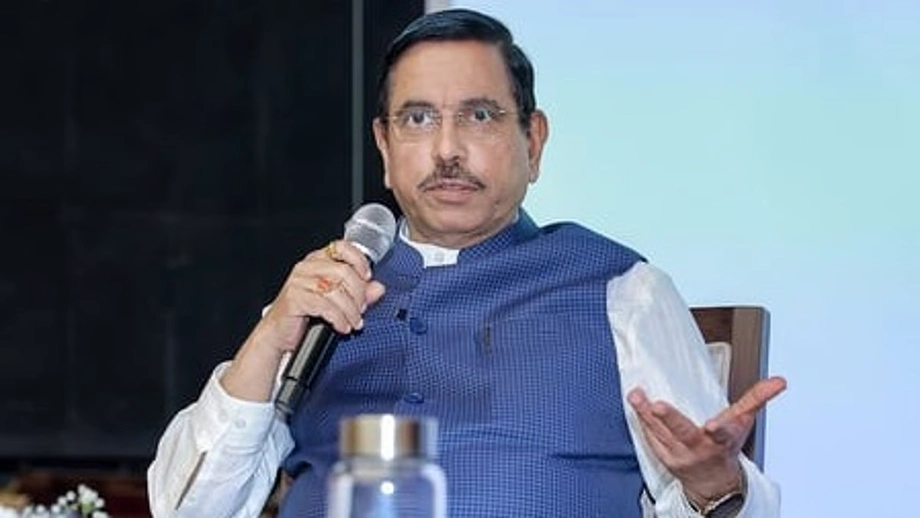
India's education ministry took its global ambitions to Parliament on Wednesday, 25 November, when Union Education Minister Pralhad Joshi chaired the first meeting of the Consultative Committee of Parliament on Education for 2026. The theme was internationalising Indian education and positioning the country as a global hub for learning. The panel is made up of Members of Parliament and advises the ministry on policy.
Contents
- A Committee, a Theme and a Set of Numbers
- What Joshi Told the Committee
- The Four Pillars of the Higher Education Plan
- Why 17 Letters of Intent Matter More Than They Sound
- The Door Widened From the Top 100 to the Top 500
- Indian Campuses Abroad: Zanzibar, Abu Dhabi and a Nigerian Site
- Australia Bets on Bengaluru, GIFT City and School Curricula
- The Numbers India Still Has to Move
- What Is Not Yet Decided
- Key Points
The briefing came with figures attached. Around 21 foreign higher education institutions are already running in India, Joshi told the members, alongside joint academic and research collaborations. A further 17 universities have been issued Letters of Intent under University Grants Commission rules to open campuses of their own, drawn from the United Kingdom, the United States, Australia and Italy.
School education produced its own headline number. According to the Department of School Education and Literacy, 268 schools affiliated to the Central Board of Secondary Education are operating in 26 countries, supported by an overseas regional office in Dubai.
Union Minister of State for Education Jayant Chaudhary attended, along with Deepti Gaur Mukerjee, secretary of the Department of Higher Education, T. K. Anil Kumar, secretary of the Department of School Education and Literacy, and other senior officials. Members of the committee welcomed the work done by the two departments and offered suggestions, the ministry said.
What Joshi Told the Committee
Joshi told the panel that the Indian Knowledge System carries a long history of global impact and that the ministry wants a wider international footprint for it. He argued that demand for CBSE schools abroad reflects the credibility of Indian school programmes and their potential to grow at a global scale.
The demand for CBSE schools abroad demonstrated the credibility of Indian education programmes and their potential for scalability at the global level.
In a post on X after the meeting, the minister summarised what had been discussed.
Deliberations covered expanding Indian universities globally, facilitating foreign university campuses in India, strengthening international research partnerships, student and faculty exchange programmes, and attracting international students.
He tied the work to the National Education Policy 2020 and to Prime Minister Narendra Modi's target of a developed India by 2047, describing the aim as an education system connected to the world, ready for future challenges and rooted in Indian values.
The Four Pillars of the Higher Education Plan
The Department of Higher Education laid out four strategies behind the push: academic and research collaborations with institutions abroad; attracting international students to study in India; allowing foreign higher education institutions to open branch campuses in the country; and helping Indian institutions open campuses overseas.
Flagship schemes sit under those four pillars. Bharat Innovates supports research and innovation partnerships. SPARC, the Scheme for Promotion of Academic and Research Collaboration, funds joint research with foreign universities, and GIAN, the Global Initiative of Academic Networks, brings international academics to teach in Indian classrooms for short stints. DASA, Direct Admission of Students Abroad, gives foreign students and overseas Indians a route into undergraduate engineering programmes, while a revamped Study in India portal is meant to draw more applicants from abroad.
On the school side, the department pointed to CBSE Global and the National Institute of Open Schooling as vehicles for taking Indian schooling overseas. Multilingual learning, mobility for teachers, curriculum reform and exposure to other cultures were listed as the changes that make an Indian classroom easier to export.
Academic equivalence gets its own body. PARAKH, the Performance Assessment, Review and Analysis of Knowledge for Holistic Development centre, works on comparing standards so a qualification earned here can be understood elsewhere. Officials said a standardised assessment framework is already in place across CBSE affiliated schools abroad, so exams and academic standards stay consistent from one country to the next.
Why 17 Letters of Intent Matter More Than They Sound
A Letter of Intent is an early green light, not a finished campus. It means the regulator has accepted an application to open, and the university can begin hiring, building and seeking further approvals. The pathway is set by the UGC (Setting up and Operation of Campuses of Foreign Higher Educational Institutions in India) Regulations, 2023, which created a single window process with defined approval timelines.
The rules leave admissions, fees, faculty hiring and salaries to the institution. They charge no annual fee beyond the application fee and take no rent from the regulator's side. Their most consequential provision concerns the degree itself: a qualification earned on an Indian campus carries the recognition of the home institution and counts as an Indian degree for all purposes, with no separate equivalence process. Credit mobility between the Indian and parent campuses lets a student begin at home and finish abroad, or come to India for a semester.
Two older laws govern money. The Foreign Exchange Management Act, 1999 sets how capital comes in and how surpluses leave. The Foreign Contribution (Regulation) Act, 2010 applies to donations. The commission keeps wide discretion: it may cancel an approval if activities are "against the interest of India", and it may add "any other conditions" over time. The higher education department's tally of 17 Letters of Intent is one more than another count published this week, which put the number at 16 covering 15 universities.
The Door Widened From the Top 100 to the Top 500
The National Education Policy 2020 had imagined only the world's top 100 universities operating in India. The 2023 regulations lowered the bar to the top 500, a change that brought in a far larger set of possible partners and helps explain the flow of applications that has followed.
What arrives on the ground is not simply a foreign nameplate. An international branch campus is defined by its curriculum, its faculty, its research networks and the institution that awards the degree. The framework requires participating universities to keep the same academic standards they apply at home and to meet specified global or subject ranking criteria. The University of Southampton, for one, says it aligns content, assessments and quality assurance in India with the standards used across its other campuses.
Louise Richardson, a former vice chancellor of the University of Oxford, put the test this way: a university has to be both "a force for good in the world" and "a good neighbour locally".
Indian Campuses Abroad: Zanzibar, Abu Dhabi and a Nigerian Site
The traffic runs both ways, and the outward leg is older. IIT Madras opened the first IIT campus outside India in Zanzibar in November 2023, and IIT Delhi followed in Abu Dhabi in September 2024. Nigeria's government proposed a site for a third campus in October 2025. No opening date has been given for it.
- November 2023: IIT Madras opens its Zanzibar campus, the first IIT outside India.
- September 2024: IIT Delhi opens a campus in Abu Dhabi.
- October 2025: Nigeria proposes land for an IIT campus.
- 25 November 2026: Parliament's education committee reviews the internationalisation plan.
- November 2026: the Abu Dhabi campus graduates its first 17 master's students.
Zanzibar shows how the model is financed. The island's government covers capital and operating costs while IIT Madras controls curriculum and student selection, which keeps India's outlay low and its presence visible. By July 2026, Tanzanians made up 51% of the campus's 130 students, and every graduate of its first master's class had found work in industry. The annual fee is $12,000, roughly nine times Tanzania's 2025 GDP per person of $1,319, a sum beyond many local families.
Abu Dhabi delivers a different return. ADNOC, the emirate's state oil company, backed up to 15 scholarships in the campus's first programme, a master's in energy transition and sustainability. Trade between India and the UAE reached $100.06 billion in 2024-25, up 19.6% on the previous year. All of the Abu Dhabi campus's faculty came from IIT Delhi as of May 2025, and Indians made up nearly 65% of its first 77 students, a mix that leaves room to build deeper local ties.
Australia Bets on Bengaluru, GIFT City and School Curricula
Australia is the most active single source of branch campuses. The University of New South Wales, Sydney, is already operating in Bengaluru, with Flinders University and La Trobe University due to follow, which would take Karnataka to six foreign universities. Tamil Nadu is set to host a campus of the University of Western Australia.
At Gujarat's GIFT City, Deakin University and the University of Wollongong run the country's first two foreign campuses. Deakin's first cohort numbered 55 students, and most found jobs quickly, including at National Australia Bank, according to Vik Singh, consul (commercial) and trade and investment commissioner for South Asia at Austrade, the Australian trade and investment commission. He spoke on the sidelines of DIDAC India 2026 in Bengaluru.
We focus on academic excellence and on employability. A ranking opens doors, but parents want to know the starting salary.
Singh put trade in both directions at about $54 billion, of which education accounts for about $9 billion, and said nearly 160,000 Indian students are studying in Australia. About 150 Australian companies operate in India, employing about 150,000 people in Bengaluru alone. Some 10 schools in Bengaluru are trialling the Australian curriculum, and TEQSA, Australia's higher education regulator, requires providers to deliver the same quality anywhere in the world.
It's not about selling our services to India. It's about Australia and India partnering to sell to the world.
Joint programmes allowed under the policy let a student study two years in Bengaluru and two in Sydney, a format that costs less than four full years abroad.
The Numbers India Still Has to Move
Inbound student numbers remain modest against the size of the ambition. India hosted 58,134 international students from 173 countries in 2023-24, up from 48,898 in 2019-20, and 73.6% of them were undergraduates. Karnataka and Punjab each hosted around 8,000, followed by Maharashtra, Uttar Pradesh and Tamil Nadu.
The global market is far larger. UNESCO estimates that nearly 7.3 million students study outside their home countries, more than three times the number in 2000. India's share of that flow is small, which is the opening the ministry wants to use.
Jobs are the second measure. Foreign universities in India are expected to create 400 to 450 academic positions over the next two to three years, a pool that could draw Indian academics back from posts in Britain, Australia and the United States without cutting them off from international research networks.
China offers a comparison in Africa. By January 2026 it had 17 Luban Workshops, vocational training centres built by Chinese colleges with local partners, in 15 African countries. India has one African campus, in Zanzibar, and competes on the strength of the IIT name rather than on the size of its network.
What Is Not Yet Decided
The ministry did not say when the 17 Letters of Intent will turn into working campuses, how many students they will admit, or what fees they will charge. The committee's recommendations were not published. Nigeria's proposed IIT site has no start date.
Some questions carry financial weight for families. A foreign degree delivered in India is cheaper than four years abroad, but fee levels are set by each institution, so the cost will vary by city, course and university, and no national list of charges exists yet.
Parliament's committee is expected to keep the subject on its agenda through 2026, and the departments involved, higher education, school education, CBSE and NIOS, will report back as the campuses come up.
Key Points
- Pralhad Joshi chaired the first meeting of Parliament's Consultative Committee on Education for 2026 on 25 November, on internationalising Indian education.
- Around 21 foreign higher education institutions are operational in India and 17 universities hold Letters of Intent under UGC rules, from the UK, US, Australia and Italy.
- 268 CBSE affiliated schools run in 26 countries, with an overseas regional office in Dubai and a standardised assessment framework.
- The Department of Higher Education listed four strategies: research collaboration, attracting foreign students, branch campuses of foreign universities in India and Indian campuses abroad.
- The UGC regulations of 2023 let degrees earned in India count as degrees of the home university, with no separate equivalence process.
- IIT Madras runs a campus in Zanzibar and IIT Delhi in Abu Dhabi; Nigeria has proposed a site for a third.
- India hosted 58,134 international students in 2023-24, against 48,898 in 2019-20.
- Foreign universities in India are expected to create 400 to 450 academic posts in the next two to three years.