Three manuscripts bring India's regional total to six
Manuscripts preserved in Pune, Mysuru and Srinagar have joined UNESCO's Memory of the World Regional Register for Asia and the Pacific, bringing India's total number of inscriptions to six. The newly recognised documents are a birch bark manuscript of the Mahabharata, a palm leaf manuscript of Kautilya's Arthashastra and a manuscript of Kalhana's Rajatarangini, the 12th century chronicle of Kashmir.
Contents
- Three manuscripts bring India's regional total to six
- Which documents received recognition?
- Rajatarangini places Kashmir's past in focus
- The Mahabharata examines duty and difficult choices
- Arthashastra records ideas about running a state
- How the register grew from three to six
- What officials said about the decision
- Preservation and access become the practical focus
- Key Points
The decision was taken at the 11th session of the Memory of the World Committee for Asia and the Pacific in Jakarta, Indonesia. Indian officials announced the additions on November 5, 2026. PIB Culture, the government's culture information service, shared photographs of the UNESCO certificates on X.
Dr Sachchidanand Joshi, member secretary of the Indira Gandhi National Centre for the Arts (IGNCA), announced the recognition. The centre helped prepare the nomination dossiers, the documents presenting the case for including each manuscript in the register.
The three inscriptions bring together different ways of understanding human affairs: recording the past, examining moral choices and organising government. They also draw attention to the physical documents through which those ideas have reached later generations. Each recognised manuscript has an identified institutional home, linking the international announcement to collections held in three Indian cities.
Which documents received recognition?
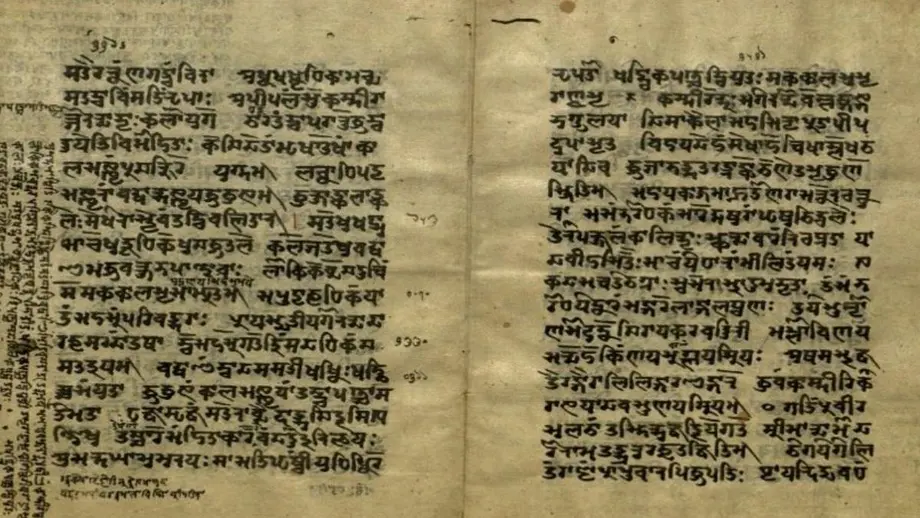
The certificates identify particular manuscripts and their custodians. The Mahabharata inscription concerns a manuscript written on birch bark, also called burjapatra, held at the Bhandarkar Oriental Research Institute in Pune. Its certificate describes the work as a perennial epic of South Asia.
The Arthashastra inscription identifies an ancient palm leaf manuscript on governance and statecraft preserved at the Oriental Research Institute in Mysuru. The Rajatarangini manuscript is housed at the Oriental Research Library in the Sri Pratap Singh Library Complex in Srinagar.
Birch bark and palm leaves are materials on which texts were written. Naming them helps explain what documentary heritage means here: both the ideas contained in a work and the surviving objects that carry those ideas. The announcement gives no dates for the production of these particular manuscript copies or timetable for new public access.
Rajatarangini places Kashmir's past in focus
Kalhana composed the Rajatarangini in the 12th century. It offers a chronological account of Kashmir's rulers, political developments, and social and cultural life, giving it a distinct place among India's historical writings.
A chronicle tells events in their sequence over time. Kalhana's work combines evidence, inherited traditions and critical inquiry to examine the past. That approach gives readers more than a succession of rulers: it connects political events with the society in which they happened.
The Srinagar manuscript therefore carries a work concerned with how history is assembled and understood. Its recognition places Kashmir's historical writing alongside the epic literature and political thought represented by the other two additions.
The Mahabharata examines duty and difficult choices
The Mahabharata manuscript at the Bhandarkar Oriental Research Institute represents one of the major epics of Indian civilisation. Its influence extends across literature, philosophy and cultural traditions, making it part of South Asia's shared cultural memory.
The epic explores Dharma, duty, justice, power and human relationships. Dharma can be understood here as the responsibilities and right conduct expected of a person, although those responsibilities can become difficult to reconcile. A duty towards family, for example, can sit uneasily beside an obligation to act justly.
Those tensions help explain the work's lasting intellectual importance. Its characters face choices involving competing loyalties and the consequences of power. The philosophical questions grow out of human relationships, making complex ethical problems understandable through a story.
The recognised document gives those ideas a physical presence: a manuscript on birch bark held in Pune. The inscription connects the epic's broad cultural reach with the preservation of a particular surviving record.
Arthashastra records ideas about running a state
Kautilya's Arthashastra addresses governance, economic policy, diplomacy, administration and strategic affairs. The palm leaf manuscript preserved in Mysuru carries a work concerned with how a state operates and how its leaders make decisions.
Statecraft means the practical business of governing. It includes organising public administration, managing resources and handling relations with other states. The Arthashastra brings these subjects together, reflecting ancient India's political and administrative thought.
The three new inscriptions can therefore be read alongside one another without reducing them to the same subject. Rajatarangini examines rulers and events over time. The Mahabharata explores duty, justice and human relationships. The Arthashastra considers the organisation and exercise of political authority.
That range is the central feature of the latest recognition. India's documentary heritage includes works that ask how people should act, how governments should function and how later generations should understand the past.
How the register grew from three to six
India's previous three inscriptions in the regional register came in 2024. They included illustrated manuscripts of Tulsidas' Ramcharitmanas, featuring intricate miniature paintings; a rare manuscript of the Panchatantra from the 15th century; and a manuscript of Sahrdayaloka-Locana, a work on Indian poetics.
The Panchatantra manuscript preserves fables and moral stories. Sahrdayaloka-Locana concerns the study and interpretation of poetry. Alongside the illustrated Ramcharitmanas, those entries already reflected several forms of literary and intellectual activity before the latest additions.
The sequence of recognition is:
- 2024: Ramcharitmanas, Panchatantra and Sahrdayaloka-Locana enter the Asia-Pacific regional register.
- The 11th committee session in Jakarta: the Mahabharata, Arthashastra and Rajatarangini manuscripts are approved for inscription.
- November 5, 2026: Indian officials announce the additions, and PIB Culture shares photographs of the certificates.
The latest three entries double India's regional total from three to six. They account for half of that total and extend its subject range to include Kashmir's historical writing and a major work on governance.
What officials said about the decision
Union Culture Minister Gajendra Singh Shekhawat described the inscriptions as a landmark recognition of India's documentary and civilisational heritage. In his statement on X, he connected the three works with historical inquiry, philosophical thought and statecraft.
These timeless works embody our rich traditions of historical inquiry, philosophical thought and statecraft, whose wisdom continues to inspire humanity.
IGNCA's contribution was the preparation of nomination dossiers for all three works. That administrative step connects the manuscripts held by individual institutions with the regional committee's consideration of their documentary importance.
The inscriptions place the documents on UNESCO's register for Asia and the Pacific, a regional platform for recognising and preserving documentary heritage. The certificates identify both the works and the institutions responsible for holding the recognised manuscripts.
Preservation and access become the practical focus
The announcement comes amid India's Gyan Bharatam Mission, which seeks to identify, conserve, promote and digitise manuscripts across the country. Its stated purpose includes making manuscript heritage accessible to future generations and the global community.
Conservation and digitisation address different needs. Conservation looks after the physical manuscript. Digitisation creates a digital record that can be viewed and studied. For works preserved on birch bark and palm leaves, attention to the object and access to its contents are connected parts of keeping documentary heritage available.
The institutional locations give that task a concrete geography. Pune holds the recognised Mahabharata manuscript, Mysuru the Arthashastra manuscript and Srinagar the Rajatarangini manuscript. Their custodians preserve records that connect local collections with a much wider history of literature, ethics and government.
The six regional inscriptions now span illustrated literature, fables, poetics, epic thought, historical writing and statecraft. The latest recognition gives international visibility to three more documents while India's manuscript mission addresses the continuing work of identifying, preserving and sharing such collections.
Key Points
- UNESCO added manuscripts of the Mahabharata, Arthashastra and Rajatarangini to its Memory of the World Regional Register for Asia and the Pacific.
- The decision was taken in Jakarta and announced by Indian officials on November 5, 2026.
- The recognised manuscripts are held in Pune, Mysuru and Srinagar respectively.
- IGNCA helped prepare the nomination dossiers for all three entries.
- India's regional total doubled from three to six, following three inscriptions in 2024.
- The announcement comes amid the Gyan Bharatam Mission's work to preserve, digitise and widen access to India's manuscript heritage.