Review proposal leaves 2012 campus rules in force
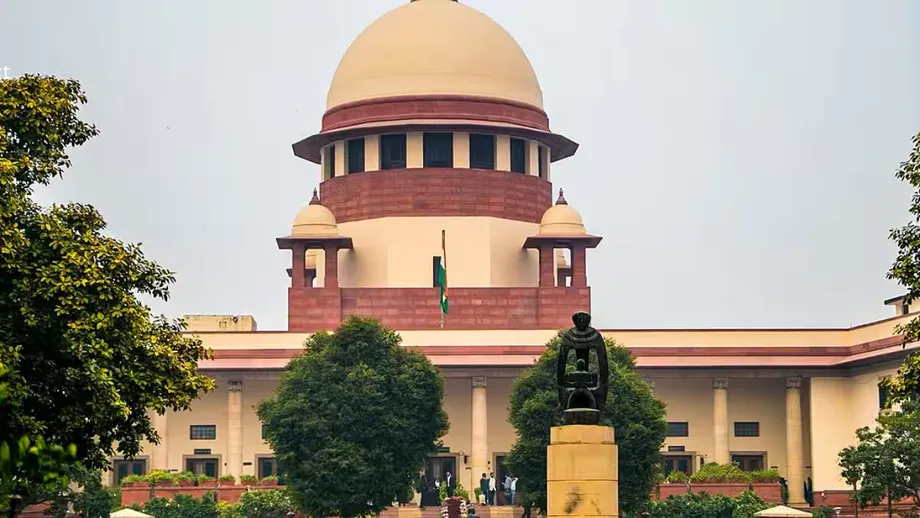
India's government told the Supreme Court on November 5, 2026, that it was considering a committee to review university equity regulations suspended since January 29, leaving the 2012 framework in force while judges examine how the new rules define and address caste discrimination.
Contents
- Review proposal leaves 2012 campus rules in force
- What the government told the court
- Judges seek a mechanism that protects everyone
- Why two definitions became the central dispute
- The court's concerns extend beyond eligibility
- A case rooted in two mothers' demands
- From the 2019 petition to the November hearing
- What the pause means for campuses
- What a review would need to address
- Key Points
Solicitor General Tushar Mehta made the submission during proceedings connected to Abeda Salim Tadvi v. Union of India and related petitions. The court adjourned the hearing for four weeks after urging the government to protect every student's interests.
The University Grants Commission (Promotion of Equity in Higher Education Institutions) Regulations, 2026, were notified on January 13. Their introduction followed litigation seeking stronger protection against caste discrimination, but challenges soon focused on their language, the groups covered by a specific definition and the risk of misuse.
At the centre of the dispute is Regulation 3(1)(c), which defines caste discrimination by reference to members of the Scheduled Castes, Scheduled Tribes and Other Backward Classes. Another provision defines discrimination more broadly, covering unfair treatment on caste grounds against any stakeholder. How those two definitions work together is a central legal issue.
What the government told the court
Mehta, representing the Centre, said the government wanted to address students' concerns and ensure that no section felt dissatisfied or apprehensive. He described the proposed committee as part of that reconsideration.
The solicitor general set out the government's position in court:
The government has taken a decision that every student should be taken care of. Nobody should have any apprehension. Nobody should feel dissatisfied. We are also considering the interests of the younger generation. The government is contemplating appointing a committee.
No committee membership, appointment date or deadline for completing a review was announced. The government had already told the court in August 2026 that the regulations were being reconsidered; the November submission introduced the possibility of a committee to examine the issues.
Judges seek a mechanism that protects everyone
Chief Justice Surya Kant urged the Centre to revisit the regulations with the welfare of students and the next generation in mind. Justice Joymalya Bagchi also participated in the hearing.
The chief justice explained the purpose he wanted the reconsideration to serve:
Why don't you revisit these regulations so that the next generation is taken care of? They should protect the interest of every student.
The court said it had conveyed its suggestions to the government and would wait to see what steps were taken. Its concern was both the wording of the regulations and a mechanism capable of safeguarding students' interests in practice.
For universities and colleges, the immediate position remains unchanged: the 2026 regulations are stayed, and the 2012 regulations continue to operate until further orders. A stay temporarily pauses the operation of a measure while the court considers the legal challenge.
Why two definitions became the central dispute
Regulation 3(1)(c) describes caste discrimination as discrimination on the basis of caste or tribe against members of the Scheduled Castes, Scheduled Tribes and Other Backward Classes, commonly called SC, ST and OBC communities.
Petitioners challenging the regulations argue that this wording leaves students and faculty from the general category outside that specific protection. Opponents have also questioned the absence of a clear provision dealing with false complaints.
The regulations contain a broader definition of discrimination in Clause 3(e), however. It covers unfair or differential treatment on caste grounds against any stakeholder. The legal question therefore concerns the relationship between an inclusive general definition and a separate definition naming particular communities.
In January, the Supreme Court asked whether the narrower definition served the regulations' purpose, especially because no distinct procedure had been prescribed for handling caste discrimination separately from other discrimination.
In plain terms, the judges asked why the rules needed two definitions with different coverage if complaints would go through the same process. Supporters of the regulations, meanwhile, argue that students from disadvantaged communities need strong protection against the caste discrimination they face in higher education.
The court's concerns extend beyond eligibility
The Supreme Court's January scrutiny covered several issues beyond whether general category students could use a particular provision. It also examined protection for the most disadvantaged groups within reserved communities, arrangements separating students and the treatment of ragging.
The judges asked whether the regulations provided adequate safeguards for extremely backward castes within SC, ST and OBC communities. Their question concerned how the new wording would work alongside existing constitutional and legal classifications, including distinctions among groups within these broad categories.
Hostels, classrooms and mentorship groups were another concern. The court questioned whether wording concerning segregation, even when linked to transparent criteria presented as free from discrimination, could create a system in which students were separated but described as equal.
That issue engages equality and fraternity: whether students receive equal treatment and can participate together in campus life. The court linked its questions to Articles 14 and 15 of the Constitution and the Preamble.
The omission of ragging as a specific form of discrimination also drew scrutiny. Ragging refers to abusive initiation or harassment, often directed at newer students. The court asked whether leaving it out could give victims unequal access to protection, raising concerns under Articles 14 and 21, which protect equality before the law and life and personal liberty.
These questions show the breadth of the possible review. Changing which communities appear in a definition would address one part of the dispute; the court has also asked how protection works across different forms of campus mistreatment.
A case rooted in two mothers' demands
The litigation began in 2019 with a petition by the mothers of Rohith Vemula and Payal Tadvi seeking stronger measures against caste discrimination in higher education.
Vemula, a student at the University of Hyderabad, died by suicide in 2016. Tadvi, a medical student in Mumbai, died by suicide in 2019. Allegations of caste discrimination surrounded both deaths.
The mothers sought stronger institutional safeguards and effective systems for dealing with complaints. Their petition placed the enforcement of protection, rather than simply the existence of rules, before the Supreme Court.
The UGC notified the 2026 regulations after consultations, replacing the framework adopted in 2012. The subsequent challenges brought another demand into the proceedings: that the new framework protect students fairly across categories and use sufficiently clear language.
From the 2019 petition to the November hearing
The case has moved through demands for stronger safeguards, the introduction of replacement regulations and challenges to their constitutionality. The principal dates are:
- 2019: The mothers of Rohith Vemula and Payal Tadvi petitioned the Supreme Court for stronger measures against caste discrimination in higher education.
- January 13, 2026: The UGC notified its new equity regulations, replacing the 2012 framework.
- January 29, 2026: The Supreme Court stayed the new regulations and directed that the 2012 regulations continue.
- March 19, 2026: The January proceedings set this date for responses from the Centre and UGC to three petitions challenging the new framework.
- August 2026: The Centre told the court that the regulations were being reconsidered.
- November 5, 2026: The Centre said it was considering a review committee, and the court adjourned the matter for four weeks.
The January 13 notification and January 29 stay were just 16 days apart. By the November hearing, the replacement regulations had been suspended for more than nine months, with the older rules continuing throughout that period.
The March response deadline belonged to the earlier proceedings. The next procedural step announced at the November hearing was the four week adjournment.
What the pause means for campuses
The Supreme Court used its powers under Article 142 of the Constitution to keep the 2012 regulations operating until further orders. That provision allows the court to issue directions needed to do complete justice in a case.
Students and institutions therefore remain subject to the older equity framework while the legal and policy review continues. The November hearing produced a possible route toward revised rules, with the existing interim arrangement still governing campuses.
The court had earlier described provisions in the 2026 regulations as initially appearing vague and raised concerns about misuse and broad consequences. It was hearing three writ petitions challenging their constitutionality. A writ petition asks a court to intervene where a law, public decision or failure to act is alleged to violate legal or constitutional rights.
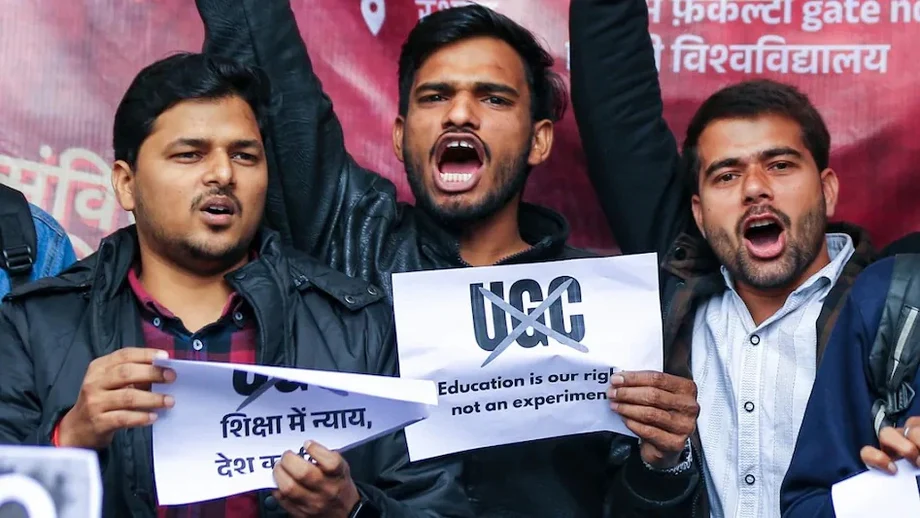
Student groups and other organisations have called for the new regulations to be withdrawn. Supporters continue to press for stronger safeguards for disadvantaged communities. The government has said its reconsideration should address students' concerns without leaving any group feeling excluded or unsafe.
What a review would need to address
The Supreme Court had already suggested examination by a committee of eminent jurists during the January proceedings. The Centre's November proposal places a possible committee alongside the continuing judicial review.
The issues before it would include the purpose of the separate caste discrimination definition, its relationship with the broader discrimination clause, protection for disadvantaged groups within reserved categories, and the treatment of segregation and ragging.
For a student facing mistreatment, those drafting questions have practical consequences: whether a complaint fits the rules, how an institution handles it and what protection is available. For someone facing an allegation, clear definitions and procedures matter to how the complaint is assessed.
The government's next submission will be an opportunity to explain what steps it has taken following the court's suggestions. The central task remains to combine effective protection against caste discrimination with clear coverage and fair procedures for everyone affected.
Key Points
- The Centre told the Supreme Court on November 5, 2026, that it was considering a committee to review the UGC equity regulations.
- The court adjourned the hearing for four weeks and urged protection for every student's interests.
- The 2026 regulations were notified on January 13 and stayed on January 29.
- The 2012 regulations remain in force until further orders.
- The dispute centres on the coverage of Regulation 3(1)(c) and its relationship with a broader definition of discrimination.
- The court also raised concerns about protection for extremely backward castes, segregation and the omission of ragging.
- The litigation began with a 2019 petition by the mothers of Rohith Vemula and Payal Tadvi seeking stronger campus safeguards.