Thirteen years later, funding and Futenma return to the table
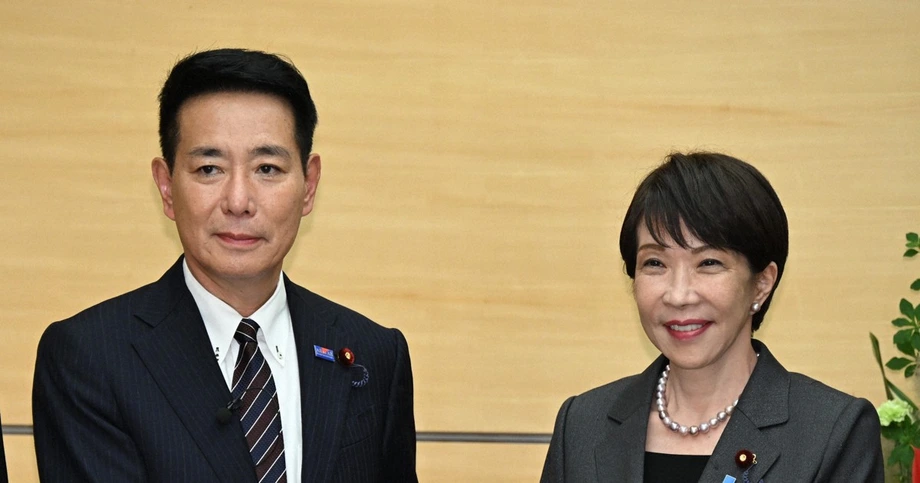
Japan's government reopened the Okinawa Policy Council on November 6 after a 13 year gap, bringing Prime Minister Sanae Takaichi, all Cabinet ministers and Okinawa Governor Genta Koja together at the prime minister's office. The immediate financial issue was a fiscal 2027 development budget request of 289.7 billion yen, which falls 10.3 billion yen short of the prefecture's 300 billion yen target.
Contents
- Thirteen years later, funding and Futenma return to the table
- How the council returned after a long pause
- A 10.3 billion yen gap shapes the budget debate
- Development requests go beyond a single budget figure
- Henoko support leaves the Futenma timetable unresolved
- A woman's killing adds urgency to safety demands
- Aircraft, noise and the rules governing U.S. forces
- The dates behind the renewed negotiations
- Key Points
Koja also sought a clear date for returning the land occupied by U.S. Marine Corps Air Station Futenma in Ginowan, a fundamental review of the agreement governing American forces in Japan, and action to prevent further incidents involving military personnel. His requests put residents' safety alongside economic development at the center of the renewed talks.
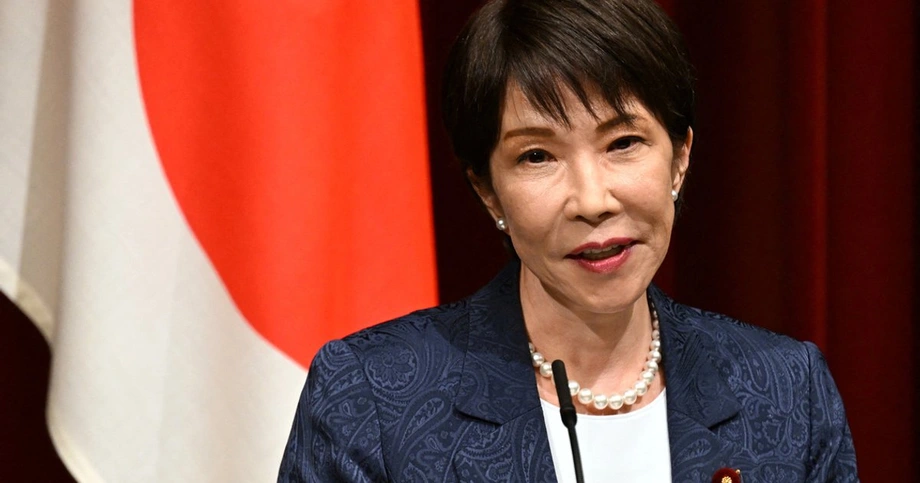
Takaichi, Japan's prime minister, pledged concrete progress on the military presence:
make every effort to achieve visible results in reducing the burden of U.S. military bases in Okinawa.
Takaichi instructed relevant ministers to consider support for Okinawa while preparing the fiscal 2027 budget. She described the prefecture's development as part of Japan's national strategy and promised coordination with its government.
Koja's support for relocating Futenma within Okinawa gives Tokyo a governor willing to cooperate on a project his predecessor opposed. Yet his demands extend beyond construction: more development funding, a timetable for giving land back, and stronger protection for communities living alongside U.S. forces.
How the council returned after a long pause
Koja requested the council's revival after winning the September gubernatorial election with backing from Takaichi's Liberal Democratic Party. He defeated Denny Tamaki, who had led Okinawa for eight years and opposed moving Futenma to Henoko, a coastal area of Nago.
The council gives Okinawa's government a forum to discuss development and military issues directly with senior national officials, including the foreign, defense and justice ministers. Its return brings matters spread across several ministries into a single discussion.
Chief Cabinet Secretary Minoru Kihara, who was to chair the meeting, described the talks beforehand as "the starting point" for renewed discussions under Takaichi's administration. Koja had campaigned on restarting the forum and increasing central government funding.
The council last met in 2013, during Governor Hirokazu Nakaima's administration. It remained dormant under Takeshi Onaga and Tamaki, both opponents of the Henoko relocation. A prefectural official said neither governor requested a meeting.
A 10.3 billion yen gap shapes the budget debate
The government's initial fiscal 2027 request of 289.7 billion yen is about 3.4 percent below Okinawa's 300 billion yen target. The calculation uses the 10.3 billion yen shortfall divided by the prefecture's target. It is the sixth consecutive annual request below that benchmark.
Okinawa development budgets have stayed in the 260 billion yen range since fiscal 2022, after falling from the 300 billion yen range. A final allocation above 300 billion yen would therefore restore funding to a level higher than the budgets of recent years.
The government is considering an allocation exceeding 300 billion yen, according to people familiar with the discussions. The final amount remains undecided. A budget request is an opening proposal in the spending process, while the final budget determines how much money is actually allocated.
Koja was expected to ask the council to secure the funding Okinawa needs without specifying a 300 billion yen demand at the meeting itself. That approach leaves room to negotiate individual measures while the prefecture continues to seek a larger development budget.
Disagreements over the relocation project were seen as contributing to funding reductions during Tamaki's tenure. Koja now faces a concrete political test: turning closer relations with Tokyo into spending that supports the stronger Okinawan economy he promised voters.
Development requests go beyond a single budget figure
Koja's economic agenda includes seeking support to attract companies in medicine and biotechnology. Biotechnology uses living organisms or biological processes to develop products, including medicines. Attracting businesses in those fields is one way the governor wants to broaden economic activity in the prefecture.
Before the meeting, Okinawa was also expected to seek an extension of a special gasoline tax measure. Such a measure changes the tax treatment of fuel, making its continuation a separate policy decision from the size of the development budget.
Support for remote islands was another possible topic identified before the talks. Okinawa's needs extend across its islands, so the negotiations concern both the total amount of assistance and where particular measures would apply.
Takaichi's instructions put those requests into the fiscal 2027 budget process. For residents and businesses, the practical results will depend on which programs receive money and how the government designs the support, rather than the headline allocation alone.
Henoko support leaves the Futenma timetable unresolved
Koja is the first Okinawa governor in 12 years to support the plan to move Futenma to Henoko under the 1996 agreement between Japan and the United States. Foundation work is underway at the replacement site, which extends into a bay.
Futenma is in Ginowan, while Henoko is in Nago. Moving the facility between those locations would return the existing site while keeping the replacement within Okinawa. Residents who want the base moved outside the prefecture continue to oppose that approach.
Koja asked Tokyo to clarify when the land occupied by Futenma would be returned. After the meeting, he said the central government had given no specific date.
The governor's position combines acceptance of the relocation plan with a demand for certainty about its outcome. For Ginowan, a return timetable would provide a clearer basis for planning the future of the occupied land. For people near Henoko, the project concerns a continuing military presence in another part of the same prefecture.
Tokyo wants closer cooperation with Okinawa on relocation while also strengthening defense capabilities in the Nansei Islands, the chain stretching southwest from Kyushu toward Taiwan. The government's plans come amid concern over China's growing assertiveness in the surrounding region.
A woman's killing adds urgency to safety demands
The killing of Anna Yagi, 39, at a hotel in Naha early on October 3 helped prompt Koja's request to restart the council. U.S. Marine Devin Jacob Ballard, 20, was arrested the following day and indicted later in October on a charge of robbery causing death. Police said he denied the allegations.
Koja cited the arrest in an October 7 letter to Takaichi and Kihara. The governor argued that another grave incident required stronger action on military discipline and human rights education.
Koja, writing in his role as Okinawa governor, said:
The fact that another incident of this nature has occurred leaves us no choice but to conclude that the U.S. military's efforts to enforce discipline and provide human rights education are not functioning at all,
Foreign Minister Toshimitsu Motegi told the council that Japan and the United States had agreed to strengthen education for U.S. military personnel following the case. Takaichi also pledged efforts to prevent incidents and accidents involving American forces.
Koja told the meeting that the killing was causing anxiety among Okinawa residents. He urged the government to make reducing the base burden and expanding development measures its highest priorities, bringing public safety directly into a discussion that also covered budgets and relocation.
Aircraft, noise and the rules governing U.S. forces
Koja's October letter also cited military aircraft accidents, noise and environmental damage. His request for a fundamental review of the Japan-U.S. Status of Forces Agreement addresses the legal framework governing the presence and status of American military personnel in Japan.
The agreement, commonly shortened to SOFA, is a different issue from relocating Futenma. A relocation changes where a facility operates. Reviewing SOFA concerns the rules under which U.S. forces are present in the country.
Okinawa accounts for roughly 0.6 percent of Japan's land area while hosting about 70 percent of U.S. military installations in the country. Those figures explain why the prefecture's leaders press for national action on problems that are concentrated locally.
The council itself emerged from earlier demands for change. Prime Minister Ryutaro Hashimoto and Governor Masahide Ota established it in 1996, and its first meeting took place that September after a referendum calling for base consolidation and a review of SOFA. The referendum followed the 1995 kidnapping and rape of a 12 year old Okinawan girl by two Marines and a Navy corpsman.
The dates behind the renewed negotiations
The November meeting connects a framework created three decades earlier with a recent election, a criminal case and preparations for the next development budget. The main dates show how those issues converged:
- September 1996: The Okinawa Policy Council first convened after a referendum on base consolidation and SOFA review.
- 2013: The council met for the last time before its prolonged pause.
- September: Koja won the gubernatorial election, then took office on September 30.
- October 3: Anna Yagi was killed at a hotel in Naha.
- October 7: Koja requested that Takaichi and Kihara reconvene the council.
- November 6: Takaichi, Cabinet ministers and Koja met at the prime minister's office.
- Fiscal 2027: The development budget will be a central vehicle for deciding support measures.
Before the council resumed, further substantive discussions were expected as early as the end of the year. The immediate task is to turn the broad commitments made at the November meeting into specific budget and policy decisions.
Koja's cooperation on Henoko has reopened a channel that had been unused for 13 years. The measures most directly affecting residents now sit on several tracks: development funding, the return of Futenma land, prevention of military incidents, and the governor's request to change the rules governing U.S. forces.
Key Points
- Japan and Okinawa revived their policy council on November 6, its first meeting since 2013.
- The fiscal 2027 development request is 289.7 billion yen, 10.3 billion yen below Okinawa's target.
- Takaichi instructed ministers to consider support measures during budget preparation.
- Koja supports relocating Futenma to Henoko and requested a clear date for returning its existing site.
- The governor sought a fundamental SOFA review and stronger action on safety following Anna Yagi's killing.
- Japan and the United States agreed to strengthen education for U.S. military personnel, according to Foreign Minister Motegi.