A deal on seats and the rules for winning them
Japan's Democratic Party for the People decided on October 28, 2026, to support a Liberal Democratic Party proposal to remove 31 proportional representation seats from the House of Representatives, accepting a larger reduction than it wanted after securing changes to the wider election reform package.
Contents
- A deal on seats and the rules for winning them
- Why the DPP accepted a bigger reduction
- How 19, 31 and 45 became competing proposals
- Why proportional seats carry the whole reduction
- What shared candidate lists would change
- Why Chugoku and Shikoku would be combined
- The package reaches beyond seat numbers
- How the negotiations moved over one week
- A route to passage, with opposition still divided
- Key Points
The proposal would reduce the lower house from 465 seats to 434, with every seat removed coming from the proportional representation portion of the electoral system. The DPP had proposed a reduction of 19 seats. The Japan Innovation Party, known as Nippon Ishin no Kai, had sought 45 but also decided to accept the compromise.
The agreement followed the LDP's addition on October 27 of two measures sought by the DPP: allowing multiple parties to place candidates on a shared proportional representation list, and combining the Chugoku and Shikoku proportional representation blocks.
The DPP's backing gives the governing LDP and Ishin a possible route to passing the legislation through the House of Councillors, where the two governing parties lack a majority on their own. Together with the DPP, they would have enough seats for a majority.
Other opposition parties remained against the package, arguing that changes to election rules require broad agreement. The political breakthrough therefore concerns both the size of parliament and a more contested question: how voters' choices should translate into seats.
Why the DPP accepted a bigger reduction
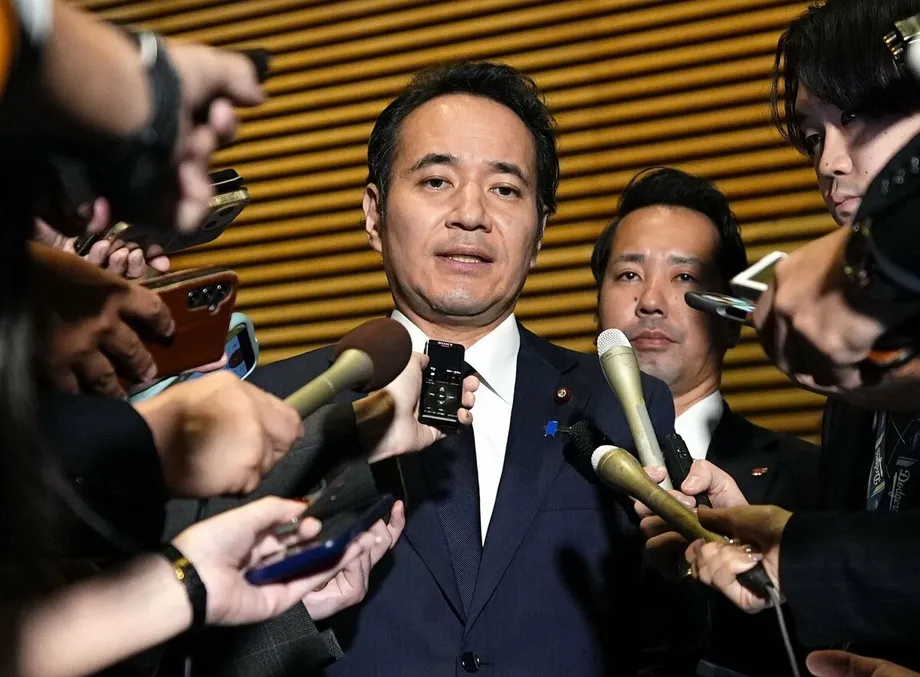
Motohisa Furukawa, the DPP's acting leader and head of its political and administrative reform headquarters, said the party had accepted the package because most of its thinking on matters other than seat numbers had been incorporated.
Furukawa described the decision at his October 28 news conference:
It is a painful choice.
The party had been negotiating under pressure from the governing parties' demand for a reduction of 45 proportional seats. Its eventual acceptance of 31 traded a smaller reduction than that demand for changes affecting how parties compete and win representation.
The position was different from the one Furukawa set out two days earlier. In the DPP's official October 26 briefing transcript, he explained that the party had neither approved nor rejected a reduction of 31. It would judge the whole package, including the other election rules.
That sequence explains why the party could propose 19 seats on October 26 and accept 31 on October 28. The intervening negotiations changed the package by adding shared candidate lists and a specific merger of proportional representation blocks.
How 19, 31 and 45 became competing proposals
The LDP's compromise, presented on October 22 by discussions chair Keisuke Suzuki, used a projected population decline of 6.7% between 2015 and 2030. Applying that percentage to the lower house's 465 seats produces approximately 31 seats.
The DPP wanted to compare 2015 with 2025 instead, using confirmed census figures rather than a projection for 2030. Its calculation produced a proposed reduction of 19 seats.
Hitoshi Goto, chair of the DPP's electoral system research council, explained at the October 26 briefing that the party's calculation used the population of Japanese nationals. He said this matched the population basis used for the governing parties' proposal.
Goto also explained why an earlier DPP estimate, made the previous December, had suggested removing 14 seats. That calculation used preliminary figures and a different population basis, including the distinction between Japanese nationals and the total population.
The competing proposals would produce visibly different chamber sizes. A reduction of 19 would leave 446 members; removing 31 would leave 434; removing 45 would leave 420. The compromise removes 12 more seats than the DPP wanted, but 14 fewer than Ishin originally sought.
The population calculation applies to the whole chamber, while the proposed reduction falls entirely on proportional representation. That choice concentrates the change on one route into parliament rather than spreading it across both parts of the election system.
Why proportional seats carry the whole reduction
Japan's lower house election system combines contests in individual constituencies with proportional representation. Constituency contests select a local representative. Proportional representation awards seats to parties according to their vote totals within regional blocks.
Removing seats from the proportional portion means fewer places would be available through the part of the system designed to translate party support into representation across a wider area.
Furukawa said on October 26 that the DPP would have preferred to maintain the existing proportional seat total. He explained its willingness to accept a reduction partly through the practical situation facing constituency boundaries.
The body responsible for reviewing lower house constituency boundaries was already working from the 2025 census figures, he said. Cutting constituency seats would interrupt that work. The party therefore accepted concentrating the temporary reduction on proportional representation.
The DPP also wanted the reduction treated as a measure for one occasion, pending a broader redesign of the election system. Furukawa said future reform should begin by considering the whole system and the number of representatives it needs, rather than starting with a predetermined demand for further cuts.
What shared candidate lists would change
The shared list proposal would allow candidates from several parties to appear on the same proportional representation list. Parties could cooperate in seeking seats while keeping their separate organisations.
Furukawa argued at the October 26 briefing that the existing combination of constituency contests and proportional representation encourages parties to join together because larger groupings enjoy electoral advantages. He said shared lists could make cooperation possible without forcing parties to merge.
The practical issue is how votes divided among several parties translate into seats. A party can receive votes yet finish without enough support in a particular block to win representation. Combining candidates on a common list could help participating parties turn their combined support into seats.
For the DPP, that rule was part of a wider preference for coalition politics involving several distinct parties. It sought an arrangement in which parties could work together while retaining their identities, rather than merging mainly to improve their election prospects.
The proposal therefore gave the DPP something beyond a concession on numbers. It offered a change to how parties could organise their electoral cooperation, helping explain why the party accepted a seat reduction larger than its own population calculation supported.
Why Chugoku and Shikoku would be combined
The LDP added the proposed merger of the Chugoku and Shikoku proportional representation blocks on October 27. This turned the DPP's broader request to review the current 11 blocks into a specific change.
Furukawa had argued that blocks with smaller populations should be considered for consolidation. His concern was that a block with very few seats could leave representation concentrated among the largest parties.
The arithmetic is simple: a block electing fewer members has fewer seats to distribute among competing parties. A party with modest support can find it harder to secure one of those places. Combining blocks creates a larger pool in which seats can be allocated.
The shared list and block merger proposals address related problems from different directions. Shared lists change how parties pool their electoral strength. Combining blocks changes the geographical area across which proportional seats are distributed.
Both measures matter more when the total number of proportional seats is being reduced. The DPP's negotiating position linked the size of that reduction to rules intended to preserve room for a range of political voices.
The package reaches beyond seat numbers
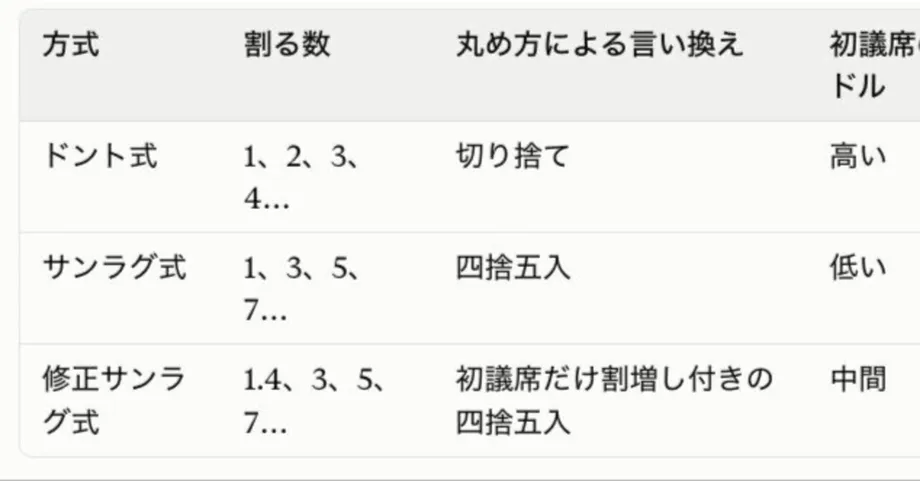
The DPP's October 26 briefing also recorded support for changing the proportional seat allocation formula to the modified Sainte-Lague method. An allocation formula is the calculation used to convert parties' vote totals into whole seats. Changing it can change how seats are divided, even when the votes remain the same.
The party also supported raising the qualifying standard for candidates who run both in a constituency and on a proportional list. Under this arrangement, a candidate who loses the constituency contest may still enter parliament through proportional representation. A higher standard would make that route more demanding.
Other measures discussed included leaving seats vacant when there are too few eligible candidates to fill them, lowering the financial deposits required to stand for election, and addressing the treatment of public party subsidies when a member elected through proportional representation leaves the party.
Candidate deposits are sums that people must put up to enter an election. Lowering them would reduce the financial barrier at the point of entry. The subsidy issue concerns public money paid to political parties and how it should be handled after an elected member changes affiliation.
The DPP separately requested a reduction in the minimum age for standing as a candidate. The additions identified on October 27 were the shared list system and the Chugoku-Shikoku block merger; the final treatment of the age proposal and detailed implementation rules had not been specified.
How the negotiations moved over one week
The agreement emerged through several rounds of proposals and party meetings, rather than a single decision on the number 31.
- October 22: Suzuki presented the LDP compromise proposing a reduction of 31 proportional representation seats, based on projected population change between 2015 and 2030.
- October 26: The DPP proposed removing 19 seats using the 2015 and 2025 population comparison. It reserved its decision on 31 and sought further changes to the package.
- October 27: Parties continued negotiations. The LDP added shared proportional candidate lists and a merger of the Chugoku and Shikoku blocks.
- October 28: The DPP decided at a morning party meeting to support the compromise. Ishin also decided to accept it, and nine governing and opposition parties held working discussions in parliament to state their positions.
Ishin's acceptance moved it away from its earlier insistence on removing 45 seats. The DPP moved in the other direction, accepting 12 more cuts than it had proposed. The added election rules helped bring the three parties together.
A route to passage, with opposition still divided
Hideki Murai, the LDP's Diet affairs chief, said the party aimed to submit the legislation and secure its passage during the current extraordinary parliamentary session.
The DPP's support matters especially in the upper house. The LDP and Ishin are short of a majority there, while the addition of DPP votes would put the three parties above that threshold. The agreement therefore gives the proposal a practical route through a chamber where the governing parties cannot rely on their own numbers.
Komeito and the Democratic Reform party were expected to oppose the compromise at the October 28 discussions. Other opposition parties also argued that electoral rules, as the foundation of democratic competition, should be revised with wider agreement.
The immediate choice for lawmakers is whether to approve a combined package: fewer proportional seats, new possibilities for cooperation between parties, and changes to the way representation is distributed. The DPP has accepted that trade, while insisting that a later, broader reform must reconsider the system as a whole.
Key Points
- The DPP decided on October 28, 2026, to support removing 31 proportional representation seats from Japan's lower house.
- The proposal would reduce the chamber from 465 members to 434.
- The DPP had sought 19 cuts, while Ishin had sought 45. Both accepted the compromise.
- The LDP added shared candidate lists and a merger of the Chugoku and Shikoku proportional blocks.
- The DPP wants the reduction treated as a temporary measure before broader electoral reform.
- DPP support provides a route to an upper house majority, but other opposition parties remain against the package.
- The LDP aims to pass the legislation during the current extraordinary parliamentary session.