Government seeks review while older campus protections remain in force
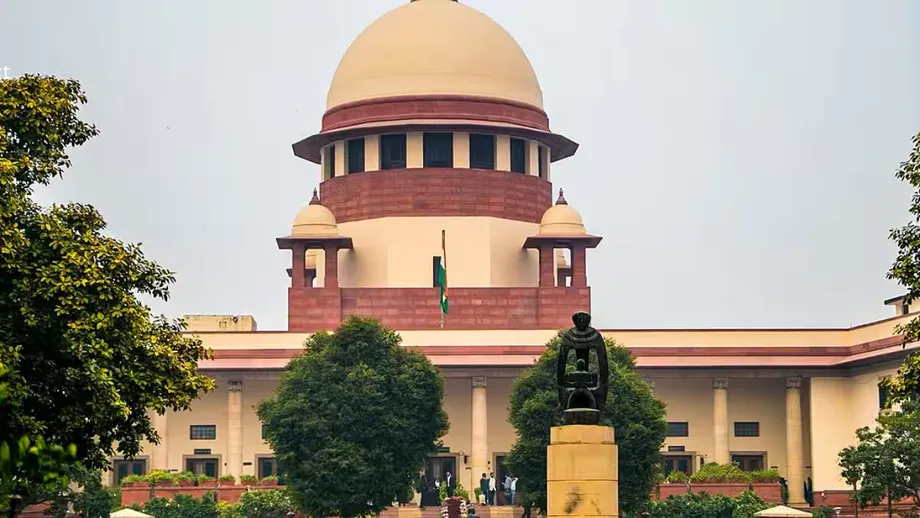
India's Central government told the Supreme Court on November 5, 2026, that it is considering a committee to review the University Grants Commission's new rules against discrimination in higher education. The court postponed the hearing for four weeks, leaving its January 29 suspension of the regulations in place and the UGC's 2012 rules in operation.
Contents
- Government seeks review while older campus protections remain in force
- What did the government tell the court?
- Why Regulation 3(1)(c) faces a challenge
- What the Supreme Court's suspension means
- How the dispute developed
- Why the families sought stronger safeguards
- What universities would have to establish
- How the UGC planned to enforce compliance
- What changed between the draft and final rules?
- Key Points
Solicitor General Tushar Mehta, representing the government, told Chief Justice of India Surya Kant and Justice Joymalya Bagchi that the review would address students' concerns and seek a framework in which no section felt dissatisfied or apprehensive. The bench stressed that every student's interests needed protection.
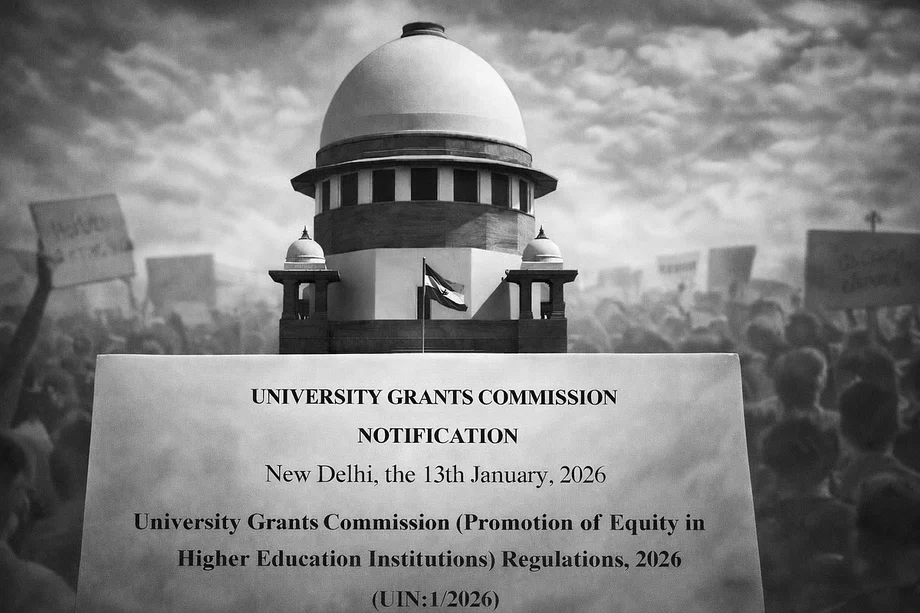
The dispute centres on Regulation 3(1)(c) of the University Grants Commission (Promotion of Equity in Higher Education Institutions) Regulations, 2026, notified on January 13. Its definition of caste discrimination focuses on unfair treatment of Scheduled Caste, Scheduled Tribe and Other Backward Classes members. Petitioners argue that students outside those categories are excluded from the protection and complaint process.
The proposed review brings together two demands that have shaped the litigation: stronger protection against caste discrimination and access to a fair complaints system for every student. Universities and colleges must continue operating under the older framework while the government and court consider how the replacement should work.
What did the government tell the court?
Mehta said the government was examining the regulations with the welfare of the younger generation in mind. Explaining the government's position to the bench, the solicitor general said:
The government has decided that every student should be taken care of and is contemplating appointing a committee.
The Centre had already told the court in August 2026 that it was reconsidering the rules. The November hearing added a possible mechanism for that exercise: a committee tasked with reviewing the framework.
No committee membership, formal appointment or review deadline was announced. The next procedural step is the hearing after the four week adjournment, when the government can update the court on its plans.
Why Regulation 3(1)(c) faces a challenge
Regulation 3(1)(c) identifies caste discrimination through unfair treatment of members of Scheduled Castes, Scheduled Tribes and Other Backward Classes, commonly shortened to SCs, STs and OBCs. These are categories recognised under India's system of protections and measures addressing social disadvantage.
General category petitioners argue that this wording leaves people outside those categories without equal access to institutional protection against caste discrimination. They have asked the court to prevent implementation in its current form and declare that denying access to grievance redressal because of caste identity amounts to impermissible discrimination by the state. Grievance redressal means a formal process for receiving, investigating and resolving a complaint.
The 2026 framework also contains a broader definition of discrimination covering unfair or biased treatment based on caste, religion, race, gender, place of birth and disability. It includes conduct that damages equal access to education or human dignity.
The legal dispute concerns how that broad protection works alongside the narrower definition of caste discrimination. Petitioners want the route for making and resolving a caste complaint to be expressly open to students from every category. Their claim of exclusion remains an issue before the court.
What the Supreme Court's suspension means
The Supreme Court suspended the 2026 regulations on January 29 after expressing an initial view that their language was unclear and could allow misuse. The bench's concerns focused particularly on the definition in Regulation 3(1)(c) and the need for clearer wording.
An interim stay temporarily stops a measure from operating while judges examine the legal challenge. The January order therefore put the new framework on hold, with its validity still awaiting further consideration.
The court directed that the 2012 equity regulations remain in effect during that period. For students and institutions, the immediate position is continuity under the older rules rather than implementation of the January replacement. The November hearing left that arrangement unchanged.
During the earlier proceedings, the court also discussed a possible committee including academics and distinguished jurists familiar with educational institutions, with its composition subject to the court's approval. That discussion gives the proposed review a focus on both legal wording and the practical workings of campuses.
How the dispute developed
The proceedings connect a campaign for stronger campus safeguards with later challenges to the scope of the rules introduced in response. The matter is being heard under Abeda Salim Tadvi v. Union of India and connected petitions.
- 2019: The mothers of Rohith Vemula and Dr. Payal Tadvi petitioned for stronger safeguards against caste discrimination in higher education.
- January 13, 2026: The UGC notified the new equity regulations to replace the 2012 framework.
- January 29, 2026: The Supreme Court suspended the new regulations and directed that the 2012 rules continue operating.
- August 2026: The Centre told the court that it was reconsidering the new rules.
- November 5, 2026: The government said it was considering a review committee, and the court adjourned the hearing for four weeks.
The new regulations were suspended 16 days after notification. By the November hearing, the dispute had therefore kept their proposed institutional arrangements on hold for more than nine months.
Why the families sought stronger safeguards
Rohith Vemula, a University of Hyderabad student, and Payal Tadvi, a doctor pursuing medical training in Mumbai, died by suicide. Their families alleged that they had faced caste discrimination and harassment. The petitions filed by their mothers in 2019 sought more effective protection for students facing such treatment.
The families' demand was for institutions to take complaints seriously and provide a functioning system for addressing them. That concern remains central to the litigation alongside the newer challenge over who can use the complaint mechanism.
Earlier investigations also form part of the debate over campus conditions. The 2007 Thorat Committee documented segregation in hostels, dining arrangements and laboratories. A 2019 finding concerning IIT Delhi put the share of marginalised students facing discrimination at 75 percent.
Those concerns help explain the demand for a framework extending beyond statements of equal treatment. The proposed 2026 system assigned institutions specific bodies, reporting duties and regulatory consequences for failing to comply.
What universities would have to establish
The 2026 regulations require higher education institutions to establish Equal Opportunity Centres to promote inclusion, equal access and an environment free from discrimination. Equity Committees operating under those centres would handle responsibilities including examining discrimination complaints.
Institution heads would chair the committees. Their membership would include representation from SC, ST and OBC communities, women and persons with disabilities. The rules also provide for helplines, giving students a designated channel through which to seek help.
The framework sets recurring duties rather than leaving institutions to respond only when a dispute becomes public. Equity Committees must meet at least twice a year, Equal Opportunity Centres must submit reports twice a year to their institutions, and institutions must send annual equity compliance reports to the UGC.
These requirements would create a record of institutional activity and place responsibility for enforcement on the head of the institution. Their practical value would depend on whether students could use the complaint channels confidently and whether committees investigated cases fairly.
How the UGC planned to enforce compliance
The UGC framework provides for a national monitoring committee drawing members from statutory councils, commissions and civil society. Its tasks include reviewing implementation, examining discrimination cases and recommending preventive action.
Institutions that fail to comply could face exclusion from UGC schemes, restrictions affecting degree programmes or programmes delivered online or through distance education, and removal from the UGC's recognised list. These are substantial regulatory consequences for colleges and universities.
The review therefore reaches beyond the disputed definition. Any revision would also need to address how complaints move through institutional committees, how institution heads account for their decisions and how national oversight responds to failures.
The proposed structure places the institution head in charge of both campus administration and the Equity Committee. That arrangement makes the committee's ability to examine complaints involving its own institution a practical issue for the review, alongside the question of which students can complain.
What changed between the draft and final rules?
The final 2026 regulations explicitly included OBCs within the caste discrimination provision after their omission from the draft. The final version also dropped a proposed penalty for false complaints.
Those changes concern different parts of the system: who receives express protection and what happens when an allegation is considered false. Upper caste groups protesting against the regulations have described them as one sided and vulnerable to misuse. Organisations seeking stronger protection for disadvantaged communities want effective measures against caste discrimination to remain.
Proposals raised in the debate include a complaint process open to every category, transparent procedures and penalties for deliberately false allegations. These remain proposals for the review rather than announced amendments.
A revised framework would need to explain both how a student obtains protection and how a person accused of discrimination receives a fair examination of the allegation. Clear definitions, a dependable complaint route and accountable decision making connect the two concerns at the centre of the case.
The government's immediate task is to decide whether and how to appoint the committee. Until the court changes the interim arrangement, institutions remain governed by the 2012 rules, while the families seeking stronger safeguards and the petitioners challenging exclusion await the next hearing.
Key Points
- The Centre told the Supreme Court on November 5, 2026, that it was considering a committee to review the UGC's 2026 equity regulations.
- The court adjourned the hearing for four weeks. Committee members and a review deadline were not announced.
- The January 29 stay remains in place, with the UGC's 2012 regulations continuing to operate.
- Regulation 3(1)(c), covering caste discrimination against SC, ST and OBC members, is the central point of challenge.
- General category petitioners seek equal access to protection and complaint procedures.
- The connected proceedings include the 2019 petitions by the mothers of Rohith Vemula and Payal Tadvi seeking stronger campus safeguards.