Medical admissions panel proposes ending percentile eligibility
India's postgraduate medical admissions could move to a system based on candidate ranks from 2027, after a 12-member expert committee recommended replacing percentile eligibility rules for NEET-PG and NEET-SS. The proposal follows a disputed reduction in qualifying thresholds that made 95,913 additional candidates eligible for counselling during the 2025-26 admission cycle, according to figures placed before the Supreme Court.
Contents
- Medical admissions panel proposes ending percentile eligibility
- What would change under a rank system?
- How far the January thresholds fell
- Why the court sought a lasting solution
- How the dispute developed
- Minimum standards remain central to the proposal
- Fees, salaries and service bonds face review
- More reliable seat information and counselling dates
- What candidates should watch next
- Key Points
The committee submitted its report to the court on November 3, 2026. The National Medical Commission (NMC) gave the proposed change approval in principle at its September 23 meeting, and its secretary communicated that decision to the Director General of Health Services in a letter dated October 1.
Under the proposed regulations, examination results would declare candidate ranks without percentile figures. A draft is expected to be issued for consultation with stakeholders, with implementation envisaged from 2027. The regulations, including how minimum qualifying standards would operate alongside ranks, have yet to be finalised.
The committee also recommended cheaper fees for non-clinical postgraduate courses, service bond exemptions for certain subjects, verified seat information and fixed counselling schedules. Its approach combines changes to eligibility with measures intended to make repeatedly vacant courses more attractive.
For doctors seeking specialist training, the central issue is practical: who gets to compete for a seat, how candidates are ordered, and whether admission rules remain predictable throughout counselling. Counselling is the process through which eligible candidates seek seats according to their merit position, preferences and the places available.
What would change under a rank system?
NEET-PG is the National Eligibility cum Entrance Test for postgraduate medical courses. NEET-SS serves admissions to super speciality training. The committee's proposed change covers counselling for both examinations, although the dispute that prompted its review concerns NEET-PG qualifying thresholds.
A rank tells a candidate where they stand in the examination's ordered list. A percentile describes their performance relative to other candidates. Neither is the same as the number of marks scored: the 50th percentile, for example, does not mean a candidate answered half the paper correctly.
The existing system uses a percentile threshold to determine who may enter counselling. Lowering that threshold expands the eligible pool. The proposed system would use a rank merit list and stop declaring percentile figures in results.
The NMC's approval is an initial regulatory step. The committee's recommendation gives the direction of the proposed change, while the consultation and final regulations will determine its operation. At the hearing, counsel for one petitioner questioned what practical difference replacing percentile eligibility with ranks would make, arguing that the central concern was the reduction in qualifying standards.
How far the January thresholds fell
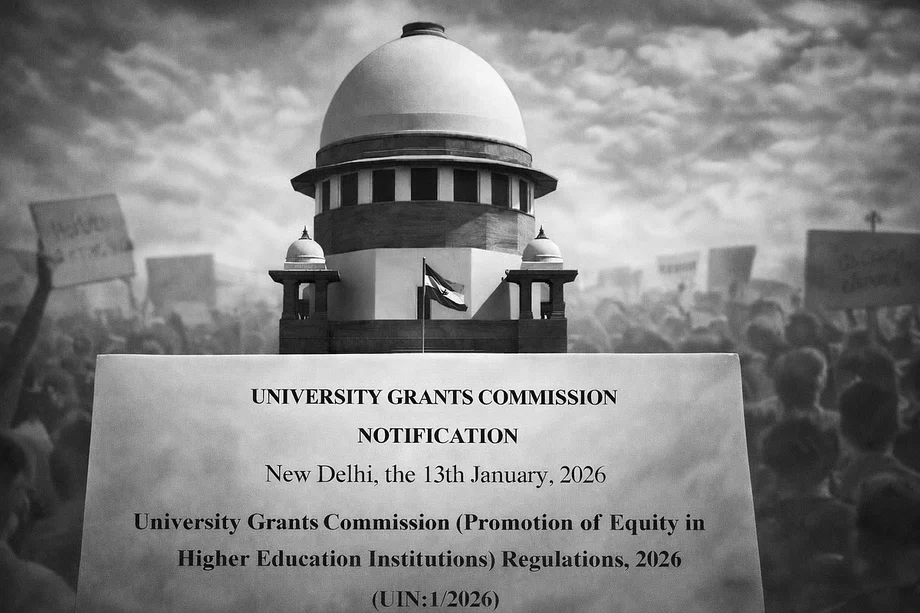
The National Board of Examinations in Medical Sciences (NBEMS) revised the NEET-PG thresholds on January 13, 2026, for the third round of counselling. The decision followed concerns about a large number of vacant postgraduate medical seats.
For General and Economically Weaker Section (EWS) candidates, the qualifying threshold fell from the 50th percentile, corresponding to 276 marks, to the seventh percentile, corresponding to 103 marks. That was a reduction of 173 marks, or about 63 per cent of the previous qualifying score.
For General candidates with benchmark disabilities, the threshold dropped from the 45th percentile and 255 marks to the fifth percentile and 90 marks. For Scheduled Caste, Scheduled Tribe and Other Backward Classes candidates, including candidates with benchmark disabilities, it fell from the 40th percentile and 235 marks to zero percentile and minus 40 marks.
A negative score can arise when penalties for incorrect answers outweigh marks earned for correct answers. Under the revised thresholds, some candidates with negative scores became eligible for counselling. Eligibility gave them access to the allocation process, while seat allotment still depended on their place in the merit order and the seats available.
Why the court sought a lasting solution
The petitioners challenged the sharp reductions, arguing that they compromised postgraduate medical education standards and raised concerns about patient safety. The Centre has defended a different understanding of the examination's purpose: it says NEET-PG creates an inter se merit list, meaning an order of merit among candidates, to distribute limited postgraduate seats.
The Centre maintains that the MBBS qualification establishes minimum competence. The disagreement therefore concerns both the purpose of the entrance examination and the level of performance required before a doctor may compete for specialist training.
Justices P.S. Narasimha and Alok Aradhe called in May 2026 for an institutional mechanism to address repeated threshold reductions. The bench noted that the issue returned during admission cycles, creating difficulties for candidates while seats remained vacant.
The expert committee, headed by the Director General of Health Services, was constituted on July 23, 2026. The Centre informed the court of its formation in August. Its deliberations included suggestions from senior advocate Maninder Singh, who is assisting the court as amicus curiae, an adviser who helps judges examine the issues before them.
How the dispute developed
The admissions controversy stretches across several examination cycles. In particular, the NEET-PG 2024 admission cycle continued into 2025, while the January 2026 reduction concerned the 2025-26 cycle.
- 2023: The qualifying percentile was reduced to zero across categories, allowing candidates with negative marks to become eligible for counselling.
- January 2025: For the NEET-PG 2024 cycle, thresholds were lowered to the 15th percentile for General and EWS candidates and the 10th percentile for reserved categories. They were reduced further in February 2025.
- January 13, 2026: NBEMS lowered thresholds for the third counselling round of the 2025-26 cycle, including a zero percentile threshold for SC, ST and OBC candidates.
- May 2026: The Supreme Court sought an institutional response to recurring reductions and vacant seats.
- July 23, 2026: The Centre constituted the committee headed by the Director General of Health Services.
- September 23, 2026: The NMC approved the proposed move to a rank system in principle. Its secretary communicated the decision on October 1.
- November 3, 2026: The committee submitted its report to the Supreme Court, proposing changes from 2027.
The sequence shows why the review extends beyond a single revised score. Authorities have repeatedly expanded eligibility after seats remained unfilled, bringing the relationship between examination standards and seat allocation back before the court.
Minimum standards remain central to the proposal
The expert committee recommended that authorities preserve minimum qualifying standards rather than substantially reduce admission requirements simply to fill vacancies. Its report expressed concern about candidates with very low or negative examination performance becoming eligible.
The committee reviewing the admissions process set out its position in the report submitted to the Supreme Court:
sanctity of NEET examinations should be maintained and minimum qualifying standards in postgraduate medical education is not diluted to the extent of permitting candidates with grossly inadequate or negative performance to become eligible for admission; the significance of competitive examinations should not be reduced to an administrative formality.
The recommendation places two goals alongside each other: maintaining a meaningful entry standard and using postgraduate training capacity. The proposed fee, salary and counselling changes address vacancies through the conditions surrounding admission, rather than relying entirely on a larger pool of eligible candidates.
Fees, salaries and service bonds face review
The committee recommended reducing fees for non-clinical postgraduate courses and exempting candidates entering pre-clinical and para-clinical subjects from service bonds. These fields include the basic sciences and supporting disciplines that underpin medical practice, rather than focusing primarily on direct patient treatment.
A service bond generally requires a graduate to work for a specified employer or public authority for a period after training, with a financial consequence for failing to fulfil that obligation. An exemption would remove that requirement for candidates covered by the proposed policy.
The panel also recommended that residents in clinical and non-clinical branches receive equal treatment in salary. Resident doctors are qualified doctors undertaking postgraduate training while carrying out duties associated with their programmes.
For an applicant choosing between subjects, fees, income during training and obligations after graduation all affect the cost of accepting a seat. The committee's proposals seek to address those factors together. It also recommended incentives for doctors to work in rural areas, linking its admissions review to the challenge of attracting medical staff outside major centres.
More reliable seat information and counselling dates
The committee asked the NMC, NBEMS and the National Testing Agency to provide verified information on available seats well before counselling begins. Candidates use those details to decide which courses and institutions to list among their preferences.
The Medical Counselling Committee would prepare a fixed schedule for each academic year and course and submit it to the Supreme Court for ratification, under another recommendation. The panel also proposed standard operating procedures, updated annually, to give the process a consistent set of rules.
Identity checks would include know your customer (KYC) procedures and biometric verification. KYC means checking a person's identity against their records; biometric checks use physical identifiers. The committee proposed these measures to address concerns about candidates participating merely to block seats.
Additional counselling rounds would offer further opportunities to allocate unfilled places. For courses with seats vacant for two to three consecutive years, the panel recommended examining whether they should be discontinued. That would put persistent vacancies under a course review, alongside efforts to improve fees and training conditions.
What candidates should watch next
The Supreme Court gave the petitioners time to respond to the committee's report and adjourned the matter. The next stages are consideration of those responses, consultation on the draft regulation and decisions on the final rules.
The examination is also facing scrutiny over candidates' access to their results. On November 2, the court sought a written explanation from NBEMS for its question confidentiality policy, after candidates sought access to the questions needed to check their answers and marks.
For applicants planning for 2027, the proposed rank system is the main regulatory development to follow. The accompanying recommendations also matter: a dependable seat list, predictable counselling dates and different financial conditions for some subjects could affect both the choices candidates make and whether vacant places are filled.
Key Points
- A 12-member committee recommended replacing percentile eligibility with a rank system for NEET-PG and NEET-SS from 2027.
- The NMC approved the proposal in principle on September 23, 2026; final regulations are pending.
- The January 2026 threshold reduction made 95,913 additional candidates eligible for counselling, according to figures placed before the court.
- The committee called for minimum qualifying standards to be maintained, alongside lower fees and service bond exemptions for certain courses.
- Verified seat information, fixed schedules, identity checks and additional counselling rounds form part of the proposed changes.
- The Supreme Court has allowed petitioners time to respond to the report.