A chart that silenced the studio
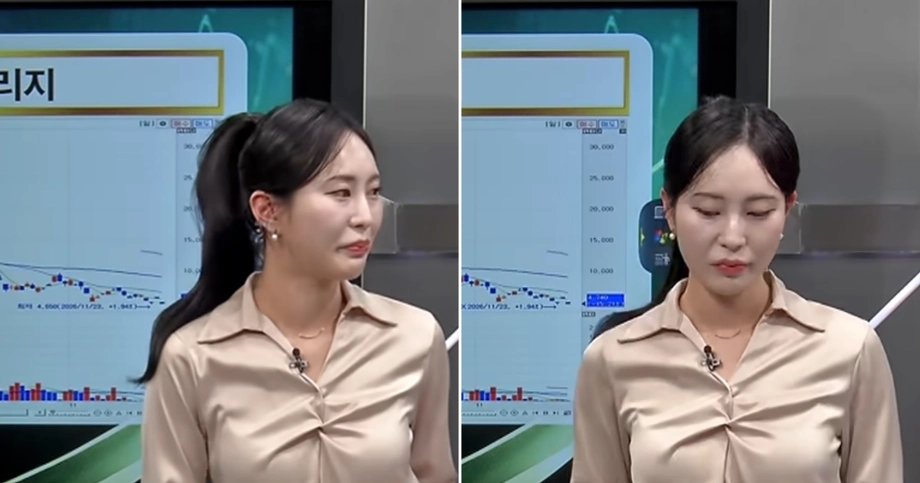
Kim Ah-hyun was live on Seoul Economic TV on November 25, 2026, when a chart showing a 15.21 percent fall in a leveraged product tied to Samsung Electronics stopped her in mid sentence. She bowed her head, tried to compose herself and looked toward the production team with reddened eyes. After a silence of about 10 seconds, the broadcast cut back to the studio.
Contents
- A chart that silenced the studio
- The scale of the November 25 selling
- How American chip worries reached Seoul
- Why the Samsung chart carried so much pain
- Kim explains her tears and completes her advice
- How the pressure built from June to November
- Why two companies and borrowed money magnify the risk
- The cushions around the market were weakening
- A small rebound and a possible expansion of official support
- What to Know
Kim hosts Kim Ah-hyun's Golden Stock and is a market commentator at Pion Investment Advisory, rather than a conventional news anchor. She had been discussing American technology stocks and the outlook for the Nasdaq when the Samsung chart appeared. The product's fall was especially alarming because it was considerably steeper than the already severe decline in Samsung's own shares.
Before that chart appeared, Kim warned that the American market could weaken further and urged viewers to endure the difficult conditions. In remarks translated from Korean, she said:
I personally think the Nasdaq could fall a further 5% or so. It's a very difficult market, but you need to get through this market well, and...
Her voice then faltered. The few seconds that followed spread across social media, drawing millions of views and messages from investors who said her reaction captured their own anxiety. Many South Korean viewers offered encouragement, while others speculated that she had lost money herself.
The scale of the November 25 selling
Korea Exchange data show that the KOSPI closed at 4,697.51 on November 25, down 308.52 points, or 6.16 percent. It was the index's lowest close since January 13. The KOSPI opened nearly 4 percent lower and touched 4,672.55 during the session before recovering some ground.
A sell sidecar was activated at about 9:08 a.m., the fourth consecutive trading day on which such a measure had been used. A sidecar temporarily curbs program sell orders when selling becomes disorderly. It does not close the exchange for the rest of the day. The mechanism is intended to slow a rush of automated orders and give traders a brief pause.
Samsung Electronics closed 9.87 percent lower at 170,700 won. Its market capitalization fell below 1,000 trillion won for the first time in about eight months. SK hynix dropped 11.05 percent to finish at 1.03 million won. Foreign investors sold a net 1.8993 trillion won of South Korean shares, approximately $1.4 billion.
The fall erased the previous session's strong rally, which had carried the KOSPI back above 5,000 following news of Jensen Huang's return as Nvidia's chief executive. The rapid reversal meant that investors who had bought during that rebound immediately faced another wave of losses.
How American chip worries reached Seoul
The immediate pressure began in New York on November 24, local time. Nvidia fell 5.86 percent, AMD lost 8.96 percent and Micron dropped 11.01 percent, with Micron under pressure after a brokerage downgrade. The Philadelphia Semiconductor Index, which tracks major companies involved in designing and making chips, plunged 7.88 percent.
Investors were questioning whether enormous spending on artificial intelligence would produce sufficient profits and whether semiconductor valuations had run ahead of the industry's prospects. Warnings that Washington could impose fresh tariffs on 16 economies added another source of anxiety.
Those concerns quickly reached Seoul because Samsung Electronics and SK hynix sit at the center of both South Korea's stock market and the global semiconductor supply chain. When international investors reduce their exposure to chip companies, the effect can spread through the entire KOSPI rather than remain confined to two technology stocks.
Why the Samsung chart carried so much pain
The product on Kim's screen was designed to magnify movements in Samsung shares. Such products seek a set multiple of an asset's daily return, often twice the daily rise or fall. Inverse products work in the opposite direction, allowing holders to benefit when the underlying share price declines.
This structure can produce large gains during a favorable session, but it also magnifies losses. The danger is less intuitive during a prolonged period of volatile trading. Because the returns are calculated each day, a holder can remain in loss even if the underlying share eventually returns to its earlier price. The product's value depends on the entire sequence of daily gains and losses, not simply on where the share price finishes.
South Korea allowed leveraged and inverse exchange traded funds based on individual stocks to list on local exchanges for the first time on May 27. Investors could then make amplified bets on companies including Samsung Electronics and SK hynix. Individuals bought about 3.5 trillion won of Samsung leveraged products during the first two weeks after their introduction.
That rush helps explain why a chart showing a 15.21 percent decline resonated so strongly. Behind the number were ordinary investors whose losses could be much larger than the fall in Samsung shares alone. Kim had warned during the broadcast about heavy foreign selling and uncertainty surrounding artificial intelligence investment, and she urged viewers to avoid aggressive trading and increase their cash reserves.
Kim explains her tears and completes her advice
Online speculation quickly turned toward Kim's own finances. Some users suggested that she had lost her savings or checked her portfolio immediately before going on air. In a later livestream, Kim rejected the idea that personal trading losses had caused her reaction. She said she had become overwhelmed after hearing repeated accounts from individual investors who had suffered severe financial damage. She called them 'tears of anger'.
Kim had also asked viewers for understanding after showing her emotions during the original broadcast. She apologized, continued the segment and advised small investors not to rush into shares during every temporary rebound. Her message was to hold cash, avoid reckless trading and not abandon hope.
Many viewers responded with messages of sympathy rather than ridicule. Some said they also wanted to cry, others thanked her for appearing sincere, and many promised to keep enduring the market together. One widely shared sentiment was that the scene seemed to capture the position of individuals caught between falling semiconductor shares and amplified losses in leveraged products.
The video travelled through overseas financial and cryptocurrency accounts and was also covered in Taiwan. It drew comparisons with Agnes Wu Mang-ching, the Hong Kong stock commentator known as Ching Jeh, who wept on television during the 2009 financial crisis over retail investors' losses as HSBC shares plunged.
How the pressure built from June to November
The KOSPI's November 25 close was roughly 48 percent below its record close of 9,114.55 on June 22. Samsung shares had fallen from 257,000 won in late August to 170,700 won, a decline of about a third. Several episodes show how the pressure accumulated:
- June 8: The KOSPI fell 8 percent within three minutes. Five circuit breakers were triggered during June, and more than 400 trillion won of market value, then estimated at $360 billion, was erased during the month's turmoil.
- June 22 and 23: After the record close, a subsequent 10 percent plunge ranked as the second worst day in KOSPI history. A proposal to tax unrealized capital gains was identified as the trigger. Unrealized gains are paper profits on investments that have risen in value but have not yet been sold.
- November 5: The KOSPI fell 5.28 percent, while Samsung Electronics lost 7.57 percent and SK hynix declined 9.46 percent.
- November 16 and 17: The index dropped another 3.59 percent on November 16. It then closed at 4,968.48 on November 17, its first finish below 5,000 since February.
- November 24 to 26: The American semiconductor rout reached Seoul, producing the 6.16 percent KOSPI fall and Kim's emotional broadcast, followed by a small recovery the next day.
This sequence shows that the viral television moment came after months of stress, rather than arising from one isolated bad session. Investors had already experienced sudden crashes, brief rallies and repeated trips below levels that had recently been recovered.
Why two companies and borrowed money magnify the risk
Samsung Electronics and SK hynix were estimated to account for between 45 and 50 percent of the KOSPI during the broader period of turbulence. By comparison, Nvidia and Apple together represented about 14 percent of the S&P 500. The contrast shows how a movement in two South Korean chipmakers can pull the entire national index with them.
Borrowed money added another accelerator. Margin debt reached a record 32.67 trillion won, approximately $22.4 billion, after rising 25 percent over the previous year. Margin debt is money borrowed to buy securities. When prices fall, lenders can demand additional cash or sell the securities to limit their own exposure. Those forced sales can push prices down again and create further demands for cash.
South Korea's large population of individual traders, often called ants locally, can also make price swings sharper when many people enter or leave the same popular investments at once. Assets in Korean leveraged exchange traded funds had fallen by nearly $40 billion from their June peak, a drop of about 75 percent, to roughly $12 billion. That was their lowest estimated level since January.
The cushions around the market were weakening
The won provided another source of pressure, weakening during the broader slump to its lowest level in 17 years. A falling currency makes imports more expensive. It can also make interest rate cuts harder for a central bank because cheaper money may place further pressure on the currency and add to inflation. That leaves fewer comfortable options when policymakers want to support economic activity during a market decline.
The National Pension Service, whose assets equal about 60 percent of South Korea's gross domestic product, had exceeded its equity allocation limit. It was therefore selling into rallies to rebalance its holdings rather than consistently buying during declines. It sold even on a day when a circuit breaker was triggered, removing a potential source of buying support.
South Korea also missed a place on MSCI's developed market watchlist in late June. Inclusion on that list can be a step toward a classification upgrade, which may attract international funds whose investment rules follow MSCI categories. Missing the list removed an anticipated reason for foreign investors to commit new money despite the volatility.
A small rebound and a possible expansion of official support
The KOSPI rose 0.29 percent on November 26 to close at 4,711.21, helped by bargain hunting in chip stocks. Samsung Electronics gained 0.4 percent and SK hynix advanced 2.2 percent. The index surrendered most of an early rebound of about 2.5 percent, however, and the Bank of Korea raised interest rates that day.
The recovery added 13.70 points after the previous session's loss of 308.52 points. Higher borrowing costs, nervous investors and doubts about artificial intelligence spending continued to hang over trading.
South Korean authorities were examining an expansion of the securities market stabilization fund, which stood at 10.76 trillion won, or about $8 billion. The Korea Development Bank approached 25 financial institutions to assess their capacity to contribute additional money. No final decision, expanded amount or starting date had been announced.
For the investors Kim addressed, the practical picture remained stark. A modest rise in the index did not restore Samsung's market value, repair months of losses in amplified products or remove the danger of forced sales involving borrowed money. Her visible distress turned those financial pressures into a scene that viewers without any knowledge of market mechanics could immediately understand.
What to Know
- Kim Ah-hyun became emotional on Seoul Economic TV on November 25 after a leveraged Samsung Electronics product showed a 15.21 percent fall.
- She later described her reaction as 'tears of anger' over losses suffered by individual investors, not personal trading losses.
- The KOSPI fell 6.16 percent to 4,697.51, while Samsung lost 9.87 percent and SK hynix dropped 11.05 percent.
- The selloff followed steep declines in American semiconductor stocks and renewed doubts about artificial intelligence investment.
- Products introduced on May 27 allowed investors to magnify daily movements in individual South Korean stocks, increasing both potential gains and losses.
- Heavy concentration in two chipmakers, record margin debt and repeated market disruptions since June intensified the pressure.
- The KOSPI rebounded just 0.29 percent on November 26, while authorities considered expanding a 10.76 trillion won stabilization fund without announcing a final decision.