A Hanoi forum turns ASEAN nuclear ambitions into timetables
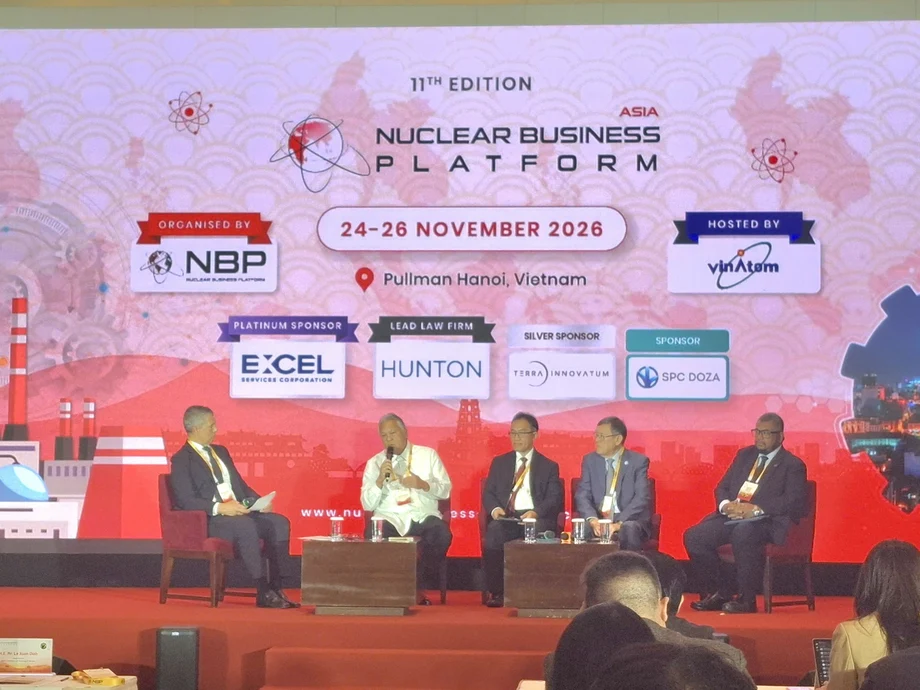
Regulators, state utilities, reactor vendors and lenders from across Asia gathered in Hanoi on November 25, 2026, for the opening of the 11th Asia Nuclear Business Platform, a meeting built around one question: how do Southeast Asian countries move nuclear projects from policy papers to construction sites? The programme ran from November 24 to 26, with two workshops the day before the main sessions and the conference itself on November 25 and 26, and was organised by the Vietnam Atomic Energy Institute (VINATOM) together with the Nuclear Business Platform.
Contents
- A Hanoi forum turns ASEAN nuclear ambitions into timetables
- What Vietnam says it still lacks
- Ninh Thuan: two plants and a national program
- The IAEA checklist behind a 2035 master plan
- Who guards the guard
- Welders, electricians and a century of work
- Small reactors for data centres, rail lines and airports
- Bangladesh and Turkey: two ways through a first project
- Where the neighbours stand
- Money, machines and what is still undecided
- Key Points
Vietnam's host institute has run nuclear science for the state since it was created on 23 February 1979, and has held the rank of special class scientific organisation under the Ministry of Science and Technology since a prime minister decision in January 2016. Its headquarters sit at 59 Ly Thuong Kiet street in Hanoi's Hoan Kiem district. President Tran Chi Thanh used the forum to argue that trained people and access to reactor designs already proven in operation, meeting strict safety demands, are the decisive ingredients for the national programme.
Organisers framed the agenda around a shift in what is pushing electricity demand up. Artificial intelligence, data centres and factories that run on electricity rather than fuel are changing power planning across the region, and the sessions addressed reactor choice, legal frameworks, project finance, local industrial participation, workforce development and public acceptance.
What Vietnam says it still lacks
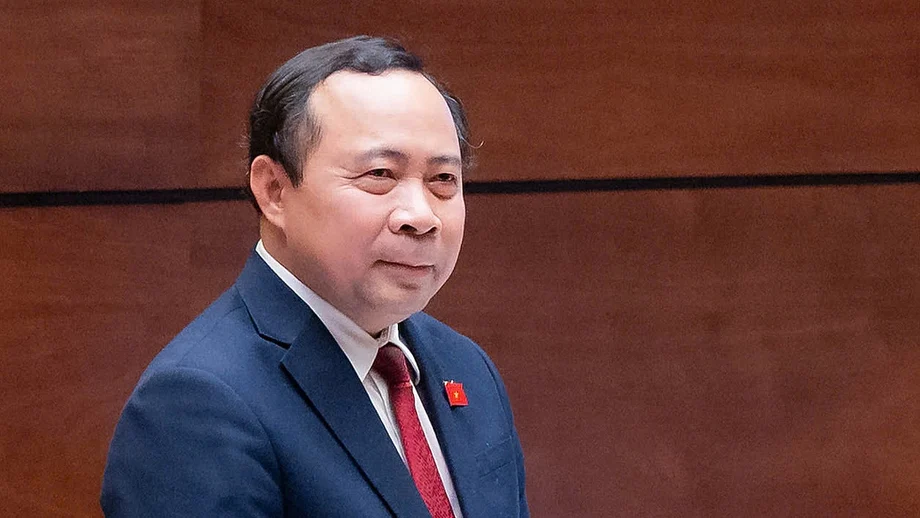
Deputy Minister of Science and Technology Le Xuan Dinh told the opening session that a national decision to go nuclear is necessary but not sufficient. He listed what has to come with it: political commitment that lasts, institutions able to regulate, qualified engineers and technicians, adequate and sustainable finance, and public consent earned through open communication.
However, we fully recognize that nuclear power development is not simply a matter of building and operating nuclear power plants. It is a complex, long-term national program that requires sustained political commitment, a robust institutional framework, highly qualified human resources, adequate and sustainable financial resources and mechanisms, as well as transparent communication and public engagement to build broad social consensus.
Vietnam welcomes foreign partnership in four areas the deputy minister named: access to technology, training, project management capacity and supply chains that buyers can trust. Nuclear plants, he said, produce few carbon emissions, can back up wind and solar, steady the grid and support growth, which is how the government links the programme to its pledge of net zero emissions by 2050.
He also pointed to small modular reactors, or SMRs, whose flexibility and safety features are opening up uses that large plants cannot serve.
Ninh Thuan: two plants and a national program
Most of the Vietnamese content at the forum concerned Ninh Thuan province, where the country plans two nuclear plants. A dedicated session examined the implementation status of Ninh Thuan 1 and the readiness of its infrastructure, from coordination between institutions to technical capability, the practical tests of turning a policy decision into a project.
Petrovietnam's Investment Preparation Board is handling preparation for Ninh Thuan 2. Its deputy head, Nguyen Thanh Binh, argued that raising the share of work done by Vietnamese firms is about more than jobs. Local content, he said, should build industrial capacity that can keep growing after the plant starts operating, giving Vietnamese companies a route to upgrade technology, tighten quality assurance systems and win places in regional and global nuclear supply chains.
The sums involved explain the interest. James Wilson Voss, vice president and regional director for ASEAN at the US consulting firm EXCEL Services Corporation, put the expenditure on the two Ninh Thuan plants at up to 40 billion U.S. dollars, with room for local suppliers inside that figure.
The IAEA checklist behind a 2035 master plan
Tran Bich Ngoc, deputy director of the Vietnam Agency for Radiation and Nuclear Safety (VARANS) under the Ministry of Science and Technology, gave the forum the results of an International Atomic Energy Agency assessment of the country's nuclear infrastructure: 38 recommendations, 13 suggestions and two good practices. Those findings, she said, are one of the main bases for identifying priority tasks in the national master plan for nuclear power infrastructure through 2035.
The assessment followed the agency's 2025 Integrated Nuclear Infrastructure Review, or INIR, a service in which an international team examines how far a newcomer country's government, regulator, utilities and training system have developed against the agency's phased milestones for launching a first plant. Separate sessions looked at the Integrated Regulatory Review Service, which peer reviews a country's nuclear regulator, and at the technical support organisations that sit between the regulator and the operator.
Safety oversight decides how far a programme can go: it shapes technology choice, construction, operation and the handling of radioactive waste. Vietnamese officials at the forum treated that chain as a single problem rather than a set of approvals.
Who guards the guard
Independence of the nuclear regulator came up in almost every regulatory session. Deputy Minister Dinh put the capacity and independence of the regulatory body among the essentials, alongside a strong domestic science base, effective technology transfer and the gradual entry of Vietnamese firms into the supply chain.
Voss, whose firm advises governments and utilities on licensing, made the same point about VARANS in sharper terms.
VARANS' job is to independently enforce safety to the benefit of the people in the nation. And they need to be trusted and seen to be doing that job. They must execute fully.
Lessons from the United States Nuclear Regulatory Commission were presented by Voss as a roadmap for countries writing their first licensing rules, covering how a regulator is built, how licences are granted and how a plant is watched once it runs. Harry Brunt, a partner for international energy and infrastructure at the law firm Hunton, compared the legal frameworks ASEAN countries need in place before a project starts.
A session bringing ASEAN regulators together with international partners narrowed to three issues: keeping the regulator independent, funding and staffing it properly, and building a safety and security culture from the first day rather than after the first inspection.
Welders, electricians and a century of work
Asked about the biggest obstacle, Voss named people, and not only the physicists. In an interview at the forum, he described a workforce that stretches from reactor specialists and procurement staff to tradespeople certified to nuclear quality standards.
I think the biggest challenge Vietnam is facing is people. And the people that will be needed are at all working levels. These workers include, yes, nuclear specialists and procurement and engineers, but they also include welders and electricians who are certified at the nuclear quality control standards.
His second warning concerned contracts. Designs, he argued, should be finished before construction contracts are signed, a lesson drawn from projects elsewhere that ran over budget.
I would say that the other international lesson that is brought from around the world is: complete the designs before you sign construction contracts. This may sound simple, but in some of the cases where costs have gone way out of line, it is because they have executed contracts too early.
Training capacity is being assembled. Hanoi University of Science and Technology presented its work on nuclear human resources, and VINATOM has run a Nuclear Training Center since December 2010. EXCEL opened EXCEL Services Vietnam in July 2026 and has cooperation agreements with the National Innovation Center and Ho Chi Minh City University of Technology, with more partnerships under discussion.
Small reactors for data centres, rail lines and airports
SMRs took a large share of the programme. The deputy minister said these designs, smaller and built in modules, widen the range of places nuclear power can go. Voss pointed to three Vietnamese cases: the technology parks overseen by the National Innovation Center on behalf of the Ministry of Finance, the planned rail line from north to south, and the country's new airports.
Vietnam is preparing to build a massive rail system north to south. That is going to be an electric system. You could position micro-reactors along the way and actually assure that there is reliable power for that system.
Competition for data centre investment is what makes the question urgent, he said, because the availability of reliable power shapes where investors build.
Right now, other countries are winning that competition because they have higher-quality and more reliable electricity generation.
A dedicated SMR session brought together VINATOM, Indonesia's PLN EPI, Thailand's EGAT and the reactor developer Terra Innovatum. Microreactors, CANDU and VVER reactor types and floating nuclear power plants were each presented in the technology sessions.
Bangladesh and Turkey: two ways through a first project
Two workshops on November 24 examined countries further along the road. The first followed Bangladesh's Rooppur plant from construction into commissioning and operating readiness, with Mohammad Shariful Islam of Nuclear Power Plant Company Bangladesh Limited speaking for the owner and Dr SK Anisur Rahman of the Bangladesh Atomic Energy Regulatory Authority speaking for the regulator. Their sessions covered how duties are split between government, the owner, the regulator, the grid operator and foreign partners, and how an operating organisation is staffed, trained and licensed before fuel is loaded.
The second workshop turned to Turkey, where Mustafa Selim Çelen of the General Directorate of Nuclear Energy, part of the Ministry of Energy and Natural Resources, described a target of about 20 GW of nuclear capacity by 2053 through the Akkuyu, Sinop and Thrace projects. Turkey's localisation goal is at least 50 percent of project costs, supported by measures to qualify domestic manufacturers, certify suppliers and pull local firms into nuclear supply chains. The workshop also set out the difficulties: different technical standards, certification requirements, thin domestic nuclear experience and complicated procurement arrangements.
Where the neighbours stand
Country updates during the forum showed how uneven the region's progress is, and how differently each government has set its targets.
- The Philippines is working on rehabilitating the Bataan nuclear plant, has formed partnerships on SMRs and is aiming for 4,800 MW of nuclear capacity.
- Indonesia plans to have its first 500 MW unit running by 2032.
- Thailand is aiming for nuclear capacity in 2037 under its 2024 power development plan.
- Singapore is building nuclear related capabilities and preparing an INIR roadmap with the IAEA.
- Malaysia is drawing on experience with its TRIGA PUSPATI research reactor as preparation for commercial SMRs.
- Turkey is targeting about 20 GW by 2053 across three plants.
The high level panel that opened the main day, moderated by George Borovas, head of nuclear at Hunton, drew participants from the Philippines, Indonesia, Kazakhstan and Malaysia to examine how demand from AI data centres is reshaping energy planning.
Money, machines and what is still undecided
Financing drew a separate track of sessions, with UK Export Finance on export credit, EY presenting an analysis of the EU Green Taxonomy as it applies to nuclear investment, Hunton on contract structures and Temasek Trust on how climate capital might be mobilised. A question running through the day was whether climate finance is shifting as governments revise their view of nuclear power.
For Vietnam, several things remain open. No construction start date for Ninh Thuan 1 or 2 was given at the forum, and the only spending figure put on the record was Voss's estimate of up to 40 billion U.S. dollars for the two plants. The 2035 master plan is still being drafted around the IAEA findings, and the next step officials pointed to is the work of turning its 38 recommendations into funded tasks.
What the Hanoi sessions made visible is the size of the machinery behind a single plant. A country needs a regulator trusted to say no, a university system that can fill a training centre, a certification system that can admit nuclear grade equipment, and firms that can weld to a standard inspectors will accept. Vietnam has begun work on all four fronts, with the two plants at Ninh Thuan as the test.
Key Points
- The 11th Asia Nuclear Business Platform ran in Hanoi from November 24 to 26, 2026, organised by VINATOM and the Nuclear Business Platform.
- Deputy Minister Le Xuan Dinh said national commitment is necessary but not sufficient for a nuclear programme.
- VARANS reported an IAEA assessment with 38 recommendations, 13 suggestions and two good practices, feeding a master plan through 2035.
- Vietnam is preparing the Ninh Thuan 1 and 2 plants, with spending estimated at up to 40 billion U.S. dollars.
- Turkey targets about 20 GW by 2053 and at least 50 percent local content, while Indonesia aims for 500 MW by 2032.
- Voss of EXCEL named workforce shortages and premature construction contracts as the main risks.