Forty-Six Groups Tell Participating States to Say No
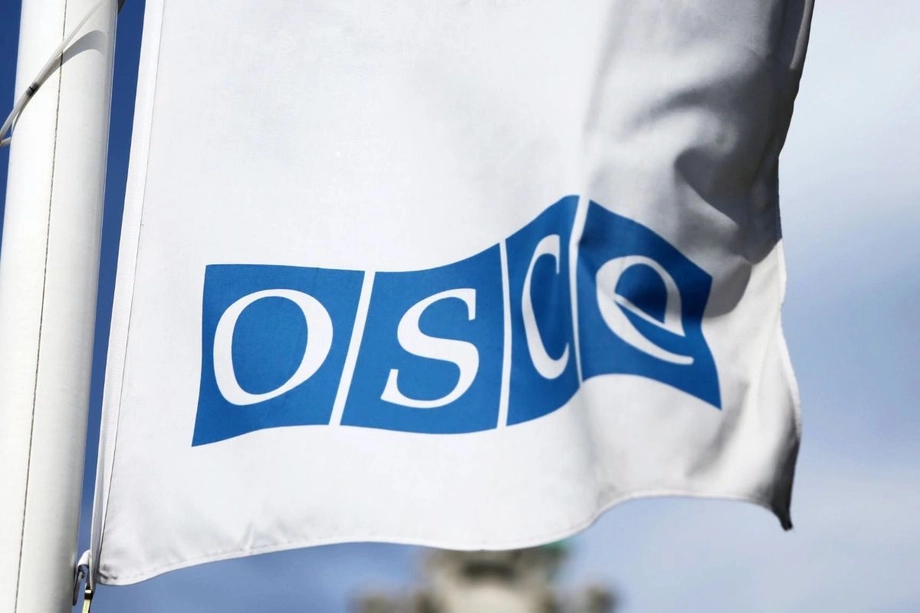
Forty-six civil society organisations have asked the governments that make up the Organization for Security and Cooperation in Europe to block Azerbaijan from chairing the organisation in 2027. Their appeal followed a session of the OSCE Permanent Council in Vienna on 19 November 2026, where participating States discussed a possible Azerbaijani Chairpersonship-in-Office and Baku made clear it wanted the post.
Contents
- Forty-Six Groups Tell Participating States to Say No
- What the Appeal Actually Says
- Why the Chairmanship Is Worth a Public Fight
- In Baku, a Crackdown Dated to 2013
- The Figures Behind the Complaint
- Courts and Assemblies Have Repeatedly Ruled Against Baku
- A Chair Would Arrive With Two Unfinished Files
- Baku Has Not Responded
- Key Points
The signatories run from the World Organisation Against Torture, known as OMCT, to small national groups such as the Independent Lawyers Network in Baku and the Turkmenistan Helsinki Fund for Human Rights. The list also includes Freedom Now in the United States, the Belarusian Helsinki Committee and the Human Rights Center Viasna, Ukraine's Center for Civil Liberties and ZMINA, Poland's Freedom Files, the Human Rights Center of Azerbaijan, and Russian groups including the Memorial Human Rights Defence Centre and the Sphere Foundation. The appeal was issued by the World Organisation Against Torture on 23 November 2026. A count of the signatories circulated on 25 November 2026 gave the figure as 45, while the list issued with the appeal carries 46 names.
Every government that would have to approve the bid sits in the OSCE, a body of 57 participating States that takes decisions by consensus, meaning one objection is enough to stop a nomination. The organisation works across three areas: military and political questions, economic and environmental questions, and a human dimension that covers elections, media freedom and the rule of law.
What the Appeal Actually Says
The organisations did not hedge. Their text calls the Azerbaijani government "not a reliable security, environmental, or human rights partner" and "unfit to chair the organisation".
Leaving the organisation in the hands of an authoritarian government would seriously question the legitimacy and credibility of a body tasked with promoting a comprehensive security approach which includes human rights among its core pillars.
The opening lines address participating States directly and ask them to stop any Azerbaijani candidacy: "We, the undersigned civil society organisations, are writing to express our firm opposition to a potential Azerbaijani OSCE Chairpersonship-in-Office and call on participating States to block any such decision."
By "comprehensive security" the signatories mean the OSCE's founding idea that a country's stability depends as much on how it treats its own citizens as on where its troops are stationed. The appeal argues that authoritarian governments, Azerbaijan among them, now threaten European security through disinformation, corruption, political interference, transnational repression and attempts to weaken democratic institutions. Transnational repression is the practice of chasing a country's critics beyond its own borders, through extradition requests, asset seizures or pressure on relatives who stayed behind.
Why the Chairmanship Is Worth a Public Fight
Each year one participating State takes the chair and its foreign minister becomes the public face of the organisation for twelve months. The chair sets the agenda, runs the Permanent Council in Vienna, frames the budget argument and speaks for the body abroad. A government that rejects outside scrutiny of its courts and newspapers would be shaping the very meetings where that scrutiny is discussed.
Consensus is the second half of the story. Because the OSCE does not vote, a single participating State can block a chairmanship it does not want, which is the arithmetic the 46 groups are counting on. The appeal also notes that many participating States are focused on putting the organisation on a more stable footing, and argues that this makes the choice of chair more important rather than less.
In Baku, a Crackdown Dated to 2013
The appeal traces the pressure on independent civic life in Azerbaijan to 2013 and says it has intensified since the end of 2023. It names the tools: criminal cases against journalists, raids on newsrooms, and laws on NGOs, media, elections and political parties that the Council of Europe's Venice Commission and the OSCE's Office for Democratic Institutions and Human Rights have said restrict fundamental freedoms and fall short of the country's own commitments.
Abzas Media became the test case in November 2023, when police detained its journalists on smuggling charges. The cases then reached Toplum TV, Kanal 13 and Meydan TV, and dozens of journalists and media workers were arrested. Anar Mammadli, a human rights defender, was detained in 2024 after his advocacy at the OSCE and other multilateral institutions, a case the European Parliament took up in its October resolution.
The sequence of dates the appeal and the resolutions set out:
- 2013: a broad crackdown begins on NGOs, media outlets, journalists, human rights defenders and lawyers
- November 2023: journalists from Abzas Media are detained on smuggling charges
- 2023 onward: raids and arrests extend to Toplum TV, Kanal 13 and Meydan TV, with dozens of media workers held
- 2024: human rights defender Anar Mammadli is detained after advocacy at the OSCE
- May 2026: a Parliamentary Assembly of the Council of Europe report counts 328 political prisoners
- June 2026: the same assembly adopts a resolution on the silencing of dissent in Azerbaijan
- October 2026: the European Parliament adopts a resolution on national security laws and transnational repression
- 19 November 2026: the OSCE Permanent Council discusses a possible Azerbaijani chairmanship for 2027
- 23 November 2026: the 46 organisations publish their appeal
The Figures Behind the Complaint
A report adopted by the Parliamentary Assembly of the Council of Europe in May 2026 put the number of political prisoners in Azerbaijan at 328. Of those, 31 were journalists, eight were human rights defenders and 44 were members of opposition or civil society organisations. The appeal uses a wider figure of more than 300, attributing it to Azerbaijani human rights groups, and says dozens of those held were imprisoned in retaliation for human rights and media work carried out at home or abroad.
The assembly's June 2026 resolution described the dismantling of independent media, a rise in reported political prisoners, the misuse of criminal law and restrictive NGO and media legislation as parts of one pattern. The appeal repeats that charge in a shorter form, arguing that a state which jails the people who monitor it cannot credibly lead a body built on their participation.
Courts and Assemblies Have Repeatedly Ruled Against Baku
Strasbourg has supplied the sharpest language. The European Court of Human Rights has described a "troubling pattern of arbitrary arrests and detentions of government critics, civil society activists and human rights defenders through retaliatory prosecutions and misuse of criminal law in defiance of the rule of law."
Enforcement is the court's weak point. Azerbaijan remains one of the states with the highest percentage of judgments it has not implemented, which the appeal presents as evidence of an unwillingness to meet its obligations under the European Convention on Human Rights. The UN Committee against Torture, the Venice Commission and the OSCE's Office for Democratic Institutions and Human Rights have each found that Azerbaijani legislation on civil society and media does not meet international standards.
In October 2026 the European Parliament adopted by a wide margin a resolution condemning the use of national security laws to silence NGOs and the press and condemning transnational repression against dissenting and opposition voices. The OSCE's own Representative on Freedom of the Media, Teresa Ribeiro, has condemned what her office called the "harassment of media workers" in Azerbaijan, a statement the appeal cites to show that criticism is not coming only from outside the organisation.
A Chair Would Arrive With Two Unfinished Files
Two items sit on the table whichever government takes the chair in 2027. One is the prisoners. The other is the court judgments Azerbaijan has not carried out, a backlog the appeal treats as a measure of how the country honours commitments it signed voluntarily when it joined the Council of Europe and the OSCE.
For the groups that signed, the practical test is simpler than the legal argument. A chairmanship gives a government a platform, a budget debate and a say over which crises the organisation looks at. Handing those tools to a state that prosecutes the monitors is, in their words, a question of the organisation's legitimacy and credibility.
Baku Has Not Responded
No official statement from the Azerbaijani authorities on either the chairmanship bid or the appeal had been published as the appeal went out. Participating States have not announced a date for a decision on the 2027 chairmanship, and no vote is scheduled because the OSCE does not hold them on such appointments. The next formal opportunity would come at a meeting of the Permanent Council in Vienna, where the 2027 chair would be confirmed by consensus if no participating State objects.
The organisations have said they will keep pressing the point with the governments they can reach. Their appeal closes with a direct request that participating States reject any candidacy for the chairmanship by the Azerbaijani authorities, a line that turns a procedural rotation into a test of what the organisation is willing to be led by.
Key Points
- Forty-six civil society organisations asked OSCE participating States to block an Azerbaijani chairmanship in 2027, in an appeal issued on 23 November 2026; a separate count gave 45 signatories.
- The bid was discussed at the OSCE Permanent Council in Vienna on 19 November 2026, after Baku signalled interest in the post.
- The signatories call the Azerbaijani government "not a reliable security, environmental, or human rights partner" and "unfit to chair the organisation".
- A May 2026 report by the Parliamentary Assembly of the Council of Europe counted 328 political prisoners in Azerbaijan, including 31 journalists, eight human rights defenders and 44 members of opposition or civil society groups.
- The appeal dates the crackdown to 2013 and says it intensified after the end of 2023, with arrests at Abzas Media, Toplum TV, Kanal 13 and Meydan TV.
- The European Court of Human Rights, the UN Committee against Torture, the Venice Commission and the OSCE's Office for Democratic Institutions and Human Rights have all found Azerbaijani law or practice short of international standards.
- The European Parliament adopted a resolution on the misuse of national security laws in October 2026, and the Council of Europe assembly followed in June 2026.
- Anar Mammadli, held since 2024, was detained after advocacy at the OSCE and other multilateral institutions.
- OSCE decisions require consensus, so one participating State can stop the 2027 appointment; no date for a decision has been announced.