A market upgrade with a price tag
Hanoi has put a number on the task ahead: Vietnam needs about 38.5 quadrillion VND, more than 1.48 trillion USD, of total social investment in 2026-2030 if it wants average GDP growth above 10 percent. The State Securities Commission says the state budget can supply about 8.5 quadrillion VND, or 20 percent. Companies, households, foreign investors and the capital markets must provide the rest.
Contents
- A market upgrade with a price tag
- What the FTSE change means
- How much money could arrive
- Why Vietnam looks cheap, and why that is not enough
- The growth bill and the 10 quadrillion VND plan
- Why banks cannot carry the whole load
- Bonds give infrastructure a longer clock
- Reforms that made the upgrade possible
- What reviewers want changed next
- Three decades, one new map
- What is still undecided
- Key Points
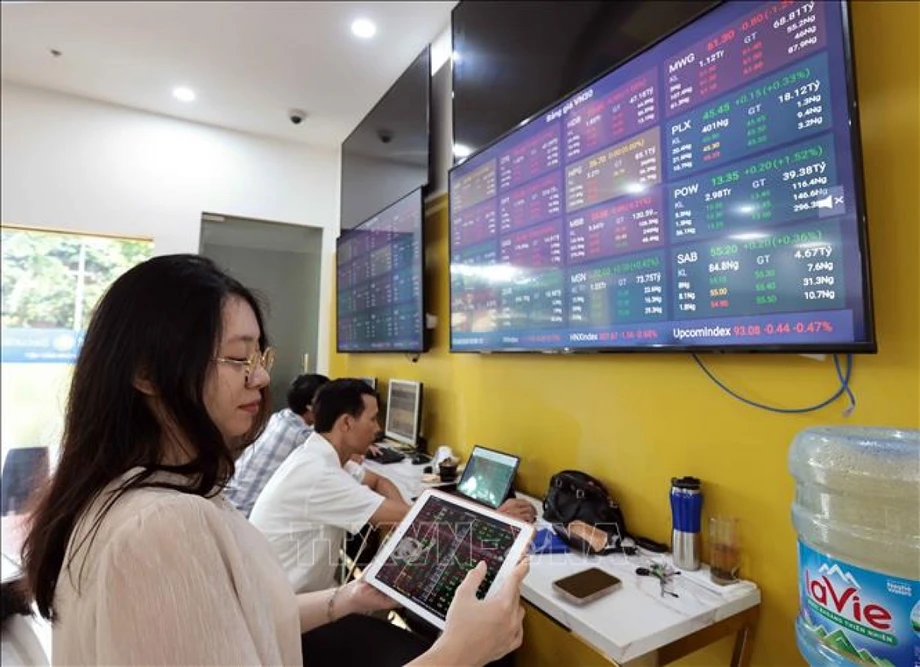
At the 31st Asian Securities Forum annual meeting in Hanoi on October 2, 2026, SSC Chairwoman Vu Thi Chan Phuong said stock market capitalisation on the Ho Chi Minh Stock Exchange and Hanoi Stock Exchange had reached about 404 billion USD, equal to 81.7 percent of GDP. Average daily stock trading had been about 1 billion USD in 2026 to that point, and securities accounts stood at nearly 13.9 million at the end of September.
A capital market is where companies and governments raise money by selling shares or bonds, instead of only borrowing from banks. Shares make buyers part owners. Bonds are loans that usually pay interest and return the original amount at maturity. Vietnam wants both channels to supply money for ports, power, high technology and new industries over many years, not just for immediate working capital.
What the FTSE change means
Vietnam was reclassified from frontier to secondary emerging market by FTSE Russell on October 8, 2025. The FTSE equity classification system is a global map that helps large funds decide which stock markets are open enough and reliable enough for their clients. The FPTS outlook said the change followed the removal of the advance cash requirement for foreign institutional investors and a formal process for failed trades.
Vietnam formally joined the FTSE Russell Global Equity Index Series on September 21, 2026. The first official study described two inclusion tranches and pointed to a March 2026 interim review. An April World Bank update said inclusion would run in four phases from September 2026 to September 2027, with emerging market index funds starting to include Vietnamese shares on September 21, 2026.
The difference matters for investors because inclusion happens through timetables. An index fund buys shares because they appear on a list, not because a manager chose them one by one. FTSE's next milestone is March 2027, when another 20 percent of eligible weight is due to be added, taking the cumulative inclusion factor to 30 percent.
How much money could arrive
The estimates are large but not identical. The World Bank says the upgrade could unlock 3 billion to 5 billion USD in portfolio flows in the near term and as much as 25 billion USD by 2030 if reforms continue. FTSE Russell has estimated that reclassification could redirect as much as 6 billion USD into Vietnam. Dragon Capital estimates put passive inflows at 500 million to just under 1 billion USD and active inflows at 2.5 billion to 7.5 billion USD.
The FPTS outlook is more precise about the machinery. It estimated about 900 million USD in passive ETF inflows, including 824 million USD from a 0.69 percent weight in the FTSE Emerging Index. It also estimated 500 million to 2.3 billion USD from 35 emerging market funds with about 75 billion USD in combined assets. Its list of 20 likely index stocks was led by Vingroup, with a 26.274 billion USD market capitalisation, followed by Bank for Foreign Trade of Vietnam, Vinhomes, Hoa Phat and FPT.
Active money is less automatic. Sana Ur Rehman, senior market analyst at EBC Financial Group, said Vietnam would compete directly with other emerging markets for fund allocations. He explained that index funds would follow the timetable, while fund managers choosing their own stocks would look at profits, liquidity, currency movements and economic risk.
The upgrade gives Vietnam access to a much larger pool of international capital, but it also places the market in a more demanding competition
Foreign flows have been selective even after access improved. Data cited by EBC Financial Group showed foreign investors bought a net 2.7 trillion VND in the week before the upgrade, yet had sold a net 91 trillion VND so far this year. Fubon FTSE Vietnam ETF had recorded cumulative net outflows of 533 million USD since 2024 and managed 484 million USD in assets in September 2025, leaving possible selling pressure during rebalancing if it did not change benchmark.
Why Vietnam looks cheap, and why that is not enough
Vietnam's relatively low stock valuations are one reason active investors are interested. A ratio of price to earnings compares a share price with company profit. VinaCapital estimated Vietnam's 2026 forward ratio at about 12.7 times, below Thailand's 14.3 times and Malaysia's 14.9 times. It forecast earnings per share growth of 42.3 percent in 2026 and 13.4 percent in 2027.
The FPTS outlook found a mixed picture. The VN-Index had gained 33.4 percent in 2025 to early October, second among 13 secondary emerging markets behind Colombia's 34.45 percent. Vietnam's average ratio of price to earnings was 16.35 times, above the peer average of 14.34 times, but its three year forward figure was 8.98 times, below the peer average of 10.28 times. That forward figure reflects expected profit growth.
Economic growth gives that story support. The FPTS outlook said Vietnam's economy grew 7.85 percent from a year earlier in the third quarter of 2025, with consumer prices up 3.38 percent. Public debt was expected near 37 percent of GDP by the end of 2025, below the 55 percent warning level, while credit growth could reach 19 percent to 20 percent, well above the 12 percent to 15 percent range of the previous five years.
Rehman said a low price could open the door but would not hold investor interest on its own. He pointed to earnings across banks, factories, consumer firms, technology, logistics and infrastructure.
A low valuation creates an attractive entry point
The growth bill and the 10 quadrillion VND plan
SSC Vice Chairman Nguyen Hoang Duong said average annual GDP growth of more than 10 percent would require about 10 quadrillion VND from the capital and securities markets during 2026-2030, roughly 2 quadrillion VND a year. Securities market mobilisation alone is projected at 5.4 quadrillion VND over five years, more than twice the amount raised in 2020-2025.
The commission has five stated priorities: rebalance the economy's capital structure, build more debt instruments in Vietnam's own currency, create a long term institutional investor base, develop sustainable bonds to international standards and deepen integration through IFRS adoption, stronger corporate governance based on OECD principles and ESG disclosure. IFRS means international financial reporting standards, a common accounting language that makes company numbers easier for foreign investors to compare. ESG disclosure means information on environmental, social and governance issues.
By 2030, the SSC wants foreign investors' assets at about 15 percent of GDP, fund net assets at 5 percent of GDP and pension fund assets growing 11.5 percent a year. It also wants to keep the FTSE classification and meet MSCI emerging market criteria and FTSE Russell advanced emerging market criteria by 2030.
A government interview with SSC Vice Chairman Hoang Van Thu put the 2027 stock market fundraising target at about 950,000 billion VND. By the third quarter of 2026, GDP growth had reached 9.95 percent, close to the target. Registered foreign direct investment reached nearly 55 billion USD in the first ten months, up 74 percent, while officials also want the investment efficiency ratio, known as ICOR, to fall from above 5 to 4. Lower ICOR means each unit of investment produces more growth.
Why banks cannot carry the whole load
Vietnam's banking system has been the main source of private investment, and it is under pressure. The Ministry of Finance estimates that 5.1 quadrillion VND is needed this year for double digit growth. By the end of the third quarter, 3.1 quadrillion VND had been invested, leaving about 2 quadrillion VND for the final quarter.
Bank credit rose from 15.6 quadrillion VND in 2024 to 18.58 quadrillion VND in 2025, an increase of more than 2.98 quadrillion VND. By the end of October, outstanding credit had reached 20.87 quadrillion VND, up 2.29 quadrillion VND, with growth above 12 percent. The ratio of loans to deposits at times reached 115 percent. Above 100 percent means banks have lent more than they have taken in from depositors.
Can Van Luc, chief economist at BIDV, said policy rates near 4.5 percent left little room for further cuts, while a falling net interest margin made banks cautious. Net interest margin is the gap between what banks earn on loans and what they pay on deposits. It fell from about 3 percent at the end of last year to about 2.8 percent in the first quarter and about 2.5 percent now.
Lowering deposit rates could also affect liquidity
The State Bank has asked commercial banks to cut annual deposit rates by 0.5 to 1 percentage point on newly opened deposits with terms of six months or longer, and to cut lending rates by 1.5 to 2 percentage points for production, business and priority sectors. More than 20 banks have announced preferential programmes. A borrower quoted an 18 percent rate for imports before the Lunar New Year, a sign of how tight funding can feel for some firms, though such a rate may be isolated.
Bonds give infrastructure a longer clock
Vietnam is also trying to open a second channel for long money. The Urban Development Law took effect on October 1, giving the Ho Chi Minh City People's Council authority over municipal and project bond issuance through the Vietnam International Financial Centre in Ho Chi Minh City. Municipal bonds are loans issued by a city; project bonds are tied to a specific development.
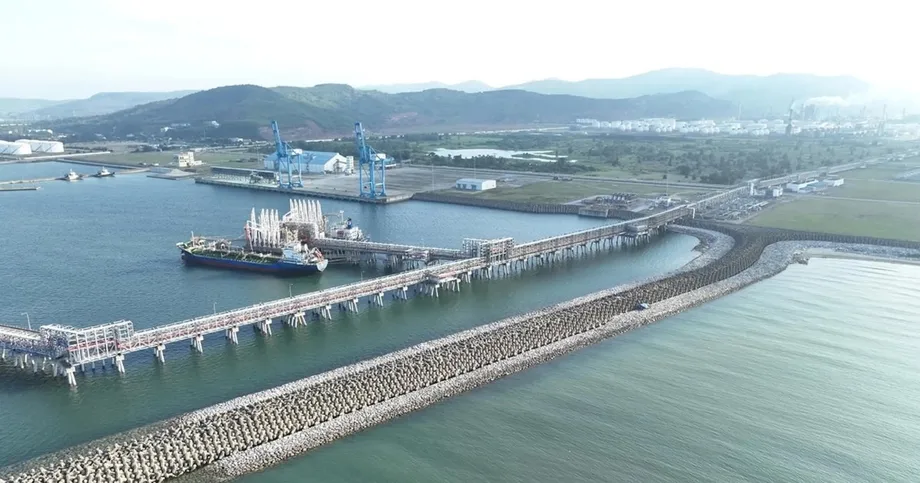
The centre has identified municipal and project bonds as basic products for metro systems, ports, logistics networks and energy projects. These assets can take years to earn steady cash. A bond can match that life better than a short bank loan, because the investor agrees to lend for years. The issuance framework was still being consulted in September, and no first actual issuance has been verified.
Rehman said banks and bond markets can work side by side. He explained that investors need reliable prices, active trading, clear information and a wide range of buyers for a bond market to function.
a deeper bond market can help connect projects with investors that are prepared to hold duration over many years.
Duration means the length of time an investor expects to hold an asset. Foreign currency borrowing would add risk if a project earned dong but had to repay in another currency. High US Treasury yields also give global investors another place to earn returns, which can slow money moving into emerging markets.
Reforms that made the upgrade possible
Vietnam's upgrade came after technical fixes that matter to global funds. The Ministry of Finance issued Circular 68/2024/TT-BTC on September 18, 2024, ending the advance cash requirement for foreign institutional investors. Under the old system, a fund had to deposit the full trade value before buying shares. That tied up money and made large funds wary.
Other changes included the Korean Stock Exchange trading and settlement platform launched on May 5, 2025, English language financial disclosure and the ability for institutional investors to trade through global brokers. Settlement is the step where ownership and money actually change hands. Global broker access matters because large funds prefer to deal with firms they already know in their own markets.
FTSE Russell Global Head of Policy David Sol said the reclassification followed work on market infrastructure. He pointed specifically to the standards work in these words:
progress made in aligning with international standards
The World Bank Group's Joint Capital Markets Program, backed by Australia and Switzerland, helped design the framework ending advance cash deposits and created an Investment Advisory Group that gave global fund managers regular access to senior regulators. The World Bank says Vietnam's infrastructure needs amount to 30 billion USD a year, with a cumulative shortfall of 94 billion USD from 2019 to 2040. Between 2019 and 2023, the economy mobilised an average 53.5 billion USD a year through banks, compared with about 2.9 billion USD through stocks.
A central counterparty clearing mechanism is planned. In simple terms, a clearing house becomes the buyer to every seller and the seller to every buyer, reducing the risk that one failed trade breaks a chain of payments. SSC officials also want more digital supervision, green bonds and products for smaller growth companies.
What reviewers want changed next
Recommendations launched at the OECD Asia roundtable in Hanoi on November 26 set out five priorities: market trust, company access to equity financing, long term corporate bonds, a broader investor base and stronger international integration. The roundtable ran on November 26 and 27 and formed part of events marking 30 years of Vietnam's securities industry.
End of 2025 figures showed why the priorities matter. Credit was about 145 percent of GDP, stock market capitalisation about 76 percent of GDP and the corporate bond market about 10 percent of GDP. Government targets for 2030 are 120 percent of GDP for stock market capitalisation and 25 percent for corporate bond debt. Corporate bond debt grew from 5 billion USD in 2012 to 50 billion USD in 2025, but commercial banks issued 53 percent of that value and property firms 28 percent.
Investors are also uneven. Individual accounts account for about 80 percent to 85 percent of trading value, while institutional investors hold about 5 percent of public company market capitalisation. New listings have been fewer than delistings in recent years. Only 21 percent of companies in the VNX AllShare index have audit committees, and 13 percent of listed companies have nomination and remuneration committees. Corporate governance means the rules for running a company, checking its leaders and protecting shareholders.
Nguyen Duc Chi, Deputy Minister of Finance, said the upgrade raised the standard Vietnam had to meet. He linked the next phase to the 2045 goal of a developed economy with high income and to the role of capital markets alongside bank credit.
Market upgrading is not our ultimate destination, but the beginning of a new journey with higher requirements for market quality, transparency and sustainability
Specific proposals included at least one third independent board members, a comply or explain system for governance rules, simpler listings that keep governance standards, more room for social insurance and private pension funds to invest, tax incentives for long term personal savings, wider use of IFRS, stronger governance at companies owned by the state and bilingual disclosure. Carmine Di Noia, OECD Director for Finance and Enterprises, said Vietnam had made real progress and that clear government commitment was central to a deeper capital market.
Three decades, one new map
Vietnam's securities industry marked its 30th anniversary on November 27, 2026. The State Securities Commission was established on November 28, 1996 under Decree No. 75. The first trading session opened on July 28, 2000 with two listed stocks. The commission moved under the Ministry of Finance in 2004. By late November 2026, market capitalisation was nearly 10.8 million billion VND, more than 82 percent of 2025 GDP, with more than 14 million investor accounts.
- November 28, 1996: the State Securities Commission was established under Decree No. 75.
- July 28, 2000: the first trading session opened with two stocks.
- 2004: the commission moved under the Ministry of Finance.
- May 5, 2025: the new trading and settlement platform was launched.
- September 21, 2026: Vietnam formally entered the FTSE Russell Global Equity Index Series.
- November 27, 2026: the securities industry marked 30 years with market capitalisation above 82 percent of 2025 GDP.
Chairwoman Vu Thi Chan Phuong said the market's role is now to provide medium and long term capital and to help the economy stand on its own. The commission received a First Class Labor Order for its work on market development and the upgrade. Politburo Resolution 68, issued in May 2025, tasks the private sector with contributing over 60 percent of GDP by 2045, linking the capital market build out to the high income ambition.
Business events showed the same turn toward global capital. At the HDBank Global Capital Summit on November 25, nearly 1,000 delegates discussed the Vietnam International Financial Centre, investment after the upgrade and ties with the London Stock Exchange and New York Stock Exchange. HD Securities announced an offering of nearly 121.8 million shares at 38,900 VND each, aiming to raise more than 4.737 trillion VND, or 180 million USD. It reported pretax profit of 2.24 trillion VND in the first nine months of 2026, 3.7 times a year earlier.
What is still undecided
Several gates remain. Foreign ownership limits are low in some sectors, especially banking. The investable universe is small, liquidity is concentrated in a few large companies, and global broker access is still limited. FPTS said the advance cash issue was unlikely to be fully resolved before 2027. Vietnam also has not yet attained investment grade status, which affects how lenders and funds judge its credit risk.
MSCI is the next big target, but it has tougher tests on foreign exchange openness, currency hedging tools and ownership limits. Officials aim to meet its emerging market criteria by 2030, yet no exact review date was given. The World Bank says MSCI reclassification could bring three to four times the portfolio flows of the FTSE upgrade if Vietnam gets there.
At home, the test is practical. A fund must be able to buy shares, get them registered, trade them later and move money in and out under clear rules. A city must be able to disclose a bond issue well enough that buyers understand the project and the repayment source. A company must show accounts investors can trust. Those ordinary details decide whether the upgrade becomes steady capital or only a burst of attention.
The World Bank's Tehmina Khan, Lead Economist for Vietnam, Cambodia and Laos, said growth quality matters as much as the pace. She pointed to labour productivity, human skills, public investment and infrastructure, while global trade uncertainty, demographic change and climate change reshape the risks. Her message was that Vietnam has room to attract both domestic and international money, but the market must improve liquidity, pricing, settlement, transparency and credit ratings.
Key Points
- Vietnam needs about 38.5 quadrillion VND of total social investment in 2026-2030 to support average GDP growth above 10 percent.
- The capital and securities markets are expected to provide about 10 quadrillion VND, including 5.4 quadrillion VND from securities market mobilisation.
- Vietnam formally joined the FTSE Russell Global Equity Index Series on September 21, 2026, with inclusion phases running to September 2027.
- Flow estimates range from 3 billion to 5 billion USD in near term portfolio money from the World Bank to as much as 25 billion USD by 2030 if reforms continue.
- Bank credit is under strain, with the ratio of loans to deposits reaching 115 percent and net interest margin falling to about 2.5 percent.
- Officials and reviewers want deeper bonds, stronger governance, more institutional investors, IFRS use, better disclosure and wider foreign investor access.