A small section with a large purpose
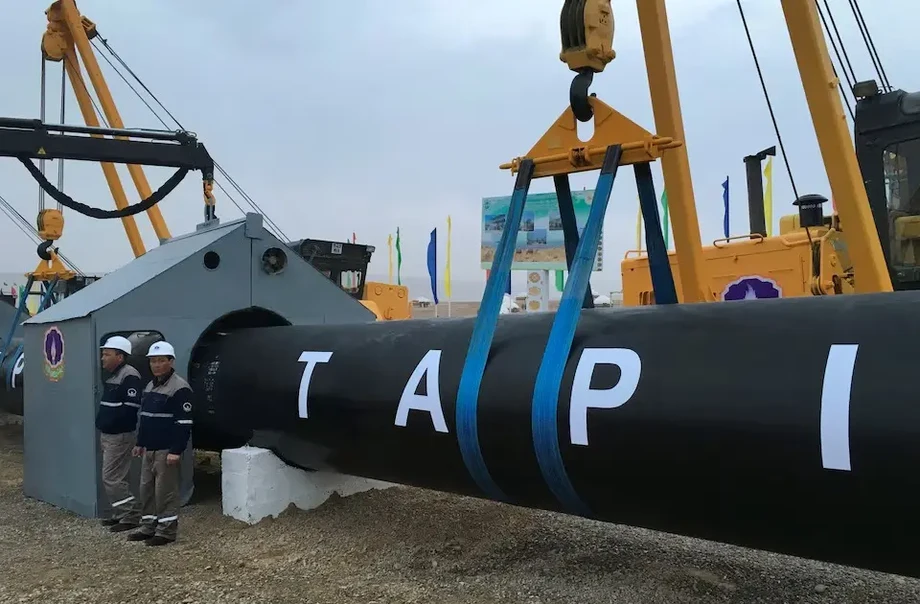
Turkmenistan says it has welded and laid about 124 kilometres of the pipeline running 153 kilometres from its border town of Serhetabat to Herat in western Afghanistan. Officials gave the update on November 26, 2026, and maintained their target of finishing construction by the end of the year. Initial gas deliveries to Herat are scheduled for early 2027. The Turkmen figure covers roughly 81% of the section's length and represents physical progress on a project discussed since the 1990s.
Contents
- A small section with a large purpose
- What Herat would receive first
- Why this construction attempt is different
- The full pipeline is designed for much bigger markets
- Can early revenue persuade international lenders?
- Why China looms over Turkmenistan's calculations
- The Caspian alternative and the Hormuz energy shock
- Pakistan remains the hardest part of the route
- What must happen before and after the first gas
- What to Know
Homayoun Afghan, spokesperson for the Ministry of Mines and Petroleum under the Taliban, provided a broader set of construction figures. He said work on the Herat section was 90% complete, with 136 kilometres of gas transmission pipe installed, 150 kilometres of the route cleared and 134 kilometres of inspection roads built. The ministry's percentage covers construction as a whole, while the Turkmen statement specifically counted pipe that had been welded and laid.
The section has an estimated cost of about $600 million, according to Afghan estimates, and Turkmenistan has paid for the work itself. At the Turkmen Energy Forum in October 2026, Ashgabat said construction had reached the outskirts of Herat. Even when finished, this section will account for only about 8.5% of the complete route of roughly 1,800 kilometres. Building the remainder toward Pakistan and India is expected to require around $10 billion, although neither that figure nor the Herat estimate has been presented as a final contract value.
What Herat would receive first
Afghanistan's state gas company signed a preliminary agreement in August 2026 to buy gas delivered to Herat. The expected initial purchase is about 500 million cubic metres a year, equivalent to 0.5 billion cubic metres. No price has been announced. The sale would give Turkmenistan its first TAPI revenue while providing Herat with a new supply for homes, businesses and industry.
The office of the Taliban governor of Herat province described the benefits that local authorities expect from the project:
TAPI brings with it the promise of economic growth, job creation, and the development of the country's infrastructure.
Planned local connections include a pipeline serving Herat Industrial Park, gas distribution stations and extensions across industrial zones. Turkmenistan has also identified a compressed natural gas complex. Compressed natural gas is stored under pressure so that it can be handled more compactly. A private investor has separately proposed a power plant near Herat that would be fueled by gas.
These local uses are important because Herat alone cannot absorb anything close to the pipeline's planned capacity. Initial gas sales would support the city and generate income, while transit fees would become much more valuable if gas continued across Afghanistan toward Pakistan and India. Transit fees are payments made for moving a commodity through a country's territory.
Why this construction attempt is different
Earlier launches often produced ceremonies rather than lasting construction. The following dates explain why the presence of buried pipe now matters to Turkmenistan's argument:
- Late 1990s: The TAPI concept emerged while the Taliban held Kabul but were still fighting for control of northern Afghanistan. After their removal from power in 2001, the four governments pursued feasibility studies and agreements on financing, prices and supply.
- 2015 and 2016: Turkmengaz, the Turkmen state gas company, took responsibility for the project in 2015 despite having no experience outside Turkmenistan. The Islamic Development Bank lent Turkmenistan $500 million for TAPI in 2016. No major new investor has joined since.
- February 2018: The leaders of Turkmenistan and Afghanistan, Pakistan's prime minister and an Indian minister gathered at Serhetabat and briefly visited Herat. The Taliban pledged protection for the work. A ceremonial weld proved to be the Afghan section's only visible progress during the following six years.
- 2019: Work on Turkmenistan's domestic section, measuring 214 kilometres, continued into 2019. An earlier announcement before the 2018 ceremony had described that section as finished.
- August 2021: The Taliban returned to power in Afghanistan. The Asian Development Bank paused its regular assistance to the country, adding to the financial and diplomatic difficulties surrounding TAPI.
- September 11, 2024: A second Afghan launch took place at the Islim Cheshme border point, attended by Taliban acting prime minister Muhammad Hassan Akhund and former Turkmen president Gurbanguly Berdimuhamedov. Pipes stacked behind the officials were subsequently taken back into Turkmenistan. Construction of the present section began that month.
- August to October 2026: Afghanistan's state gas company signed its preliminary purchase agreement, and Turkmenistan announced that construction had reached the outskirts of Herat.
- End of 2026 and early 2027: These remain the respective targets for completing the section and beginning gas deliveries.
The distinction now is straightforward: pipes have been installed in the ground, roads and route preparation have advanced, and Ashgabat has continued paying. Whether the latest targets are met will provide a practical test after years of changing completion dates.
The full pipeline is designed for much bigger markets
TAPI is designed to carry as much as 33 billion cubic metres of gas annually from the giant Galkynysh field in southern Turkmenistan. That capacity is 66 times Afghanistan's expected initial purchase. Capacity describes how much a pipeline is built to transport in a year, not the quantity that customers have already agreed to buy.
Pakistan and India together import approximately 45 billion to 50 billion cubic metres of natural gas each year, almost all of it as liquefied natural gas delivered by ship. Liquefied natural gas, or LNG, has been cooled into liquid form so that it takes up less space during transportation. TAPI's full capacity of 33 billion cubic metres would equal about 66% to 73% of their present combined imports, showing the scale of the market Ashgabat wants to reach.
Detailed route plans describe a total length of 1,814 kilometres, commonly rounded to 1,800 kilometres. They include 214 kilometres in Turkmenistan, about 774 kilometres through Afghanistan and approximately 826 kilometres through Pakistan. From Galkynysh, the line would pass through Herat and Kandahar, continue through Quetta and Multan, and finish at Fazilka in the Indian state of Punjab.
Recent project descriptions assign about 42% of the transported gas to each of Pakistan and India, roughly 14 billion cubic metres annually for each country, with an allocation and transit income for Afghanistan. Earlier agreements instead envisioned 15 billion cubic metres each for Pakistan and India and 3 billion for Afghanistan. The initial Herat sale is a separate and much smaller starting arrangement. India is also expanding its domestic gas infrastructure through projects such as the North East Gas Grid, so TAPI would form part of a broader supply strategy rather than serve as its only source of energy.
Can early revenue persuade international lenders?
Muhammetmyrat Amanov, head of the Turkmen state company responsible for TAPI, has made the Herat section central to the search for financing. He named the Asian Development Bank, based in Manila, and the Islamic Development Bank, based in Saudi Arabia, as potential funders. Amanov said the Herat section should:
provide early revenue streams and increase confidence among lenders
The Asian Development Bank has remained engaged with TAPI despite pausing regular assistance to Afghanistan after the Taliban returned to power. It has not committed to finance the pipeline and set out the conditions governing any future decision:
Any decision by ADB to provide technical assistance or financing would depend on the circumstances at the time and be subject to due diligence and applicable ADB approvals.
Due diligence means examining the financial, legal and technical risks before approving support. For TAPI, those questions extend beyond engineering. Afghanistan's Taliban administration is under international sanctions and lacks broad diplomatic recognition, complicating contracts, guarantees and the movement of money. Turkmenistan itself maintains relatively friendly relations with Kabul without formally recognising its government.
Ashgabat also faces questions about its own financial information. The World Bank stopped using Turkmenistan's gross domestic product data in 2020 because of concerns about reliable statistics, and the International Monetary Fund followed in 2021. These issues help explain why a working pipeline and actual sales could be useful evidence for lenders. They also explain why the $500 million Islamic Development Bank loan from 2016 has not yet turned into a wider financing package.
Why China looms over Turkmenistan's calculations
China buys almost all of Turkmenistan's gas exports. Maksat Babayev, chairman of Turkmengaz, said in October 2026 that the country had supplied China with more than 477 billion cubic metres of gas between the opening of their export pipeline in December 2009 and October 1, 2026. For a government seeking greater bargaining power and another major customer, South Asia offers an attractive alternative.
A Western diplomat based in Ashgabat, speaking on condition of anonymity, described why selling more gas to China might appear commercially simpler:
From a purely commercial perspective, maximising exports to China might seem the obvious and least risky option.
The diplomat said Ashgabat nevertheless regarded excessive dependence on one buyer as an existential strategic risk because it gives that buyer extensive power over the national economy. Mobilising international money for TAPI would be extremely difficult, the diplomat added, but Turkmenistan was willing to spend its own resources up to and beyond the Afghan border to keep the project alive and attract partners.
The relationship with China is not simply being replaced. An expansion at Galkynysh involves China National Petroleum Corporation, meaning Turkmenistan is seeking new buyers while continuing to draw on Chinese expertise and investment. TAPI would diversify the destinations for its gas rather than end the central role of China in its energy economy.
The Caspian alternative and the Hormuz energy shock
Turkmenistan's other principal export proposal would travel west instead of south. The Trans-Caspian Gas Pipeline would run beneath the Caspian Sea to Azerbaijan, where existing pipelines through Georgia and Turkey could carry gas toward Europe. Construction has not started. Political and technical disputes over demarcation of the Caspian seabed remain major obstacles, with Iran and Russia holding considerable influence over the process.
On November 23, 2026, United States Deputy Secretary of State Christopher Landau and Turkmen Foreign Minister Rashid Meredov discussed energy export diversification and Caspian trade in Ashgabat. Landau also met President Serdar Berdimuhamedov, who expressed interest in joint renewable energy projects. Their talks connected gas exports with a wider American effort to expand trade routes linking Central Asia, the South Caucasus and Europe.
Ferries already carry trucks and trailers between Turkmenbashi and the Azerbaijani port of Alat, near Baku, allowing cargo to continue overland through the South Caucasus. A September World Bank study covering Turkmenistan and eight other countries along the Middle Corridor recommended a single digital system for transport and trade documents. It also called for closer coordination among railway operators, ports and shipping companies.
Washington is separately supporting the Trump Route for International Peace and Prosperity, which would connect mainland Azerbaijan with its Nakhchivan exclave through southern Armenia. Armenia, Azerbaijan and the United States agreed on November 7 to create working groups for transportation and electricity transmission. Armenian Prime Minister Nikol Pashinyan announced preparatory construction in southern Armenia on the day of Landau's talks in Ashgabat.
The blockade of the Strait of Hormuz during the war involving the United States, Israel and Iran has added another argument for TAPI. Turkmen officials hope higher energy prices and demand for alternatives to Middle Eastern supplies will revive interest. The pipeline would avoid that maritime chokepoint, where shipping disruption can affect LNG deliveries, but its customers would instead depend on security and political cooperation along the route through Afghanistan and Pakistan.
Pakistan remains the hardest part of the route
Security conditions across much of Afghanistan have improved since 2021, but completing TAPI requires more than reaching Herat. Pakistan's present conflict with the Taliban authorities, its longstanding rivalry with India and the intensifying separatist insurgency in Balochistan all affect the planned corridor. The pipeline would cross Balochistan, making security there central to construction, insurance and eventual operation.
Faryal Leghari, Pakistan's ambassador in Turkmenistan, said Islamabad remains interested in TAPI. She also described a complementary proposal under which Turkmen gas would travel to the Pakistani ports of Gwadar and Karachi. There it could be converted into LNG and exported by sea, giving Pakistan another potential commercial role beyond receiving gas for its own consumers.
India's foreign ministry did not respond to requests for comment on the latest developments. Turkmen diplomats have indicated that attention will turn to the Pakistan section once Afghan deliveries begin. Homayoun Afghan similarly connected operation of the pipeline with completing the remaining work, protecting the route and maintaining cooperation among all participating countries.
Russia is the only government identified as having recognised the Taliban administration, while Turkmenistan and most other governments have not. This diplomatic position continues to complicate international financing even where working relations are practical and construction is advancing. Pakistan's stated interest therefore does not remove the need for agreements among Kabul, Islamabad and New Delhi.
What must happen before and after the first gas
Construction crews still need to finish pipe installation and backfilling, which means covering the laid pipeline with soil. They must also complete access crossings and establish a gas metering station. Metering is commercially essential because it measures the volume delivered and provides the basis for payment. The purchase price and final commercial terms for Herat have not been disclosed.
The next measurable deadlines are completion by the end of 2026 and initial deliveries in early 2027. No date has been announced for completing the remaining route toward Pakistan and India, and no new international financing package has been confirmed. Progress in Herat would create a working asset, but extending that asset will require much larger commitments than Turkmenistan has made on its own.
For Afghanistan, the immediate gains would be gas supplies, industrial connections, construction activity and possible employment. Transit income and a larger regional economic role depend on continuation beyond Herat. For Turkmenistan, the section is both an energy project and an attempt to demonstrate that a second export corridor is feasible. For Pakistan and India, it offers access to Central Asian pipeline gas, provided that the financial and political arrangements can survive conditions along the entire route.
What to Know
- Turkmenistan counts about 124 kilometres of pipe welded and laid on the 153 kilometre section to Herat, while the Taliban mines ministry says construction is 90% complete.
- The section is scheduled for completion by the end of 2026, with initial gas deliveries planned for early 2027.
- Turkmenistan has funded the approximately $600 million section itself; the complete TAPI project is estimated to cost around $10 billion.
- The full route would measure roughly 1,800 kilometres and carry up to 33 billion cubic metres of gas annually.
- Afghanistan initially expects to buy 500 million cubic metres a year, while Pakistan and India together import about 45 billion to 50 billion cubic metres annually.
- The Asian Development Bank has made no financing commitment, and the Islamic Development Bank's major loan dates back to 2016.
- China remains the destination for almost all Turkmen gas exports, having received more than 477 billion cubic metres between December 2009 and October 2026.
- The gas price for Herat, the construction schedule beyond Afghanistan and the financing for the remaining route have not been announced.