A stronger harvest, but less output per person
Afghanistan's economy is projected to grow by 3% in 2026, yet output per person is expected to fall by 3.3% as population growth outpaces production. Alongside that widening gap, the country has been losing an estimated 4.9 billion cubic metres of freshwater reserves annually since 2003, according to the World Bank's Fall 2026 Afghanistan Development Update.
Contents
- A stronger harvest, but less output per person
- Why a good harvest has not eased household hardship
- Border closures turned food supply into a costly detour
- New suppliers replaced only part of the missing food
- Children face worsening hunger and malnutrition
- Water depletion threatens the engine of growth
- In Neili, dry wells turn water into another household bill
- Humanitarian water deliveries meet immediate needs
- Higher revenue leaves investment limited
- Key Points
The report connects two pressures that increasingly shape daily life: families have less purchasing power, while the water needed for drinking, farming and earning a living is becoming harder to obtain. A strong harvest is supporting economic growth, but agriculture itself depends on water reserves that are shrinking.
Population growth of 6.6% explains why a larger economy can still leave less output for each person. Gross domestic product, or GDP, measures the value of goods and services produced. When that total grows more slowly than the population, the amount per person falls. Afghanistan faces its third consecutive annual decline on that measure.
The pressure is visible in household budgets. In September 2026, casual labourers found 14% fewer days of work than a year earlier, and their weekly earnings bought 27% less wheat flour. Meanwhile, 15.9 million people faced acute food insecurity in September and October, despite the improved harvest.
Why a good harvest has not eased household hardship
Afghanistan's growth forecast depends largely on agricultural production rather than an expansion spread across many industries. That leaves employment and household spending vulnerable when other parts of the economy remain weak.
Casual workers face a double squeeze: fewer opportunities to earn money and higher prices for basic food. A household that could buy 100 units of flour with a week's earnings a year earlier could buy only 73 units in September 2026. The comparison combines the effect of earnings and flour prices in a measure that directly reflects the family food budget.
Food availability and food affordability are closely connected, but families need both. Grain reaching a market helps little if a worker cannot find enough paid days to buy it. The World Bank therefore places employment, particularly in provinces receiving large numbers of returning migrants, among its priorities for improving living standards.
Border closures turned food supply into a costly detour
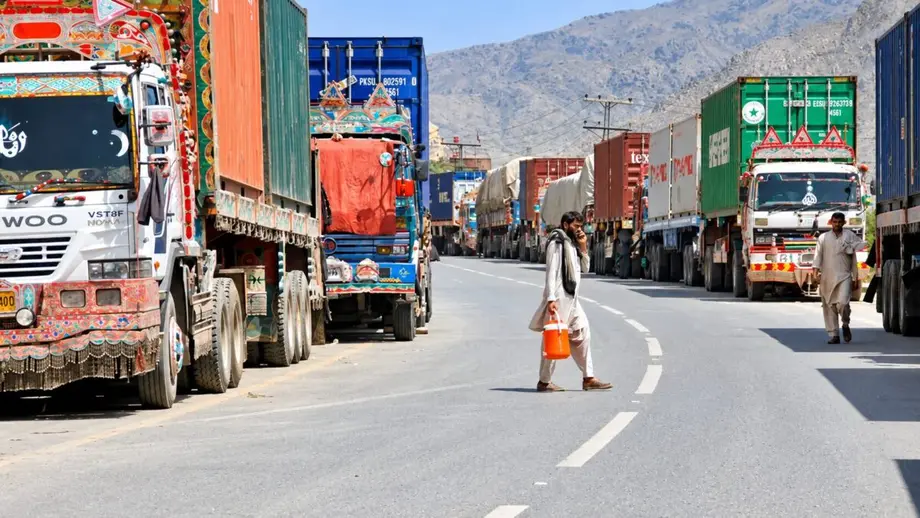
Pakistan supplied 27.6% of Afghanistan's food imports in 2024, while Iran supplied 14.6%. Together, they accounted for 42.2%. Their importance was greater still because their roads and ports also carried goods produced elsewhere into landlocked Afghanistan.
Research analyst Sediqa Zaki, writing in the International Food Policy Research Institute's food trade analysis, traces how successive disruptions restricted those routes:
- October 12, 2025: Pakistan closed its main crossings with Afghanistan following armed clashes with the Taliban.
- October 2025 to March 2026: Pakistan's share of Afghan food imports fell to 3.3%, while Central Asia's share rose from 24.9% to 41.9%.
- February 28, 2026: The start of war in Iran disrupted an alternative corridor on which Afghanistan had become increasingly dependent.
- Early March 2026: Iran suspended exports of food and agricultural products to protect domestic supplies.
- By mid-2026: Shipping disruption associated with the closure of the Strait of Hormuz had more than doubled transport costs for Afghan importers.
The World Bank says about 97% of Afghanistan's imports now enter through Central Asia and Iran. Exports fell by 15.1% between April and September 2026 compared with the same months a year earlier, adding pressure on businesses selling abroad.
Humanitarian deliveries have also become more expensive. The World Food Programme rerouted aid shipments overland through seven countries at three times its usual transport cost, according to Zaki's analysis. Higher delivery costs stretch the money available to bring assistance into the country.
New suppliers replaced only part of the missing food
Afghan traders found alternatives, but replacement suppliers made up only 54% of lost Pakistani food imports in the two quarters following the closure. Rice import volumes fell 17% in the first quarter of 2026 compared with a year earlier, while fruit and vegetable imports fell 43%.
India supplied more sugar and rice. Food imports from India rose from $44 million in October 2024 to March 2025 to $142 million in the corresponding period a year later, more than tripling. Without a land route through Pakistan, those goods relied on air freight or Iranian ports such as Chabahar, both costly options.
Central Asia became especially important for staples, supplying 98% of imported wheat and flour in the period examined by IFPRI. That concentration leaves Afghanistan's main food staple exposed to restrictions or transport problems along those routes.
Consumer price inflation rose from 2.1% in September 2025 to a peak of 8.6% in April 2026, before easing to 7.8% in August. Bread and cereal prices were rising faster, at 13.7% in August, after reaching 18.2% in May. Poor households, which spend a larger share of their money on staples, faced particularly heavy pressure.
IFPRI also simulated the effect of those price increases using household spending patterns from the 2019–2020 national survey. Holding incomes and consumption patterns at those earlier levels, the model estimated that price shocks of this size would put an additional 2.7 million people below the poverty line at the April peak. The exercise measures exposure to higher prices using an older household baseline; a current poverty count requires newer household data.
Children face worsening hunger and malnutrition
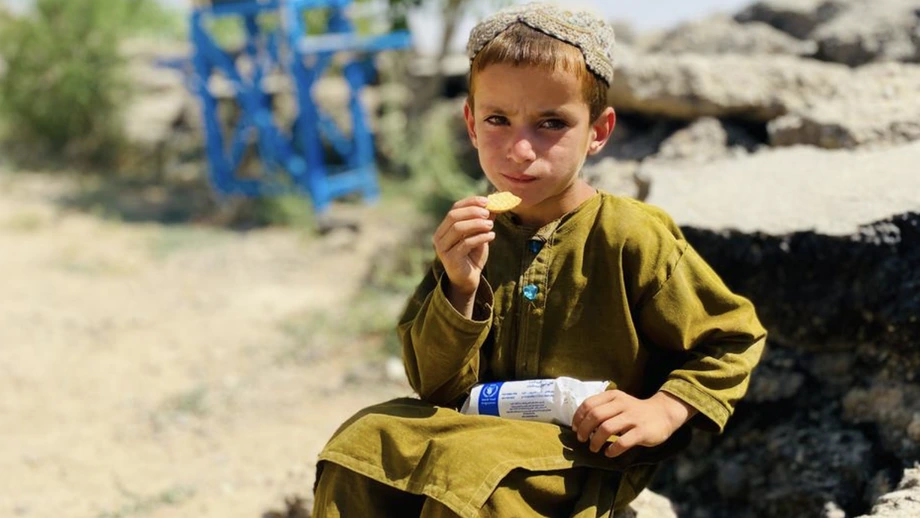
UNICEF's September situation report, covering September 1–30, records 15.9 million people facing Crisis or worse levels of food insecurity, including 3.4 million in Emergency. Those in Emergency represented roughly one in five of the people facing Crisis or worse conditions.
The Integrated Food Security Phase Classification, or IPC, uses a scale to describe the severity of food insecurity. Phase 3 is Crisis, when households struggle to meet food needs without damaging their livelihoods. Phase 4 is Emergency, involving more severe food gaps and threats to lives and livelihoods.
UNICEF said child wasting reached its highest recorded levels for the August–October period. Wasting means a child is too thin for their height, often following inadequate food or illness. During September, UNICEF screened approximately 1.3 million children and admitted 107,396 with severe or high risk moderate wasting for treatment. It also provided nutrition counselling to 196,601 caregivers.
The October IPC analysis cited by IFPRI projected a further deterioration to 19.2 million people in Phase 3 or above, an increase of 3.3 million from the September–October figure. Its identified drivers included high food prices, unemployment, returning migrants and reduced humanitarian funding.
Water depletion threatens the engine of growth
Agriculture accounts for 46% of employment in Afghanistan and 95% of water withdrawals, according to the World Bank. That makes water management central to both the food supply and the earnings of a large part of the workforce.
The estimated annual loss of 4.9 billion cubic metres of freshwater reserves points to sustained depletion. In Kabul, groundwater is being extracted at nearly four times the rate at which it is naturally replenished. Groundwater is water stored beneath the surface; rainfall and snowmelt help refill it, but pumping removes it faster when withdrawals exceed that natural recharge.
Afghanistan therefore faces a difficult balance. Producing more food locally can reduce exposure to border closures, but expanding production also requires water and agricultural inputs. IFPRI found fertiliser prices were about 27% higher, making it more expensive for farmers to respond to lost imports.
A separate World Bank study on food security and employment across the Middle East, North Africa, Afghanistan and Pakistan describes food trade as one way to conserve domestic water. Importing a crop means the water needed to grow it was used in the exporting country. For Afghanistan, reliable imports and better domestic irrigation serve different but connected needs.
That regional study estimates that investment and reforms in agriculture and food industries could create about five million jobs across the whole region by 2050. Its recommendations include better irrigation, storage, processing and links between farms and markets. Afghanistan's water constraints make the choice of investments especially consequential.
In Neili, dry wells turn water into another household bill
Neili, the capital of central Daikundi province, shows how falling groundwater reaches family budgets. Khudadad Samit, head of water affairs coordination at the Upper Helmand River Sub-basin in Daikundi, said about 3,000 families had no access or only limited access to drinking water. Across the province, 81 villages had been affected by drought.
Ghulam Ali, a Neili resident, said his household well dried up, briefly yielded water after being deepened to around 40 metres, then dried up again. A nearby mosque's well also ran dry. He described the cost of relying on deliveries:
"We can no longer afford to dig another well. We pay nearly 1,000 afghanis for each water tanker, but even that amount does not last us a week," he said.
Another resident, Wajiha, said her large family used more than one tanker each week. She described paying 1,000 afghanis for a delivery containing around 5,000 litres plus 20 barrels. Sometimes a delivery slot was unavailable, leaving the household without water despite its willingness to pay.
Residents also voiced concern about drinking water quality. Tanker seller Rahmatullah said his business held a government licence and supplied treated water from selected wells or springs. Dr Allah Yar, an internal medicine specialist at Daikundi Provincial Hospital, warned that contaminated water can cause diarrhoea, vomiting, abdominal pain and intestinal infections.
Samit said the Afghanistan Urban Water Supply and Sewerage State Company had identified a water source and transmission route and completed a survey for a Neili supply network. Two private companies were also distributing water outside the city's master plan. No completion date was given for the main network.
Humanitarian water deliveries meet immediate needs
UNICEF provided 274,043 people with access to safe drinking water during September, alongside basic sanitation services for 121,138 people. Hygiene promotion reached another 175,389 people. Those activities address urgent needs while communities contend with damaged or inadequate services.
The United Nations Office for the Coordination of Humanitarian Affairs warned on November 12 that prolonged drought and reduced water access were straining families' daily lives and income sources. It called for climate financing to reach affected communities fairly and accessibly, stressing that communities contributing least to the climate crisis face some of its greatest consequences.
In Bamyan, UN official Rabab Fatima raised concerns about water shortages and inadequate infrastructure during a November 2–4 visit. Poor roads also limited access to healthcare and education in remote communities. She called for expanded health services, more medical facilities and equal educational and economic opportunities for women and girls.
The World Bank's water priorities connect immediate relief with repairs to the systems people depend on: restoring essential water and sanitation services, repairing irrigation and protecting watersheds and groundwater reserves. Watersheds are the areas of land that collect and channel rain and snowmelt into streams, rivers and underground stores.
Higher revenue leaves investment limited
Domestic revenue rose 10.2% in the first half of 2026 as taxes and other domestic receipts offset falling customs duties. Yet capital spending, the money used for longer lasting assets such as infrastructure, is projected at only about 1.3% of GDP for the fiscal year.
That limited investment sits alongside demands for water networks, irrigation repairs, transport links and services in communities receiving returnees. IFPRI's analysis says nearly 3.7 million people returned from Iran and Pakistan between March 2025 and March 2026, increasing demand for food, jobs and basic services.
The World Bank projects economic growth of 3.3% in 2027 and 3.5% in 2028. Even with that expansion, output per person in 2028 is expected to remain about 7% below its 2024 level. A poor harvest, further trade disruption, additional large returns or deeper aid cuts could weaken those forecasts.
The report's priorities combine more reliable trade routes, employment in provinces receiving returnees and restored access to education and work for women and girls. Together with water investment, those measures address the practical barriers between higher national production and better living conditions: the ability to earn, buy food, reach services and obtain safe water.
Key Points
- Afghanistan's economy is forecast to grow 3% in 2026, while output per person falls 3.3%.
- Casual labourers found 14% fewer workdays in September, and weekly earnings bought 27% less flour than a year earlier.
- Some 15.9 million people faced Crisis or worse food insecurity, including 3.4 million in Emergency.
- Border disruption has increased reliance on Central Asia and Iran while making food and aid transport more expensive.
- Freshwater reserves have fallen by an estimated 4.9 billion cubic metres annually since 2003; Kabul pumps groundwater at nearly four times its recharge rate.
- Water repairs, reliable trade routes and more employment are central priorities as output per person remains below its earlier level.