Two disrupted borders leave Afghan families paying more
Afghanistan's border closure with Pakistan and the war in Iran have squeezed the country's main food supply routes, pushing up prices and exposing millions more people to poverty. A simulation using household spending data estimates that the price increases could have pushed an additional 2.7 million Afghans below the poverty line at their April 2026 peak, while leaving families already in poverty further behind.
Contents
- Two disrupted borders leave Afghan families paying more
- Why food supplies depend on so few routes
- How the disruptions unfolded
- New suppliers replaced only part of the loss
- Iran's disruption made detours more expensive
- Food inflation hits the poorest hardest
- What the poverty simulation measures
- Farmers and exporters lose income too
- A stronger harvest meets a difficult winter
- Key Points
The pressure has persisted despite a better domestic harvest. Afghanistan produced an estimated 5.15 million metric tons of wheat in 2026, yet September rice prices were 35% higher than a year earlier. Poor households face two problems at once: essential goods cost more, while paid work remains scarce.
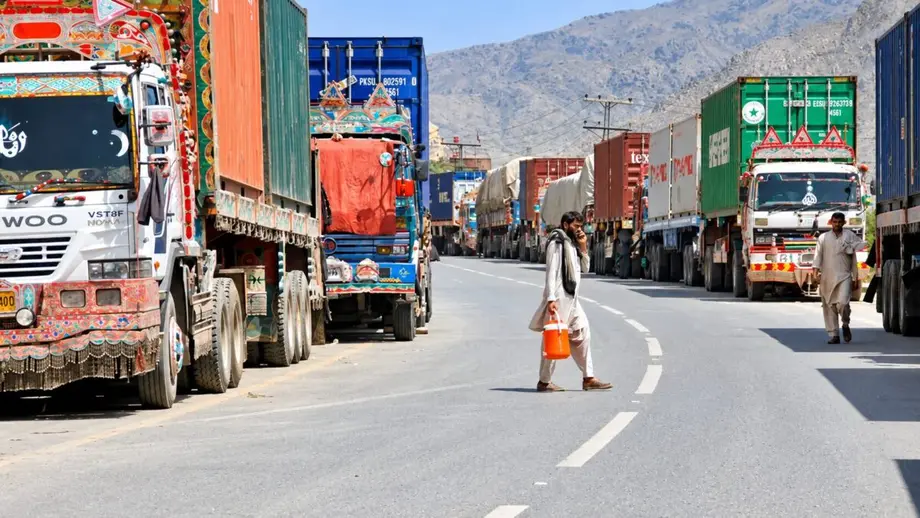
Pakistan closed its main crossings with Afghanistan on October 12, 2025, following armed clashes with the Taliban. Traders then shifted toward Iran, which by January and February 2026 supplied or carried about 60% of Afghan imports. War beginning on February 28 disrupted that alternative, followed by Iranian restrictions on food exports.
The closures have also hurt farmers selling fruit abroad and Pakistani businesses supplying Afghan customers. Longer journeys, spoiled produce and lost orders show how a border dispute can spread through an economy, reaching households far from the crossings.
Why food supplies depend on so few routes
Afghanistan imported $11.7 billion in goods in 2024–25, equivalent to about two thirds of its economic output and nearly seven times the value of its exports. Food imports alone amounted to $2.6 billion in calendar year 2024, or 24% of total imports.
Pakistan supplied 27.6% of those food imports and Iran supplied 14.6%, a combined 42.2%. Their role extended beyond selling their own products: ports and roads in both countries carried food purchased elsewhere, including cooking oil arriving by sea. Afghanistan has no coastline, so access to those transport networks is essential.
Dependence was particularly concentrated for individual foods. Pakistan supplied 94% of imported rice, nearly half of imported sugar and 45% of imported fruit and vegetables. Iran supplied another 27% of imported fruit and vegetables and dominated several processed foods, including pasta and sauces.
Food and Agriculture Organization figures show that Afghanistan imported 46% of its staple cereals during 2021–23, more than half its rice and almost all its cooking oil and sugar. Wheat and flour mainly came from Central Asia, giving Afghanistan an alternative supply base for its most important staple, but fewer immediate options for other foods.
How the disruptions unfolded
Afghanistan's trade difficulties developed in stages. The Pakistan closure first removed a major supplier and transit corridor. The Iran war then disrupted the route that traders had increasingly used to replace it.
- October 12, 2025: Pakistan closed its main crossings after clashes with Taliban forces.
- November 12, 2025: Taliban authorities suspended trade with Pakistan and urged businesses to find alternative routes.
- December 4, 2025: Taliban spokesman Zabihullah Mujahid said reopening required guarantees against using trade routes as political pressure.
- February 28, 2026: War began in Iran, disrupting Afghanistan's increasingly important alternative corridor.
- Early March 2026: Iran suspended exports of food and agricultural products to protect domestic supplies.
- October 2026: Food security assessments warned of continuing hardship through the coming winter and into 2027.
Pakistan links the dispute to demands for action against Tehreek-e-Taliban Pakistan, or TTP, an armed group responsible for attacks in Pakistan. Kabul denies sheltering it. Traders and households have borne the commercial costs while the security dispute continues.
FEWS NET's October outlook expected the Pakistan border to remain closed to trade through at least January 2027. A firm reopening date had not been given.
New suppliers replaced only part of the loss
Pakistan's share of Afghan food imports fell from 27.6% in 2024 to 3.3% during October 2025–March 2026. Central Asia's share rose from 24.9% to 41.9%, but changing suppliers left large gaps.
Across products for which Pakistan had been a major supplier, imports from Pakistan fell by $577 million in the two quarters following the closure. Purchases of those same products from other countries increased by $250 million, replacing 43% of the loss. Food replacement was somewhat stronger at 54%, compared with roughly one quarter for other goods.
Afghanistan consequently bought less of several foods. Rice import volumes in the first quarter of 2026 were 17% below a year earlier, while fruit and vegetable imports were 43% lower. Much of Central Asia's increased trade involved wheat, flour and fuel that it already supplied, rather than substitutes for products previously bought from Pakistan.
India supplied more sugar and rice. Afghan food purchases from India rose from $44 million during October 2024–March 2025 to $142 million during the same months a year later. Without access through Pakistan, those goods depended on costly air transport or Iranian ports such as Chabahar.
Iran's disruption made detours more expensive
Iran's importance grew just before the war. Once conflict began, imports from Iran fell 13.8% in a single month, while imports passing through it declined 9.4%. By the middle of 2026, shipping disruption associated with the closure of the Strait of Hormuz had more than doubled transport costs for Afghan importers.
Humanitarian deliveries faced the same geography. The World Food Programme rerouted shipments overland through seven countries at three times its usual transport cost. More spending on moving supplies puts additional pressure on relief budgets already reduced by funding cuts.
World Bank figures for June 2026 put 48% of Afghan imports through Central Asia and 46% through Iran, with almost none through Pakistan. Those figures cover all imports by route, whereas Central Asia's roughly 42% share during October–March concerns food supplied by the region. Together, they show how strongly trade shifted northward and westward.
Central Asia also brings concentration risks. It supplied 98% of imported wheat and flour. Disruption there would reach the country's main staple directly, while suppliers in the region still rely on transport networks across other countries for some goods.
Pakistani exporter Mohammad Naeem described a similar cost increase for shipments to Uzbekistan: a journey that previously took about a week and cost $2,000–$3,000 through Torkham now took nearly six weeks through Iran and cost $10,000–$13,000. Alternative routes preserve some trade, but at a much higher price.
Food inflation hits the poorest hardest
Afghanistan's annual consumer price inflation rose from 2.1% in September 2025 to 7.7% in January 2026, before the Iran war began. It reached 8.6% in April and eased to 7.8% in August. The timing points to the Pakistan closure driving much of the initial increase, with the Iran disruption extending the pressure.
Food prices rose faster for some essential items than the headline inflation rate suggests. In August, food inflation was 8%, while bread and cereals inflation reached 13.7%, down from 18.2% in May. Rice prices increased by about one third between October 2025 and January 2026.
Poor families spend a larger share of their budgets on basic cereals, so these increases absorb more of their income. Afghanistan's currency, the afghani, remained relatively stable, leaving disrupted supplies and higher transport costs as the main explanation for the price pressure.
FEWS NET's October food security outlook, based on information available on October 23, put the September Food Security and Agriculture Cluster cash basket at 6,058 afghanis, 12% above a year earlier. Imported wheat flour was 8% more expensive than a year earlier, although 13% below its average over five years, reflecting support from domestic production and continued Kazakh supplies.
What the poverty simulation measures
Researchers used Afghanistan's 2019–20 Income, Expenditure and Labor Force Survey to estimate households' exposure to the price shock. In that survey, 47.1% of the population lived below the national poverty line, the spending threshold used to identify people unable to afford basic needs.
The calculation held household incomes and spending patterns at their survey levels, then raised the poverty line to reflect higher prices. It asks how many additional people would fall below that threshold if households with those resources faced the later price shock. The resulting figures describe exposure under fixed household circumstances; current poverty also depends on subsequent wages, income, assistance and changes in what families buy.
To account for normal seasonal movements, researchers compared each month's annual price change with September 2025, immediately before the closure. By January 2026, food prices were about 9% above their usual seasonal path and stayed roughly 8%–9% above it through summer. The consumer price index was around 5%–6% above that path.
The simulated poverty increase was 5.6 percentage points in January, 6.2 points at the April peak and 5.7 points in August. These increases correspond to approximately 2.4 million, 2.7 million and 2.5 million additional people below the threshold, respectively.
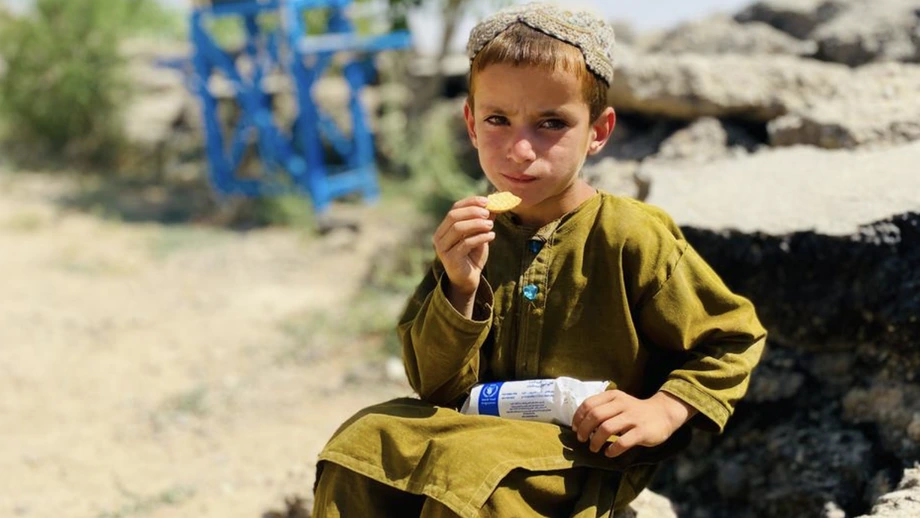
Families already in poverty also lost purchasing power. Among the poorest fifth of the population, the average gap between spending and the poverty line widened from 44.7% to 48.3%. A household already struggling to buy enough food would therefore need still more resources to reach the same minimum standard.
Farmers and exporters lose income too
Afghan fruit exporters have faced delays moving grapes, pomegranates and apples toward Pakistan through Iran's Rimdan route. Trader Yamin Watanyar described waits of 10 to 15 nights and higher transport costs. Trader Ramin Haidari reported produce waiting 20 to 25 days or longer, with some shipments delayed up to a month and deteriorating before delivery.
Traders say Iranian gas and oil trucks receive priority at crossings, adding to congestion. They have also raised concerns about cold storage and airfreight restrictions. The Afghanistan Chamber of Agriculture and Livestock Products says national cold storage capacity is largely sufficient, while acknowledging shortages in some provinces. Storage at home and refrigeration during a prolonged journey present different practical needs.
Pakistan's exporters have also lost business. Trade Development Authority of Pakistan figures put exports to Afghanistan at $358 million in 2025–26, down 74% from $1.391 billion in 2024–25. Pakistan's total medicine exports fell from $457.46 million to $319.01 million, with manufacturers blaming trade disruption for much of the decline.
Fedro Pharmaceuticals had packaged around 70% of its medicines for Afghanistan and Central Asia. Agricultural exporter MM Ellahi Traders saw those markets' share of revenue fall from 80% to 5%. Political affairs researcher Naila Mahsud argues that Afghan traders learning new transport systems, payment channels and commercial relationships may continue using them even after crossings reopen.
A stronger harvest meets a difficult winter
Afghanistan's Ministry of Agriculture, Irrigation and Livestock estimated the 2026 wheat harvest at 13% above the previous year and 17% above the average over five years. FEWS NET nevertheless expects Crisis conditions, IPC Phase 3, among poor households across several regions and major cities through May 2027. At this level, households face food shortages or must sacrifice essential assets and spending to obtain food.
Years of drought have left families with debts and fewer livestock or other assets to sell. In September, casual workers found an average of two days of work per week, 14% less than a year earlier, while daily wages remained around 300 afghanis. Returning migrants have added competition for jobs and reduced remittances from relatives previously working abroad.
Nearly 3.7 million people returned from Iran and Pakistan between March 2025 and March 2026. For January–October 2026, UN refugee agency figures cited by FEWS NET recorded about 1.36 million returns, down 40.7% from the same months in 2025. Kabul, Nangarhar and Herat were major destinations.
The October 2026 IPC analysis put 15.9 million people in acute food insecurity at Phase 3 or above, 2 million more than a year earlier, and projected deterioration to 19.2 million. FEWS NET separately estimated that 9.0–9.99 million people would need food assistance during February–April 2027. The assessments use different estimation frameworks and periods. FEWS NET's projection assumed no planned humanitarian food assistance during its outlook period.
FEWS NET expects another harvest above average beginning in April 2027, supported by favorable rainfall and soil moisture. Farmers still face expensive inputs: September urea fertilizer prices were 27% above a year earlier nationally and 50%–100% higher in several provinces. Better weather can improve supply, while affordable transport, farm inputs and household income determine how much of that improvement reaches families.
Key Points
- Pakistan and Iran supplied 42.2% of Afghan food imports in 2024 and carried additional goods through their ports and roads.
- Alternative suppliers replaced 54% of lost food imports previously supplied by Pakistan after the border closure.
- A household simulation estimated that the price shock could place an additional 2.7 million people below the poverty line at its April 2026 peak.
- Rice prices remained 35% above a year earlier in September, despite a stronger domestic wheat harvest.
- Fruit delays, lost exports and scarce work have reduced income alongside rising living costs.
- FEWS NET expects Crisis conditions among poor households in several regions and major cities through May 2027.