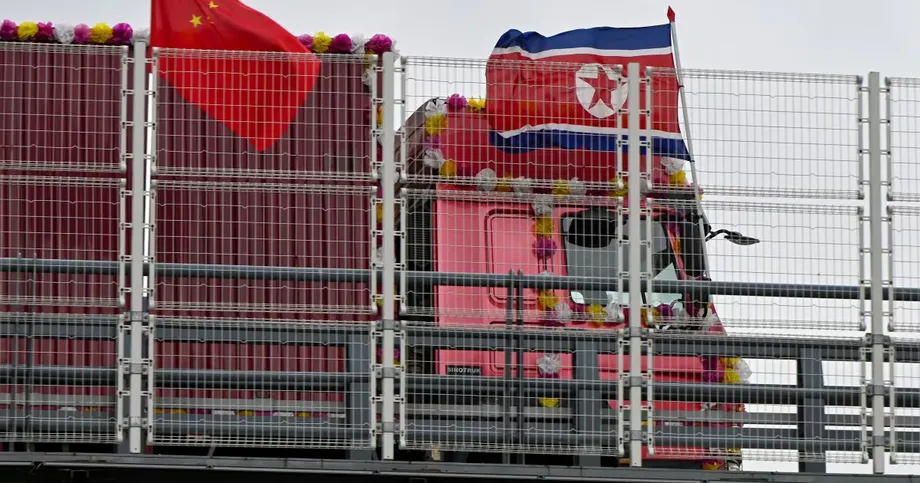
Fuel costs surge across four cities
Gasoline prices exceeded 100,000 North Korean won per kilogram in a November 1, 2026 survey of fuel stations in Pyongyang, Hyesan, Wonsan and Sariwon, more than twice the roughly 43,000 won recorded in early January. Diesel reached about 95,000 won per kilogram, compared with 41,000 won at the start of the year.
Contents
- Fuel costs surge across four cities
- How quickly have prices climbed?
- More cars compete for available fuel
- What the UN petroleum limits require
- China's figures show an uneven flow
- Russia and transfers at sea remain part of the picture
- A 2017 comparison shows an older supply problem
- Food prices leave households little relief
- Exchange rates add another cost pressure
- Key Points
Pyongyang had more than 16,000 private cars operating by the end of October, about 4,800 more than in March. Local sources described shortages at some stations, leaving drivers searching for fuel while people considering a car purchase hesitated over the growing expense of keeping it running.
November market observations also put gasoline at 140,000 won per kilogram and diesel at 120,000 won. Against January 6 prices of 42,000 won and 40,000 won respectively, those figures represent increases of about 233% for gasoline and 200% for diesel.
North Korea is facing pressure from both sides of the fuel market: more vehicles need fuel, while supplies reaching filling stations appear constrained. United Nations sanctions limit imports of refined petroleum, and trade figures offer only a partial picture of deliveries from China, Russia and unofficial routes.
How quickly have prices climbed?
Local sources said vehicle fuel prices began rising gradually in early April. Prices later spent time around 80,000 won before increases of another 2,000 to 3,000 won at the beginning of November. The November 1 survey recorded gasoline crossing the 100,000 won threshold for the first time.
Diesel followed a similarly steep course. Its rise from about 41,000 won to 95,000 won amounts to roughly 132%. Gasoline at 100,000 won would be about 133% above the January level of 43,000 won, with the survey placing the actual price above that threshold.
The reported sequence shows how the pressure developed over several months:
- Early January 2026: gasoline cost about 43,000 won per kilogram and diesel about 41,000 won.
- March: approximately 11,200 private cars were operating in Pyongyang.
- Early April: local sources said vehicle fuel prices began their gradual rise.
- End of October: the number of private cars in Pyongyang exceeded 16,000.
- November 1: the survey across four cities placed gasoline above 100,000 won and diesel near 95,000 won per kilogram.
Other November observations recorded gasoline doubling from 70,000 won on October 2 to 140,000 won. Shorter movements were less uniform: gasoline rose 6% from October 30, while diesel fell 4% to 120,000 won. Drivers were facing both much higher costs than in January and prices that could move sharply over a short period.
More cars compete for available fuel
Pyongyang added about 4,800 private cars in seven months, an increase of roughly 43% from the March estimate of 11,200. That is about three additional cars for every seven already operating at the earlier date.
Private passenger car ownership was reportedly permitted from the previous year, helping explain the expansion. Every additional car creates potential demand for gasoline, although actual consumption depends on how often it is driven and how much fuel it uses.
Pyongyang sources attributed the price increases to insufficient supply and described some stations running short. Other market observations described stations with no gasoline, forcing owners to look elsewhere.
Car buyers therefore face two connected expenses: purchasing a vehicle and finding enough money to operate it. Local sources said existing owners were feeling the strain, while some prospective buyers were reconsidering. For those drivers, a shortage means more than a higher posted price. It also means spending time searching for a station that can sell them fuel.
What the UN petroleum limits require
The United Nations Security Council adopted Resolution 2397 on December 22, 2017. It set an aggregate ceiling of 500,000 barrels of refined petroleum supplied to North Korea during the 12 months beginning January 1, 2018, and each subsequent period of 12 months.
Refined petroleum means products made by processing crude oil, including diesel and kerosene. Gasoline belongs to the same broad category. The ceiling applies to supplies from all countries combined, rather than giving each supplier its own allowance of 500,000 barrels.
Countries supplying refined petroleum must report monthly shipments to the Security Council committee responsible for North Korea sanctions, known as the 1718 Committee. The reporting system is intended to track deliveries against the collective limit.
Crude oil is covered by a separate provision. Resolution 2397 sets its annual limit at 4 million barrels or 525,000 tonnes and requires suppliers to report crude deliveries every 90 days. Crude oil can be processed into usable fuels inside North Korea, making it another part of the country's energy supply.
The resolution also strengthened action against prohibited maritime trade. It requires countries to seize, inspect and freeze vessels in their ports and territorial waters when those vessels are involved in prohibited activities, with provisions for the committee to review their status.
China's figures show an uneven flow
Chinese customs figures cited for January through September 2026 put exports to North Korea in the category of other petroleum products at 1,456 tonnes. Monthly shipments were generally around 180 to 200 tonnes, but supplies were almost absent in August and reached 166 tonnes in September.
The total works out to an average of about 162 tonnes per month across the nine months. The near absence of August deliveries helps explain why that average was below the usual monthly range.
China's recorded shipments matter because a gap in deliveries can leave less fuel available for sale even as car numbers increase. Filling stations depend on supplies arriving regularly, as well as on the total quantity delivered over a year.
The customs category covers one part of petroleum trade. Assessing the country's fuel balance also requires crude oil deliveries, Russian supplies, domestic processing and fuel entering through unofficial channels. Those flows are recorded with different levels of detail.
Russia and transfers at sea remain part of the picture
Russia has supplied refined petroleum to North Korea in recent years, including since 2022. Reduced Russian deliveries following the start of the war in Ukraine, together with a decline in smuggling through transfers between ships, have been suggested as reasons for the current price surge. Higher international oil prices have also been cited as a contributing factor.
Transfers between ships allow cargo to move from one vessel to another at sea. When used to conceal petroleum deliveries, they make it harder to track the cargo's origin, destination and quantity. Resolution 2397's maritime measures address prohibited petroleum imports and other illicit cargo movements.
The exact volume of recent Russian deliveries, and the size of any reduction in unofficial transfers, are unknown. The proposed explanations for the latest shortages therefore remain tentative.
Russian involvement in North Korea's fuel supply also predates 2022. A December 2017 analysis cited Russian trade figures through September of that year showing refined petroleum deliveries of about 1,000 tonnes per month. The current account of supplies since 2022 sits within that longer trading relationship.
A 2017 comparison shows an older supply problem
William Brown, an adjunct professor at Georgetown University's School of Foreign Service and a nonresident fellow at the Korea Economic Institute of America, examined a previous period of fuel market stress in a December 2017 analysis. His figures put Pyongyang gasoline at 15,400 won per kilogram and diesel at 7,500 won on December 12 that year.
Comparable Chinese prices, converted into North Korean won, were 4,225 won for gasoline and 5,200 won for diesel. Gasoline in Pyongyang therefore cost about 3.6 times the Chinese equivalent, while diesel cost about 1.4 times as much.
Brown described the price gap in the context of the market exchange rate:
Domestic prices are still much higher than international prices, however, using the market exchange rate to convert won to dollars.
Brown linked the 2017 increases partly to reduced Chinese shipments, shortages of foreign currency and concern about sanctions. He also argued that a large gap between domestic and international prices created an incentive for smuggling.
His analysis estimated that China was supplying about 50,000 tonnes of crude oil per month, or 600,000 tonnes annually, and described that crude as the largest source of fuel after processing. That was an estimate for 2017, before the latest annual limits took effect.
The timing of Brown's article also explains its reference to a refined petroleum ceiling of 500,000 barrels per quarter. Published on December 18, 2017, it described the earlier sanctions framework. Resolution 2397, adopted four days later, imposed the much tighter ceiling of 500,000 barrels per year.
Food prices leave households little relief
Rice cost about 50,000 won per kilogram around the November 1 fuel survey. At those prices, one kilogram of gasoline cost more than two kilograms of rice, while a kilogram of diesel cost almost as much as two kilograms of rice.
November 6 market observations placed rice at 48,000 won per kilogram, down from a peak of 54,000 won on October 23. The decline was about 11%, following the arrival of the autumn harvest. Rice nevertheless remained about 191% above its early January price of 16,500 won.
Corn was reported at 13,500 won per kilogram, compared with 15,000 won on October 16 and a peak of 17,200 won on August 28. Its decline offered some relief for buyers as newly harvested grain reached markets.
Food and fuel were consequently moving in different directions during the autumn. Harvest supplies helped lower grain prices from their peaks, while gasoline continued climbing. Households buying food and operating a vehicle still faced much higher prices than at the beginning of the year.
Exchange rates add another cost pressure
North Korea's market exchange rate stood at 70,000 won per US dollar and 12,000 won per Chinese yuan on November 6. Both had eased from October 30, when the dollar traded at 75,000 won and the yuan rate was about 16% higher than its November 6 level.
Foreign currency matters because fuel bought abroad must be paid for through international trade. When more won are needed to buy a dollar or yuan, an importer needs more domestic currency to purchase the same foreign cargo, unless other costs or prices change.
At 70,000 won per dollar, gasoline priced at 140,000 won per kilogram works out to $2 per kilogram. That conversion helps explain the purchase price in another currency; the burden on a household also depends on its income and access to money.
Pyongyang's growing car fleet, gaps in recorded deliveries and shortages at filling stations together describe a market under pressure. The immediate consequences are concrete: more expensive journeys, searches for available fuel and a higher running cost for anyone considering a car.
Key Points
- A November 1, 2026 survey across four North Korean cities put gasoline above 100,000 won per kilogram and diesel near 95,000 won.
- Other November observations recorded gasoline at 140,000 won and diesel at 120,000 won, more than three times their January 6 levels.
- Pyongyang's private car fleet grew by about 43% between March and the end of October, reaching more than 16,000 vehicles.
- UN Resolution 2397 limits annual refined petroleum supplies to North Korea to 500,000 barrels across all suppliers.
- Chinese customs figures recorded 1,456 tonnes of other petroleum products exported to North Korea from January through September 2026.
- Rice and corn prices eased after the harvest, but rice remained far more expensive than at the beginning of the year.