Parks, schools and hospitals face new land protections
Uzbekistan plans to prohibit the privatization of parks and land belonging to state educational and medical institutions, with draft legislation due by January 20, 2027. The proposal would protect both land within these institutions' grounds and land recorded as their property, extending protection beyond the spaces immediately around their buildings.
Contents
- Parks, schools and hospitals face new land protections
- What land would the proposed law protect?
- Property sales have brought pressure for broader action
- What does 30% greenery mean for cities?
- Tashkent's planting losses show why survival matters
- Tree selection also affects public health
- Roots and water demand change where trees belong
- Planting records are becoming more detailed
- Water reforms have their own deadlines
- Key Points
A presidential decree signed on November 10 approved seven national programs and an implementation plan for 2027 to 2031. Its environmental measures combine stronger protection for public land, a target to make district and city centers 30% green, and a proposed expansion of water saving technologies across all cultivated agricultural land.
The decree's implementation outline places the greenery target in 2031, while the target has also been stated as at least 30% by 2030. That difference matters for judging progress: it leaves a year between the two stated deadlines. The January 2027 date concerns preparation of the land protection bill, rather than the start of an enacted prohibition.
For residents, the proposed changes concern familiar places: a school playground, a hospital garden, a neighborhood park or the green space beside an apartment building. Protecting these areas would help preserve land for public services and greenery as cities develop.
The measures also expose a practical challenge. Keeping land available for trees is one task; choosing trees that survive, use an appropriate amount of water and suit the health needs of nearby residents is another. Experience in Tashkent shows why legal protection, planting decisions and continued care need to work together.
What land would the proposed law protect?
The planned amendments would prohibit privatizing parks and land on the premises of state educational and medical organizations, along with land on their balance sheets. A balance sheet is an organization's formal record of its assets. In this context, it helps identify property assigned to a school, hospital or other public institution.
Green areas around schools, hospitals and apartment buildings are also intended to receive stronger legal protection as an inviolable public asset. This puts the focus on preserving spaces used by communities, including areas that may be smaller than a park but still provide shade and room outdoors.
The distinction between land within an institution's grounds and land listed among its assets is useful. A public institution can hold land beyond the immediate footprint of its buildings. Covering both categories would give the proposed prohibition a wider reach than a rule confined to a courtyard or garden.
Uzbekistan has already adopted a related measure for specialist gardens. In March 2026, President Shavkat Mirziyoyev signed a separate decree prohibiting the privatization or transfer of land belonging to botanical and dendrological gardens, as well as reductions in their area. Dendrological gardens specialize in trees and other woody plants.
Property sales have brought pressure for broader action
The Social Democratic Adolat Party has proposed a wider prohibition covering the sale, privatization or other disposal of both land and buildings belonging to educational and medical institutions. It also wants liability established for violations.
The party cited the sale of Tashkent School No. 243 in 2020 without an auction, and the listing for electronic auction of the buildings and land of the former Borovskiy Medical College and Nizomiy University. Its argument is that public educational property is being offered for sale while demand for schools and kindergartens remains high.
Adolat has called for a full inventory of facilities removed from education and healthcare balance sheets in recent years. The party says the total number is unknown. Such an inventory would identify which properties left those systems and provide a basis for examining the circumstances.
The party also proposes returning properties to the state where buyers failed to meet investment obligations or changed the designated use. Investment obligations are commitments attached to a sale, such as promises to invest in a facility. The party's proposals extend to buildings and past transactions, while the November decree's planned prohibition focuses on parks and institutional land.
What does 30% greenery mean for cities?
The urban target forms part of Yashil Makon, the national project whose name means Green Space. The November decree calls for strengthening the project and changing the country's approach to environmental protection and water resources.
A target of 30% means roughly three out of every 10 units of the measured area would be green. The focus is district and city centers, rather than a national total that could be met mainly through planting far from population centers.
Responsibility is assigned to the National Committee for Ecology and Climate Change, the Agency for Increasing Forests and Green Areas and Combating Desertification, the Council of Ministers of Karakalpakstan, regional administrations and the Tashkent city administration. Delivery therefore involves national environmental bodies and the authorities responsible for individual places.
The combination of land protection and a greenery target addresses two connected needs. Public authorities would have to preserve existing spaces while creating and maintaining enough greenery to reach the required share. The Tashkent planting experience shows how much depends on what happens after land has been allocated.
Tashkent's planting losses show why survival matters
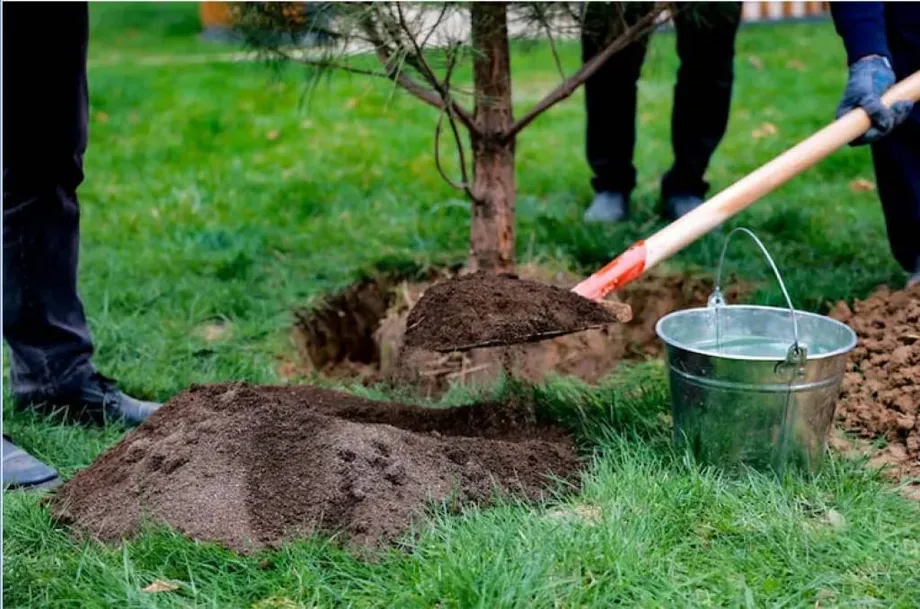
Figures attributed to the Ecology Ministry describe 95 Eldar pines and 12 junipers drying out in Tashkent after being transplanted incorrectly. Together, those losses amount to 107 trees. They provide a concrete example of how planting work can fail when trees are moved or established improperly.
Botanist Atirgul Khalmurzayeva recommends greater reliance on local scientific advice and trees suited to Uzbekistan's conditions. She favors propagating established local trees from seed and selecting varieties that tolerate drought and provide shade.
Khalmurzayeva also points to differences within the country. A tree that grows successfully in Tashkent or the Fergana Valley may struggle in the saline soils and dry conditions of Khorezm or Navoi. Soil, water availability, summer heat and winter cold all affect whether a planting succeeds.
Imported mature trees can face particular difficulty adapting, she says, becoming weakened by heat or cold and more vulnerable to disease and pests. For the urban greenery target, this makes survival and continued growth central measures of success alongside the number of seedlings planted.
Tree selection also affects public health
Research by the Republican Allergy Center and the International Molecular Allergology Center has identified 20 types of allergenic trees that are not recommended for planting within Tashkent. The recommendation brings a medical consideration into decisions often driven by appearance and shade.
Allergist Akram Suyarov says the allergy risk of newly introduced foreign species should be assessed during flowering. Pollen, the fine material plants release as part of reproduction, can trigger symptoms in people whose immune systems react to it.
Suyarov describes the conditions that pollen can provoke:
These include allergic rhinitis, rhinoconjunctivitis, increased bronchial sensitivity and allergic bronchial asthma.
Rhinitis affects the nose, while rhinoconjunctivitis affects the nose and eyes. Asthma affects breathing. Suyarov recommends planting according to specialist advice rather than introducing the same trees everywhere without considering local circumstances.
Khalmurzayeva's recommendations and the allergy specialists' concerns need to be considered together. A tree may suit the climate yet produce pollen that causes problems for some residents. Decisions about new planting therefore involve both botanical suitability and medical advice, particularly around busy public spaces.
Roots and water demand change where trees belong
Tree selection also affects pavements, underground services and nearby buildings. Planting guidance discourages placing several vigorous or demanding species along pedestrian routes and central roads because of their roots, water requirements or tendency to spread.
Weeping willow requires substantial water and can damage underground utilities. Ailanthus and American maple can develop roots that disrupt pavement and asphalt. These concerns make location an important part of a planting decision, alongside the choice of species.
The Forestry Agency imported 3,000 paper mulberry seedlings from China in 2025. Khalmurzayeva explains that paper mulberry reproduces actively through seeds and root shoots, which are new stems growing from the root system. Roots left behind after removal can produce further growth.
She advises against planting the tree on city streets because its roots can lift asphalt, while supporting its cultivation on broad areas of forest land, as planned by the agency, for its useful wood. The example shows how a tree's value depends partly on where it is grown and what purpose it serves.
Planting records are becoming more detailed
Tashkent is developing a planting program based on individual locations. Oloviddin Nizamov, a department head at the city's Main Improvement Department, describes a process that starts with examining the site.
Agronomists visit the site, study the soil and local conditions, and determine which tree should be planted where.
Nizamov says the work draws on recommendations from scientists at the Forestry Research Institute. This approach connects the choice of tree to the conditions in which it will have to live, rather than relying on a uniform planting list.
Seedlings planted in Tashkent are entered into the Yashil Makon electronic system. Records include the species, location, photograph and responsible organization. These details make it possible to identify a planting and the body assigned to look after it.
Pollen concentration data are also being supplied to Uzhydromet through an aerobiological monitoring system, which tracks biological particles in the air. Neighborhood bodies are receiving greater responsibility, and digital monitoring tools, including Yashil AI, are being introduced more widely. Together, these measures connect planting, maintenance and observation more closely.
Water reforms have their own deadlines
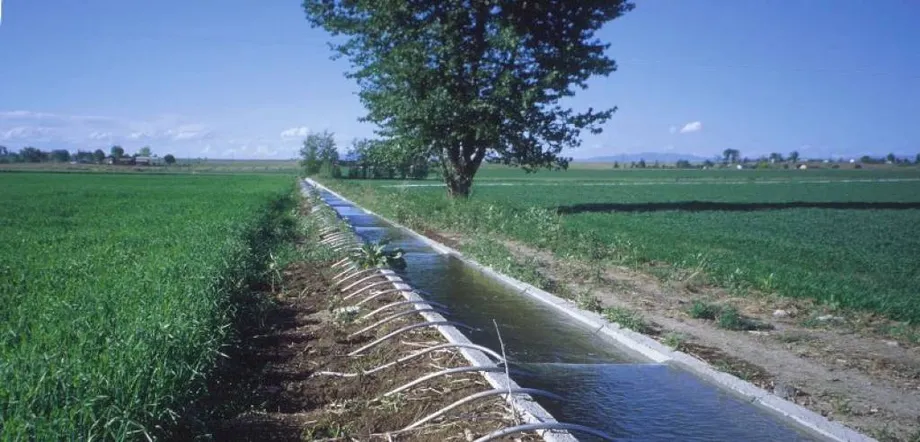
Uzbekistan also plans to extend water saving technologies to 100% of cultivated agricultural land. A draft presidential decree is due by December 2026, setting out a targeted program lasting five years and reviewing subsidies and other financial support.
The proposed changes include replacing ineffective subsidies, simplifying access to preferential loans and subsidies, and providing incentives for agricultural producers that have used water saving technologies for at least five years. Preferential loans offer more favorable borrowing terms than ordinary lending, helping farmers meet the initial cost of equipment.
Stronger oversight would examine whether technologies financed with public subsidies are being used effectively. The practical focus is therefore both on helping farms acquire equipment and on checking its continued use.
The main dates and milestones are:
- 2020: Tashkent School No. 243 was sold without an auction, according to the example cited by Adolat.
- 2025: The Forestry Agency imported 3,000 paper mulberry seedlings from China.
- March 2026: A decree prohibited privatization, transfer and area reductions for botanical and dendrological garden land.
- November 10: A presidential decree approved seven national programs and the implementation plan for 2027 to 2031.
- December 2026: The draft decree on water saving irrigation technologies is due.
- January 20, 2027: The draft law protecting parks and institutional land is due.
The water and greenery measures share a practical concern: maintaining living plants with limited resources. Farmers need irrigation systems that work after installation, while cities need trees suited to their soil and available water. The proposed reforms pair financial support and monitoring in agriculture with legal protection and planting records in urban areas.
Key Points
- Uzbekistan plans a prohibition on privatizing parks and land belonging to state educational and medical institutions.
- The land protection bill is due by January 20, 2027; green areas around apartment buildings are also intended to receive stronger protection.
- The urban greenery target is 30%, with 2031 in the implementation outline and 2030 also stated as the deadline.
- Adolat proposes broader protections for educational and medical buildings, an inventory of former public facilities and possible recovery of certain properties.
- Tashkent's planting measures include site assessments, electronic seedling records and pollen monitoring.
- A separate draft decree due in December 2026 would set out a program to expand water saving agricultural technologies and revise financial support.