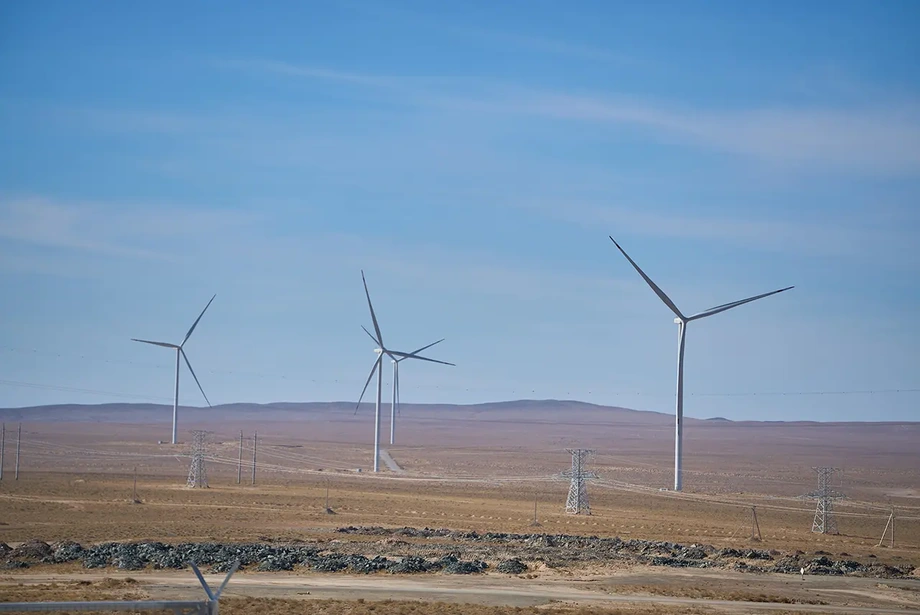
Billions of units of clean electricity face curtailment
Uzbekistan could have to turn away 3.5 billion kilowatt-hours of renewable electricity in 2028 as new solar and wind farms outgrow the networks needed to carry their output, according to the Eurasian Development Bank (EDB). The country holds 23.1 gigawatts of the Central Asia Power System's 38.6 gigawatts of installed generating capacity, making its grid constraints a problem for its neighbours as well.
Contents
- Billions of units of clean electricity face curtailment
- Why usable electricity falls behind installed capacity
- Why solar and wind output may be turned down
- Congested routes spread the pressure across borders
- What batteries and pumped storage can contribute
- Nukus 2 brings generation, storage and grid investment together
- Hydropower flexibility comes with water obligations
- Kazakhstan and Turkmenistan complete the regional picture
- Better data can guide where new solar belongs
- Integration needs payment rules as well as wires
- Key Points
The bank's report, Energy Without Borders: The Architecture of Power Connectivity in Central Asia, prepared with the United Nations Economic and Social Commission for Asia and the Pacific, describes an electricity hub pulled in several directions. Uzbekistan receives power from Turkmenistan, exchanges electricity with southern Kazakhstan, takes summer hydropower from Kyrgyzstan and Tajikistan, and connects with Afghanistan.
New generation is arriving faster than the system's ability to move electricity between those places. Uzbekistan's renewable capacity could reach 11.4 gigawatts by 2028, alongside 4.3 gigawatts of battery storage, under the projects examined by the bank. Announced national plans envisage 25 gigawatts of renewables by 2030.
Demir Kabylbayev, an EDB senior analyst, described the country's position:
Uzbekistan is a major centre of demand and currently the centre of renewable energy deployment.
For households, factories and investors, the practical challenge is getting electricity where it is needed at the right hour. A sunny afternoon can produce more power than nearby networks can carry, while a cold winter evening can leave gas plants short of fuel. Both problems require changes beyond building more power stations.
Why usable electricity falls behind installed capacity
Uzbekistan's generating fleet on January 1, 2025 included 17.54 gigawatts of thermal power, 2.26 gigawatts of hydropower, 900 megawatts of wind and 2.4 gigawatts of solar. Its total represented about 60% of the interconnected system's installed capacity.
Capacity measures how much power equipment can produce at a given moment. Electricity generation measures output over time. A plant rated at one gigawatt would produce one billion kilowatt-hours if it ran at full output for 1,000 hours. Fuel shortages, repairs, water availability and congested lines all affect how much electricity actually reaches customers.
The regional system experienced those limits during peak demand on December 10, 2024, when the EDB says about 6.6 gigawatts of capacity was unavailable or restricted. Fuel restrictions alone reduced available capacity by 1,081 megawatts across the region.
Uzbekistan can have a theoretical generating surplus of 600 to 1,300 megawatts even in severe winter conditions, yet still face shortages. When temperatures fall, homes and businesses use more gas. Lower pressure in pipelines can then prevent power plants from increasing electricity production during evening peaks, creating shortfalls of 100 to 400 megawatts.
Flexible gas engines and gas turbines have helped conventional thermal plants operate more steadily. The EDB reports reductions of up to 30% in their starts, shutdowns and outages following the introduction of such flexible facilities. Reliable fuel supplies and accessible transmission capacity remain necessary for that equipment to serve demand.
Why solar and wind output may be turned down
Curtailment means reducing electricity production because the system cannot absorb or transport the available output. Conventional plants have minimum operating levels, while solar farms can generate strongly at the same time across a wide area. Without enough demand, storage or export capacity, operators must ask some generators to reduce production.
The EDB projects approximately 2.2 billion kilowatt-hours of curtailed renewable output in 2026 and 3 billion in 2027. Calculations by the Energia Coordination and Dispatch Centre give slightly lower figures of 2.1 billion and 2.9 billion respectively; both reach 3.5 billion in 2028.
Energia's figures pair the 2028 curtailment estimate with 22.1 billion kilowatt-hours of renewable electricity used. Together, those figures imply that about 14% of the potential output would be turned away. The calculations, prepared in 2024, also show much sharper seasonal pressure, with projected curtailment reaching 45.7% in September and 37.5% in May.
Kabylbayev explained the scale of the annual estimate:
Under a conservative assessment, perhaps every seventh kilowatt-hour will have to be curtailed in 2028.
Power purchase agreements can make that lost output a financial issue. Depending on their terms, generators may receive compensation for electricity they were required to withhold. Electricity buyers, system operators or consumers could then bear costs even though the energy never entered the network.
Congested routes spread the pressure across borders
The 500 megawatt Bash wind farm illustrates how a new plant can reshape flows beyond its connection point. Its commissioning increased loading between Samarkand and Bukhara and reduced electricity imports from Turkmenistan, according to the EDB.
Measurements cited in the report show flows of 2,940 megawatts through the Fergana power hub, about 113% of an applicable 2,600 megawatt limit. The domestic Sogdiana–Guzar–Talimarjan section carried 1,570 megawatts against a permitted 1,500 megawatts. Constraints at Fergana affect Uzbekistan's own network as well as supplies to Kyrgyzstan and northern Tajikistan.
Kabylbayev also described congestion at the Surkhandarya hub that required around 40% of planned summer hydropower deliveries to be redirected within Tajikistan. Electricity available in one country therefore could not all reach the intended customers across the border.
Several proposed upgrades target these specific problems. Reconstruction of the Kristall–Yulduz line is included in the first phase of the World Bank's Regional Electricity Market Interconnectivity and Trade programme, known as REMIT. Other proposals include another line operating at 220 kilovolts and connections involving the Datka–Sughd corridor.
A second connection to Kazakhstan's Shymkent substation is also under consideration. REMIT's second phase includes a route from the Tashkent Thermal Power Plant, while Uzbekistan's Energy Ministry prefers Khalka–Shymkent because of limitations at the plant and expected flows toward Khalka. A proposed Muruntau–Shymkent line could carry surplus Uzbek electricity to southern Kazakhstan while easing domestic congestion.
What batteries and pumped storage can contribute
Uzbekistan is pursuing several ways to shift electricity from hours of surplus to hours of need. Batteries can respond quickly to changes in supply and demand, support grid frequency and cover evening peaks. Frequency is the rhythm of an alternating current system, which operators must keep stable as generation and consumption change.
The EDB says batteries alone will not absorb all projected daytime solar surpluses. Their usefulness depends on both how much power they can deliver and how much energy they can store. The national projection of 4.3 gigawatts describes power capacity; operating duration depends on the associated energy storage.
Pumped storage offers another approach. It uses spare electricity to pump water uphill, then releases the water through turbines when electricity is needed. The bank estimates Uzbekistan's potential at 5,030 megawatts across 16 facilities, with around 46% in the Tashkent region.
Four proposals, Upper Pskem, Khodjikent, Karateren and Aydarkul, total 1,600 megawatts and an estimated $2.167 billion in investment. Their value still requires detailed calculations of how they would operate within the power system. Coordinating them with neighbouring grids could widen the market for stored electricity and improve their use.
Nukus 2 brings generation, storage and grid investment together
In Karakalpakstan, the Nukus 2 project combines a 200 megawatt wind farm with batteries storing 100 megawatt-hours. Developed by ACWA through its local subsidiary, the project also includes a new transmission line stretching 44 kilometres and upgrades to existing electrical infrastructure.
An October 26 progress update put construction at 94.2%, with 25 of 26 turbines generating electricity. Battery commissioning was targeted for completion by the end of November 2026. Project director Sardorbek Mahmudov estimated the batteries could supply electricity for three to four hours, depending on demand.
The difference between the wind farm's power rating and the battery's energy rating matters. A fully charged battery holding 100 megawatt-hours could theoretically deliver 25 megawatts for four hours before accounting for operating limits and losses. Its duration changes with the amount of power drawn.
The €232 million project has a power purchase agreement lasting 25 years, signed in March 2024, and expected annual generation of nearly 728,000 megawatt-hours. In September 2025, the Asian Development Bank and a fund it administers signed financing of about €46 million; the Asian Infrastructure Investment Bank separately approved about €67 million.
Mahmudov said construction employed between 750 and 800 people, including more than 400 local workers and specialists. The project also has procedures for complaints and compensation, alongside monitoring of potential effects on land and wildlife. Its combination of generation, batteries and transmission shows the range of work involved in adding usable renewable electricity.
Hydropower flexibility comes with water obligations
Kyrgyzstan and Tajikistan can help balance variable solar and wind generation because reservoir hydropower can adjust output as electricity demand changes. Hydropower accounted for 3.26 gigawatts of Kyrgyzstan's 4.13 gigawatts of capacity and 5.8 gigawatts of Tajikistan's 6.55 gigawatts.
Domestic needs are growing, however. Kyrgyzstan's electricity consumption rose from 14.6 billion kilowatt-hours in 2014 to 19.3 billion in 2025, an increase of roughly 32%. That leaves less surplus available for neighbours. The planned Kambarata-1 hydropower plant could strengthen supply and support operation of the Toktogul Reservoir.
Tajikistan resumed parallel operation with the Central Asia Power System on June 7, 2024. Under existing arrangements, it supplies Uzbekistan from June through September and receives electricity during November–December and March–April. Summer deliveries are two to three times the winter supplies.
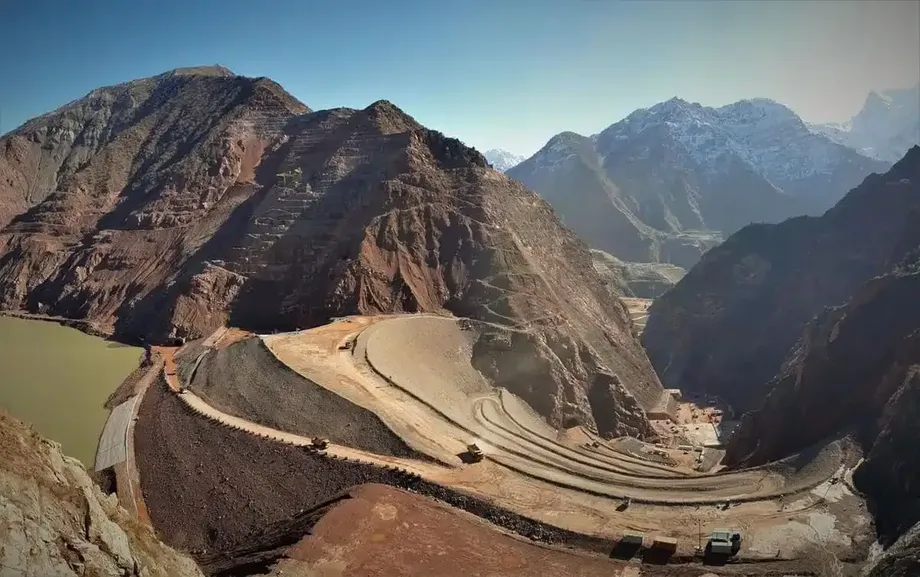
Toktogul, the Naryn cascade, Nurek and the developing Rogun project could provide valuable regional flexibility. Reservoir releases also serve irrigation, food production and interstate water agreements. The EDB recommends paying for measurable balancing services so that countries providing flexibility receive compensation for the costs and constraints involved.
Kazakhstan and Turkmenistan complete the regional picture
Southern Kazakhstan receives roughly equal amounts of electricity from local generation and transfers from northern Kazakhstan. During the winter of 2024–2025, its North–South corridor carried 2,395 megawatts against an allowable 2,100 megawatts. An emergency shutdown could interrupt around 2,000 megawatts of flows to the south.
Kazakhstan also exchanges seasonal electricity with Kyrgyzstan and carries Russian supplies onward to it. That Russian transit amounts to approximately 30 million kilowatt-hours a month and is constrained by transmission capacity. A possible longer term project is a connection using high voltage direct current, stretching about 1,500 kilometres from Ekibastuz GRES-1 toward Zhambyl or Shymkent, with capacity of 2,000 megawatts.
Turkmenistan has a different operating arrangement. Its network runs separately from the main interconnected system, although individual generating facilities supply it through isolated configurations. Seasonal generating reserves range from 15% to 50%, depending on exports and other conditions.
Power from Turkmenistan's Mary and Lebap thermal plants can reach Kyrgyzstan through Uzbekistan. Domestic and border transmission limits restrict these exchanges, reinforcing the importance of Uzbekistan's transit network to countries that may be several connections away.
Better data can guide where new solar belongs
The International Energy Agency's solar energy roadmap recommends publishing more information about generation and network loading so developers can place projects where their electricity has the greatest value. Its earlier planning framework discussed solar targets of 4 gigawatts by 2026 and 5 gigawatts by 2030, while the EDB's newer 25 gigawatt figure covers renewable capacity more broadly.
The IEA recommends coordinating solar development with regularly updated grid expansion plans and transparent connection procedures. It identifies interconnections with five neighbours as a source of flexibility. These recommendations address the same practical challenge visible in the EDB's congestion figures: the location of new generation matters alongside its size.
Smaller installations and existing hydropower sites offer other options. The roadmap describes a programme targeting 150,000 rooftop systems rated at 2 to 3 kilowatts. It also identifies 25 reservoirs covering 1,500 square kilometres, including four hydropower reservoirs totalling 890 square kilometres, as opportunities to assess floating solar that could use existing electrical infrastructure.
Integration needs payment rules as well as wires
The interconnected system generated 125.4 billion kilowatt-hours in 2024 and consumed 142.2 billion. Regional trade reached 12.1 billion kilowatt-hours, compared with 2.5 billion in 2010, and represented about 8.5% of consumption. The EDB estimates that better coordination could enable another 6 billion kilowatt-hours of annual trade, nearly half the 2024 volume.
Preliminary scenarios put annual net benefits at $118 million for partial integration and $123 million for deeper integration. A more advanced architecture yields around $40 million after higher infrastructure and implementation costs. Estimated gross benefits reach up to $640 million. Actual gains depend on costs, utilisation and coordination, with compensation arrangements needed where countries bear unequal costs.
Demand adds urgency. Arman Akhunbayev, head of the EDB Center for Sectoral Analysis, presented a forecast of 27% growth across Central Asia by 2030 without specifying its baseline. A separate March projection put broader regional consumption at 370 billion kilowatt-hours by 2030, nearly 40% above approximately 270 billion in 2024.
The bank proposes a staged timetable for making electricity exchanges more dependable:
- 2026–2028: improve commercial metering, secure data exchange, dispatch coordination and settlement of differences between scheduled and actual supply.
- 2028–2030: upgrade transmission and automation, pilot a market for electricity delivered the following day, and introduce payments for balancing services.
- After 2030: consider balancing markets operating in real time, regional assessments of dependable generating capacity and further border connections.
For Uzbekistan, the immediate task is to connect renewable construction with transmission investment, flexible operation and workable trading rules. For its neighbours, the same changes could improve access to electricity, reduce emergency risks and make better use of shared resources.
Key Points
- Uzbekistan holds about 60% of installed generating capacity in the interconnected Central Asia Power System.
- Renewable electricity curtailment could reach 3.5 billion kilowatt-hours in 2028.
- Winter gas pressure problems can restrict Uzbek generation by 100 to 400 megawatts.
- Transmission upgrades, storage and compensated hydropower services are central to absorbing more renewable output.
- EDB scenarios estimate around $120 million in annual net regional benefits from partial or deeper integration.
- The proposed roadmap begins with metering and coordination, followed by a pilot market during 2028–2030.