Nearly 6,000 jobs, but who gets them?
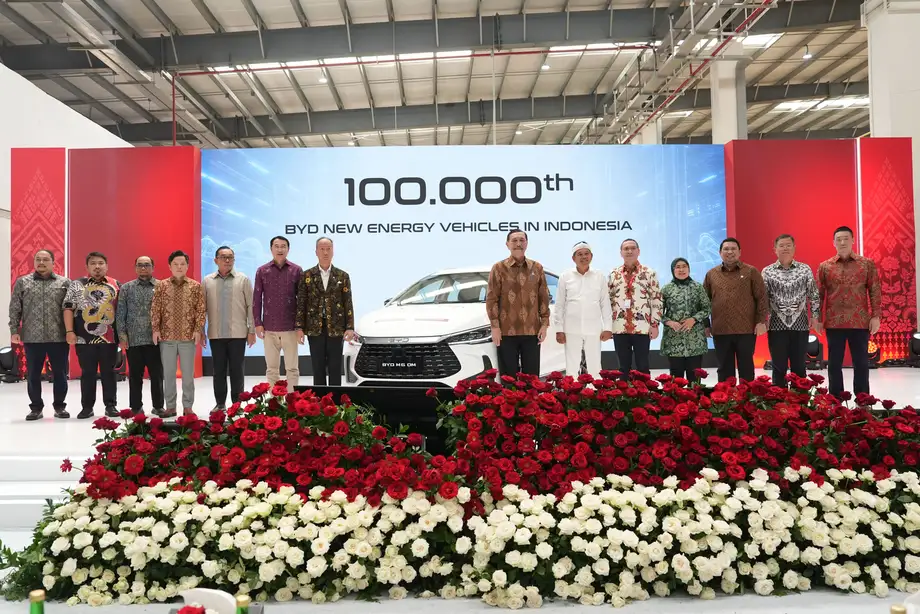
BYD says Indonesian citizens make up 90% of the nearly 6,000 employees at its electric vehicle factory in Subang, West Java, as residents press for greater access to jobs at the facility, which opened on September 3, 2026.
Contents
- Nearly 6,000 jobs, but who gets them?
- What residents asked for on October 28
- Why experience matters in BYD's recruitment
- Training is the main point of agreement
- Earlier recruitment figures show a smaller workforce
- Government considers a visit as lawmakers seek data
- How the dispute developed
- A large factory still increasing production
- Local benefits extend to suppliers and household incomes
- Key Points
Luther Panjaitan, head of public and government relations at PT BYD Motor Indonesia, gave the workforce breakdown during a factory visit on November 10. Of the Indonesian employees, 80% come from West Java. Of that provincial group, 30% come from Subang or communities around the factory.
Those percentages describe three different groups. Using 6,000 employees as an approximate base, the breakdown would mean about 5,400 Indonesian workers, 4,320 workers from West Java and 1,296 from Subang or nearby communities. The local group would therefore represent roughly 21.6% of the entire workforce. These are calculations from rounded company figures, rather than exact employee counts.
The Forum Masyarakat Subang Bersatu (FMSB), a community organisation that demonstrated outside the factory on October 28, estimated that Subang residents accounted for less than 20% of employees. Its demand concerns opportunities for people living near the investment, while BYD's headline figure of 90% concerns Indonesian nationality.
BYD says experience requirements help explain its recruitment choices. Residents want transparent hiring and training that would help them qualify. The company is increasing production at a plant designed to make 150,000 vehicles annually and eventually employ up to 20,000 people.
What residents asked for on October 28
Hundreds of FMSB members gathered at the BYD factory in Cipeundeuy, within the Subang Smartpolitan industrial area, on October 28. They sought more employment opportunities for local residents and clearer information about recruitment.
FMSB spokesperson Megi Akbar Setiawan said the group supported investment and wanted dialogue about how residents could obtain work. He pointed to young people leaving secondary school who could not afford university and hoped a nearby factory would provide a route into paid employment.
FMSB also asked local authorities to consider a requirement that companies investing in Subang recruit 70% of their workers locally. It urged Subang Regent Reynaldy Putra Andita and the district legislature to examine a regional regulation or a regent's regulation to support that demand.
The demonstration briefly became tense at about 11 a.m. Police secured a man suspected of provoking the crowd, after which speeches continued until the protest ended around midday. Alongside employment demands, FMSB sought scrutiny of alleged irregularities involving PT CMM's permits and transparency in selecting a contractor to handle hazardous and toxic waste. Those allegations were raised by the protesters.
Why experience matters in BYD's recruitment
BYD generally requires applicants for production work to have at least one to two years of automotive industry experience. Some operator, engineering and quality control positions require three to four years, depending on the skills involved.
Panjaitan said Subang had no previous manufacturing facilities producing vehicles with four wheels. BYD therefore recruited from other parts of West Java where applicants had already worked in automotive factories.
The Subang plant combines four main manufacturing processes. Stamping presses metal into shaped panels. Welding joins parts of the vehicle body. Painting coats and protects the body, while final assembly brings components together into a finished vehicle.
Robots and automated equipment carry out much of the production work, with people needed for supervision and particular tasks. Experience in operating machinery, checking production quality and identifying faults is consequently part of the company's hiring criteria.
BYD accepts graduates of vocational secondary schools, known in Indonesia as SMK, for suitable positions. The company says recruitment through that route currently accounts for less than 10% of its workforce needs. For a school leaver, the immediate difficulty is gaining access to a job when many openings require experience already acquired elsewhere.
Training is the main point of agreement
BYD and FMSB both identify skills as central to wider local recruitment. Their proposals focus on different stages: BYD is training employees, while residents want a clearer route for people who have yet to qualify for factory jobs.
BYD says it has sent hundreds of employees abroad for training. The intention is for them to return with specialist knowledge and teach other Indonesian workers, gradually increasing the pool of skilled staff around the Subang facility.
FMSB proposes a vocational training centre dedicated to electric vehicle manufacturing. It wants support from the district and provincial governments, the local manpower office, the district legislature and BYD, including funding through the company's corporate social responsibility programme.
Megi welcomed West Java's Nyari Gawe application, which provides vacancy information, while arguing that residents also need practical training to meet employers' requirements. BYD says it already recruits through the local labour office and applications recommended by local government.
Bagong Suyanto, a professor of economic sociology at Airlangga University, argues that residents should share in the benefits of industrial investment. He recommends mapping the skills factories need and aligning vocational school and training centre courses with those jobs. His assessment also cautions that an immediate 70% local hiring requirement would be unrealistic without enough qualified applicants.
Earlier recruitment figures show a smaller workforce
Subang's Manpower and Transmigration Agency provided an earlier picture of recruitment in April 2026, before the factory opened. Figures attributed to agency head Rona Mairansyah listed 299 BYD recruits from Subang, 220 from Karawang, 144 from Bekasi and 112 from Purwakarta.
The same figures listed 91 recruits from Bandung, 75 from Cirebon, 63 from Indramayu, 50 from Kuningan, 28 from Majalengka and 19 from Bogor. Together, the ten named West Java locations supplied 1,101 workers, compared with 937 from outside the province.
Subang contributed about 14.7% of the 2,038 BYD recruits identified in that list. The April recruitment figures and November workforce statement cover different stages of the project, with the later company statement describing nearly three times as many employees.
Rona said recruits from outside West Java often filled specialist positions, including senior roles and jobs requiring Mandarin. He hoped technical training would allow more local residents to take such positions as the industry expanded.
The agency also recorded 317 Subang recruits at electric vehicle manufacturer VinFast. Combined with BYD's 299, that brought the two companies' Subang recruitment total to 616 at that earlier stage.
Government considers a visit as lawmakers seek data
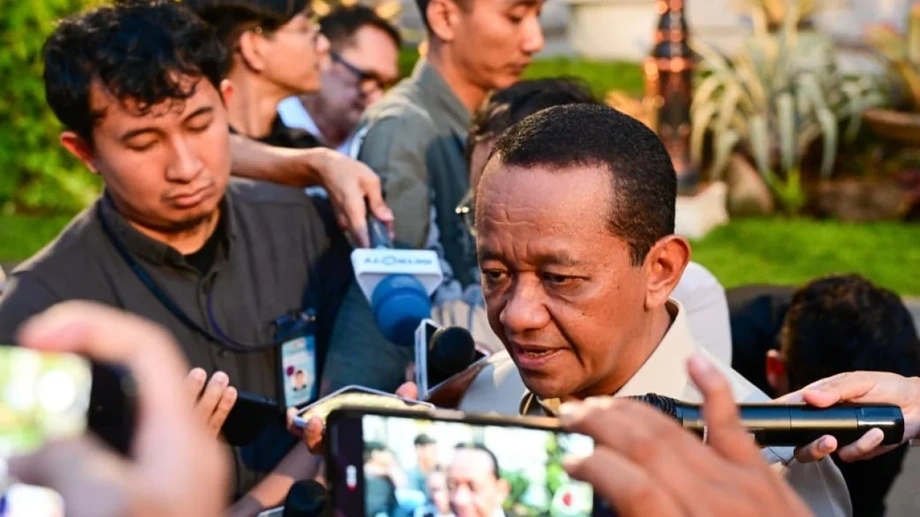
Industry Minister Muhammad Sarmuji said the government could inspect the Subang project with other agencies to help address the employment dispute. He described the response as a task involving more than the Industry Ministry.
"Of course, resolving this issue is not solely the responsibility of the Industry Ministry. We will look into it, and if necessary, we will visit the site with other government agencies," Sarmuji told reporters in Jakarta.
Sarmuji said the company and surrounding residents could have different views of whether enough local jobs had been created. He called for better communication and a shared understanding of employment opportunities.
Ateng Sutisna, a member of the House of Representatives from the Prosperous Justice Party representing West Java IX, urged BYD to disclose local recruitment data. He also called on the company and local government to respond to the concerns raised at the October 28 demonstration.
BYD, meanwhile, asked public authorities to help communicate clear information about the dispute. Panjaitan said the demonstrations had caused no significant operational disruption. No date was given for a government inspection, and the proposed 70% quota and dedicated training centre had no announced approval or implementation timetable.
How the dispute developed
The employment debate stretches from recruitment before production began to demonstrations after the opening. Earlier protests in 2025 were also mentioned by Eddy Soeparno, deputy speaker of Indonesia's People's Consultative Assembly.
- 2025: Protests concerning the Subang project took place, according to the account cited by Eddy Soeparno.
- April 15, 2026: Recruitment figures attributed to the local manpower agency listed 299 BYD recruits from Subang.
- September 3, 2026: BYD inaugurated the Subang factory and began operations.
- October 28, 2026: FMSB demonstrated at the factory, seeking transparent recruitment, more local jobs and skills training.
- November 10, 2026: Panjaitan described the workforce breakdown, experience requirements and production expansion during a factory visit.
- 2027: BYD targets a domestic content level of 60% for vehicles made at Subang.
The factory's opening changed the focus from promised employment to the distribution of existing jobs. Residents now want access to current recruitment and preparation for the larger workforce BYD expects to need.
A large factory still increasing production
BYD's Subang facility occupies 126 hectares and has capacity to produce up to 150,000 vehicles a year. Panjaitan said the company was increasing production and targeting utilisation of 80% to 90% during 2026.
Utilisation describes how much of a factory's production capacity is being used. At Subang's stated annual capacity, 80% to 90% corresponds to an annual production pace of 120,000 to 135,000 vehicles. The plant opened in September, so those figures describe a production rate rather than a full year's output in 2026.
Panjaitan said monthly sales had reached about 6,000 to 7,000 vehicles. BYD Group sold more than 46,700 vehicles in Indonesia from January through September 2026, and BYD held 37% of the country's electric vehicle market as of August.
Figures attributed to the Indonesian Automotive Industry Association, Gaikindo, put total vehicle sales at 679,020 during the first nine months of 2026, with battery electric vehicles accounting for 16.8%. That share amounts to approximately 114,075 vehicles. A broader account put electric vehicles above 26% of sales during 2026 without specifying the same reporting period or vehicle categories.
BYD's employment target of up to 20,000 people is more than three times its current workforce. That makes future recruitment particularly important to residents seeking work, although the company has tied the target to full operation of the facility.
Local benefits extend to suppliers and household incomes
BYD says it works with more than 200 domestic partners and that products made at Subang meet a minimum domestic content level of 40%. It aims to raise that figure to 60% in 2027, an increase of 20 percentage points.
Domestic content measures the Indonesian contribution to a product under local content rules. It addresses a different part of industrial development from workforce nationality or a worker's home district. Supplier participation creates another channel through which the factory can bring business to Indonesia.
Panjaitan said BYD chose its location after considering domestic demand, production stability, supply continuity and supporting infrastructure, including transport links, electricity and water. The company also wants to protect confidence among its business partners in Indonesia and abroad.
For Subang households, access to employment carries immediate financial weight. Figures cited by Suyanto put the district's poverty rate at 8.70%, or 146,820 people, in 2026, compared with 6.54% across West Java. That is a gap of 2.16 percentage points. He also cited 76,115 unemployed people in Subang in 2025.
The practical issue linking those household needs to BYD's expansion is whether residents can obtain the qualifications and experience required for the next round of jobs. Transparent recruitment figures would show where hiring stands, while training aligned with actual vacancies would give applicants a clearer route into the factory.
Key Points
- BYD says 90% of nearly 6,000 Subang factory employees are Indonesian citizens.
- Its detailed percentage breakdown places Subang and nearby workers at roughly 21.6% of the total workforce.
- FMSB estimated the Subang share at less than 20% and demonstrated on October 28 for more jobs and transparent recruitment.
- BYD generally requires one to two years of automotive experience, with longer experience needed for some roles.
- Residents propose a dedicated electric vehicle training centre; BYD has sent hundreds of employees abroad for training.
- The government may inspect the project, while lawmakers have called for clearer local hiring data.
- The factory can produce 150,000 vehicles annually, and BYD targets employment of up to 20,000 at full operation.