A large investment plan starts from a small trading base
Uzbekistan and Oman are preparing about 35 joint projects valued at roughly $5 billion while seeking to lift annual trade to $500 million, a sharp expansion from the few million dollars in goods currently exchanged between them. The plans brought investment, customs reform and access to Omani ports onto the agenda of their sixth intergovernmental commission meeting in Muscat on November 15, 2026.
Contents
- A large investment plan starts from a small trading base
- What the Muscat meetings agreed
- How far away is the trade target?
- What would a preferential trade agreement change?
- An existing investment company could carry more of the plan
- Which industries and businesses are involved?
- Ports and transport costs will shape the opportunity
- Fruit and vegetables offer a concrete starting point
- What turns the plans into business?
- Key Points
Uzbekistan's Minister of Investment, Industry and Trade Laziz Kudratov described a portfolio of about 35 projects worth more than $5 billion being prepared for investment and operation. Shohzakhon Ortikov, a member of the Oriental Studies Analysts club at Tashkent State University of Oriental Studies, said reaching the trade target would require a wider range of goods, stronger direct business contacts and joint production.
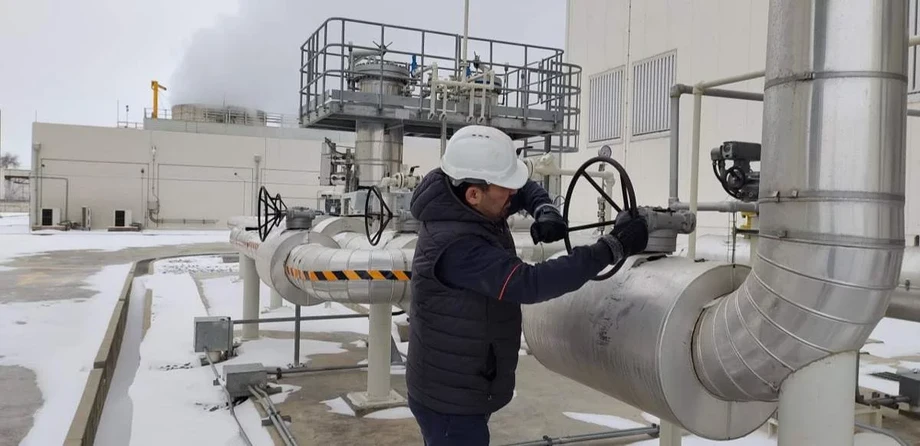
The proposed projects cover energy, mining, manufacturing, agriculture and transport. Alongside large investment discussions, the countries are pursuing more immediate steps, including a dedicated sales pavilion for Uzbek produce in Oman and possible direct cargo flights between Tashkent and Muscat.
The scale of the ambition is striking. Ortikov put bilateral trade at $2.3 million in 2025 and $3.3 million from January through September 2026. A $500 million annual target would be about 217 times the 2025 figure. Investment spending and trade measure different things: the project portfolio concerns money put into businesses and infrastructure, while trade records goods bought and sold across borders.
What the Muscat meetings agreed
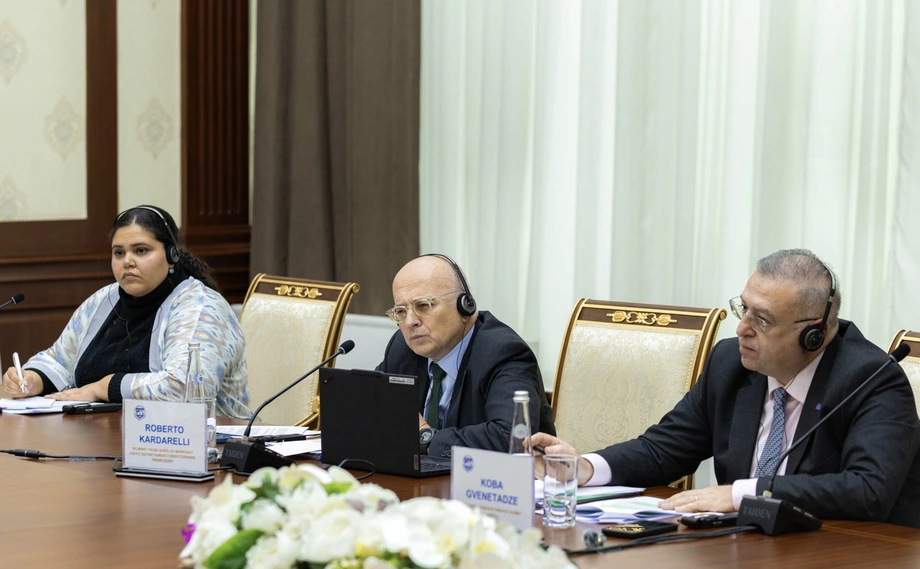
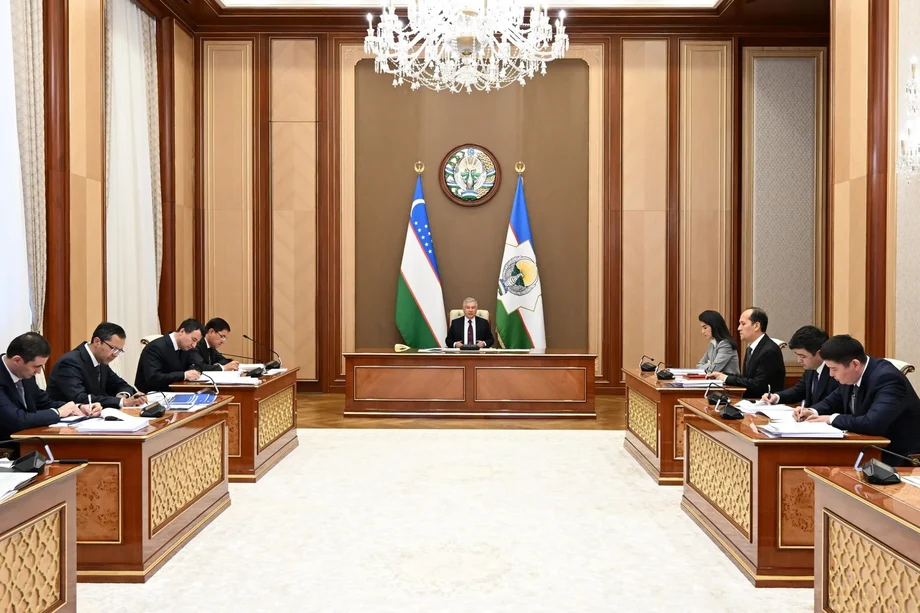
Kudratov and Oman's Minister of Commerce, Industry and Investment Promotion Anwar bin Hilal Al Jabri chaired the November 15 commission meeting during President Shavkat Mirziyoyev's state visit. The director of Uzbekistan's Agency for Industrial Cooperation and Public Procurement also participated, bringing an institution concerned with industrial links into the discussions.
The commission signed a protocol recording the meeting's results and agreed to hold its next session in Uzbekistan. Its agenda included preparing a preferential trade agreement, removing technical barriers, simplifying customs procedures and expanding cooperation between companies.
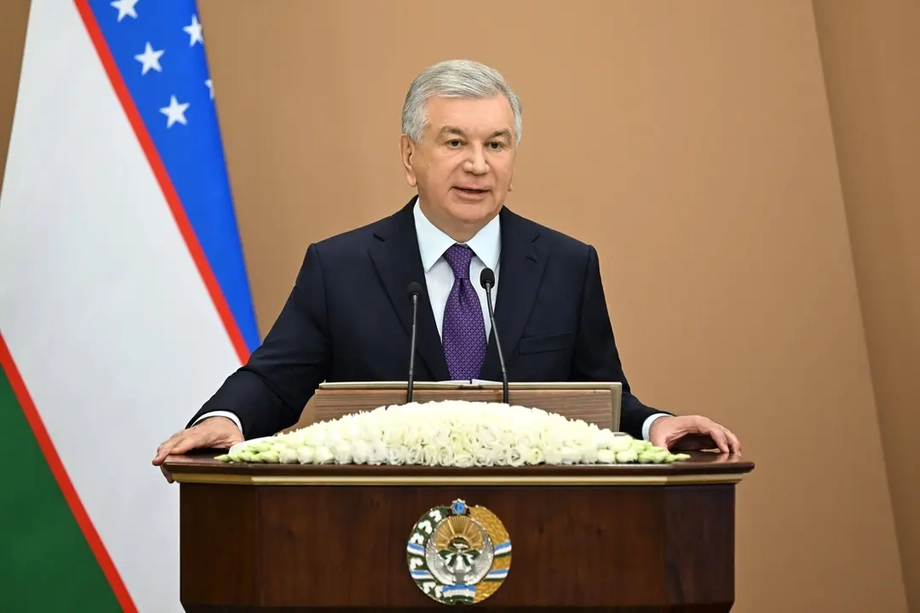
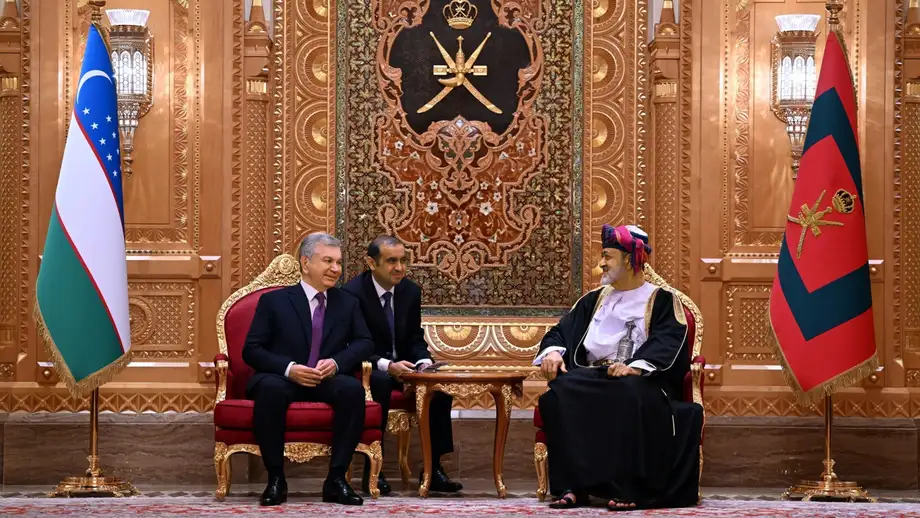
On November 16, Mirziyoyev met Sultan Haitham bin Tariq Al Said at Al Alam Palace after the official welcoming ceremony. The Uzbek presidency's November 16 statement said the leaders discussed strengthening bilateral relations and noted expanding political, economic, cultural and humanitarian ties.
The main steps leading into the latest discussions were:
- October 15, 2024: Asyad Group and Uzbekistan's investment ministry signed a memorandum covering logistics opportunities, including dry ports, railways, warehouses and air freight.
- June 2025: The fifth joint commission meeting took place in Tashkent, with discussions on air transport rights and exports through Omani ports.
- July 2026: Oman Air began two direct flights a week between Muscat and Tashkent.
- November 15, 2026: The sixth commission met in Muscat and signed its protocol.
- November 16, 2026: Mirziyoyev and Sultan Haitham held talks at Al Alam Palace.
How far away is the trade target?
Kudratov said bilateral trade exceeded $3 million in the first eight months of 2026, more than 3.5 times its level in the same period a year earlier. Oman's National Centre for Statistics and Information recorded trade of RO 1.1543 million for those eight months.
Even after that growth, the $500 million goal remains far above current business volumes. Compared with the $3.3 million recorded over the first nine months of 2026, the target is about 152 times as large, although that comparison places an annual ambition beside a partial year.
Ortikov identified the practical challenge as finding more products and buyers. Existing Uzbek exports to Oman include floor coverings, textiles, clothing, fabrics, food and cosmetics. The proposed expansion would add deeper cooperation in pharmaceuticals, chemicals, food processing and other manufacturing activities.
Direct connections between importers and exporters will matter alongside government agreements. A company needs a buyer, reliable payment arrangements and a workable delivery route before a political trade target can become a recurring shipment.
What would a preferential trade agreement change?
Uzbekistan and Oman are preparing a preferential trade agreement and an updated investment protection agreement. A preferential trade agreement gives selected goods more favorable treatment, commonly through lower import duties. Its value to businesses depends on which products qualify and the rules exporters must meet.
The commission also discussed technical barriers and customs procedures. Technical barriers can include different product standards, testing requirements or certificates. Customs procedures govern the documents and checks used to move goods across a border. Both can add time and expense even when an import duty is low.
For a food exporter or textile manufacturer, simpler procedures could make it easier to quote a dependable delivery date and price. The talks therefore connect market access with the everyday work of getting a shipment accepted, cleared and delivered.
The project list, financing commitments, completion schedules, proposed tariff concessions and deadline for the $500 million target have not been detailed publicly. No date was given for the next commission meeting in Uzbekistan.
An existing investment company could carry more of the plan
The Uzbek-Omani Investment Company, also known as UzOman, gives the two countries an existing vehicle for financing businesses. It is owned by Oman Investment Authority and Uzbekistan's Fund for Reconstruction and Development, with stated capital of $200 million.
Ortikov said the company was established in 2010 and had financed 11 projects worth $231 million; another published account dates its establishment to 2009 and puts its investments at more than $256 million. Those figures leave the precise historical total unsettled.
Mirziyoyev's meeting with Omani business representatives focused partly on increasing the company's authorized capital. Authorized capital is the amount owners permit a company to raise through ownership shares. A larger capital base could support more investment, depending on how much funding shareholders actually contribute and which projects receive approval.
Even using the higher investment figure of $256 million as a reference, a portfolio of about $5 billion would be nearly 20 times as large. Delivering it would require a much greater financing effort than the company's reported investment record so far.
Which industries and businesses are involved?
Energy, geology, construction, agriculture and digital technologies featured in the commission discussions. Ortikov also identified pharmaceuticals, food, textiles and chemicals as promising areas. The business meeting added mining, electrical engineering, green energy, urban development, infrastructure, transport and logistics.
Oman Investment Authority President Abdulsalam Al Murshidi led the Omani business representatives who met Mirziyoyev. Participants included Oman Chamber of Commerce and Industry chairman Sheikh Faisal Al Rawas, SABCO Group chairman Sayyid Khalid bin Hamad Al Busaidi and Voltamp Energy chairman Sayyid Aymen Al Busaidi.
Asyad Group chief executive Abdulrahman Salim Al Hatmi, Zubair Corporation chairman Rashad Mohammad Al Zubair and UzOman chief executive Omar Bahram also attended. Their presence brought investment institutions, industrial companies and logistics operators into the same discussions.
A Uzbekistan-Oman Business Council is being established to connect entrepreneurs. The sides also agreed to create a joint working group and review progress quarterly. Those reviews provide a regular checkpoint for turning proposed ventures into specific business decisions.
Ports and transport costs will shape the opportunity
Uzbekistan wants to use Oman's ports and logistics infrastructure to reach customers beyond the Omani market. Oman, on the southeastern Arabian Peninsula, offers maritime connections linking the Middle East, Asia and Africa. Uzbekistan's access to those connections depends on the routes that carry its goods to the coast.
Ortikov highlighted the Uzbekistan-Turkmenistan-Iran-Oman transport corridor, combining rail, road and sea transport. He said its competitiveness would depend on transit tariffs, border procedures, delivery times and logistics costs. A route becomes commercially useful when its total price and reliability work for the cargo being shipped.
Asyad Group and partners have acquired majority stakes in two logistics companies in Tashkent. That adds a business presence in Uzbekistan to the earlier memorandum covering warehouses, railways, dry ports, air freight and electronic commerce.
Oman Air's twice weekly passenger service already connects the two capitals. Dedicated cargo flights remain under discussion. Officials also considered the Middle Corridor and alternative transport routes for agricultural goods, giving exporters several potential options to assess against delivery time and cost.
Fruit and vegetables offer a concrete starting point
Uzbekistan and Oman plan to increase bilateral food trade twofold to threefold starting in 2027. Uzbekistan's Agriculture Minister Ibrokhim Abdurakhmonov and Oman's Minister of Agriculture, Fisheries and Water Resources Saud bin Hamoud bin Ahmed Al Habsi discussed expanding shipments of fruit, vegetables, dried fruit and nuts to Oman and onward to other Gulf countries.
Uzbek exporters agreed to obtain a dedicated pavilion at the Silal wholesale market in the Khazaen economic zone. Market representatives are also discussing export contracts with Uzbek companies, providing a more specific commercial step than a broad target for national trade.
Silal has laboratories for food safety testing. According to the Uzbek side, testing and the issue of the relevant certificate from Oman's agriculture ministry take about one hour after samples are submitted. For fresh produce, a shorter testing stage can help preserve the time available for sale.
Suhol al Fayha, a company operating at the market, receives, sorts, packs, stores and sells fruit and vegetables wholesale. Those services give suppliers a place to handle produce after arrival. The countries are also considering joint projects in food processing, packaging, aquaculture and organic fertilizer production.
What turns the plans into business?
Uzbekistan plans a business forum and a Made in Uzbekistan national exhibition in Muscat to introduce products and connect companies. These events, the proposed business council and the Silal pavilion address a shared practical need: bringing sellers into direct contact with buyers and investors.
Oman's approach fits priorities under Oman Vision 2040, including logistics, manufacturing, fisheries, renewable energy and investment development. For Uzbekistan, the discussions offer both potential investment in production and routes for selling goods through Oman to wider markets.
The quarterly working group reviews should give the two sides a way to track financing, company participation and progress on proposed ventures. Starting in 2027, the food trade plan provides another specific point of reference, with a stated ambition to double or triple exchanges.
The central task is to connect the pieces: finance for production, agreements that make trade easier, and transport services that deliver at a workable price. The produce market arrangements show how that can look at the level of an individual exporter. The much larger investment portfolio will require the same practical detail across many more projects.
Key Points
- Uzbekistan and Oman are preparing about 35 joint projects worth roughly $5 billion.
- Their $500 million trade target is about 217 times the $2.3 million recorded for 2025.
- The November 15, 2026 commission meeting prioritized a preferential trade agreement, simpler customs procedures and industrial cooperation.
- Investment discussions include expanding UzOman's capital and projects in energy, mining, manufacturing, agriculture and logistics.
- Uzbek exporters agreed to obtain a pavilion at Silal wholesale market, while the countries aim to double or triple food trade starting in 2027.
- A joint working group will review progress quarterly, and the next commission meeting will take place in Uzbekistan.