Homes, Schools and Hospitals Move to the Front of the Queue
Uzbekistan will give households, schools, kindergartens, hospitals and other social facilities priority access to natural gas from October 1, 2026, to March 31, 2027, under a Cabinet of Ministers resolution announced by the Ministry of Energy. During severe cold, other categories of consumers may face temporary restrictions so gas can keep reaching those essential users.
Contents
- Homes, Schools and Hospitals Move to the Front of the Queue
- How the Monthly Gas Schedule Will Work
- Local Authorities Must Carry the Priority Through
- What Temporary Restrictions Could Mean
- Repairs Target Pipelines, Pumps and Neighbourhood Networks
- Liquefied Gas and Other Fuels Form Part of the Plan
- Supply Disruptions and Enforcement Add Pressure
- The Dates and Decisions That Matter
- Key Points
The distribution rules accompany a substantial programme of repairs. A presidential briefing on July 6, 2026, set out plans to replace 53.7 kilometres of defective main pipelines, carry out major repairs on 77 gas pumping units and improve distribution for 220,000 households in 881 mahallas, or local neighbourhood communities.
The two parts of the winter preparations address different problems. Repairs are intended to make the network more reliable and reduce gas losses. The allocation rules determine where available gas goes when cold weather, falling pipeline pressure or an unexpected change in supply puts the system under strain.
Strategically important consumers are also covered by the resolution. The repeated instruction for both national and local distribution decisions, however, is to preserve priority for homes and social institutions. For families, that concerns gas used for heating and cooking. For hospitals and schools, it concerns maintaining services during the coldest months.
How the Monthly Gas Schedule Will Work
The Ministry of Energy, Uztransgaz, Khududgazta'minot and other responsible organisations will prepare supply schedules covering individual days and periods of ten days. Those schedules must reflect both the amount of natural gas available and weather conditions.
Planning at these shorter intervals gives officials a way to adjust deliveries within a month as temperatures and demand change. A monthly allocation sets the broader framework, while daily and ten day schedules determine how that allocation is organised over time.
The organisations must submit their schedules by the 25th of each month to the Republican Commission for Ensuring the Uninterrupted Operation of Economic Sectors During the Autumn and Winter Period. The commission must approve deliveries for the following month by the last day of the current month.
Approval will cover regions and major wholesale consumers, meaning customers that receive gas in large quantities. The process creates a regular sequence: energy organisations calculate expected needs and resources, the commission approves allocations, and local authorities arrange distribution within their territories.
Local Authorities Must Carry the Priority Through
The Council of Ministers of Karakalpakstan, regional administrations and the Tashkent city administration will organise distribution among districts and cities together with regional branches of Khududgazta'minot. Their decisions must follow the approved national schedules.
Household and social facility priority therefore applies at two levels. It guides the national allocation between regions and large consumers, and it must remain in place when officials divide a region's allocation among individual districts and cities.
Uzbekistan's winter planning also allows schedules to be revised promptly if pressure falls in main pipelines or the volume of available gas changes unexpectedly. Pressure is the force that moves gas through the network. When it drops, delivering enough gas to consumers becomes more difficult, even where pipes remain connected.
The resolution requires officials to preserve household and social facility priority during those revisions. It gives the authorities a continuing instruction for managing shortages, rather than leaving the priority order to be decided after a cold spell begins.
What Temporary Restrictions Could Mean
Consumers outside the priority groups may face temporary supply limits during periods of severe cold, following established procedures. The ministry has also identified compressed natural gas filling stations and other seasonal consumers as categories that may face restrictions when temperatures drop.
Compressed natural gas, usually shortened to CNG, is natural gas stored under high pressure and used as vehicle fuel. Restricting deliveries to filling stations can leave more gas available for homes and essential institutions, while reducing access to fuel for drivers who depend on it.
A ministry cold weather notice said restrictions on filling stations would follow schedules agreed upon and approved by local administrations, known as khokimiyats, with consumers notified in advance. That places local authorities at the centre of both distribution decisions and communication with affected users.
The resolution announcement does not specify which other consumers would face restrictions, how long any limits would last or what volume each priority group would receive. Businesses outside the protected categories consequently face a practical uncertainty: their access to gas during severe cold will depend on available resources and the schedules approved for their area.
Repairs Target Pipelines, Pumps and Neighbourhood Networks
President Shavkat Mirziyoyev reviewed the physical preparations at the July 6 briefing. The presidential administration's winter preparations statement identifies work on both the main transmission network and the smaller distribution systems that carry gas towards consumers.
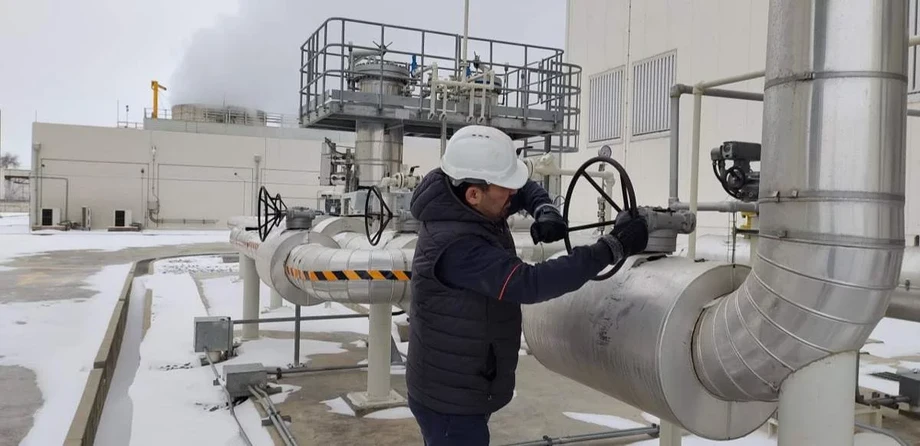
The planned replacement of 53.7 kilometres of defective main pipeline sections addresses faults in the routes used to transport gas across the system. Major repairs to 77 pumping units at compressor stations are intended to support the equipment that keeps gas moving through those routes.
At the distribution level, 711.9 kilometres of gas networks and 400 gas distribution points are scheduled for overhaul or reconstruction. Distribution points regulate gas as it moves between parts of the network operating at different pressures.
The programme also calls for converting distribution from a three stage system to a two stage system. In simple terms, gas would pass through fewer pressure levels before reaching consumers. The stated objectives are to reduce technical losses and improve supplies to 220,000 households across 881 mahallas.
Those figures describe planned work and intended beneficiaries. The presidential statement presents the repairs as preparations to be completed before cold weather, with responsible officials instructed to oversee timely completion and readiness of emergency repair crews.
Liquefied Gas and Other Fuels Form Part of the Plan
Uzbekistan's preparations extend beyond natural gas delivered through pipelines. The presidential statement sets a seasonal supply target of 325,700 tons of liquefied gas for the population and social facilities, including deliveries to remote settlements.
Of that total, 8,200 tons are allocated for 104,700 consumers in 229 remote settlements. The remote allocation represents about 2.5 percent of the planned liquefied gas supply, calculated from the two published tonnage figures.
Liquefied gas is stored as a liquid under pressure and can be transported in tanks or cylinders. That makes it a separate delivery system from piped natural gas, with its own transport, storage and distribution needs. For remote consumers included in the plan, those deliveries are a specific part of winter energy provision.
The government also plans a reserve of 120,000 tons of motor gasoline for December and January. Thermal power plants are projected to receive 4,161,000 tons of coal throughout the heating season, while 90 process units at Uzbekneftegaz enterprises are scheduled for repairs to support continued production.
Mirziyoyev instructed officials to coordinate preparations across the oil and gas industry, energy suppliers and utility services. The instruction recognises that winter readiness depends on several connected systems: fuel production, transport, electricity generation, local distribution and emergency repairs.
Supply Disruptions and Enforcement Add Pressure
Tashkent has experienced widespread gas supply disruptions, bringing the practical reliability of deliveries into focus alongside the new allocation rules. In the capital, the city administration and regional gas distribution organisation will be responsible for applying approved schedules at district level.
Authorities have also stepped up checks on coal and gas supplies ahead of winter. Law enforcement bodies identified 390 cases of illegal storage and sale of energy resources during a month of inspections. The figure concerns energy resources collectively; it gives no breakdown between coal, gas and other fuels.
The ministry's cold weather notice illustrates the conditions that can prompt tighter distribution. It cited an Uzgidromet forecast for November 9–12, when cold and humid air was expected to bring rain across many areas and possible snow in northern and mountainous regions. Forecast nighttime temperatures reached minus 7 degrees Celsius in the north and minus 1 to minus 2 degrees elsewhere.
For consumers experiencing problems, the ministry listed 1104 as its hotline. Gas emergencies can be reported on 104, while electricity outages can be reported on 1154. These provide separate routes for general supply concerns, urgent gas incidents and interruptions to electricity.
The Dates and Decisions That Matter
The winter programme combines a fixed operating period with monthly approvals and adjustments when conditions change. The principal dates and deadlines are:
- July 6, 2026: Mirziyoyev was briefed on pipeline repairs, fuel reserves and other winter preparations.
- October 1, 2026: The Cabinet resolution governing seasonal gas distribution takes effect.
- By the 25th of each month: Energy organisations must submit supply schedules to the republican commission.
- By the last day of each month: The commission must approve allocations for the following month.
- December and January: The planned motor gasoline reserve covers these two winter months.
- March 31, 2027: The seasonal gas distribution resolution expires.
Households and social facilities have an explicit place at the front of the allocation process throughout that period. Other consumers will need to follow local notices, particularly when a sharp fall in temperature leads authorities to revise deliveries or impose temporary restrictions.
The central test will be how the repair programme and the distribution system work together. Completed repairs would help gas move more reliably through the network; approved schedules would direct available supplies towards the users the government has chosen to protect first.
Key Points
- Homes, schools, kindergartens, hospitals and other social facilities receive priority from October 1, 2026, to March 31, 2027.
- Gas schedules will cover individual days and periods of ten days, with monthly approval by a republican commission.
- Authorities may revise allocations when pipeline pressure or available gas volumes change.
- CNG filling stations and other consumers may face temporary restrictions during severe cold.
- Planned work includes replacement of 53.7 kilometres of main pipelines and repairs to 77 gas pumping units.
- Distribution upgrades are intended to improve supplies for 220,000 households in 881 mahallas.
- The ministry hotline is 1104, gas emergencies are handled on 104, and electricity outages on 1154.