A new airport partner, with a 2027 target
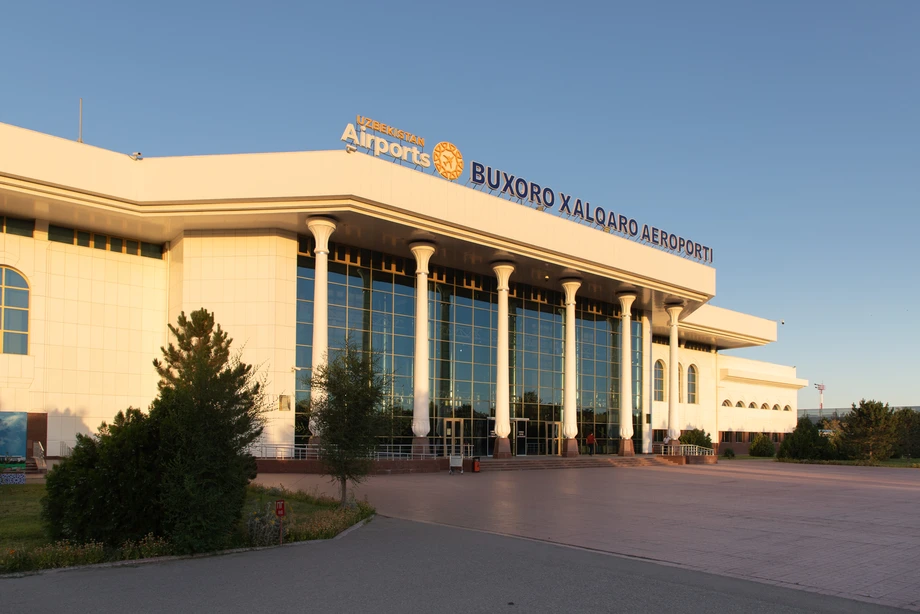
Uzbekistan Airports has selected Türkiye's Limak İnşaat Sanayi ve Ticaret A.Ş. and Qatar's Hamad Bin Khalid Contracting Company W.L.L., known as HBK Contracting, to build and operate the passenger facilities at the new Bukhara International Airport. The planned partnership will run for 23 years, including up to three years for construction.
Contents
- A new airport partner, with a 2027 target
- What Limak and HBK will build
- The runway stays with the state
- How the partnership will work
- Six bidders reached the final stage
- How the project reached this point
- Road and bus connections are part of the plan
- What the builders bring to Bukhara
- More room for international travel
- Key Points
The project brings together a terminal covering 48,500 square meters, a planned runway stretching 3.3 kilometers and a road connecting the airport with Bukhara. Its estimated cost has risen from $226 million when the project was presented in May 2024 to about $300 million, an increase of $74 million, or roughly 33%.
The next step is signing the public-private partnership agreement. The winning bid's financial terms, the consortium's planned investment and the arrangements for sharing revenue have not been disclosed. The $300 million figure is the broader project estimate, while the consortium's responsibilities center on passenger facilities.
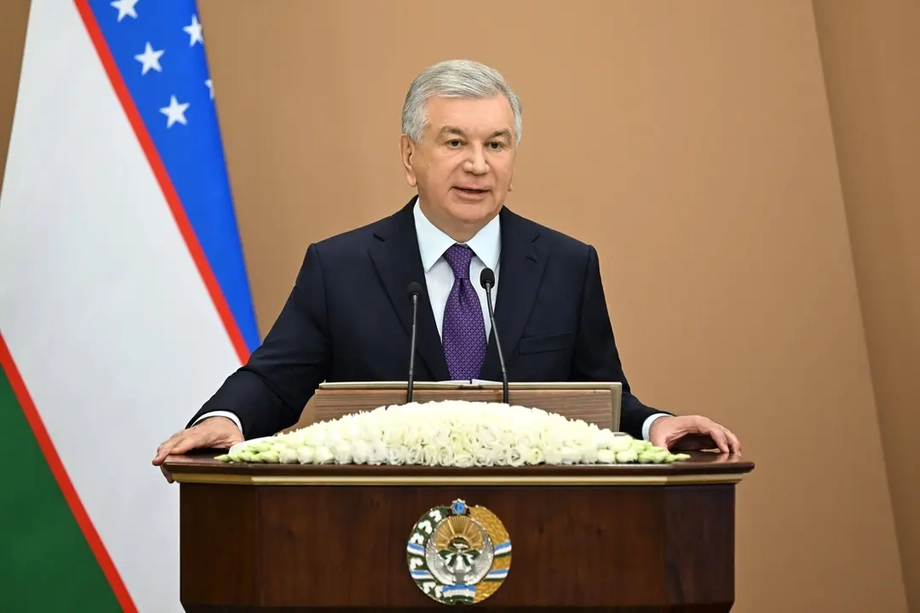
President Shavkat Mirziyoyev has instructed officials to complete the airport complex by September 2027, with Uzbekistan's Independence Day, September 1, identified as the opening target. The proposed agreement allows a construction period of up to three years, leaving the final contract and construction schedule central to how that target will be met.
What Limak and HBK will build
The consortium will be responsible for the passenger terminal, its concourse, the forecourt outside the building, parking and related infrastructure. A concourse is the area through which passengers move toward their boarding gates. The private partner will also manage the facilities it develops.
The government's official tender announcement, published by the Ministry of Economy and Finance, gives a more detailed description of the terminal: capacity for 1,200 international passengers per hour, counting arrivals and departures, plus 400 domestic passengers per hour. Award announcements describe the terminal more briefly as handling 1,200 passengers per hour.
The official design therefore provides for a combined hourly capacity of 1,600 passengers across international and domestic services. An hourly capacity measures how many people the building is designed to process during a busy period. Annual traffic will depend on airline schedules, demand and how frequently those busy periods occur.
The private partner's responsibilities also include the terminal surroundings, a specialized equipment building and a public catering complex. These facilities support the movement of passengers and the daily work needed to keep an airport functioning.
The runway stays with the state
Uzbekistan will build and operate the airfield complex, including the runway and apron, the area where aircraft park for boarding, unloading and servicing. The official tender announcement says aerodrome facilities will remain under public ownership and control.
The planned runway is 3.3 kilometers long and is intended to accommodate all types of aircraft. Around 370 hectares outside the city have been allocated for the airport and related infrastructure. The location is in the Qumsulton area of Bukhara district.
The wider project also includes cargo handling areas, a catering building and a fuel storage complex with capacity for 8,000 cubic meters on a site covering four hectares. Together, these plans extend the development beyond a passenger building to include facilities needed for aircraft operations and freight.
Deputy Transport Minister Jasurbek Choriyev said in May that the state had begun road construction, airfield infrastructure work and site preparation before the tender was announced. Public construction and the selection of the terminal operator have therefore proceeded on separate tracks.
How the partnership will work
Uzbekistan Airports is implementing the project with the Ministry of Transport and the Ministry of Economy and Finance under a presidential resolution dated August 30, 2024. The chosen structure is a public-private partnership using the Build-Transfer-Operate model, commonly shortened to BTO.
In a BTO arrangement, the private partner builds the agreed facilities, transfers them under the terms of the contract and then operates them for the agreed period. In Bukhara, the practical division is between passenger facilities managed by the consortium and an airfield built and operated by the public partner.
The 23-year term includes construction. If building work uses the full three years allowed, about 20 years would remain within that term for subsequent operation. The signed agreement will govern the precise timetable and the obligations of each partner.
For travelers, the division means different organizations will be responsible for closely connected parts of the same journey. The terminal operator will manage passenger facilities, while the state partner will manage the infrastructure used by aircraft.
Six bidders reached the final stage
The international competition used two stages: a Request for Qualifications, followed by a Request for Proposals. The first checks whether applicants have the experience and resources required for the project. The second seeks detailed proposals from those that qualify.
Uzbekistan Airports identified March 12, 2026, as the tender launch date; its earlier account of the qualification stage gave a start date of March 11. The ministry's official announcement set the application deadline at 18:00 Tashkent time on May 21, 2026.
Choriyev initially said the first stage was expected to finish around May 11. The published deadline and the subsequent account of the completed stage instead placed its conclusion on May 21.
The first stage attracted interest from 51 foreign companies and local enterprises, spanning countries in Europe, Asia, the Middle East and North America. Following technical, legal and financial assessment, six international bidders qualified to submit proposals. An interdepartmental tender commission evaluated the proposals and selected the Limak-HBK consortium.
How the project reached this point
Bukhara's airport plans have moved through an initial proposal for direct negotiations, a later competitive tender and several presentations to the president. The main milestones show both the change in partner selection and the scale of work planned:
- January 2024: The Cabinet of Ministers decided to select Ark Port as the private partner through direct negotiations, without a tender.
- May 2024: The new airport project was presented to Mirziyoyev with an estimated cost of $226 million.
- August 30, 2024: A presidential resolution established the framework cited for the current project.
- March 2026: The international tender opened, with the qualification deadline set for May 21.
- April 10, 2026: Mirziyoyev reviewed the airport plans and called for the facility to meet international standards fully.
- September 2027: The president's target for completing the airport complex, with Independence Day identified as the intended opening occasion.
The earlier proposed partner, Ark Port, is wholly owned by Sanoat Energetika Guruhi Enera, part of a group that includes Eriell Group, Enter Engineering and Saneg. The group has faced financial difficulties, and the government instructed it to sell assets outside its main businesses to repay debts to employees, the state budget and banks.
The current award follows a competition involving several qualified bidders, replacing the earlier approach of selecting a partner through direct talks.
Road and bus connections are part of the plan
A connecting route of 23.8 kilometers, commonly described as about 24 kilometers, is planned between the airport and central Bukhara. It includes 2.7 kilometers of newly constructed road, two road interchanges, nine underground crossings and eight bridges.
The project also includes plans for a bus rapid transit corridor stretching 5.5 kilometers. Bus rapid transit generally uses dedicated space or traffic priority to make buses faster and more reliable than services operating entirely in ordinary traffic.
For passengers, the journey between the terminal and the city will be part of the airport experience. The road and planned bus corridor give the project a transport role beyond aircraft movements, connecting the new site outside Bukhara with the place visitors and residents need to reach.
What the builders bring to Bukhara
Limak brings experience in both airport construction and operation. It operates the international airports serving Pristina in Kosovo and Dakar in Senegal, participated in the construction and operation of Istanbul Airport, and is building a new terminal at Kuwait International Airport.
HBK Contracting brings experience delivering major construction projects in Qatar. It was the main contractor for Lusail Stadium, which hosted the final of the 2022 FIFA World Cup.
The consortium combines airport operating experience with large construction experience. Its task in Bukhara will cover both the building phase and the management of passenger facilities during the partnership term.
More room for international travel
Bukhara's existing international airport handled 574,000 passengers in 2025, with international flights accounting for most of the traffic. Uzbekistan Airports says the new facility is intended to accommodate tourist traffic, expand international connections and support the region's tourism and aviation sectors.
Mirziyoyev has called for direct flights to Malaysia, Indonesia, Kuwait, Bahrain and Egypt. These are destinations sought by the government; the project announcements have not set out airline commitments or launch dates for those routes.
The ministry's tender announcement places the airport within the Uzbekistan 2030 Strategy and describes plans to expand capacity progressively for scheduled and charter flights across Eurasia. Scheduled flights run to published timetables, while charter services are arranged for particular travel programs or groups.
Bukhara's historic center, inscribed on the UNESCO World Heritage List in 1993, is a central reason for the tourism focus. More direct air connections could shorten journeys for visitors, while domestic capacity would serve travel within Uzbekistan.
The immediate milestone is the partnership agreement. Its construction schedule and financial terms will turn the tender result into a defined set of commitments, alongside the state's work on the runway, access route and other infrastructure needed for the planned 2027 opening.
Key Points
- Limak and HBK Contracting won the tender to build and operate passenger facilities at the new Bukhara airport.
- The proposed partnership lasts 23 years, including up to three years for construction.
- The official terminal plan provides capacity for 1,200 international and 400 domestic passengers per hour.
- The state will retain ownership and control of the airfield and will build and operate the runway and apron.
- The broader project estimate has risen from $226 million to about $300 million; the winning bid's financial terms remain undisclosed.
- The president has targeted September 2027 for completion, with Independence Day identified as the intended opening occasion.
- Plans include a connecting route of 23.8 kilometers and a bus rapid transit corridor of 5.5 kilometers.