A faster route between two historic cities
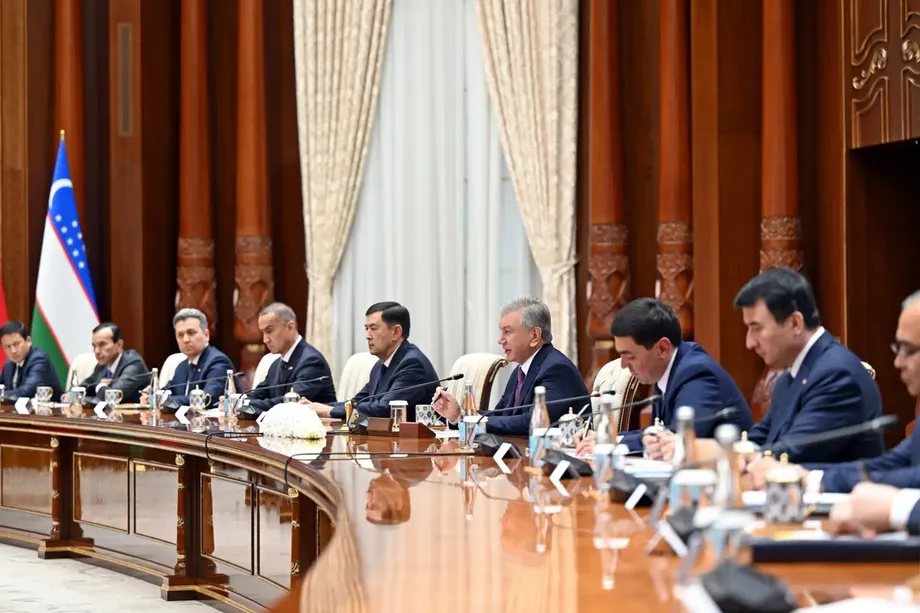
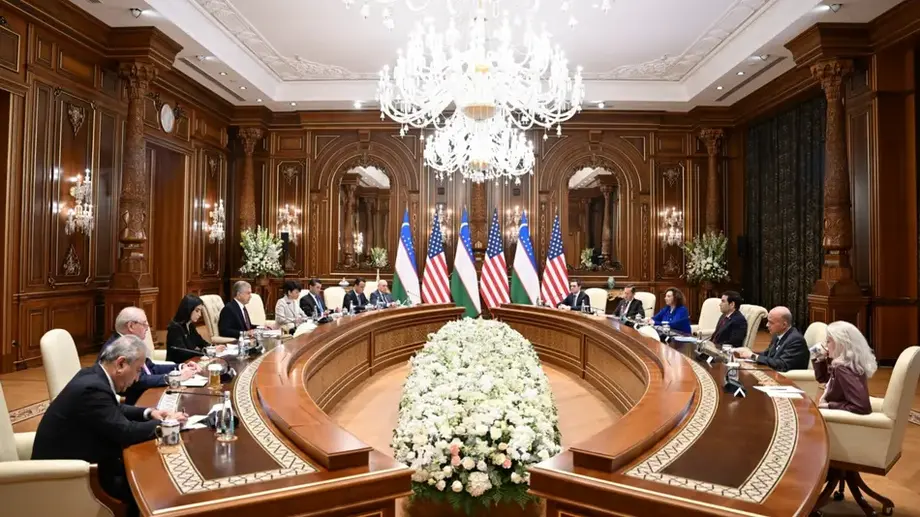
Uzbekistan plans to build a toll highway between Samarkand and Bukhara that could reduce the journey from around five hours to 90 minutes. The proposed road, with a cement-concrete surface, was discussed during President Shavkat Mirziyoyev's visit to Bukhara region on November 4, alongside a new railway line for high-speed trains and major investments in water services.
Contents
Presidential press secretary Sherzod Asadov said officials had been instructed to finish master plans for the road and railway projects and begin negotiations with potential partners. A master plan sets out the broad design and organization of a project, providing a basis for more detailed engineering and discussions about financing and construction.
The proposed travel time would save three and a half hours on each journey, a reduction of 70% from the current estimate of five hours. For someone making a return trip, that would mean seven fewer hours on the road if both journeys achieved the planned time.
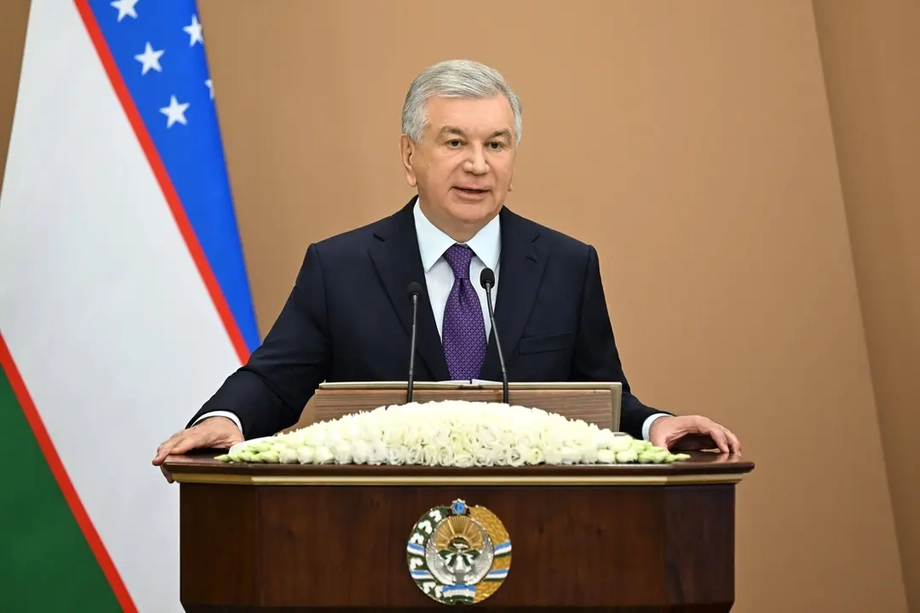
The highway forms part of a much wider package of initiatives for Bukhara. At the meeting, Mirziyoyev described the scale of the proposed investment and its intended effect on residents.
"We have come with new initiatives worth $30 billion that will bring positive changes to Bukhara's economy and people's daily lives," Mirziyoyev said.
The $30 billion figure covers the broader initiatives presented for the region. The transport and water projects discussed at the meeting have different budgets and schedules, with some already under way and others still being planned.
From an initial proposal to partner talks
Plans for the Samarkand–Bukhara toll road were first announced in January 2025. Turkish construction company IC İçtaş İnşaat signed a memorandum of understanding with Uzbekistan's Highways Committee to participate in developing the highway.
A memorandum of understanding records the parties' intention to work together. The next steps announced at the November 4 meeting were to complete the master plans and open negotiations with potential partners, moving the proposal toward a more detailed development framework.
The toll road would charge motorists for using it. For travelers, the practical trade would be a payment in return for the expected saving in time. The size of that payment will matter to people deciding how often they can use the route.
No opening date, toll rate, total highway cost or detailed alignment was given in the announcement. It also provided no construction timetable or journey time for the proposed railway. Those details will determine when residents can use the new connections and how much their journeys will cost.
Road and rail are being planned together
Samarkand and Bukhara would also be connected by a new railway line designed to accommodate high-speed trains. Officials were told to complete planning for both modes of transport, placing the road and rail proposals within the same regional transport discussion.
The 90 minute target applies to the proposed road journey. The railway is a separate project, intended to provide another way to travel between the cities. Its design, service arrangements and eventual timetable will shape the choices available to passengers.
For families, workers and businesses, a shorter road trip could make a return journey easier to fit into a single day. Passenger rail could provide another option for people who do not drive. The benefits will depend on how the projects are delivered, where access points are placed and what users pay.
Other highways have specific milestones
Bukhara's transport programme also includes work on existing roads. Reconstruction of the A-380 highway through the region is scheduled for completion in 2026. Work on a 69 kilometer section of the M-37 highway is scheduled to begin in 2027.
The M-37 project is estimated to cost $200 million and includes a 4.5 kilometer bypass around Bukhara city. A bypass gives vehicles a route around a city instead of requiring them to travel through its streets. Its usefulness will depend on how it connects with the surrounding road network.
The main announced milestones are:
- January 2025: Plans for the Samarkand–Bukhara toll highway were first announced.
- November 4: Mirziyoyev discussed the road and railway proposals in Bukhara and instructed officials to finish master plans and begin partner negotiations.
- 2026: Reconstruction of the A-380 through Bukhara region is scheduled for completion.
- 2027: Work is scheduled to begin on the M-37 project covering 69 kilometers and a bypass around Bukhara.
The A-380 and M-37 milestones concern different stages of work: completion for the former and the start of construction for the latter. Residents along those routes therefore face different waits before the planned improvements are finished.
Water investment reaches beyond transport
Drinking water and sewerage were another major focus of the meeting. A $385 million project is already being implemented with support from the Asian Infrastructure Investment Bank, while another $248 million is expected to be secured for a second phase.
Together, those amounts come to $633 million. The second phase represents about 39% of that combined figure, making the proposed additional funding a substantial part of the programme. The first project is under way; funding for the second phase is still expected.
Mirziyoyev said residents had been waiting for improvements to water infrastructure and instructed officials to speed up implementation. For households, the programme concerns two basic services: bringing drinking water through a shared supply network and carrying wastewater away through sewer pipes.
The water investments give the regional programme a direct household dimension alongside its transport ambitions. Faster journeys would change movement between cities, while water and sewer connections would affect daily life inside homes and neighborhoods.
What the water targets mean for residents
The projects are expected to improve drinking water supply for 1.7 million people and connect 775,000 residents to centralized sewerage services. The two figures describe different services, so they should be considered separately when assessing the programme's reach.
Centralized drinking water coverage is projected to rise from 80% to 95% of the region's population. In simple terms, the target is to move from serving about 80 out of every 100 residents to 95 out of every 100.
That is an increase of 15 percentage points. It would reduce the share outside the centralized network from 20% to 5%, or by three quarters. Improving supply for 1.7 million people can also involve work for residents already connected, because the stated target covers improvements in service as well as wider access.
The sewerage target addresses a different need. Connecting 775,000 residents to a shared wastewater network would extend the infrastructure used to collect sewage from homes and other buildings. Drinking water pipes bring water in; sewer pipes take wastewater away.
The next steps are planning and delivery
Officials now have several distinct tasks: complete the road and railway master plans, negotiate with potential partners, pursue the second phase of water funding and carry out projects with announced construction milestones. Each task affects when the promised benefits can reach residents.
The clearest near term transport benchmark is the scheduled completion of the A-380 reconstruction in 2026, followed by the planned start of M-37 work in 2027. For the new Samarkand–Bukhara connection, the immediate work remains project planning and negotiations.
Key Points
- The proposed toll highway could cut the Samarkand–Bukhara journey from five hours to 90 minutes, saving 70% of travel time.
- A new railway line for high-speed trains is also planned between the cities.
- Officials have been instructed to finish master plans and begin negotiations with potential partners.
- A-380 reconstruction is scheduled to finish in 2026; the $200 million M-37 project is scheduled to begin in 2027.
- A $385 million water project is under way, with another $248 million expected for a second phase.
- The water programme targets better supply for 1.7 million people and sewer connections for 775,000 residents.