Bangkok seeks talks alongside concrete border commitments
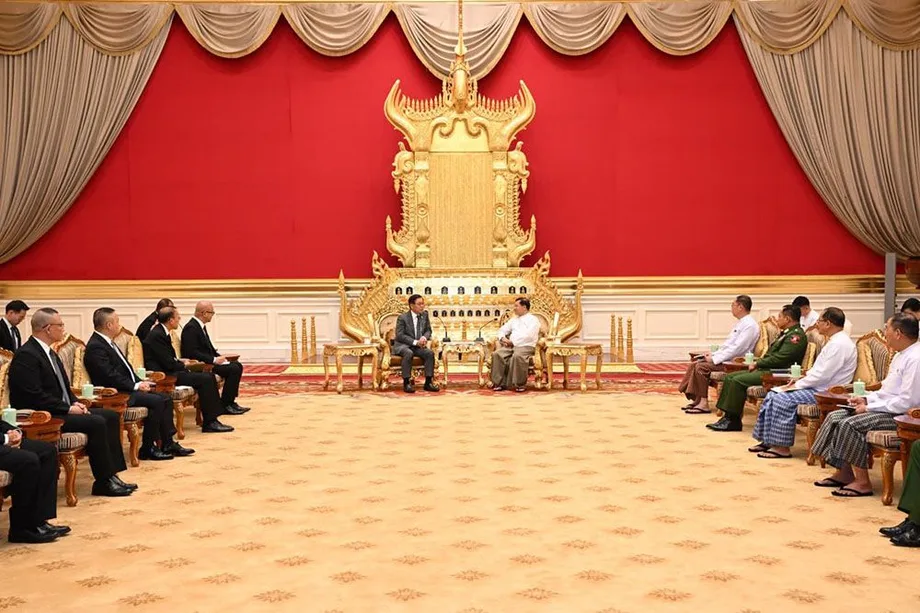
Thailand has offered to host talks between Myanmar's military leadership and the Karen National Union (KNU) and Karenni National Progressive Party (KNPP), following a November 12, 2026, visit to Naypyidaw that also secured promises on border security and a November 25–26 meeting on river pollution.
Contents
- Bangkok seeks talks alongside concrete border commitments
- Why the Karen and Karenni groups matter
- Border incidents bring urgency to the offer
- A security delegation with a wider agenda
- River pollution has the clearest next deadline
- Workers face remittance and passport pressures
- Thailand links dialogue to ASEAN engagement
- A mediation offer with a history
- The next steps and dates
- Key Points
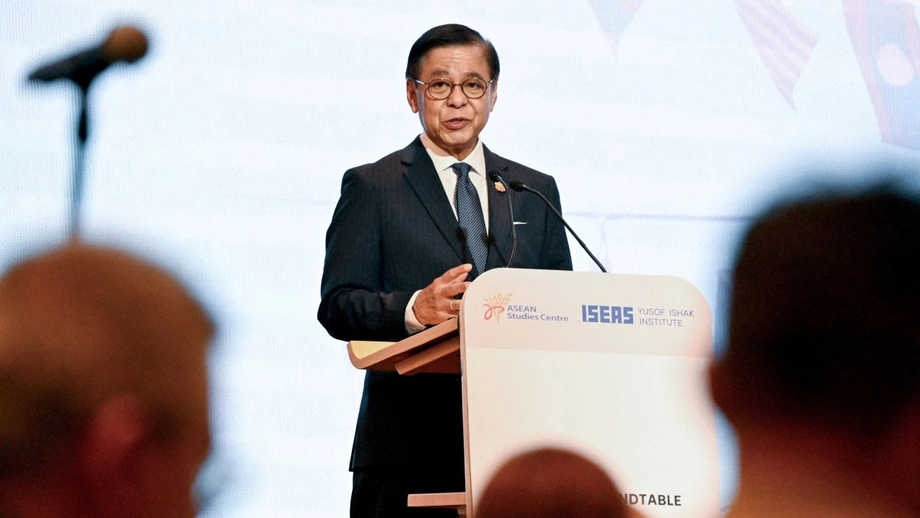
Thai Deputy Prime Minister and Foreign Minister Sihasak Phuangketkeow said Myanmar had agreed in principle to the proposal, including sending representatives to discussions in Thailand. The offer brings diplomacy with two armed opponents of Myanmar's military into a broader effort to protect Thai communities, restore trade and address problems flowing across the countries' 2,416 kilometre border.
The KNU and KNPP have not publicly accepted the proposal in the announcements described, and no date or detailed agenda for the proposed peace talks was given. Further coordination is required. Myanmar's willingness to send representatives leaves Bangkok with the task of securing participation and agreeing on what the parties would discuss.
Sihasak met Myanmar leader Min Aung Hlaing, Foreign Minister Tin Maung Swe and Defence Minister Lt. Gen. Yar Pyae, who chairs the National Solidarity and Peacemaking Negotiation Committee. That committee is the military leadership's body for negotiations with ethnic armed organisations.
Thailand is also seeking a gradual restoration of Myanmar's engagement with the Association of Southeast Asian Nations (ASEAN). Bangkok's immediate priorities, however, are practical: preventing further injuries from fighting, addressing polluted rivers and keeping Myanmar workers in legal employment. Each featured in the visit, giving the proposed talks a wider purpose than arranging a meeting between armed rivals.
Why the Karen and Karenni groups matter
The KNU and KNPP are among Myanmar's oldest ethnic armed organisations, with strong connections to areas beside Thailand. The KNU began its armed rebellion in 1949, while the KNPP began its struggle in 1957. Their histories make them established political and military actors, rather than organisations formed only after the latest coup.
Their armed wings, the Karen National Liberation Army and Karenni Army, signed bilateral ceasefire agreements with Myanmar's government in 2012. A ceasefire is an agreement to stop fighting; a bilateral agreement applies between the parties that sign it.
The KNU subsequently signed the Nationwide Ceasefire Agreement in 2015, while the KNPP did not. Both returned to fighting the military following the February 2021 coup. Their different experiences with past agreements matter for any new negotiation: Thailand is approaching two organisations with distinct records of participation in Myanmar's peace process.
Both are also founding members of the Steering Council for the Emergence of a Federal Democratic Union, established on March 30. Its other founders include the Kachin Independence Organization, Chin National Front, National Unity Government and Committee Representing Pyidaungsu Hluttaw, which represents elected lawmakers removed by the coup.
The coalition connects ethnic armed organisations with opponents seeking to restore elected government. Its stated federal goal concerns how power would be shared between a national government and Myanmar's constituent regions or states. Talks involving the KNU and KNPP would therefore take place alongside their commitments to a wider resistance alliance.
Border incidents bring urgency to the offer
Thailand warned Myanmar on November 2 that airstrikes against resistance forces near the frontier must respect Thai sovereignty and avoid injuring Thai nationals. Sovereignty means Thailand's authority over its own territory, including its airspace.
The warning followed incidents that had already reached Thai communities. A Thai woman was hospitalised in Mae Sot on October 29 after artillery fire from Myanmar's Myawaddy Township. Thai authorities also reported property damage. Myanmar's military blamed ethnic armed groups and forces supporting democracy for that injury.
Thailand's earlier border warning also followed an October 31 airstrike on a KNU base near Hpapun Township, which caused fear across the frontier in Mae Hong Son Province. The incidents involved different locations, making safety a concern along more than one stretch of the border.
Sihasak said Min Aung Hlaing and Myanmar's foreign and defence ministers expressed regret over border incidents and promised preventive measures. The two countries agreed to hold a special Regional Border Committee meeting, adding an urgent discussion to a mechanism that normally meets annually.
Thai Prime Minister Anutin Charnvirakul confirmed Myanmar's pledge on November 13. He said military and government discussions had produced commitments to continuous coordination and information sharing between security agencies. For residents, the immediate measure of progress will be whether fighting stops reaching homes, workplaces and communities on the Thai side.
A security delegation with a wider agenda
Sihasak arrived at Naypyidaw International Airport at 10:15 a.m. on November 12 with senior military and security officials. His delegation included Deputy Supreme Commander Gen. Chidchanok Nuchchaya, National Security Council Secretary General Gen. Chaiyapruk Duangpraphat and Third Army Region Commander Lt. Gen. Worathep Boonya.
The delegation's composition reflected the range of issues under discussion. Thailand wanted to address military operations affecting its territory, Myanmar's internal situation, obstacles to border trade and Thai exports, and pollution in the Kok and Sai rivers.
Online scam operations and other crime crossing the border were also discussed, along with energy cooperation. These issues put civilian agencies, security forces and businesses into the same diplomatic conversation. Trade needs usable border routes, while action against criminal operations requires cooperation across jurisdictions.
The special border committee meeting gives security officials a channel to work on preventing incidents. The proposed peace talks would serve a different purpose: opening discussion between Myanmar's leadership and armed opponents whose conflict continues beside Thailand.
River pollution has the clearest next deadline
Thailand and Myanmar agreed to bring forward a meeting of the Joint Working Group on Water Quality Management in Border and Transboundary Rivers to November 25–26. The talks are intended to identify concrete responses to toxic contamination, including suspected pollution from mining areas in Myanmar's Shan State.
The urgency was visible in Thailand's November 12 pollution talks. Tests of untreated Sai River water found arsenic at 0.3 milligrams per litre, compared with Thailand's surface water standard of 0.01 milligrams per litre, a level 30 times the standard. Farmers in 39 villages use the Sai and Ruak rivers to irrigate about 60,500 rai, or 24,000 acres, of rice fields.
Myanmar proposed additional water monitoring stations, particularly near mining sites suspected of releasing chemicals. Thailand also wants Chinese technical assistance and help bringing representatives from Shan State into the discussions. China is expected to support a water quality laboratory at Mae Fah Luang University.
Sihasak, explaining why action upstream matters, said:
Effective solutions must address the source of the problem.
A possible temporary suspension of mining operations was left for the working group to discuss. The next meeting therefore has a specific task: moving from measurements and expressions of concern to decisions about activities that may be contaminating water used downstream.
Workers face remittance and passport pressures
Myanmar's requirement that citizens working overseas send at least 25% of their earnings through approved financial channels was another major issue. Workers also face an additional 2% income tax. Failure to comply could bring legal action and restrictions on overseas employment for three years.
Myanmar's leadership told Sihasak that the remittances were intended for workers' families rather than the government. Thailand raised a separate financial concern: converting earnings at the official exchange rate could reduce the amount families receive.
Min Aung Hlaing said Myanmar would consult its Labour Ministry and central bank on the exchange rate issue. The remittance requirement and income tax are separate obligations. The first directs part of a worker's earnings through specified channels; the second is a charge on income.
Sihasak warned that difficulties meeting the requirements could prevent passport renewals and push workers into irregular employment in Thailand. That would affect their ability to retain legal status and receive workplace protections.
The discussions followed alleged tax demands raised at Thailand's Parliament on November 2, when employer representative Nilubon Pongpayom said Myanmar workers were being asked to pay about 6,000 baht in income tax while obtaining identity documents. Her complaint also described document fees and unofficial appointment payments, showing how several costs can accumulate around the paperwork needed to work legally.
Thailand links dialogue to ASEAN engagement
Sihasak described Thailand's approach as "Calibrated Re-engagement", meaning a gradual restoration of Myanmar's interaction with ASEAN. Bangkok wants Myanmar to resume participation at foreign minister level, allowing direct discussion with officials responsible for policy.
Myanmar's political leadership has been excluded from ASEAN summits and foreign ministers' meetings following its failure to implement the Five-Point Consensus agreed in April 2021. Lower level officials have continued to participate in some meetings. The restrictions concern political representation rather than Myanmar's membership of the organisation.
The consensus calls for an end to violence, dialogue among all parties, an ASEAN special envoy, humanitarian assistance and an envoy visit to meet the parties concerned. Thailand's offer to host talks connects most directly with the commitment to dialogue.
Sihasak said Myanmar also had responsibilities in any return to fuller participation:
Myanmar must also make efforts to return to ASEAN.
His latest proposal follows his call for ASEAN action at a November 5 roundtable in Singapore. There, he sought a permanent crisis coordination team and more practical direction for an envoy whose appointment changes with ASEAN's rotating chair. Hosting discussions would give Thailand a concrete initiative to present alongside those institutional proposals.
A mediation offer with a history
Thailand made a similar offer on April 23, 2024, when then Foreign Minister Parnpree Bahiddha-Nukara visited Mae Sot. He said initial discussions had taken place with Myanmar's military government and ethnic groups and that they knew Thailand was ready to mediate. Thailand also sought ASEAN involvement.
That initiative came during fighting around Myawaddy, across the border from Mae Sot. The Karen National Liberation Army and its allies had captured Infantry Battalion 275 on April 10. Subsequent fighting included an attack on a military convoy and a helicopter strike.
Tak provincial health authorities reported 735 people who had fled the conflict, including 255 children, with 114 receiving treatment in local hospitals as of the Monday before Parnpree's visit. Children represented about 35% of that reported group. The border command recorded aerial fighting between 1.5 and 12 kilometres from Thailand that week, while reporting no effects on Thai territory.
Chalida Tajaroensuk, director of the People's Empowerment Foundation, argued at the time for a longer term Thai strategy, participation by a broader range of Myanmar stakeholders and humanitarian assistance through multiple locations. Her proposals addressed the same practical challenge facing the new initiative: a conflict involving several political and armed organisations, with needs extending beyond a single border town.
The next steps and dates
Thailand now has several parallel tracks: arranging possible political talks, strengthening military coordination, preparing pollution measures and seeking a regional response. The water working group has a scheduled meeting; arrangements for the peace discussions and special border committee meeting still require coordination.
The key developments run across several dates:
- April 23, 2024: Parnpree announced Thailand's readiness to mediate during a visit to Mae Sot.
- November 2, 2026: Thailand warned against airstrikes violating its territory or injuring its nationals.
- November 12: Sihasak visited Naypyidaw and discussed talks with the KNU and KNPP, border security, pollution and labour concerns.
- November 13: Anutin confirmed Myanmar's pledge to prevent its conflict from affecting Thailand.
- November 25–26: The joint working group is scheduled to discuss river pollution.
ASEAN foreign ministers are expected to discuss Myanmar ahead of the 49th ASEAN Summit in Manila. The schedule accompanying the mediation announcement gives November 15–17, while earlier summit scheduling gave November 16–18. The regional discussions provide Thailand with an immediate opportunity to seek support for its approach.
For the proposed talks, the next concrete development would be agreement by the intended participants on attendance and an agenda. For Thai border communities, progress also means fewer dangerous incidents, safer river water and workable documentation rules for migrant workers. Bangkok is trying to advance those immediate needs alongside a political conversation about ending the fighting.
Key Points
- Thailand offered to host talks involving Myanmar's military leadership, the KNU and the KNPP.
- Myanmar agreed in principle, but the announcements included no acceptance from the two armed groups or date for talks.
- Myanmar promised measures to prevent fighting from affecting Thailand, and both countries agreed to a special border committee meeting.
- A joint river pollution meeting is scheduled for November 25–26.
- Thailand raised concerns about Myanmar workers' remittance requirements, income tax and passport renewals.
- Bangkok wants progress on dialogue to support Myanmar's gradual return to fuller ASEAN engagement.