Temple dispute widens beyond wartime damage
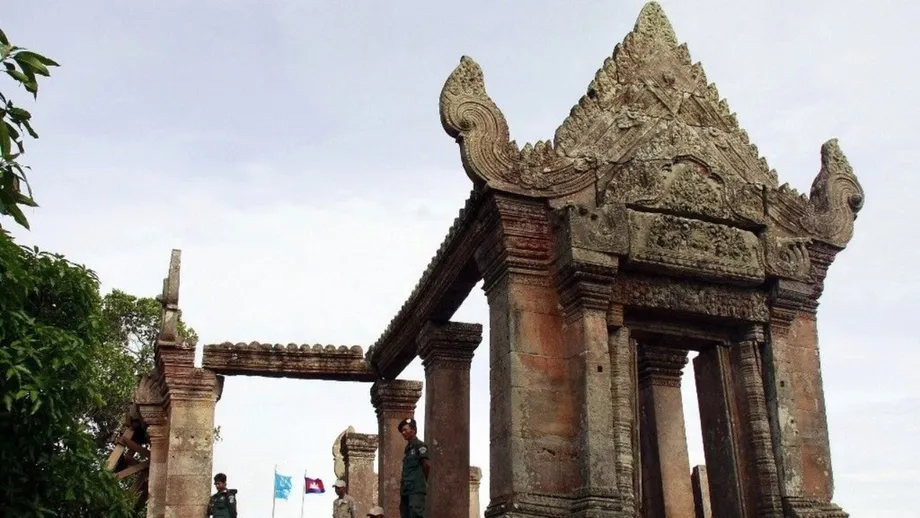
Cambodia's Ministry of Culture and Fine Arts on October 22, 2026, demanded an end to Thai activities at Tamone Thom, Ta Krabey and K'nar temples, rejecting allegations that Cambodia had used ancient monuments as military bases. Its protest covered the presence of Thai forces, demining, electricity networks, construction and restoration work undertaken without Cambodian consent.
Contents
- Temple dispute widens beyond wartime damage
- What Cambodia wants stopped
- Thailand alleges weapons were placed at Preah Vihear
- What the damage figures describe
- Why the heritage terms matter
- Both sides invoke international law
- Thailand's heritage registrations add another dispute
- How the dispute developed
- K'nar objects and the role of border talks
- Key Points
The statement brought together several disputes: responsibility for damage during fighting in July and December 2025, control over work at border heritage sites, and the return of archaeological objects that Cambodia says were taken from K'nar Temple to Thailand. The ministry urged both countries to use established negotiations, particularly the Joint Boundary Commission (JBC), to address outstanding border issues.
Thai Army spokesman Maj Gen Winthai Suvaree has rejected accusations that Thai forces attacked Preah Vihear Temple unlawfully. He accused Cambodian forces of placing weapons and military equipment at or around the World Heritage site and said Thai operations targeted immediate threats in self-defence.
Cambodia's response was categorical: its temples serve cultural, historical, religious, conservation, research, educational and tourism purposes, not military ones. The ministry said Thai allegations misled the public and diverted attention from destruction caused by Thai armed forces.
The disagreement now reaches beyond what happened during combat. Thailand has also registered 79 additional ancient sites under its domestic heritage protections, including border temples whose registration Cambodia has protested. For the two governments, decisions presented as conservation measures are becoming part of a wider argument over sovereignty and authority.
What Cambodia wants stopped
Cambodia's October 22 statement objected to the continued presence of Thai forces at the named temples and other archaeological sites along the border. It also challenged activities by Thai civilian authorities, extending the protest beyond military deployments.
The ministry listed demining operations, infrastructure development, electricity networks, restoration, construction and other interventions. Its central objection was that Thailand was acting at sites Cambodia regards as Cambodian territory without securing Cambodia's agreement.
Demining removes explosive hazards, while restoration repairs damaged buildings. Cambodia's complaint concerns who authorises and carries out that work. Even an activity intended to preserve a monument can become politically contentious when two governments contest authority over its location.
The ministry said unilateral projects risked undermining peaceful efforts to settle outstanding border issues. It called for Thailand to stop the activities, respect Cambodia's sovereignty and territorial integrity, and bring unresolved matters into bilateral negotiations.
Thailand alleges weapons were placed at Preah Vihear
Maj Gen Winthai accused Cambodian forces of deploying artillery, grenade launchers, ammunition depots and systems used to counter drones at or around Preah Vihear. The Thai Army said those positions had been used to attack Thai troops and civilian communities.
The distinction between the temple itself and the surrounding area matters to understanding the allegation. Thai statements described weapons both at the site and in nearby positions. Cambodia rejected the broader claim that its ancient temples had been used for military purposes.
Winthai said Thai forces used precision weapons against military targets posing an immediate threat. The army denied having a policy of deliberately attacking civilians or ancient monuments and argued that its actions complied with international law.
Colonel Ritcha Suksuwanon, a deputy spokesman for the Thai Army, renewed the allegation about military use of Preah Vihear on October 21. Cambodia's ministry responded the following day. The exchange shows that the argument over the 2025 fighting remained active well after the clashes themselves.
What the damage figures describe
The Cambodian Mine Action Centre (CMAC) attributed 1,599 artillery shells fired at Preah Vihear to Thai forces across the two episodes of fighting in 2025. Its figures also recorded 501 firing directions. Those are different measurements: one counts shells, while the other describes directions of fire.
Cambodia's culture ministry recalled extensive damage to Preah Vihear and other heritage sites during the July and December clashes. It called for restraint, accountability and compliance with international conventions protecting cultural property.
Cambodia's public relations team also cited a UNESCO assessment said to have been published in early September 2026. According to Cambodia's description, the findings identified damage to Preah Vihear's integrity, authenticity and outstanding universal value, and a serious, specific threat requiring urgent major conservation work.
The Thai Army disputed Cambodia's interpretation of an assessment it described as a draft involving the World Heritage Centre and the International Council on Monuments and Sites (ICOMOS). It instead attributed harm to the site's heritage value to Cambodia's alleged military use. The assessment's final status and full wording remain unresolved in the public exchange.
Why the heritage terms matter
Preah Vihear's World Heritage status makes the condition of its historic fabric an international conservation concern. The terms used in the damage assessment describe different aspects of what could be lost when a monument is struck.
Integrity concerns whether a heritage site retains the elements needed to express its importance. Authenticity concerns the credibility of its historic features, such as original materials and design. Outstanding universal value means the cultural importance that makes a place exceptional beyond the borders of the country where it stands.
A damaged structure can therefore present more than an engineering problem. Repairs may help keep a building standing, while the loss of original stonework can also affect the historical evidence that researchers, conservators and visitors come to study.
Cambodia said its conservation work was focused on preventing further damage, protecting the temple's structure and preparing for future repairs. That sequence puts immediate stabilisation before larger restoration projects, reflecting the ministry's concern that further deterioration could compound the damage already sustained.
Both sides invoke international law
Cambodia reaffirmed its commitments under the 1954 Hague Convention for the Protection of Cultural Property in the Event of Armed Conflict and the 1972 World Heritage Convention. The first addresses protection during war; the second provides the international framework for safeguarding places recognised for their exceptional cultural or natural importance.
Thailand also invoked the 1954 Hague Convention. Winthai argued that military use could affect the protection afforded to cultural property and accused Cambodia of compromising the temple's protected status by deploying weapons there.
The Thai Army separately cited Article 51 of the United Nations Charter, which recognises the right of self-defence following an armed attack. It said its operations were directed at threats from Cambodian military positions.
Self-defence and the protection of cultural property address different legal issues. Article 51 concerns a state's use of force in response to an attack, while rules protecting cultural sites concern how military operations are conducted. The competing positions therefore turn on specific factual claims about weapons, targets, attacks and damage, alongside the countries' legal arguments.
Thailand's heritage registrations add another dispute
Thailand's Fine Arts Department said Culture Minister Sabeeda Thaiseth issued 11 announcements registering 79 additional ancient sites. The registrations were published in the Royal Gazette and took effect on May 9. They covered temples, archaeological sites, cave paintings and ruins from the Khmer era across northern, northeastern and southern Thailand.
Nine of the sites were registered in Surin province, including Prasat Ta Muen and Prasat Ta Kwai near the Cambodian border. Nine out of 79 is about 11 percent of the newly registered total. Cambodia protested the registration of border sites, linking the action to its sovereignty concerns.
The announcements also covered locations in Ubon Ratchathani, Nakhon Phanom, Mukdahan, Tak, Yala, Narathiwat, Ranong, Buri Ram, Si Sa Ket and Amnat Charoen. The scale of the programme shows that Thailand placed the contested registrations within a broader national heritage initiative.
Sabeeda said registration would strengthen conservation, restoration and protection against encroachment or destruction. The Fine Arts Department allocated 20 million baht for renovation of Prasat Ta Kwai over two years after damage during the recent conflict. Cambodia's objection to unilateral restoration places such spending within the argument over who may approve work at disputed border sites.
How the dispute developed
The latest statements connect fighting in 2025 with conservation assessments, domestic heritage decisions and renewed military allegations. The principal dates are:
- July 2025: Armed clashes caused damage to Preah Vihear and other cultural sites, according to Cambodia's culture ministry.
- December 2025: Further fighting caused additional heritage damage, the ministry said.
- May 9: Thailand's registrations of 79 additional ancient sites took effect.
- Early September 2026: Cambodia said a UNESCO assessment documented serious damage to Preah Vihear.
- October 21, 2026: Thai Army deputy spokesman Colonel Ritcha Suksuwanon renewed allegations of military use at the temple.
- October 22, 2026: Cambodia's culture ministry rejected the allegations and protested Thai activities at border heritage sites.
The sequence explains why the current disagreement includes both responsibility for past destruction and authority over present conservation work. Cambodia is seeking accountability for damage while also demanding that Thailand stop projects it regards as unauthorised.
K'nar objects and the role of border talks
Cambodia renewed its demand for the return of archaeological objects it says were removed from K'nar Temple and transported to Thailand. That claim adds movable heritage to a dispute otherwise centred on temples, land and construction.
Archaeological objects matter partly because of their connection to the place where they were found or used. Removing them can separate physical evidence from the setting that helps explain its history. Cambodia's demand seeks the return of that material as well as recognition of its authority over the site.
The ministry identified the Joint Boundary Commission as a channel for resolving outstanding issues peacefully. A bilateral mechanism allows the two countries to address their border disagreements through direct discussions rather than competing unilateral actions at the temples.
Cambodia described the monuments as part of both its national identity and humanity's shared heritage. Its requested outcome combines several concrete steps: an end to the disputed activities, the return of objects from K'nar, respect for cultural protection rules and negotiations over unresolved border questions.
Key Points
- Cambodia's October 22, 2026, statement rejected allegations that its ancient temples served as military bases.
- The ministry protested Thai troop presence, demining, construction, electricity networks and restoration at border heritage sites without Cambodian consent.
- Thailand alleged weapons deployments at or around Preah Vihear and said its operations were acts of self-defence.
- CMAC attributed 1,599 artillery shells and 501 firing directions at Preah Vihear to Thai forces during two episodes of fighting in 2025.
- Cambodia cited a UNESCO damage assessment; Thailand disputed Cambodia's interpretation and described the assessment as a draft.
- Thailand registered 79 additional ancient sites and allocated 20 million baht for renovation of Prasat Ta Kwai over two years.
- Cambodia sought the return of objects from K'nar Temple and urged peaceful negotiations through the Joint Boundary Commission.