New ministers face a test of party support
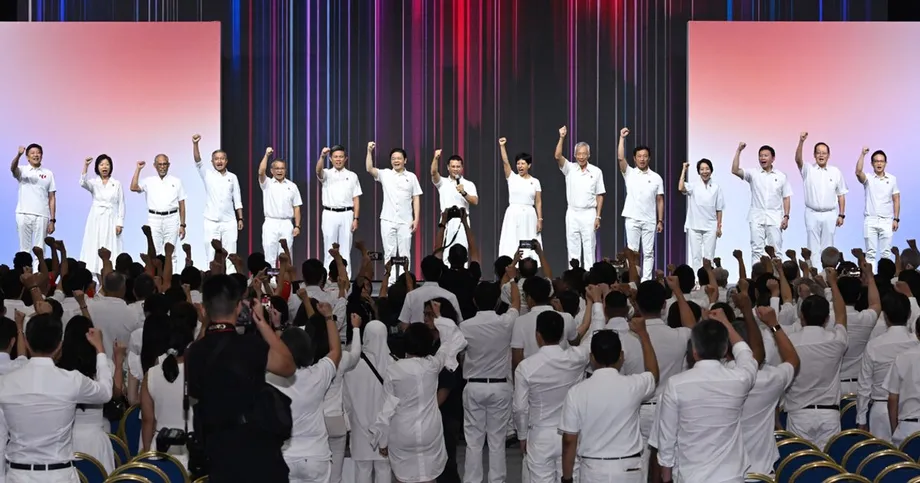
More than 2,000 People's Action Party cadres are expected to elect its 39th central executive committee on Sunday, Oct 25, 2026, giving Prime Minister Lawrence Wong an opportunity to bring newer ministers into the ruling party's top decision making body. Transport Minister Jeffrey Siow, Culture, Community and Youth Minister David Neo, and Acting Manpower Minister Jasmin Lau are among the names political observers expect to enter.
Contents
- New ministers face a test of party support
- How the party chooses its inner circle
- What the current committee shows
- Why Siow, Neo and Lau are being watched
- Renewal is expected to come in stages
- Senior members face competing demands
- Two party offices could offer succession clues
- Will candidates outside Parliament retain a place?
- How earlier newcomers reached the top table
- Key Points
The three ministers are among the PAP's 27 MPs serving their first parliamentary term. None currently sits on the central executive committee, known as the CEC. Zaqy Mohamad, the acting minister in charge of Muslim affairs, has already joined: the PAP records his appointment to the existing committee on July 22, 2026.
The election will be Wong's first CEC contest since leading the PAP through the 2025 General Election as prime minister. The party won 65.57 per cent of the vote, leaving its leadership with little immediate electoral pressure for a major overhaul. Observers instead expect a gradual shift that gives newer figures more responsibility while retaining experienced colleagues.
Wong has set a longer timetable for renewal. At the party's 2025 convention, he said he hoped the outline of its next generation of leaders would emerge by the next general election, due by 2030. This October's vote and the next CEC election in 2028 are opportunities to develop that team.
How the party chooses its inner circle
PAP cadres are party members entrusted with voting in internal leadership elections. They choose 12 CEC members, rather than directly assigning posts such as chairman or treasurer. Those responsibilities are allocated within the committee after the election.
The sitting CEC typically puts forward about 19 candidates, including roughly seven recommended as core leaders. The 12 candidates receiving the most votes are elected. By custom, the next two are co-opted, meaning they are added through appointment rather than winning one of the elected seats.
Up to four more members can then be co-opted, taking the committee to its maximum of 18. At that size, elected members hold two thirds of the seats and appointed members hold one third. The arrangement combines a vote among cadres with room to bring in people whose experience or responsibilities the leadership wants represented.
Malminderjit Singh, managing director of political consultancy Terra Corporate Affairs, said newcomers still need broad cadre support despite the option of co-option. Inclusion on a recommended list shows backing from senior leaders; the ballot tests support across the wider party organisation.
What the current committee shows
The PAP's official CEC membership list names Desmond Lee as chairman, Masagos Zulkifli as vice chairman and Wong as secretary-general. Chan Chun Sing is the sole assistant secretary-general. Ong Ye Kung is treasurer, Chee Hong Tat is assistant treasurer, and Grace Fu and Edwin Tong are organising secretaries.
The list also records how the committee developed after its November 2024 election. Chee and Tan See Leng were co-opted on Nov 24, 2024. Desmond Choo, Lam Pin Min, Ng Chee Meng and Sim Ann followed on Dec 4. Zaqy's appointment came in July 2026. The current roster contains 18 members.
The party separately names Alex Yam, Desmond Tan Kok Ming, Low Yen Ling and Tan Kiat How as assistant organising secretaries. These roles show that organisational work extends beyond the CEC membership itself.
With only 18 places available, bringing several newcomers into the committee requires choices about existing members. The 27 MPs in their first term alone outnumber the maximum committee size by nine, before experienced ministers and other party figures are considered.
Why Siow, Neo and Lau are being watched
The July Cabinet reshuffle gave Siow and Neo full ministerial responsibilities and made Lau acting manpower minister. Goh Pei Ming was promoted to senior minister of state. Those appointments widened the group from which Wong can draw future party leaders.
Dr Teo Kay Key, a senior research fellow at the Institute of Policy Studies, said the time since the 2025 General Election would have given Wong a clearer understanding of how his team works together and which responsibilities suit different people. She expects newer or younger ministers to take a greater role in steering the party.
Independent political observer Felix Tan expects Siow, Neo and Lau to enter the new committee, alongside Zaqy's continued involvement. He described that prospect as a natural progression reflecting their growing responsibilities in government and the party.
CEC membership would give these ministers influence over party membership, cadre selection and organisational direction. For recruits from the public service, where political activity is restricted, it also provides a route to build relationships with activists. Those relationships matter when organising election campaigns and serving residents between elections.
Renewal is expected to come in stages
Singapore Management University associate professor of law Eugene Tan expects Wong to make changes while retaining the trust of his fourth generation colleagues. Labels such as fourth and fifth generation describe successive groups of political leaders, rather than formal party offices.
Eugene Tan said the next internal election gives Wong room to introduce younger leaders gradually:
He has time with another CEC election due in 2028. Incremental change is likely the theme. It will be continuity amid change.
Eugene Tan also expects the committee could include more women and members of minority communities. Felix Tan raised another possibility: one or two MPs in their first term who hold no government appointment could enter, giving them a larger role in the party before any move into government.
Earlier transitions followed different patterns. After his first general election as prime minister in 2006, Lee Hsien Loong retained a strong core of third generation leaders and kept Lim Boon Heng as party chairman. In 1992, Goh Chok Tong became secretary-general two years after becoming prime minister, while Lee became first assistant secretary-general. Singh regards that appointment as an early signal of Lee's place in the succession.
Senior members face competing demands
The three oldest members of the current committee are Senior Minister Lee Hsien Loong, 74, Senior Minister K Shanmugam, 67, and Foreign Affairs Minister Vivian Balakrishnan, 65. Their places are being watched because retaining senior experience and making room for newcomers draw on the same limited number of seats.
Eugene Tan expects Lee to be elected again, describing the immediate past secretary-general as a link between the third and fourth generations. He nevertheless considers it possible that one or more of the three senior figures could leave if space is needed for younger leaders.
Felix Tan expects both senior ministers to remain. He argues that Wong has favoured keeping experienced leaders in his governing team and that their knowledge remains valuable to the party's organisation and leadership development.
Previous departures illustrate several possible routes. Khaw Boon Wan left the CEC in 2018 and retired from politics at the 2020 General Election. Yaacob Ibrahim and Lim Swee Say left after becoming backbench MPs. Gan Kim Yong, by contrast, continued in senior government office after leaving the committee. Teo Chee Hean and Tharman Shanmugaratnam also served as senior ministers without CEC membership.
Two party offices could offer succession clues
Chan Chun Sing, the coordinating minister for public services and defence minister, currently holds the PAP's only assistant secretary-general post. Singh said an appointment of a second assistant secretary-general would be worth watching because it could broaden the senior leadership group.
Under Lee Hsien Loong, Teo Chee Hean and Tharman Shanmugaratnam served as first and second assistant secretaries-general. Singh said a second appointment under Wong could indicate who is being prepared for greater responsibility, including a possible future deputy prime minister if Gan eventually steps aside.
Observers also see Zaqy as a potential successor to Masagos as party vice chairman. Zaqy's appointment to lead Muslim affairs and his July entry into the CEC have already increased his responsibilities.
Felix Tan said such a change could give the next generation of Malay-Muslim leaders more room to establish their profiles in the party and community. He also said Masagos could continue contributing in other ways. These possible changes remain observers' expectations; the new membership and officeholders have yet to be announced.
Will candidates outside Parliament retain a place?
Every CEC term since 2020 has included people who were not MPs. After the 2020 General Election, Ng Chee Meng and Victor Lye were co-opted following defeats in Sengkang GRC and Aljunied GRC respectively. Alex Yeo, who also contested Aljunied, joined Ng through co-option in 2022.
Ng and former Sengkang teammate Lam Pin Min were co-opted after the 2024 election. Ng, Lye and Yeo subsequently entered Parliament after winning at the 2025 General Election.
Eugene Tan expects Wong to retain a place for a candidate outside Parliament, arguing that it gives residents in constituencies the PAP did not win a voice within the party's leadership. He anticipates one unsuccessful election candidate this time and suggests that, with Lam coming from Sengkang, another choice could come from Aljunied or Hougang. He also noted that Ng's earlier inclusion was primarily linked to his role as labour chief.
Singh is less certain that this practice will continue in the next committee. He said some candidates were previously brought in to strengthen their party standing before the general election. The priority may now shift toward succession planning and newer government officeholders. Felix Tan sees continuing value in candidates outside Parliament as future contenders and as people who can recruit and mentor others.
How earlier newcomers reached the top table
The PAP has used both election and co-option to develop leaders during their first parliamentary term. The record shows different speeds of entry across successive groups of new MPs:
- 2011: Heng Swee Keat, Chan Chun Sing and Tan Chuan-Jin joined the CEC around six months after entering Parliament, as senior figures including Lee Kuan Yew and Goh Chok Tong left.
- 2012 to 2014: Chan and Heng won elected places in 2012, when Wong was co-opted. Tan Chuan-Jin won an elected place in 2014.
- 2016 to 2018: Ong Ye Kung was co-opted in 2016, while Ng Chee Meng was elected in 2018. Both entered during their first parliamentary term.
- 2022: Tan See Leng was co-opted, becoming the only member of the 2020 intake to enter the CEC during that parliamentary term.
- Nov 24, 2024: Cadres elected the 38th CEC. Chee Hong Tat and Tan See Leng were co-opted after receiving the 13th and 14th highest vote totals.
- July 22, 2026: Zaqy Mohamad was co-opted into the current committee.
- Oct 25, 2026: Cadres are scheduled to elect the 39th CEC, with another internal election due in 2028 and the general election due by 2030.
October's choices will determine who gains experience directing the party before the next national campaign. The immediate task is to combine cadre support, government responsibilities and organisational experience within a committee whose size is fixed.
Key Points
- More than 2,000 cadres are expected to choose 12 elected CEC members on Oct 25.
- Up to six members can be co-opted, bringing the committee to a maximum of 18.
- Jeffrey Siow, David Neo and Jasmin Lau are among the potential newcomers; Zaqy Mohamad joined in July 2026.
- Observers expect gradual renewal, with senior leaders continuing to provide experience.
- A second assistant secretary-general, the vice chairmanship and places for candidates outside Parliament are key decisions to watch.
- The next CEC election is due in 2028, ahead of a general election due by 2030.