Nine electricity distributors anchor the latest push
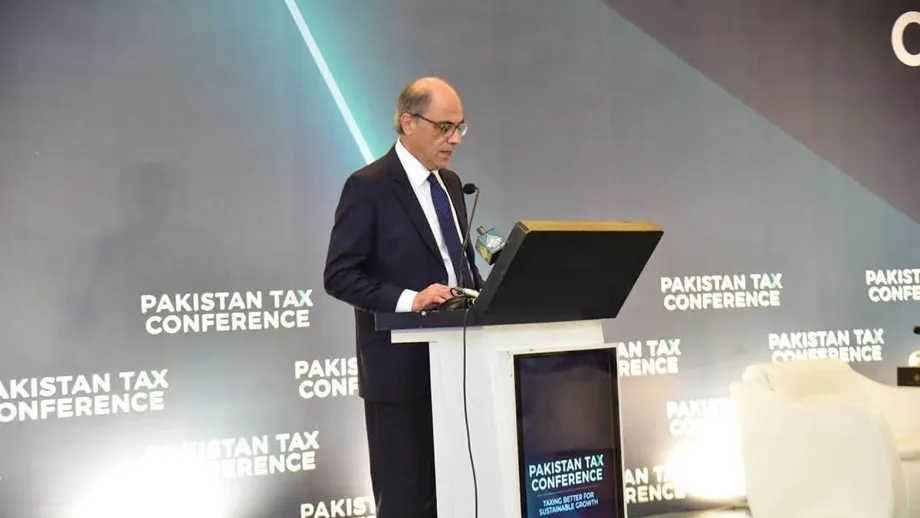
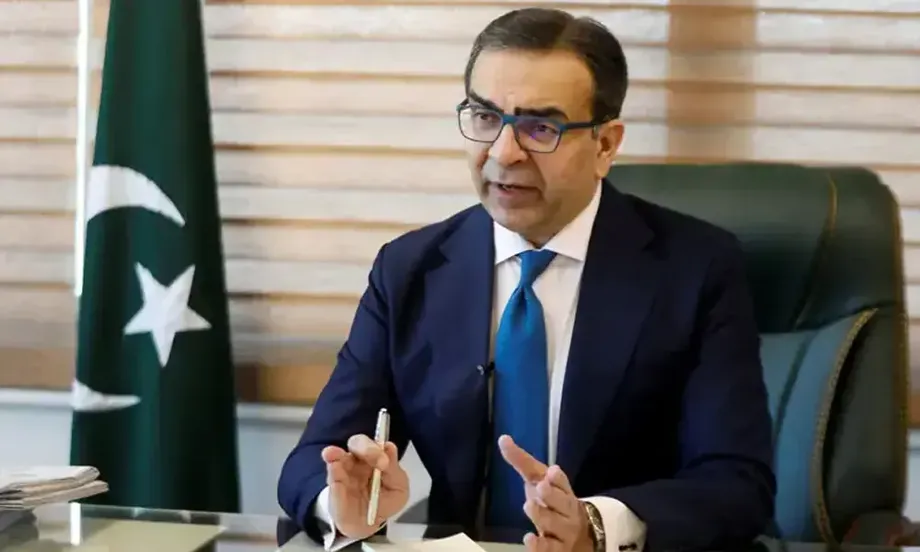
Pakistan is working on the privatisation of 17 state enterprises, including nine electricity distribution companies, while pursuing private management of its three major airports in Islamabad, Karachi and Lahore. Muhammad Ali, adviser to the prime minister on privatisation and chairman of the Privatisation Commission, outlined the programme at the CEO Summit in Islamabad on Thursday, October 22, 2026.
Contents
- Nine electricity distributors anchor the latest push
- Ten potential buyers advance for IESCO
- Airports move to open competition
- Farm lending and insurance follow separate tracks
- How the programme has changed since 2024
- Some businesses are being excluded from sale
- Ali links private investment to domestic savings
- Remittances exceed goods exports by $11.6 billion
- Workers are part of the investment plan
- Key Points
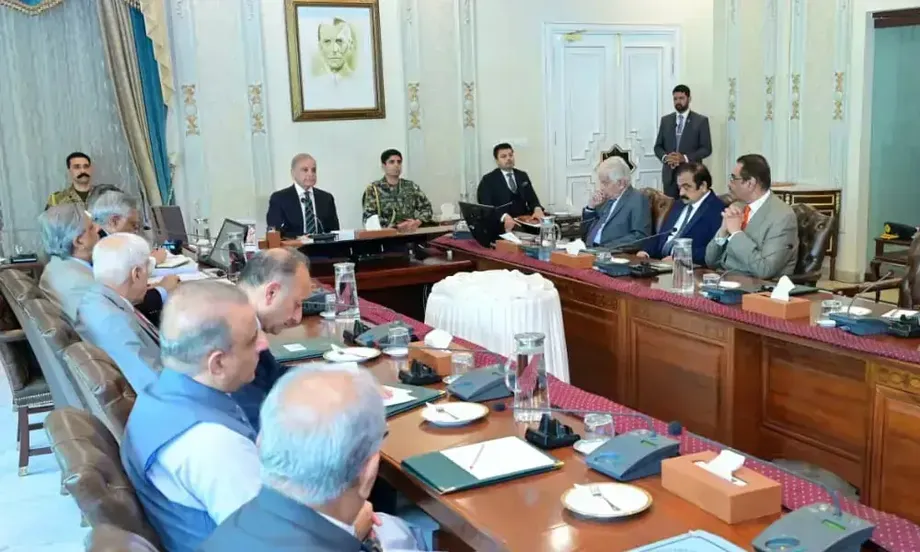
The electricity transactions have reached a concrete stage: the commission's board has approved 10 interested parties to proceed in the privatisation of Islamabad Electric Supply Company Limited (IESCO). Banking and insurance transactions are also advancing, including changes intended to preserve agricultural lending at Zarai Taraqiati Bank Limited (ZTBL) and the selection of a preferred financial advisory consortium for State Life Insurance Corporation of Pakistan.
The airports are being handled through a different route. The government is considering management contracts or commercial concessions, under which private companies would operate facilities according to agreed terms. Its official position is that domestic and foreign investors should compete through open bidding.
Ali presented these transactions as part of a wider economic programme linking reliable electricity, private investment, exports and workforce skills. He said Pakistan had endured severe economic and fiscal difficulties in 2022 and 2023, and now needed consistent implementation of reforms to sustain growth.
For households, businesses, farmers and travellers, the programme reaches services used every day: electricity supply, agricultural loans, insurance and airport operations. The decisions already announced concern investor eligibility, transaction design and advisers, with further work required before the transactions can be completed.
Ten potential buyers advance for IESCO
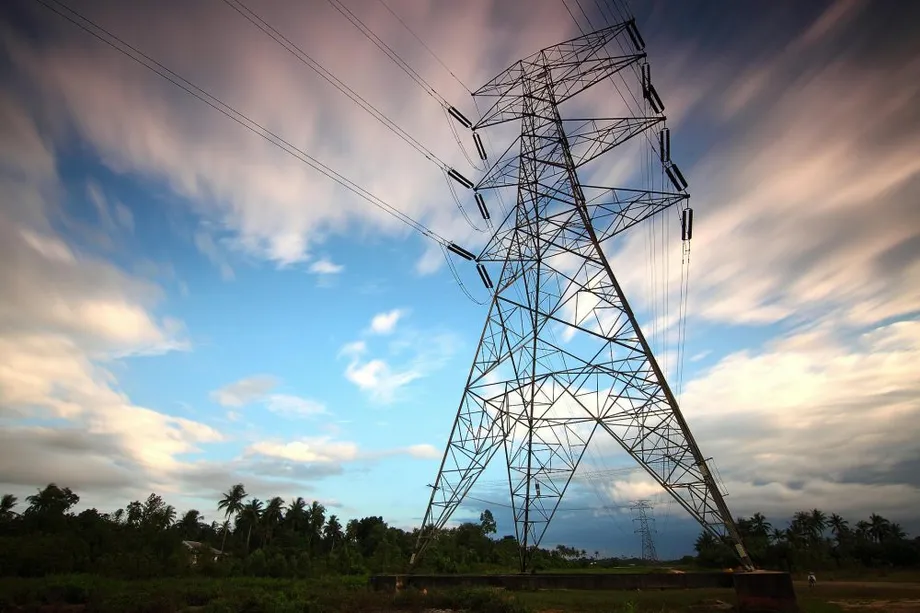
IESCO, Faisalabad Electric Supply Company Limited (FESCO) and Gujranwala Electric Power Company Limited (GEPCO) form the first group of electricity distributors selected for privatisation. These companies, commonly called DISCOs, deliver electricity through local networks to homes and businesses and collect customers' payments.
The 10 parties approved for IESCO include three Turkish energy companies: Aktor Elektrik Enerji Yatirimlari, Genvera Enerji and Cengiz Enerji. Pakistani participants include Engro Energy, Sapphire Fibers, Novatex and Bestway Cement, alongside consortia led by Artistic Milliners, Hub Power Holding and Hasnaat Brothers Construction.
The approved investors will next gain access to a virtual data room. This is a secure collection of business records that prospective buyers examine to understand a company's finances, operations and obligations before deciding what to offer. That examination is known as due diligence.
The board also approved additional consortium members for Artistic Milliners, which had already qualified for the FESCO transaction. Its consortium includes Lake City Holdings, Fatima Capital, Din Ventures and Fazal Cloth Mills. The arrangement allows participation across the first group of electricity transactions, subject to the requirements of each sale.
Ali placed affordable and reliable energy among his central economic priorities. Electricity distribution therefore connects two parts of his programme: restructuring state businesses and improving the conditions under which other companies produce goods, employ workers and compete for export orders.
Airports move to open competition
The Privatisation Commission's airport programme statement, issued as Press Release No. 02/2026, confirms that Islamabad International Airport has entered the active privatisation programme alongside the processes for Karachi's Jinnah International Airport and Lahore's Allama Iqbal International Airport.
The commission identifies management contracts and long term commercial concessions as possible arrangements. A management contract appoints an operator to run agreed activities. A concession grants operating and commercial rights for a defined period, with responsibilities set out in a contract.
In November 2025, the government decided to move from arrangements negotiated between governments to open bidding for all three airports. The commission said strong investor interest prompted the change and that eligible local and foreign investors would have equal opportunities to participate.
The commission also addressed claims about an airport agreement with the United Arab Emirates. It said no such lease had ever been signed for Islamabad or either of the other airports. Discussions had involved entities from the UAE, Turkey and Saudi Arabia, as well as other international stakeholders.
The government's stated objectives are better service, higher revenue, infrastructure upgrades and private investment. For passengers, those goals concern the quality of airport facilities and operations. The precise duties of an operator, and how its performance would be measured, would depend on the eventual contract.
Farm lending and insurance follow separate tracks
ZTBL's transaction is being shaped around its role in lending to agriculture. The Privatisation Commission board approved changes to its transaction structure and restructuring plan following directions from the prime minister to maintain the bank's focus on agricultural and farmer financing after privatisation.
For farmers, that requirement matters because the intended transaction concerns both ownership and the bank's continuing purpose. The approved approach seeks to retain agricultural finance as a central function while the government changes how the institution is owned and organised.
State Life is at an advisory stage. The board selected a consortium led by Deutsche Bank as the highest ranked candidate for appointment as financial adviser and formed a committee to negotiate the Financial Advisory Services Agreement. An adviser helps prepare and structure a transaction and guide the sale process.
The announced steps include investor due diligence for IESCO and advisory contract negotiations for State Life; completion dates, final prices and detailed terms for these transactions and the airport arrangements were not given.
How the programme has changed since 2024
Prime Minister Shehbaz Sharif broadened the government's privatisation policy on May 14, 2024, announcing plans to privatise all state enterprises except those classified as strategic. The earlier approach had focused on businesses making losses. The broader policy brought commercial state ownership itself under review.
The list described in 2024 contained 25 entities and assets. It included Pakistan International Airlines, the Roosevelt Hotel in Manhattan, two insurance companies, four power plants and 10 electricity generation and distribution companies. Two of the power plants had capacities exceeding 1,200 megawatts each. At that time, the government was also discussing a transaction between governments involving First Women Bank and the UAE.
The main stages show how the policy has moved from a broad announcement to individual transaction decisions:
- May 14, 2024: Sharif announced privatisation of state enterprises apart from strategic entities, with priority for businesses making losses.
- November 2025: The government chose open bidding for the three airport operating arrangements.
- December 1, 2025: The Privatisation Commission board recommended adding three enterprises to the programme and removing two others.
- In its 2026 airport statement: The commission confirmed Islamabad airport's inclusion in the active programme.
- October 22, 2026: Ali outlined work on 17 enterprises and private management of three airports at the Islamabad CEO Summit.
The 2024 figure covered a programme list of entities and assets, while Ali's latest figure describes enterprises on which the commission is working. The commission has also been reviewing which businesses are suitable for a transaction, making the composition of the programme an active policy decision.
Some businesses are being excluded from sale
The commission's December board statement gives a detailed account of that screening. At its 243rd meeting on December 1, 2025, chaired by Ali, the board considered an Investment Committee assessment of 15 enterprises referred by ministries.
Only three were cleared for recommended inclusion: Saindak Metals Limited, Pakistan Minerals Development Corporation and National Insurance Company Limited. The other 12 were found unsuitable for privatisation. That means just one fifth of the enterprises examined in that exercise advanced toward inclusion.
The board separately recommended removing Sindh Engineering Limited and Utility Stores Corporation. Sindh Engineering had been inactive since 2007–08, and its only tangible assets were land affected by litigation. Utility Stores had ceased operations following a government decision, and its liabilities substantially exceeded its assets.
The commission said ministries could consider other options, including liquidation, for enterprises unsuitable for sale. Liquidation means winding up an organisation and dealing with its assets and debts. The December decisions show why a privatisation programme also requires choices about businesses that have stopped operating or carry obligations that complicate a sale.
Ali links private investment to domestic savings
Ali organised his economic proposals under a five part framework called TRUST: targeting competitive sectors, sustaining reforms, unlocking private capital, scaling up exports and developing talent. He argued that these priorities needed to advance together.
Muhammad Ali, the prime minister's privatisation adviser, described confidence and policy continuity as central to that approach:
The secret of development lies in one word: trust.
Pakistan's domestic savings stood at 14% of gross domestic product, compared with 34% in Bangladesh and 30% in India, according to figures Ali cited. GDP measures the value of goods and services produced in an economy. The savings rate shows how much of that value is saved rather than consumed.
On those figures, Pakistan's rate was 20 percentage points below Bangladesh's and 16 points below India's. Ali used the comparison to argue for more savings to finance investment, alongside greater foreign investment and support for new businesses.
He also called for better documentation of economic activity so that more of it enters the tax system. His stated aim was to broaden the tax base without increasing the burden on people and businesses already paying tax. Privatisation and partnerships with private companies, he argued, could bring capital and expertise into businesses and infrastructure while freeing public resources for essential services.
Remittances exceed goods exports by $11.6 billion
Overseas workers sent Pakistan approximately $41.6 billion in the previous fiscal year, compared with around $30 billion earned from merchandise exports, Ali said. The difference was $11.6 billion: remittances were about 39% larger than goods exports.
Remittances are money that people working abroad send home. Goods exports are products sold to customers in other countries. Both bring foreign currency into Pakistan, but Ali argued that sustained growth required stronger domestic production and exports with greater value.
Agriculture and food processing, textiles and apparel, and information technology and digital services were the sectors he identified for priority attention. He said Pakistan should focus on activities with established strengths, international demand, the ability to create substantial employment and the capacity to earn foreign exchange.
Ali cited China, South Korea, Vietnam and Bangladesh as examples of economies that built on their strengths while maintaining a consistent policy direction. His proposal connects export growth with the electricity programme: producers need dependable energy as well as investment and workers able to meet customers' requirements.
Workers are part of the investment plan
Education and technical training formed the talent element of Ali's framework. He called for training tied more closely to industry requirements and argued that Pakistan needed to develop its own workforce even when machinery and capital could be obtained from abroad.
Women also featured in his proposals. Ali called for wider access to skills development and employment, saying greater participation by women would improve productivity and competitiveness. He paired those measures with support for new businesses and encouragement for Pakistani companies to expand into international markets.
The programme's scale helps explain the government's focus. International Monetary Fund estimates cited during the 2024 policy debate put state enterprise assets at 44% of GDP in 2019, with almost half of those enterprises operating at a loss that year. Those historical figures describe a large public business sector, while the latest board decisions show the practical work of selecting investors, preserving institutional functions and deciding which transactions can proceed.
Pakistan's current push therefore combines several tasks: transferring businesses to private ownership, arranging private airport operations, restructuring financial institutions and winding down enterprises unsuitable for sale. Ali's wider economic argument is that those changes need reliable energy, stronger exports, investment and skills to produce sustained growth.
Key Points
- The Privatisation Commission is working on 17 state enterprises, including nine electricity distributors.
- Ten interested parties have qualified to advance in IESCO's privatisation, including three Turkish energy companies.
- Islamabad, Karachi and Lahore airports are being prepared for private operating arrangements through open competition.
- ZTBL's revised transaction plan seeks to preserve agricultural lending; State Life is advancing toward appointment of a financial adviser.
- A December 2025 review recommended three enterprises for inclusion and the removal of Sindh Engineering and Utility Stores.
- Ali linked privatisation with investment, exports, reliable electricity, technical skills and greater employment opportunities for women.