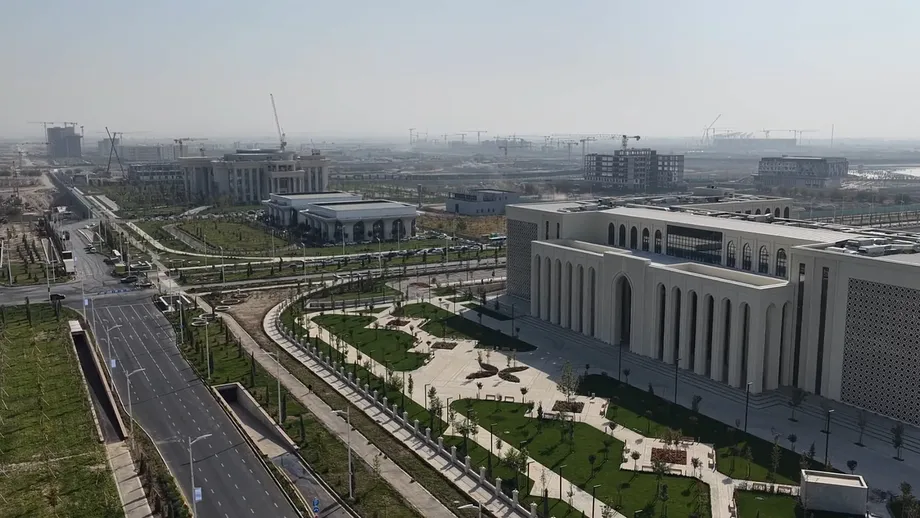
A new city moves beyond the drawing board
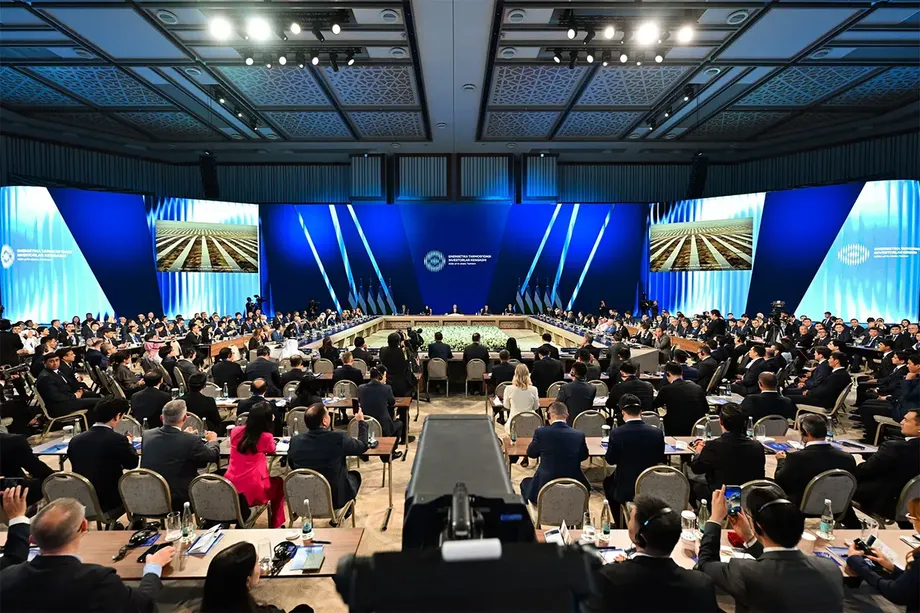
Nearly 7,000 apartments, three operating ministries and university buildings are giving New Tashkent its first working neighbourhoods as Uzbekistan builds a city intended for up to two million people. At a ceremony on 12 October 2026, President Shavkat Mirziyoyev attended the opening of seven facilities valued at $1 billion and the launch of ten more projects worth $2.5 billion.
Contents
- A new city moves beyond the drawing board
- How large will New Tashkent become?
- Housing arrives before the full city
- Ministries create an early working population
- Investment plans extend beyond apartments
- Utilities must grow alongside the buildings
- Universities, a school and a hospital build daily life
- A stadium faces a 2027 tournament target
- Transport and green space shape the next stage
- Key Points
The presidential administration's project launch statement puts completed developments at $2 billion. The seven facilities opened at the ceremony form part of that total. They include housing, a school, electricity infrastructure, a heating and cooling plant, roads, a park and the Chamber of Commerce and Industry building.
Construction began in 2023 on the eastern outskirts of Uzbekistan's capital. The wider development covers about 20,000 hectares, equivalent to 200 square kilometres. Its first phase covers 6,000 hectares and is designed for 600,000 residents, with projects worth $50 billion planned.
The numbers describe several different stages: buildings already finished, projects now entering construction and a much larger development programme extending over decades. For residents, the immediate changes are more concrete: finished apartments, workplaces, classrooms and the first transport connections.
How large will New Tashkent become?
The first phase accounts for 30 percent of the city's planned land area: 6,000 of roughly 20,000 hectares. At its intended population of 600,000, that phase would average 100 residents per hectare across land used for homes, roads, workplaces, services and open space.
Buro Happold, the engineering consultancy commissioned to review the masterplan, gives a development horizon of 2045 for those first 6,000 hectares. Its masterplan review describes an eventual population increase of 2.5 million, a higher figure than the target of up to two million residents used in current descriptions of New Tashkent.
Cross Works produced the masterplan and engaged Buro Happold on behalf of the New Tashkent Directorate. The review covered transport, utilities, economics, ecology, water systems and flood risk, helping assess how the proposed city could function as it grows.
The main milestones stretch from the start of construction to a much longer planning horizon:
- 2023: Construction of New Tashkent began.
- 12 October 2026: Seven facilities worth $1 billion were commissioned, and ten projects worth $2.5 billion were launched.
- End of 2026: Authorities expect 20,000 apartments to be ready across the city.
- 2027: The new stadium is expected to host FIFA Under-20 World Cup matches.
- 2045: Buro Happold identifies this as the planned development horizon for the first 6,000 hectares.
Housing arrives before the full city
Sharq Bahori is the clearest sign of residential progress. Nearly 7,000 apartments are complete in its first phase, alongside landscaped courtyards and playgrounds. The development covers 95 hectares and is planned to contain almost 15,000 homes.
Two demonstration apartments illustrate the housing being marketed: one measuring 63 square metres with a separate kitchen, and another measuring 54 square metres with an open living area. Both have panoramic windows and adjustable heating and cooling. Apartments are delivered with finished interiors, while the developer says it uses construction materials rated A+ for energy efficiency.
Nazokat Makhmudova, head of marketing at the New Tashkent Directorate, described the buyers she sees:
"The main customers for our apartments are people who are purchasing them as an investment in their children's future," she said.
Makhmudova also described interest from other parts of Uzbekistan and neighbouring countries. Apartment prices, financing terms and occupancy figures have not been disclosed, leaving the cost of moving to New Tashkent unclear for prospective residents.
Authorities expect 20,000 apartments citywide by the end of 2026, with room for at least 70,000 people. Those figures imply an average of at least 3.5 residents per apartment. Even at 70,000 people, the initial housing capacity would represent only about 12 percent of the first phase's population target of 600,000.
Ministries create an early working population
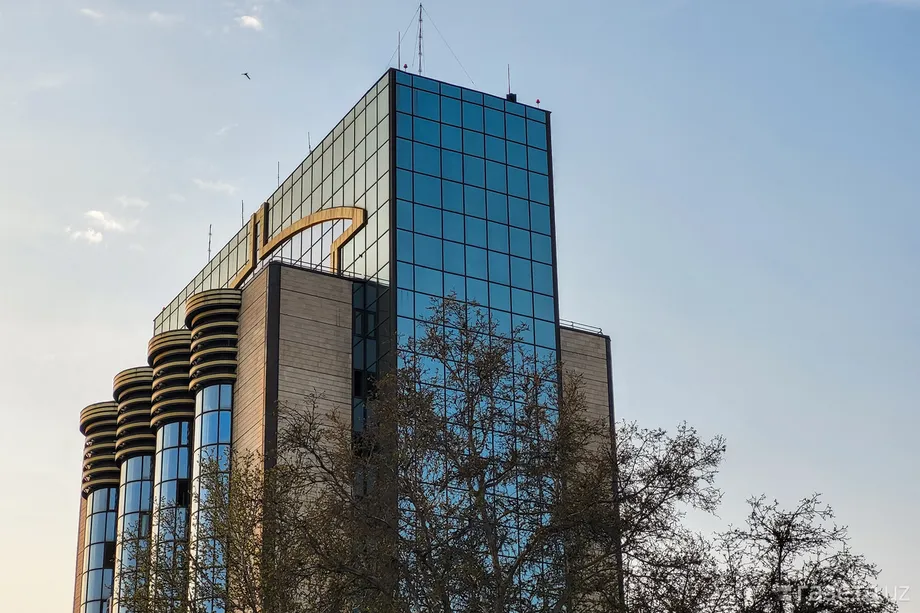
The Ministries of Construction, Transport and Energy already operate in New Tashkent. A broader relocation programme aims to move 150 state bodies and organisations linked to the state, with facilities planned for more than 60 government agencies.
Nine additional buildings are under construction for about 2,600 employees. Government offices create a regular flow of workers while residential districts are still filling up, giving the new city an early base of daily activity.
Elyor Komilov, a deputy department head at the Ministry of Construction, said its future headquarters would bring departments and related organisations together. He described the intended benefit for visitors:
"When citizens come to us, whether to submit a request or deal with some official business, they will be able to complete everything they need in one place," he explained.
A bus service already carries government employees to their workplaces in New Tashkent. As more institutions move, access will matter for citizens travelling to submit applications or handle official business, as well as for staff commuting each day.
Investment plans extend beyond apartments
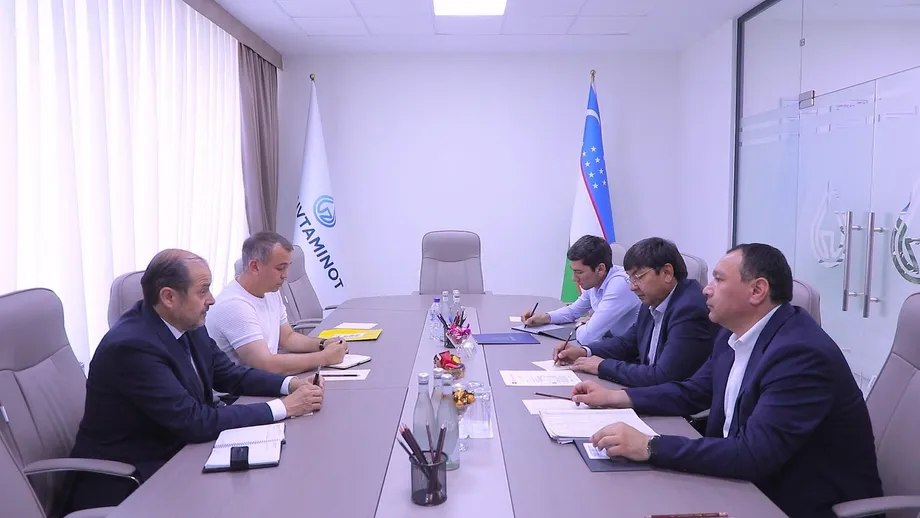
Fifty plots have been earmarked for foreign investors, with proposals intended for distribution through Uzbekistan's diplomatic missions. Shohruh Ochilov, an investment specialist at the New Tashkent Directorate, said delegations had visited from France and Kazakhstan, while the directorate was working with companies from China, the United Arab Emirates, Saudi Arabia and other countries.
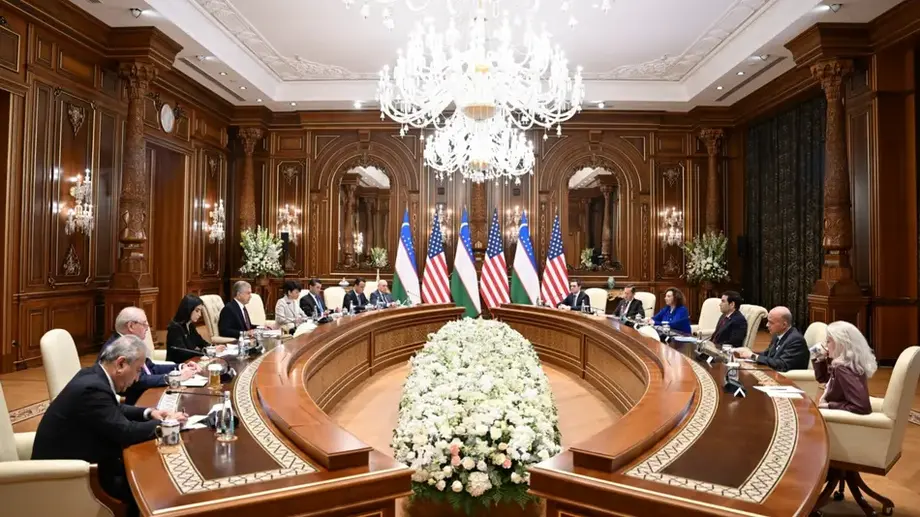
At an October meeting, Mirziyoyev urged officials to simplify approvals, reduce administrative obstacles and improve investment proposals. The ten projects launched on 12 October involve partners from China, Türkiye, the United Arab Emirates and elsewhere.
Deep Tech Park is one of the largest named industrial developments. The government says $320 million will go towards creating the zone, which is intended for technology products and semiconductors, the electronic components used in computers and many other devices. It expects projects worth $1.7 billion to locate there in the future.
Metropolis, a planned business district, will cover more than 818,000 square metres, including offices, a hotel, housing and services. Of that area, 500,000 square metres will be devoted to business infrastructure, with provision for 1,500 jobs. Other named housing projects include Silk City, Mavj and Marjon.
Buro Happold identifies a central economic task: matching construction to demand from residents and businesses. Its assessment uses a forecast of economic growth in Uzbekistan of around 5 to 6 percent and calls for development to proceed at a pace the regional economy and population can support. That makes the timing of each district as consequential as its design.
Utilities must grow alongside the buildings
A $73 million trigeneration plant, developed with Türkiye's MIMSAN, is among the facilities commissioned in October. Trigeneration means producing electricity, heating and cooling through an integrated system. The presidential administration says the plant will provide central heating and cooling for 100,000 households while generating electricity.
A separate $95 million project, implemented with China's Haocheng Industry Group Limited, covers New Tashkent Substation No. 1 and high voltage transmission lines. The substation connects electricity supply with the network serving buildings and other facilities.
Completed infrastructure includes 18 kilometres of roads, 13 kilometres of sewerage networks and 4.5 kilometres of drinking water supply networks. Their expansion will need to accompany each new housing district, university building and workplace.
Plans also include rooftop solar systems with a combined capacity of 20 megawatts and a project involving Finland's MariMatic for waste collection and electricity generation from waste. Together with the central heating and cooling plant, these projects show how much of the city's construction programme takes place outside the apartments themselves.
Universities, a school and a hospital build daily life
New Uzbekistan University has opened facilities for 7,000 students, with research buildings and an innovation park planned for its wider campus. Nizami Pedagogical University has opened an academic building for 12,000 students and a laboratory complex, while its planned campus capacity is 20,000.
The two universities therefore have opened teaching facilities with a combined stated capacity of 19,000 students. That is a substantial daily population alongside government employees and the first residents, creating demand for transport, food, study space and other services.
The new National Library can accommodate 1,500 readers and provides digital resources. A comprehensive school for 2,000 pupils was among the facilities commissioned on 12 October, giving families a local education option as housing becomes available.
A central hospital with 120 beds is also planned. These institutions serve different needs, from a child's school day to medical treatment and university research. Their arrival is part of the government's ambition to create a functioning economic and administrative centre rather than a collection of residential estates.
A stadium faces a 2027 tournament target
A stadium costing $100 million is under construction with seating for 55,000 spectators. Designed to meet FIFA standards, it is expected to host matches at the 2027 FIFA Under-20 World Cup, which Uzbekistan will stage jointly with Azerbaijan.
Yasin Uyghur, chief operating officer of contractor KOC Construction, described the workforce and schedule:
"We are working in two shifts, day and night. We have reached 1,600 workers, alongside more than 50 engineers and architects. International supervisors are working with us as well," he said.
KOC Construction has set a target of completing the stadium in 16 months. Uyghur said obtaining heavy machinery had been difficult, while simpler customs procedures had helped the company import equipment.
The stadium is intended for wider sporting and community use after the tournament. Its size also gives transport planning a practical test: a major match could draw tens of thousands of spectators to a city whose permanent population and public transport network are still developing.
Transport and green space shape the next stage
A proposed metro line would run for 21 kilometres, include nine stations and connect New Tashkent with the capital's existing network. Its projected capacity is up to 230,000 passengers a day. The line remains a proposal, while the employee bus service and completed roads provide the first operating connections.
Construction has begun on a bridge across the Chirchik River. The government's October statement also describes a bridge, an overpass and a road of 10 kilometres connecting Temur Malik Street with the 4R12 highway. Further plans include electric buses, cycling routes, pedestrian routes and underground parking connected to metro stations.
Within neighbourhoods, planners are using the 15 minute city model: placing schools, shops, parks and basic services close enough to reach with a short walk or bicycle ride. Buro Happold's review identified oversized transport infrastructure as a challenge for movement within the city and proposed changes to support walking and public transport.
The environmental plans are similarly extensive. The presidency lists 2,000 hectares of green space and 500 hectares of parks, while Buro Happold describes plans to plant 200,000 trees. Sohil Bogi Park already includes walking and cycling paths along a waterfront stretching 10 kilometres.
The development is being built on land previously used for agriculture, and its masterplan includes canals. Buro Happold assessed flood risk, identified areas with greater exposure and advised on protective measures. Water, drainage, shade and safe routes between buildings will help determine how comfortable the planned city becomes for people living there.
New Tashkent's next milestones are tangible: delivering the promised apartments by the end of 2026, advancing the stadium for 2027 and expanding services as more ministries, businesses and households arrive. The first completed facilities provide a starting point, while the 2045 planning horizon shows the scale of the work still scheduled.
Key Points
- New Tashkent covers about 20,000 hectares, with a first phase designed for 600,000 residents.
- The government says $2 billion in developments are complete, and projects worth $50 billion are planned for the first phase.
- Nearly 7,000 apartments are finished at Sharq Bahori; authorities expect 20,000 apartments citywide by the end of 2026.
- Three ministries already operate there, and opened university facilities have a combined stated capacity of 19,000 students.
- A stadium with 55,000 seats is expected to host matches at the 2027 FIFA Under-20 World Cup.
- A proposed metro would have nine stations across 21 kilometres; roads, utilities and a river bridge are also part of the transport and infrastructure programme.
- Buro Happold places development of the first 6,000 hectares on a horizon extending to 2045.