Asia's financing shift reaches the repayment stage
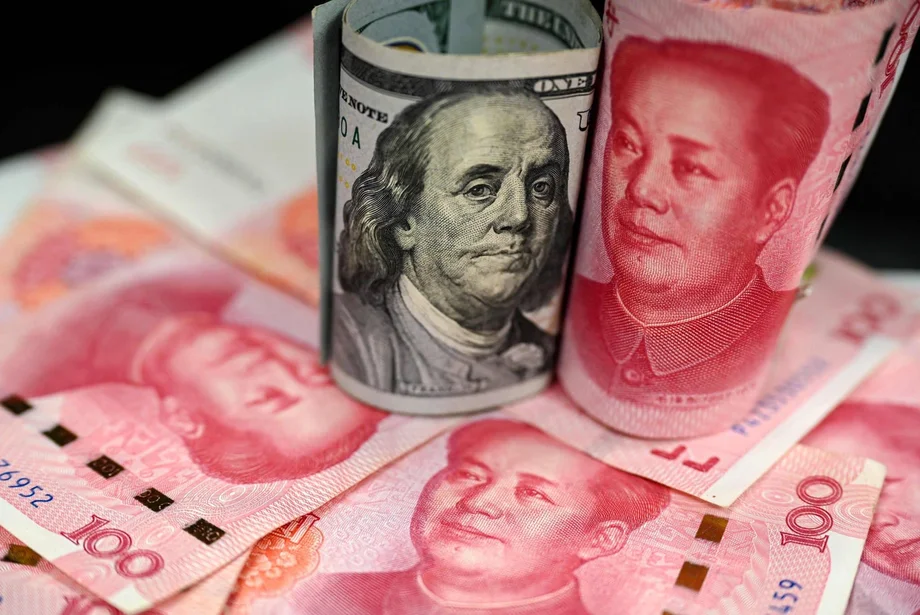
China's net lending flows to developing countries fell to negative $34 billion in 2024, while the World Bank's own net flows to low and middle income countries reached about $36 billion. Behind those opposite movements lies a change in Asia's development finance: governments are increasingly turning to multilateral lenders for new money while repaying loans taken during China's infrastructure lending boom.
Contents
- Asia's financing shift reaches the repayment stage
- Why China's lending balance has turned negative
- Pakistan buys time through Saudi and Chinese support
- What Pakistan still has to pay
- Longer loans are Pakistan's next objective
- A flagship railway turns to the ADB
- Sri Lanka restructures while Laos defers
- The dates shaping the transition
- What borrowers gain and what becomes harder
- Key Points
Pakistan illustrates how the two systems now operate together. Its external debt service for the fiscal year ending in 2027 is estimated at $21.5 billion. Islamabad is arranging $7.3 billion in rollovers from Saudi Arabia, China and Kuwait, while seeking Asian Development Bank financing for a railway upgrade long associated with the China-Pakistan Economic Corridor, or CPEC.
A rollover moves a repayment date into the future. It keeps money available for imports and other immediate needs, but leaves the underlying debt outstanding. That makes the timing, cost and purpose of financing as important as the headline amount a lender announces.
On October 12, alongside the IMF and World Bank Annual Meetings in Bangkok, the Borrowers' Platform held its first Governing Council and set priorities for its first annual cycle. Launched in April with U.N. Trade and Development, or UNCTAD, as its secretariat, the forum seeks to help borrowing governments improve debt management and coordinate their positions.
The meetings took place amid an energy supply shock linked to war in West Asia, rising interest rates and heavy public debt. Developing countries face roughly $400 billion in payments to external creditors during the year. For Asian governments, the immediate task is to meet those bills while preserving money for railways, disaster recovery and essential services.
Why China's lending balance has turned negative
Chinese infrastructure loans agreed during the middle of the 2010s often included grace periods of three to five years. Those periods postponed principal repayments, giving projects time to begin operating. Many of those loans have since entered their repayment phase.
China was a net drain on financing for 60 developing countries in 2023, compared with 18 in 2012. Developing countries were expected to pay Beijing an estimated $35 billion in debt service in 2025. A negative net flow means repayments exceeded the new financing received over the period.
The World Bank's International Debt Report 2025 describes a different direction for multilateral institutions. The bank's own net flows reached a record of about $36 billion in 2024, and multilateral creditors provided nearly half of all long term net financing. Net flows from bilateral creditors, meaning individual governments and their lending agencies, fell to about $4.5 billion, the lowest since the global financial crisis.
China remains involved through loan extensions, deferred payments and currency swap arrangements, which can supply foreign currency during a shortage. Its role increasingly includes helping existing borrowers manage payments rather than financing another large wave of construction. Pakistan, Sri Lanka and Laos show three different versions of that transition.
Pakistan buys time through Saudi and Chinese support
Finance Minister Muhammad Aurangzeb confirmed that Saudi Arabia extended a $3 billion facility beyond its October 31 maturity. The financing had helped Pakistan meet a gap associated with $3.5 billion in repayments to the United Arab Emirates. A separate Saudi facility of $5 billion has been extended until 2028.
Aurangzeb described the extension of the $3 billion facility in these terms:
It has been extended, and for a reasonable period.
The minister did not disclose its duration. China and Kuwait have also given assurances concerning $4.3 billion in rollovers, comprising $4 billion from China and $300 million from Kuwait. The Chinese extension is expected in March 2027, with those arrangements expected to run for about a year.
Together, the $3 billion Saudi facility and the proposed Chinese and Kuwaiti extensions account for the $7.3 billion rollover package. That equals about 34 percent of Pakistan's estimated $21.5 billion external debt service bill. Earlier expectations of roughly $12 billion in support from China and Saudi Arabia cover a broader financing need than this specified package.
What Pakistan still has to pay
Finance Secretary Imdadullah Bosal put Pakistan's net external financing requirement at about $11 billion after rollovers and refinancing. Refinancing replaces an old loan with another borrowing arrangement. The finance ministry said $5 billion had already been paid and about $6 billion remained payable over the following seven months.
The $21.5 billion gross debt service estimate includes $4 billion in interest. Figures attributed to the Senate finance committee briefing put principal repayments at $17 billion or $17.5 billion. The latter figure adds up to the stated total. After bilateral rollovers, the remaining requirement was put at about $14 billion, including $3.2 billion in commercial refinancing that officials said Pakistan might avoid because of its cost.
Pakistan also returned to international bond markets, issuing $3 billion in September against orders worth $6 billion. Investor demand was therefore twice the amount issued. Aurangzeb said further Eurobonds, Panda bonds and bonds linked to the rupee but settled in dollars were under consideration. Panda bonds are issued in China's domestic market in renminbi by borrowers based outside China.
A proposed $10 billion U.S. liquidity facility has become less central to the government's plans. Washington reportedly declined the request, while Aurangzeb continued to describe any eventual support conditionally. He said it was neither guaranteed nor essential to meeting Pakistan's external financing needs.
Aurangzeb, explaining the government's position on the U.S. request, said:
If possible, fine; if not, we are going to move forward, with or without it.
The minister said an IMF Executive Board meeting was expected in December to consider a disbursement of about $1.2 billion. That financing and the expected March 2027 Chinese rollover are important points in Pakistan's repayment calendar.
Longer loans are Pakistan's next objective
Pakistan is seeking borrowing with maturities of five to ten years, replacing arrangements that require frequent refinancing. Aurangzeb told the Senate finance committee that domestic debt had previously needed refinancing as often as every three months, exposing the budget to repeated changes in borrowing costs.
The average maturity of domestic debt rose from 2.7 years in June 2024 to 3.8 years in June 2026. The government's target is 4.2 years by the fiscal year ending in 2028. Longer maturities spread repayments across more time and reduce the amount that must be renewed at once.
Bosal said public debt stood at 68.6 percent of gross domestic product at the end of June 2026, down from 75.1 percent in the fiscal year ending in 2023, a decline of 6.5 percentage points. The debt stock nevertheless rose from 24.9 trillion rupees in the fiscal year ending in 2018 to 86.7 trillion rupees in 2026. Debt can rise in cash terms while falling relative to the size of the economy.
Interest payments consumed 35 percent of government revenue, compared with 61 percent in the fiscal year ending in 2024. Annual interest expenditure fell from 8.9 trillion rupees to 6.9 trillion rupees between the fiscal years ending in 2025 and 2026. Officials attributed the improvement to lower rates, debt management and a stronger budget balance before interest payments.
Aurangzeb said Pakistan aims to reduce external debt by $4 billion during the current fiscal year and $3.5 billion the following year, after a reported $4.5 billion reduction in the previous year. The plan depends on replacing expensive financing while maintaining enough foreign currency to meet repayments and import needs.
A flagship railway turns to the ADB
Main Line 1, or ML-1, makes the change in financing visible. The proposed $6.7 billion upgrade covers roughly 1,726 kilometers between Karachi and Peshawar. Pakistan originally sought Chinese financing for the railway as a flagship CPEC investment.
Pakistan declined an ADB financing offer in 2017 after China sought to finance the project alone. An expected Chinese commitment covering 85 percent of the cost did not materialize. During an August 2025 visit, Chinese Foreign Minister Wang Yi indicated that Beijing accepted participation by other financiers.
The railway's earlier funding test showed why the decision matters beyond diplomacy. Pakistan Railways was running an annual deficit of about 55 billion rupees, while rail's share of freight had fallen from about 70 percent in the 1960s to only 2 to 3 percent. Rebuilding the line is tied to making railway operations more dependable and financially sustainable.
Pakistan initially sought $7 billion from the ADB. Financing discussions have since included about $2 billion for the wider project, $10 million in project readiness financing and a proposed $1.1 billion for the Karachi to Rohri section. Those figures describe different stages and parts of the financing plan. The government says the sequence was agreed with Beijing.
China's existing exposure remains substantial. Chinese investment in Pakistani power projects exceeded $21 billion, and Pakistan owes Chinese power producers more than $1.5 billion. Security pressures also weigh on the relationship: 21 Chinese nationals have reportedly been killed in Pakistan since 2021. New railway financing therefore sits alongside unresolved payment and security concerns.
Sri Lanka restructures while Laos defers
Sri Lanka signed agreements in June 2024 to restructure about $4.2 billion owed to China's Export-Import Bank. Its subsequent financing has relied heavily on multilateral institutions. In 2025, the IMF and ADB together supplied nearly 80 percent of roughly $1.48 billion in foreign development financing disbursed to Colombo, equivalent to about $1.18 billion.
The ADB subsequently raised its 2026 allocation for Sri Lanka to $480 million following Cyclone Ditwah. Disaster recovery spending adds another claim on public resources while the country manages the consequences of its debt crisis.
Laos has relied instead on repeated Chinese repayment deferrals since 2020, totaling $3.23 billion, or about 19 percent of its GDP. Deferrals postpone payments; restructuring can change the wider terms of a debt agreement, including repayment schedules and sometimes the amount owed.
The World Bank projects Lao debt service at 13 percent of GDP in 2026. That is equivalent to about $13 for every $100 of annual economic output. Such a large payment burden restricts the government's room to fund health, education and social protection, even when extensions prevent an immediate financing crisis.
The dates shaping the transition
Asia's current financing pressures developed over years of borrowing, delayed projects and changing repayment terms. Several dates show how earlier commitments now shape current decisions:
- 2017: Pakistan declined ADB participation in ML-1 while pursuing Chinese financing.
- 2020 onward: Laos accumulated repeated Chinese payment deferrals totaling $3.23 billion.
- June 2024: Sri Lanka signed agreements to restructure about $4.2 billion owed to China's Export-Import Bank.
- August 2025: Wang Yi indicated that China accepted other financiers joining ML-1.
- July 2026: Pakistan repaid $1.3 billion in Chinese commercial loans associated with CPEC and sought faster refinancing.
- October 31, 2026: Pakistan's $3 billion Saudi facility reached maturity before its extension was confirmed.
- December 2026: Pakistan expects an IMF board decision concerning about $1.2 billion.
- March 2027: The expected $4 billion Chinese rollover becomes a key financing milestone.
Pakistan's calendar captures the central difficulty: new financing decisions and old repayment deadlines arrive at different times. Governments need enough cash between those dates, even when their annual financing plans appear balanced.
What borrowers gain and what becomes harder
Multilateral financing can provide longer repayment periods, competitive procurement and more disclosure about projects. Having several possible lenders also gives governments more choices when negotiating terms. For Pakistan, ADB involvement offers a route to advance a railway project stalled under its previous financing plan.
Money also moves across a government's wider budget. A development bank may finance a railway or disaster recovery program, freeing domestic revenue or foreign reserves for another bill, including repayment to a bilateral creditor. New development finance can therefore support investment and ease pressure from older debt at the same time.
Multilateral loans bring their own commitments, including policy conditions. Development banks generally receive preferred creditor treatment, meaning their claims are usually kept outside debt restructuring. As their share of borrowing grows, a larger portion of debt is normally protected from renegotiation, leaving bilateral and private creditors to carry more of any future adjustment.
The Borrowers' Platform could help governments manage those tradeoffs through practical cooperation. Sri Lanka's experience negotiating with an official creditor committee, China and bondholders offers lessons for other borrowers dealing with several creditor groups. Members could share methods for tracking net flows, spreading repayment dates and designing clauses that temporarily pause debt service after climate disasters.
Pakistan's rollovers, Sri Lanka's restructuring and Lao deferrals point to the same immediate priority: keeping development spending possible while meeting inherited obligations. Tracking money actually received and repaid gives governments a more useful guide than announced financing pledges alone.
Key Points
- China's net flows to developing countries were negative $34 billion in 2024, while the World Bank's own net flows reached about $36 billion.
- Pakistan is arranging $7.3 billion in bilateral rollovers against estimated external debt service of $21.5 billion.
- Saudi Arabia confirmed a $3 billion extension; a $4 billion Chinese rollover is expected in March 2027.
- ADB financing is being pursued for parts of Pakistan's ML-1 railway after years of stalled Chinese financing talks.
- Sri Lanka has combined debt restructuring with multilateral support, while Laos has relied heavily on Chinese payment deferrals.
- The Borrowers' Platform aims to strengthen debt management and coordination among borrowing countries.