Water debts could leave consumers unable to top up electricity
Uzbekistan will allow electricity payments to be blocked from January 1, 2027, when consumers fail to settle drinking water and sewerage debts after a formal collection process. The change comes as Uzsuvtaminot, the national water company, puts unpaid bills across its system at 542.6 billion soums as of October 1, 2026.
Contents
- Water debts could leave consumers unable to top up electricity
- How collection will work
- What happens to a household's electricity supply?
- Households owe nearly four fifths of the arrears
- More than 110,000 documents have reached enforcement
- Water tariff decisions will move to a national commission
- Electricity costs and regional water prices have risen
- Pricing changes will come with notice and repair commitments
- The dates that shape the change
- Key Points
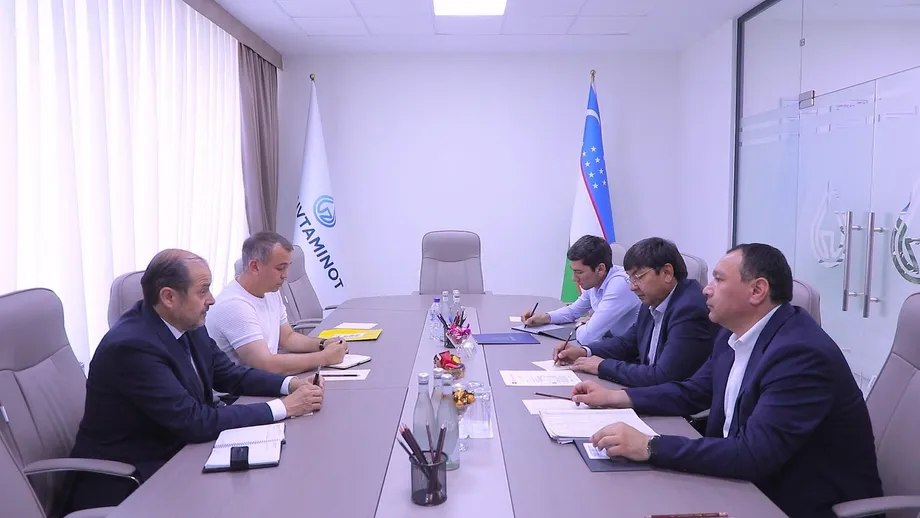
Islom Abdullayev, first deputy chairman of Uzsuvtaminot, announced the measure at a press conference in Tashkent on October 30. Households account for 430.7 billion soums of the arrears, approximately 79% of the total, while businesses and other legal entities owe 111.8 billion soums.
Consumers will first receive a written warning and five working days to pay. An unpaid debt must then go through a notary or court, followed by the Bureau of Compulsory Enforcement. Electricity payments can be restricted only after the consumer also misses the deadline for voluntary compliance with the enforcement document.
The restriction targets the ability to add money to an electricity account. For a household using a prepaid meter, the practical consequence can still be a loss of electricity once the balance already on the meter runs out.
Families included in the Unified Social Protection Register will be exempt. The procedure is part of Presidential Decree No. UP-140, dated July 24, 2026, which also changes how water tariffs are approved and how water companies respond to rising costs.
How collection will work
Uzsuvtaminot describes the electricity payment restriction as the final stage of debt collection. After the written warning, consumers have an opportunity to settle their water and sewerage bills before legal enforcement begins.
Uncontested debts of up to 1,000 base calculation units, inclusive, will be handled through a notary. The threshold is given as 440 million soums. A base calculation unit is an official reference amount used to calculate legal thresholds and other payments, rather than a unit of water consumption.
A notary can issue an enforcement endorsement, a document allowing an eligible debt to proceed to compulsory collection. Debts above 1,000 base calculation units will go through the courts.
Abdullayev explained the division between the two routes at the October 30 press conference. In translation, he said:
If the debt is up to a thousand times the base calculation amount, measures will be taken to recover it through a notary, and amounts above a thousand times through a court. After that, enforcement documents will be prepared and sent to the Bureau of Compulsory Enforcement.
The bureau will receive the resulting enforcement document. If the consumer fails to comply within the period allowed for voluntary payment, acceptance of electricity payments will be restricted automatically. The duration of that voluntary enforcement period was not specified in the announcement.
What happens to a household's electricity supply?
A consumer who reaches the final enforcement stage will be unable to replenish the electricity balance until the water and sewerage debt is paid. Uzsuvtaminot says payment access will be restored after the outstanding debt is settled.
A prepaid electricity account works by using money deposited in advance as electricity is consumed. If new deposits are blocked, the remaining credit continues to shrink. A household can therefore reach a point where its meter stops supplying power because the credit has been exhausted.
The amount already on the electricity account will affect how quickly that happens. A household with little remaining credit could feel the restriction sooner than one with a larger balance. The collection process therefore connects an unpaid water bill to the household's ability to keep buying electricity.
Families listed in the Unified Social Protection Register are excluded from the measure. Similar restrictions already apply to debts for household waste collection. In Tashkent, they have also applied since July 1, 2026, to unpaid mandatory contributions for maintaining common property in apartment buildings.
Households owe nearly four fifths of the arrears
Uzsuvtaminot's figures show that household debt is the largest part of the collection problem. Residents owe 430.7 billion soums, compared with 111.8 billion soums owed by legal entities. Household arrears are about 3.9 times the amount owed by those other consumers.
Tashkent city has the largest reported regional debt, at 92.9 billion soums. Andijan region follows with 74.1 billion soums, while Tashkent region owes 61.6 billion soums and Ferghana region 57 billion soums.
Together, these four areas account for 285.6 billion soums, or about 53% of the national total of 542.6 billion soums. Tashkent city alone represents approximately 17%.
These figures show where the largest unpaid amounts are concentrated. The size of a region's customer base also matters when comparing its total debt with another region's. The figures announced at the press conference did not include customer numbers for calculating average debt per account.
More than 110,000 documents have reached enforcement
Water companies were already pursuing substantial numbers of collection cases before the new electricity payment restriction was announced. During 2026 up to the press conference, they submitted 167,783 applications to notarial offices and courts.
Those applications resulted in 114,305 notarial enforcement endorsements and court orders. Of these, 110,563 documents were forwarded to the Bureau of Compulsory Enforcement, approximately 97% of the documents issued.
The announced figures describe applications and legal documents. They do not include an amount recovered through those proceedings. For consumers, the new measure adds a further consequence at the end of that existing enforcement process: losing access to electricity payments while the water debt remains unpaid.
The billing deadline needs clarification. Payment guidance describes full advance payment by the 10th of each month, while another description of the announcement places the deadline on the 10th of the following month. Consumers will need a clear statement of which deadline applies to their bills, because it determines when a payment becomes overdue.
Water tariff decisions will move to a national commission
January 1, 2027, will also bring a change in who approves drinking water and sewerage prices. Responsibility will move to the Interdepartmental Tariff Commission under the Cabinet of Ministers, replacing separate regional approval decisions.
The reform aims to apply consistent economic criteria when prices are reviewed. Water companies identify electricity, maintenance, salaries and debt servicing as costs that affect the price of supplying water and removing wastewater.
A tariff is the approved price charged for a service. For water measured by volume, it is usually expressed as a price per cubic metre. One cubic metre equals 1,000 litres. A household's bill then depends on the applicable tariff and the amount of water billed, alongside any sewerage charges.
The national average drinking water tariff for households was given as 3,765 soums per cubic metre, or 4,217 soums including value added tax. The average sewerage tariff was put at 2,008 soums per cubic metre.
Authorities also plan a unified water tariff for organizations funded from the state budget from April 1, 2027. That proposal concerns institutions receiving public funding, rather than a single announced price for every household across Uzbekistan.
Electricity costs and regional water prices have risen
Uzsuvtaminot identifies rising electricity prices as a major pressure on operating expenses. Water services use electricity to move and process water, making power costs part of the expense that tariffs must cover.
The electricity tariff cited for the sector rose from 450 to 900 soums on October 1, 2023. It then increased to 1,000 soums on May 1, 2025, and 1,100 soums on June 1, 2026. Compared with the earlier 450 soum rate, the latest figure is about 2.4 times as high.
By October 27, revised water tariffs had been approved for six enterprises. The announced changes show different starting prices and different increases:
- Andijan region: from 1,650 to 2,500 soums per cubic metre, an increase of about 52%.
- Navoi region: from 3,500 to 4,200 soums, an increase of 20%.
- Samarkand region: from 2,800 to 3,600 soums, an increase of about 29%.
- Surkhandarya region: from 5,300 to 6,800 soums, an increase of about 28%.
- Tashkent region: from 2,600 to 3,100 soums, an increase of about 19%.
- Chimgan-Charvak main water supply enterprise: from 1,500 to 1,700 soums, an increase of about 13%.
For households in those service areas, higher prices increase the cost of the same volume of water. For the companies, collecting bills and adjusting tariffs are two parts of the effort to meet operating expenses.
Pricing changes will come with notice and repair commitments
Presidential Decree No. UP-140 links tariff reform to the financial condition of water companies and the quality of their services. It provides for shorter tariff review periods when energy costs change, allowing pricing decisions to respond more quickly to a major operating expense.
The decree also calls for greater transparency in pricing and advance public notice of tariff changes. For customers, advance notice gives a clearer point from which to calculate the cost of future consumption and plan household spending.
Funds are also intended to support repairs and modernization of water networks. The reform therefore combines stronger debt collection with changes to price approval and investment in the infrastructure used to deliver the service.
The immediate consequence for consumers is more concrete: unpaid water bills can move through a legal process that eventually affects electricity purchases. The warning, the notarial or court stage, and the voluntary enforcement period are the points at which payment can prevent that final restriction.
The dates that shape the change
The collection measure sits alongside tariff reforms and earlier uses of electricity payment restrictions. The main dates are:
- July 1, 2026: Tashkent began applying similar restrictions for unpaid mandatory contributions to apartment building common property maintenance.
- July 24, 2026: Presidential Decree No. UP-140 set out changes to water tariff regulation and the sector's finances.
- October 1, 2026: water and sewerage arrears across Uzsuvtaminot's system stood at 542.6 billion soums.
- October 30, 2026: Abdullayev announced the water debt collection measure at a press conference in Tashkent.
- January 1, 2027: the electricity payment restriction procedure takes effect, and water tariff approval moves to the national commission.
- April 1, 2027: authorities plan to introduce a unified water tariff for organizations funded from the state budget.
The January changes bring collection and pricing reforms into effect on the same day. The planned April tariff change follows three months later and applies to a specific group of institutional customers.
Key Points
- From January 1, 2027, unpaid water and sewerage debts can lead to blocked electricity payments after formal enforcement.
- Consumers must first receive a written warning and five working days to pay.
- Uncontested debts up to 1,000 base calculation units go through a notary; larger debts go through court.
- Families in the Unified Social Protection Register are exempt.
- Prepaid electricity users risk losing supply when their existing credit runs out.
- Uzsuvtaminot puts total arrears at 542.6 billion soums, with households owing approximately 79%.
- A national commission will take responsibility for approving water and sewerage tariffs from January 2027.